The One Mistake That Keeps Backyards Quiet
If you want to know how to attract birds, the useful starting point is not a particular bag of seed. It is the yard as a whole. Food matters, but birds also need a safe way to approach, somewhere nearby to retreat, and resources that stay clean enough to use. At the store, I often spoke with people who had bought good seed and a suitable feeder yet still saw little activity because the rest of the setup worked against them.
A common mistake is treating the feeder as the entire habitat. Local birds may already have several natural food sources, and their routes change with weather, breeding activity, migration, and seasonal abundance. A dependable setup can help them recognize your yard as useful, but consistency means more than keeping one feeder full in one exact spot. It also means keeping seed fresh, water usable, and the surrounding area safe enough for repeated visits.
Key point: A feeder is only one part of the decision a bird makes. Pair appropriate food with nearby escape cover, clean water, and fewer hazards, then give local birds enough time to assess the setup.
Why Birds Need to Learn to Trust Your Yard
To figure out how to get birds to come to your yard, look at the approach from their perspective. Small birds have to balance feeding with the risk of hawks, cats, sudden human movement, and reflective glass. A chickadee may grab one seed and return to cover, while a cardinal may wait in a shrub until the feeding area is quiet. Those pauses are normal behavior, not proof that the birds cannot find the feeder.
Some birds approach a new feeder quickly, while others are cautious around unfamiliar objects. Season matters too. A feeder may draw attention rapidly during a cold spell but receive little interest when insects, berries, and natural seeds are abundant. From what I have seen at the store, people often assume the feeder has failed before checking whether birds have a protected route into and out of the area.
Moving a feeder is not automatically a mistake. If the current spot is exposed, close to an untreated reflective window, easy for a cat to ambush, or collecting wet waste underneath, relocation can be the safer choice. What usually creates confusion is changing the location, food, and feeder type all at once, then having no way to tell which change mattered. Choose a defensible location, observe it for a reasonable period, and adjust one variable at a time.
Field Note: A recurring conversation at the store began with, “I have tried everything.” When we walked through the setup, several things had often changed within the same week. The useful fix was not to promise that one location would work forever, but to choose a safer starting point and give each change enough time to produce a readable result.
The Five Elements Working Together
Once the yard is viewed as a system, the individual choices become easier to judge. Attracting backyard birds is rarely about one clever trick. Food, feeder access, placement, water, and maintenance affect one another, so improving the weakest part of the setup often matters more than buying something new.
Seed Quality Over Quantity
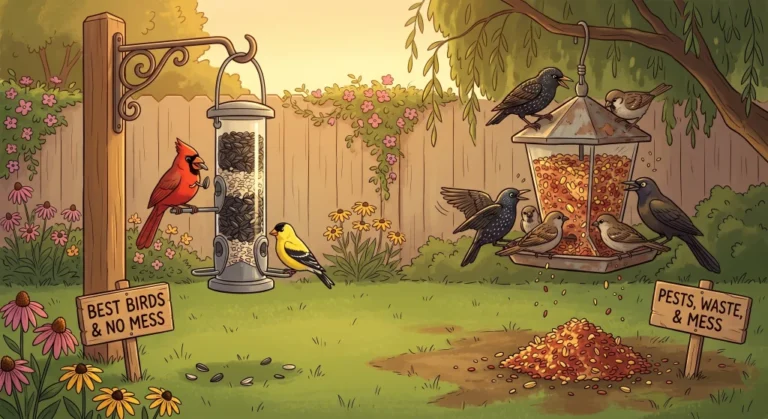
Low-cost mixed seed often contains a large share of grains that many common feeder birds leave behind. When birds sort through a mix for preferred pieces, the rejected seed collects below the feeder, where it can become wet or attract unwanted visitors. Black oil sunflower is a practical starting point for many seed-eating species because its shell is relatively easy to open and its kernel is energy-dense. It will not attract every bird, and local preferences still matter, but it usually gives a beginner a clearer test than a filler-heavy blend. For a deeper breakdown of what goes in your feeders, check our guide on the best bird seed options available.

Wagner's Four Season Sunflower Seed is 100% black oil sunflower seed. Sunflower seed is the favorite seed of most wild birds. It is high in energy and has a thin shell making it easy for all birds to consume. Use tray feeders or hopper feeders to attract sunflower loving songbirds. Cardinals, Chickadees, Finches, Nuthatches, Woodpeckers and much more. Trust your backyard birds to the experts at Wagner’s.
Check on AmazonIf you click this link and buy, we earn a commission at no additional cost to you.
Matching the Feeder to the Foot
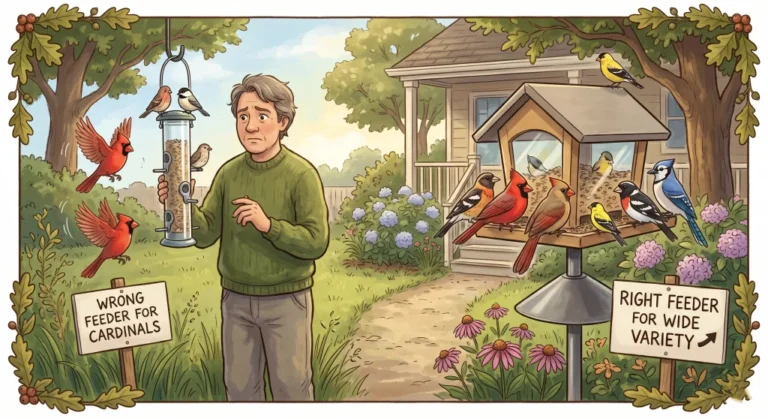
Different birds use feeders in different ways. Downy Woodpeckers are comfortable clinging, small finches readily use narrow perches, and Northern Cardinals generally feed more comfortably when they have a stable tray or a generous perch. Cardinals can use some tube feeders, so the issue is access and perch design rather than a physical inability to feed from a tube. One feeder style may serve a useful group of species, while a second style can make the yard accessible to birds with different body sizes and feeding habits. You can explore the exact mechanics of these in our breakdown of bird feeder types.

High quality: bird feeder pole up to 94 inch height, from heavy-duty metal material, The strong material makes the bird feeder station more stable.
Check on AmazonIf you click this link and buy, we earn a commission at no additional cost to you.
The Geometry of Safe Placement
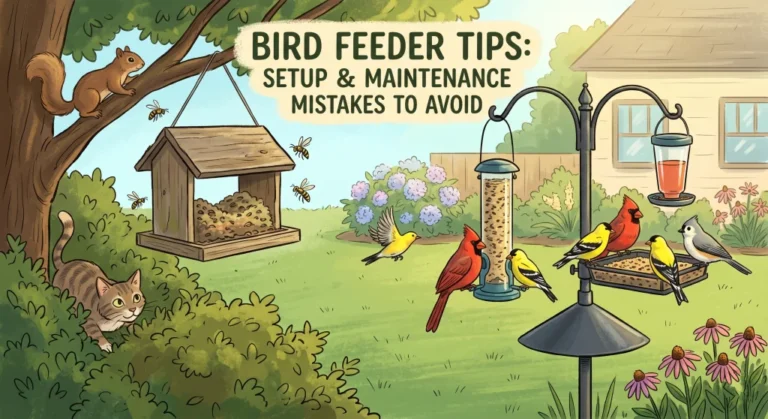
Placement is where access, cover, predators, and maintenance meet. A feeder in a wide open lawn may leave small birds without a quick retreat, while a feeder pressed against low dense cover can give cats or squirrels an easy approach. About ten feet from useful cover is a reasonable starting point in many yards, but the right distance depends on the shape of the vegetation and the predators present. Nearby glass also needs attention: if a window reflects sky or foliage, make the outside surface visible to birds with a dense marking pattern or an external screen instead of assuming distance alone removes the hazard. Finally, choose a position you can reach easily enough to inspect, clean, and refill without turning maintenance into a chore.
The Sound of Moving Water
Seed mainly serves species that use the food you offer, while water can interest birds that never visit a seed feeder. American Robins, warblers, and bluebirds may use a shallow bath even when they ignore sunflower seed. Gentle ripples or a quiet drip can make water easier to notice, but cleanliness, shallow depth, and secure footing matter more than any device. Keep the basin fresh, remove slick buildup, and provide an easy edge where a small bird can enter without stepping into deep water. Moving water may increase activity, especially in dry conditions, but results still depend on the birds and habitat around your yard.

LATEST 1W SOLAR POWERED: The solar birdbath fountain only needs 3 seconds to operate automatically in direct sun, with a spray height of 50-70cm. The most important this will attract a lot of hummingbirds to your garden!
Check on AmazonIf you click this link and buy, we earn a commission at no additional cost to you.
Consistency Means Maintenance
Consistency is useful, but it does not mean a feeder can never be empty or moved. Wild birds use multiple natural and supplemental food sources, so missing a refill does not leave them helpless. The practical goal is to offer seed that is dry and fresh, remove accumulated waste, keep water clean, and avoid changing several parts of the setup at once. A new feeder may receive visits within days or may take several weeks to become active, depending on the season, local bird population, food availability, and surrounding cover. If you see mold, a sick bird, repeated window strikes, or a predator using the feeder as an ambush point, pause and correct the hazard rather than protecting an artificial routine.
The Visibility Test: Can Birds Approach Safely?
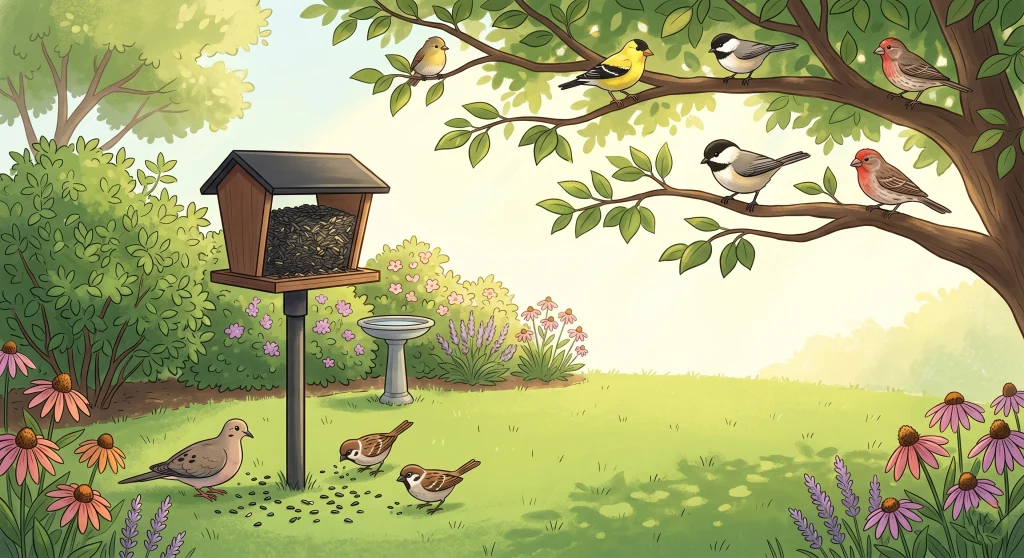
When people tell me they have done everything right but the feeder remains quiet, I ask them to stop looking only at the food. Instead, trace the route a small bird would have to take from nearby cover to the feeder and back. Birds perched in surrounding branches may be assessing the area, waiting for another bird to leave, or simply resting. Their presence is a useful clue that birds are nearby, but it does not prove they have inspected the feeder or know what is inside it.
Start with the obvious barriers. Check whether the feeder is exposed to constant foot traffic, whether a cat can hide below it, whether nearby glass reflects vegetation, and whether the approach is blocked by fencing or dense branches. Then inspect the feeder itself for wet seed, clogged ports, unstable perches, or a design that does not suit the birds you are trying to attract. This separates a discovery problem from an access, food-quality, or safety problem.
For a controlled visibility test, place a small amount of fresh seed on the feeder tray or another part of the feeder where it can be seen without spilling onto the ground. Observe for several mornings and look for missing seed, shells, or brief visits rather than expecting a busy flock immediately. Mourning Doves and Dark-eyed Juncos often feed low, but a low tray is easier to manage than scattering food where moisture, rodents, or waste may become a problem. If nothing changes, adjust one factor at a time so the result tells you something useful.
Why Your Zip Code Changes the Rules
If you are trying to figure out how to attract birds to your yard, remember that broad principles still bend with geography and season. I have seen the same feeder and food produce very different results in different settings because the surrounding habitat, weather, and local species were different. Your yard can only attract birds that occur in the area, and even familiar species may change their feeding patterns across the year.
In colder regions, high-energy foods often receive more attention during winter weather. In humid climates, smaller fillings can help prevent seed from sitting long enough to spoil. In dry areas, a maintained water source may add more value than another seed feeder, particularly for species that do not eat feeder seed. Natural food also changes through the year, so a quiet feeder during a season rich in insects, berries, or seeds is not necessarily a failed setup.
To adapt the yard, use a local bird-conservation group or extension resource to identify common species and regionally appropriate native plants. Native trees, shrubs, grasses, and flowers can provide seeds, fruit, nectar, insects, nesting structure, and escape cover that a feeder cannot replace. They are especially valuable in spring and summer, when many songbirds feed insects to their young even if the adults visit seed feeders at other times. A feeder works best as a supplement to that living habitat, not as a substitute for it.
Patience Works Best With Observation
Patience with a new feeder should not mean ignoring a poor setup. Keep the seed fresh, the water clean, and the area below the feeder free of accumulating waste. Watch how birds move through nearby cover, note when natural food is abundant, and check for hazards before changing the food again. When an adjustment is needed, change one thing and give it enough time to evaluate.
No setup can guarantee a particular species or a fixed level of activity. Local range, migration, weather, breeding cycles, predators, and nearby habitat all influence what you see. What you can control is whether the yard offers useful food, clean water, cover, and a safer place to approach. Build those conditions first, then let observation guide the smaller changes.
Where to Go Next: Specific Solutions for Your Yard
The basic system gives you a starting point, but different yards develop different problems. You may be working with a brand-new feeder, a sudden decline in visits, persistent squirrels, or one species with particular food and access needs. The resources below narrow those situations so you can investigate the relevant variables without changing the whole yard at once.
| Specific Guide | What You Will Learn |
|---|---|
| New Feeder Setup | How placement, food quality, surrounding cover, and time affect the discovery of a new feeding station. |
| Sudden Disappearances | How seasonal food, predators, maintenance problems, and habitat changes can alter established feeder activity. |
| Pest Control | How placement, barriers, and food choices can reduce squirrel access without promising complete exclusion. |
| Targeting Cardinals | Which feeder shapes, perch dimensions, and foods commonly make a setup easier for Northern Cardinals to use. |
| Hummingbird Strategies | How nectar care, feeder placement, territorial behavior, and regional timing affect hummingbird visits. |
| Attracting Finches | How seed freshness, feeder compatibility, and seasonal food availability influence finch activity. |
| Winter Feeding | How water, energy-dense foods, weather protection, and local winter visitors change cold-season feeding. |
| Birdbath Setup | How depth, footing, shade, cleanliness, and gentle water movement affect whether birds use a bath. |

High Quality 11 oz. Suet Cakes. Approx. Size: 5” x 5” x 1”. Premium Quality, Melt-Resistant Formula. Store in a cool dry area to ensure long lasting quality for your wild birds. Easy-Open No Mess Packaging. 100% recyclable.
Check on AmazonIf you click this link and buy, we earn a commission at no additional cost to you.
FAQs
🐦 How do I get birds to find my new feeder faster?
Use fresh seed, make the feeder easy to approach from nearby cover, and place a small amount on its tray or another visible surface. Then allow several days or longer for local birds to investigate, since discovery time varies with season, habitat, and the number of birds already moving through the area.
🏡 Why are the birds throwing seed all over my yard?
They may be sorting through a mixed seed blend for the pieces they prefer. A simpler blend with less uneaten grain can reduce waste, but some shells and discarded seed are normal. Clean the area below the feeder before damp debris accumulates.
💦 Do I really need a birdbath if I have good seed?
A birdbath can interest species that do not eat feeder seed, including many insect-eating and fruit-eating birds. Keep the water shallow, clean, and easy to enter; gentle movement may make it easier to notice but does not replace regular maintenance.
❄️ Should I take my feeders down in the winter?
You can continue feeding through winter if you can keep the food dry and the station clean. Supplemental food may be especially useful during severe weather, but wild birds still use multiple natural food sources and do not depend on one feeder. Pause feeding if local wildlife guidance, disease activity, or an active predator makes the setup unsafe.
🌻 What time of day is best to watch for feeder activity?
Many feeder birds are active after dawn and again later in the day, but the pattern varies by species, season, weather, and disturbance around the yard. Watch at several consistent times before deciding that a feeder is unused, and also check for shells or changing seed levels that indicate brief visits.