The Empty Feeder Problem
You brought home a new setup, filled it with fresh seed, and hung it where you can enjoy the view from the kitchen window. Then you waited, and nothing happened. That does not automatically mean you chose the wrong feeder or that there are no birds nearby. A new feeding spot often needs a little troubleshooting before local birds begin using it regularly.
I have heard versions of this problem from backyard feeders more times than I can count. People often assume they bought the wrong equipment, chose the wrong yard, or simply live in a neighborhood without enough birds. In practice, the price or appearance of the feeder matters far less than whether birds can find useful food, reach it comfortably, and approach without feeling overly exposed.
Local birds already have familiar places where they forage, perch, hide, and move between food sources. A new feeder is simply one more object in that landscape, and some species investigate new things faster than others. If your bird feeder is not attracting birds yet, it usually makes more sense to check the setup piece by piece than to assume the whole idea has failed.
Field Note: One placement problem I have seen repeatedly is a feeder set in the middle of a wide, bare lawn because that gives the homeowner the clearest view. From the window it looks perfect, but from a small bird’s perspective it can mean a long exposed trip with no quick retreat nearby. Moving that same feeder closer to usable cover is one of the first adjustments I would test before replacing the feeder itself.
Fixing an empty feeding station usually comes down to checking a few overlapping factors instead of changing everything at once. Seed, feeder style, placement, season, and simple visibility can all affect early traffic. Work through those variables one at a time and you have a much better chance of seeing which change actually helped.
The Seed: Start With Something Birds Recognize
One of the first things I check is the seed. Beginners often grab a large inexpensive bag labeled as a wild bird mix and assume more ingredients means more birds. Some low-cost mixes contain a high proportion of grains such as milo, wheat, or oats that many common feeder birds may leave behind while picking out the more desirable pieces. When a feeder is brand new, starting with a simpler seed choice makes it easier to tell whether food preference is part of the problem.
Seed preference becomes especially obvious when an established feeding spot changes food and activity changes with it. One widely shared case described a feeder that received heavy traffic at first, followed by a sharp decline after the seed mix was changed to one containing much more corn. That does not prove every quiet feeder has a seed problem, and it is not the same situation as a feeder that has never been visited. It does show why I would rather start a new setup with a straightforward, widely used seed than troubleshoot a complicated mix full of ingredients the birds may sort through.
For a general seed feeder, black oil sunflower is one of the most useful starting choices because many common backyard seed-eating birds accept it readily. Its relatively thin shell is easier for smaller birds to open than thicker striped sunflower shells, and the kernel provides a calorie-dense food source. It will not attract every species in the yard, but it gives a new feeder a broad, uncomplicated starting point.
If birds are sorting through a mix and leaving much of it behind, our breakdown of the best bird seed explains how different seed types fit different backyard goals. It also helps to know what to feed birds in winter when colder weather changes both natural food availability and feeder use.

Wagner's Four Season Sunflower Seed is 100% black oil sunflower seed. Sunflower seed is the favorite seed of most wild birds. It is high in energy and has a thin shell making it easy for all birds to consume. Use tray feeders or hopper feeders to attract sunflower loving songbirds. Cardinals, Chickadees, Finches, Nuthatches, Woodpeckers and much more. Trust your backyard birds to the experts at Wagner’s.
Check on AmazonIf you click this link and buy, we earn a commission at no additional cost to you.
The Hardware: Feeder Style and Fresh Water
Even with a good seed choice, the feeder itself can favor some birds over others. Species differ in body size, feeding posture, and how comfortably they can use a perch or tray. I often see people fill a narrow tube feeder with sunflower seed and then wonder why the cardinals they see in the yard rarely settle onto it.
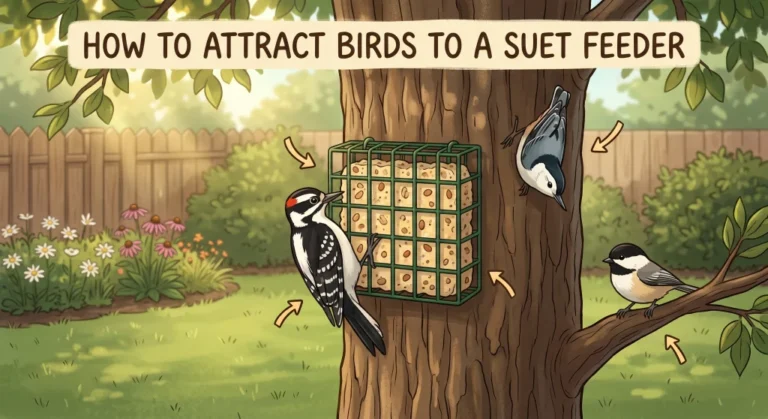
Northern Cardinals are larger than many birds that use narrow tube feeders, and small perches can make those feeders awkward for them to use. A tube feeder with a wider tray can be easier, while hopper and platform styles naturally provide more room to land and face the food. Woodpeckers, by comparison, are comfortable clinging to vertical surfaces and often use suet cages or other feeders that support that posture. If you want to broaden the mix of visitors, understanding how different bird feeder types accommodate different birds is more useful than assuming one feeder should serve everything.
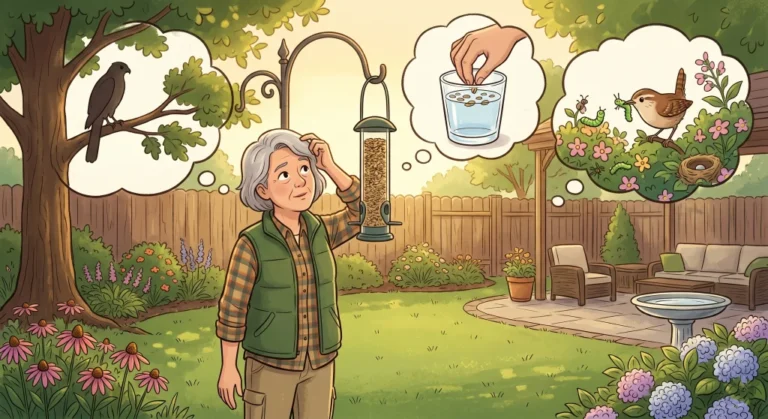
Food is not the only reason birds visit a yard. A clean source of fresh water can attract species that have little interest in the seed you are offering, including birds that feed mostly on insects or fruit. A simple bird bath therefore complements a feeder rather than replacing it, especially when it is kept shallow, clean, and easy to approach. Whatever setup you use, regular cleaning matters because wet seed, droppings, and dirty water can quickly turn a useful feeding area into a poor one.

ADJUSTABLE DESIGN & DURABLE CONSTRUCTION: Smart design to adjust the height to control the size of visiting birds. The rust-proof metal base can maintain a better balance even in the windy weather. THE SQUIRRELS WILL HATE IT: The special system in the top will keep spinning if squirrels sit on it, which helps to keep them away.
Check on AmazonIf you click this link and buy, we earn a commission at no additional cost to you.
Placement: Keep Cover Close Without Creating an Ambush Point
Small songbirds have to feed while still watching for predators. A titmouse or chickadee may grab a sunflower seed and carry it back to a branch rather than sit exposed on the feeder while opening it. That is why a feeder with useful cover somewhere nearby often feels very different to a bird than the same feeder standing alone in the middle of open ground.
As a practical starting point, I like to look for a spot with shrubs, branches, or other usable cover within a short flight rather than placing the feeder far out in an exposed lawn. A range around ten to fifteen feet from cover can work well in many yards, but it is not a universal measurement. The right distance depends on the shape of the yard, the type of cover available, and whether that cover also gives cats or other predators a concealed approach.
What matters is the tradeoff. Birds benefit from having a quick retreat, but a feeder pressed directly against dense ground-level cover can also give a stalking cat somewhere to hide. I would rather treat ten to fifteen feet as a useful starting range and then watch the actual yard than pretend one number creates the perfect placement everywhere.
Key point: Windows add a separate safety problem. A commonly used placement guideline is to put feeders very close to the glass, within about three feet, or well away from it, around thirty feet or more. Close placement can reduce the speed a bird builds before reaching the window, while greater distance reduces the chance that normal feeder departures end at the glass. Window treatments that make the glass visible to birds are still worth using because feeder distance alone cannot eliminate every collision risk.

Backyard Expressions' Resin Birdbath This beautiful resin birdbath with the artistic bird perched on its edge is the perfect accessory for bird watchers, ture lovers and gardeners alike. Outdoor enthusiasts know that a water feature like the Backyard Expressions Resin Bird Bath not only brings birds flocking, but will impress your neighbors as well!
Check on AmazonIf you click this link and buy, we earn a commission at no additional cost to you.
Timing: Natural Food Changes How Fast a Feeder Gets Noticed
Even with a sensible seed and good placement, a new feeder can be discovered quickly in one season and slowly in another. That does not mean there is one best month to put up a feeder. Natural food, weather, migration, breeding activity, and the species already present around your home all change how much attention birds give supplemental food.
Summer can be slow at some seed feeders because birds may have abundant insects, seeds, fruits, and other natural foods available. Breeding birds may also spend much of their time collecting the foods their young need rather than visiting the same seed source repeatedly. That pattern varies by region and species, though, and plenty of birds still use feeders in warm weather. A quiet summer feeder is therefore a reason to consider natural food availability, not proof that something is wrong.
When natural food is abundant, a new feeder may simply have more competition for attention. As conditions change and some natural foods become less available, feeder activity can increase, but fall is not automatically faster everywhere because many seeds and berries are also abundant then. I would use season to adjust expectations rather than predict a fixed discovery speed. If the setup is otherwise sound, give local conditions time to change before you start replacing equipment unnecessarily.
The Visibility Test and the Ground-Scatter Trick
Seeing birds in nearby trees while the feeder remains untouched tells you something useful, but not as much as people sometimes assume. The birds may have noticed the feeder, or they may simply be using the same cover they always use without paying much attention to it yet. Either way, their presence confirms that you have local bird activity to work with, so I would focus next on making the food easier to notice and access rather than immediately moving the whole setup.
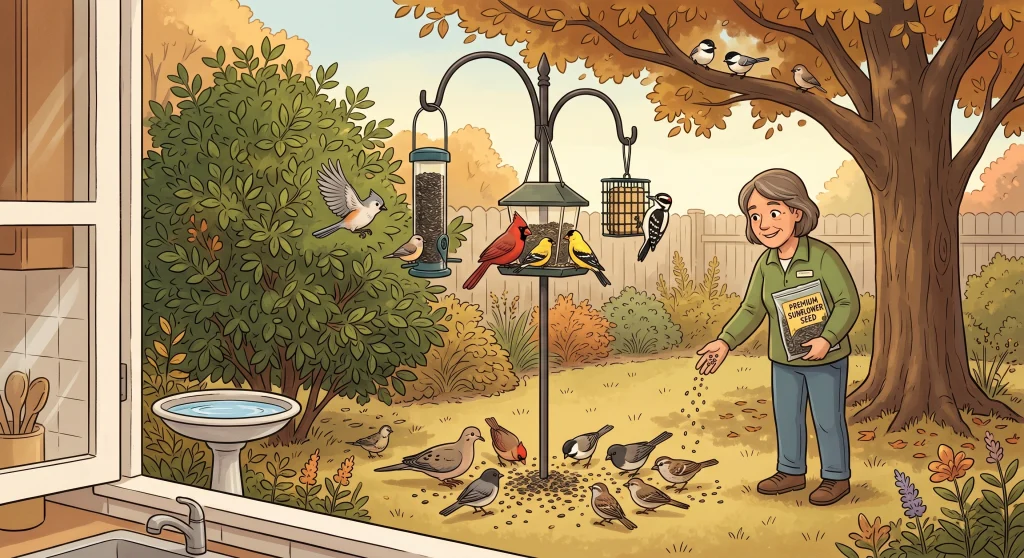
One simple way to make a new feeding area more obvious is to put a small amount of seed where ground-feeding birds naturally forage. That is less about sending a guaranteed safety signal and more about increasing the visible feeding opportunity around a feeder that may otherwise be easy to overlook. Mourning doves, juncos, and many sparrows are comfortable taking food from the ground, so scattered seed gives those species a way to use the site without first landing on unfamiliar hardware.
Pro Tips: Scatter a modest amount of black oil sunflower seed or a mix containing white millet on the ground directly below or near the feeder. Ground-feeding birds such as juncos, mourning doves, and sparrows may notice loose seed more readily than a new hanging feeder. Use only enough to make the food visible, then remove wet or uneaten seed rather than letting it accumulate on the ground.
Scattering a little seed around a new feeder is a practical way to make the food source easier to discover, and it is an approach I have recommended when a perfectly reasonable setup sits untouched. I would not expect one bird landing to make the rest of the flock follow immediately. The useful part of the trick is simply that it adds another feeding surface while local birds are still becoming familiar with the new station.
If the feeder is still sitting untouched, resist the urge to replace everything at once. Work through a short troubleshooting pass, then give the setup enough time to show whether the change made a difference:
- Empty out any cheap red filler grain and replace it with pure black oil sunflower seed.
- Ensure your hardware style actually matches the birds you want to attract.
- Check your distance to the nearest tree or dense shrub to ensure it is around ten to fifteen feet away.
- Scatter a visible layer of seed directly onto the ground to encourage early foragers.
- Adjust your expectations based on the current season and natural food availability.
- Commit to keeping the station clean and full for at least a month to build local trust.
Final Thoughts: The Value of Routine
A new feeder usually benefits from patience and reasonable consistency, but backyard birds are not dependent on a single feeder for every meal. They use multiple natural and supplemental food sources, and temporary interruptions do not mean they will permanently abandon your yard. Keeping fresh food available on a predictable basis simply gives birds more opportunities to discover the station and decide that it is worth including in their normal foraging routine.
Start with a widely accepted seed, make sure the feeder can actually accommodate the birds you hope to see, and place it where nearby cover and predator safety are both considered. If the feeder remains invisible, a small amount of scattered seed can give ground-feeding birds another way to discover the site. After that, observe before making the next change. Birds do not follow a schedule, but a sensible setup that stays clean and useful gives them a good reason to investigate it when local conditions are right.

The Solution4Patio Cedar Bird Feeder provides a covered outdoor feeding area made from weather-resistant cedar wood. Its 3.2-pound seed capacity reduces frequent refilling, while clear panels make the remaining seed easy to monitor. A powder-coated mesh tray promotes drainage and helps keep seed from sitting in accumulated moisture.
Check on AmazonIf you click this link and buy, we earn a commission at no additional cost to you.
FAQs
⏳ How long before birds come to a new feeder?
It can take anywhere from a few days to several weeks, and sometimes longer. Season can affect the wait, but there is no fixed rule that fall is always faster than summer because natural food availability and local bird activity vary by region.
🌻 What seed is best to start with?
Black oil sunflower seed is one of the strongest general-purpose starting choices for a seed feeder. Its relatively thin shell and energy-rich kernel make it useful to many common backyard seed-eating birds, though no single seed attracts every species.
🌳 Does placement really matter?
Yes, placement matters because birds need both access to cover and protection from predators. Around ten to fifteen feet from useful cover is a practical starting range in many yards, but adjust it to the actual vegetation, cats, windows, and layout around your feeder.
👀 Why are birds sitting in the trees but avoiding the food?
Their presence tells you birds are active nearby, but it does not prove they have already inspected the feeder. Scattering a small amount of seed on the ground can make the food easier for ground-feeding species to notice while other birds become familiar with the new setup.
☀️ Should I worry if my feeder is empty during the summer?
Summer feeder activity can drop in some yards when insects, seeds, fruits, and other natural foods are abundant. It also varies by region and species, so a quiet summer feeder is not automatically a problem if the food is fresh and the setup is otherwise sound.