Why Your New Feeder Starts Out Invisible
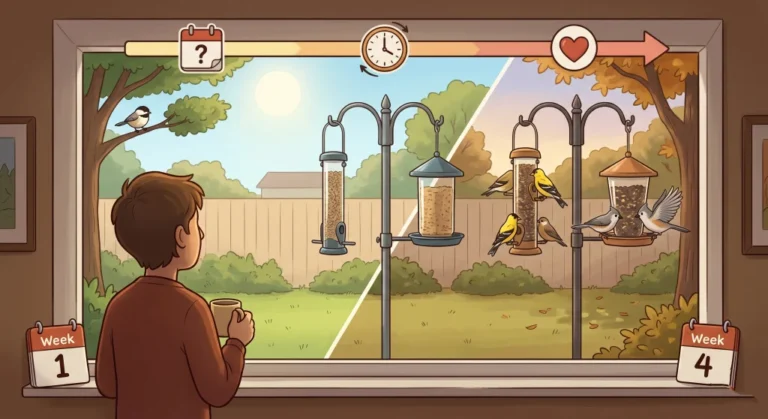
When you first set out to figure out how to attract birds to a new feeder, the natural assumption is that the food will do all the work. You fill the tubes, step back, and expect the local flock to arrive by the afternoon. In practice, discovery is only the first hurdle. Birds also have to decide that approaching the new setup is worth the risk, and different species can reach that point at very different speeds.
A feeder is not literally invisible, and birds do not all react to new objects the same way. Some familiar backyard species investigate changes readily, while others spend more time using nearby trees, shrubs, fences, or other cover before coming closer. That is why two identical feeders filled with the same seed can get completely different results in two neighboring yards.
The useful goal is not to force birds past some imaginary fear barrier. It is to remove as many reasons for hesitation as you can while making the food easy to find. It helps to understand the broader mechanics of how to attract birds in general, but a brand-new installation deserves a little extra attention to visibility, cover, and fresh food during the first stretch.
Make the New Feeder Easier to Notice
One of the most common things I see with a new feeder is a perfectly stocked food source that does not stand out much from the rest of the yard. A hanging tube or hopper may be obvious to us, but birds are not searching the landscape for a product shape. What matters at first is making a familiar food source easy to notice while the feeder itself is still new.
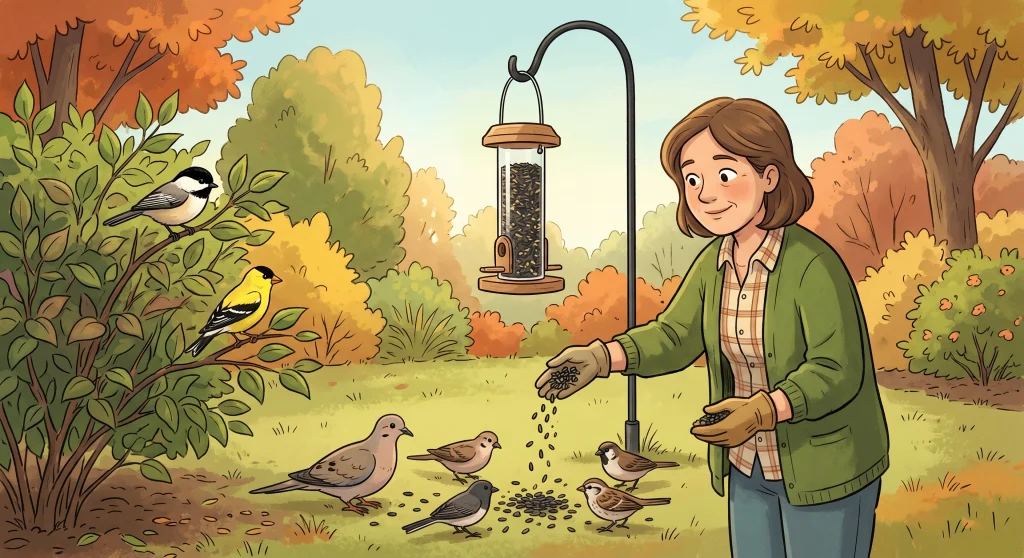
A small amount of seed scattered on the ground directly below or close to the feeder can help with that. Ground-feeding birds such as juncos, mourning doves, and many sparrows may find it, but you do not need to assume they are signaling other birds or acting as scouts. The practical benefit is simpler: visible food gives birds another way to discover that this new spot contains something worth checking.
Field Note: I used to hear from customers who had bought a good feeder and fresh seed but still had no activity. One of the first things I would ask was whether any food was visible outside the feeder itself. In plenty of those cases, putting a small amount of seed where birds could notice it gave the setup a better chance to be discovered without changing everything else at once.
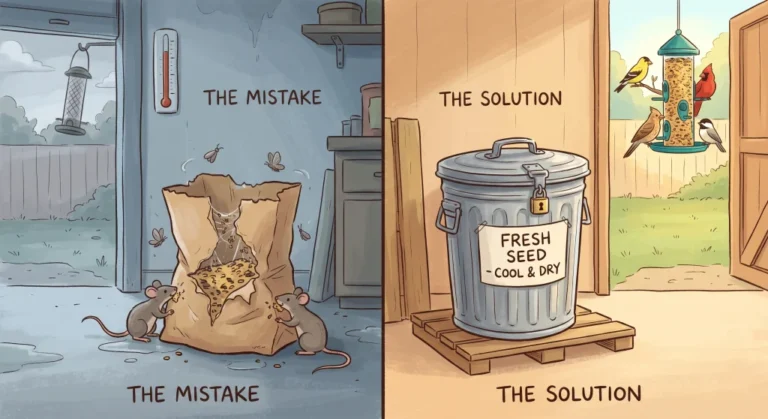
You do not need to keep feeding on the ground once the station is getting regular use. During the early stage, scatter only a small amount that can be eaten quickly, and do not let uneaten seed build up, get wet, or sit underneath the feeder. Ground waste can attract rodents and creates another cleanup problem, so this is a temporary visibility tool, not a permanent pile of seed.

Wagner's Four Season Sunflower Seed is 100% black oil sunflower seed. Sunflower seed is the favorite seed of most wild birds. It is high in energy and has a thin shell making it easy for all birds to consume. Use tray feeders or hopper feeders to attract sunflower loving songbirds. Cardinals, Chickadees, Finches, Nuthatches, Woodpeckers and much more. Trust your backyard birds to the experts at Wagner’s.
Check on AmazonIf you click this link and buy, we earn a commission at no additional cost to you.
Placement Rules for the First Two Weeks
Location matters a lot when a feeder is new because birds need both a reason to approach and somewhere nearby to retreat. A useful starting point is roughly ten feet from a tree, shrub, hedge, or other cover rather than treating ten to fifteen feet as a universal rule. The right distance still depends on the shape of the yard, predator pressure, squirrels, and any nearby windows.
Useful cover gives small birds a place to pause between feeding visits and a quick escape route if a hawk passes through. At the same time, pushing the feeder directly into dense vegetation can create hiding places for cats and easy jumping points for squirrels. The best spot is usually a compromise rather than the most open or the most sheltered location available.
At the store, people often brought me photos of their yards and wanted one exact spot circled. I usually looked first for a position just outside useful cover where birds could stage before approaching without putting the feeder right against a bush. If a window is close to that location, collision safety has to be part of the decision too. If you want a deeper look at all the placement factors that affect an established setup, I highly recommend reviewing the core principles of how to attract birds to a feeder.
Placing a brand-new feeder in the exact dead center of a large, empty backyard because it looks nice from the kitchen window. The birds will view the open flight path as an unacceptable risk for an unproven food source.
Placing the feeder near the edge of the yard, about twelve feet away from a thick lilac bush. The birds can use the bush as a staging area to observe the new feeder in total safety before making their move.
Treat that twelve-foot example as a starting point, not a measurement you have to reproduce. Watch how birds use the cover already in your yard, then adjust the feeder if the approach remains exposed, a cat can hide underneath it, squirrels can launch from nearby branches, or the window position creates a collision hazard.
Why Nearby Feeders Can Change Discovery Time
One factor that is easy to miss is how much feeder activity already exists around your neighborhood. Birds that regularly use feeding stations nearby already have experience finding food around homes, while birds in an area with little supplemental feeding may have fewer reasons to inspect a new setup quickly. Research on novel feeders has found that nearby feeder experience can shorten the time it takes birds to locate a new food source.
That helps explain why feeder discovery can look so inconsistent from one yard to the next. Your neighbor may put up a feeder and see activity almost immediately while yours sits quiet even though the seed and feeder type are similar. The difference can come from the birds already moving through each property, the surrounding habitat, local predators, and whether feeding stations are already part of their normal foraging landscape.
If you know someone nearby with an established feeder, the useful lesson is not that you need to move a tray back and forth between properties. It is simply a sign that feeder-using birds are already present in the immediate area. In that situation, I would focus on making your own station easy to notice, keeping the seed familiar and fresh, and giving birds a safe approach rather than constantly changing the setup.
If there are few or no feeders nearby, give the process more room to breathe. Keep the location consistent long enough for birds to discover it, use a seed that common local feeder birds readily recognize, and avoid making several changes every few days. You are trying to become another reliable stop in the area, and that usually comes from consistency rather than a one-week trick.

Made from high-quality recycled plastic, this bird feeder withstands rain snow sunlight. It ensures durability without denting, cracking, or breaking, making it ideal for year-round use.
Check on AmazonIf you click this link and buy, we earn a commission at no additional cost to you.
Timeline by Season: How Long It Actually Takes
There is no reliable seasonal countdown for a brand-new feeder. The same setup can be discovered in a short time in one yard and take much longer in another because local species, weather, natural food, habitat, and nearby feeder activity all change the picture. Season matters, but it is a factor that changes the conditions around the feeder, not a stopwatch.
Natural food is one reason feeder traffic can shift through the year. Late summer and early fall, for example, can bring abundant seeds, berries, and insects in many regions, so some birds may spend less time at feeders even though the setup is perfectly usable. In other places or during unusual weather, the pattern can look completely different.
Cold weather can make supplemental food more valuable when natural food becomes harder to reach, but even winter does not guarantee instant discovery. Spring brings changing diets, nesting behavior, and migration, while summer can bring both plenty of natural food and active feeder visitors depending on the species. I would use the season to set expectations, not to promise a number of days.
| Season Setup | What Usually Changes | What to Watch For |
|---|---|---|
| Fall (Sept – Nov) | Natural seeds, fruit, and migration can change which birds are moving through the yard. | Traffic may rise or fall quickly, so judge the setup by fresh seed, safe placement, and visible local bird activity rather than a fixed deadline. |
| Winter (Dec – Feb) | Cold, snow, and shorter days can make accessible supplemental food more valuable in many regions. | Keep the feeder stocked with dry, fresh seed and watch whether severe weather is changing when birds are active. |
| Spring (Mar – May) | Migration, nesting, and greater insect use can change both the species present and what they want to eat. | Do not assume lower seed use means the feeder is failing if birds are active elsewhere in the yard. |
| Summer (Jun – Aug) | Insects, seeds, berries, and other natural foods can be abundant, while heat and humidity can spoil feeder seed faster. | Fill lightly while traffic is low, replace damp or stale seed, and expect activity to vary by species and region. |
The table is useful for diagnosing conditions, not predicting an arrival date. If the seed is fresh, the feeder is safely placed, and local birds are present, a quiet week can still be normal. Change something when you have a specific reason, not simply because a seasonal average says the birds should already be there.
When to Worry versus When to Keep Waiting
Patience matters when you are waiting for birds to use a new feeder, but patience does not mean ignoring obvious setup problems. If several weeks pass with no activity, use that as a reason to inspect the feeder and the surrounding yard rather than as proof that something is fundamentally wrong. The goal is to find a specific problem before you start moving the feeder, changing the seed, and resetting every variable at once.
There are specific signs that indicate you need to make an adjustment rather than just waiting longer. If you observe any of the following conditions, it is time to intervene:
- The seed has become wet, clumped, sprouted, musty, or otherwise stale. Replace it instead of topping it off with fresh seed and leaving the old material buried underneath.
- An outdoor cat regularly patrols, crouches, or waits directly beneath the feeder or in the cover birds would use to approach it.
- The mix contains a large amount of seed that the birds in your area are leaving behind. A simpler, familiar seed such as black oil sunflower can remove one more variable while the feeder is new.
- The feeder is positioned near reflective glass without a window-safety plan. Treat that as a collision risk that needs correcting, not as evidence that birds are simply afraid of the reflection.
If none of those red flags are present and the seed remains dry and fresh, resist the urge to rebuild the whole setup every few days. Let birds get used to a consistent location, keep only a reasonable amount of food out while traffic is low, and watch for activity in nearby cover. A feeder can be discovered before it becomes a regular stop.

Wild birds spend much of their day looking for food. It takes a lot of energy to fly, so they're always looking for their next meal. Birds will frequent your feeders more often and stay longer if you provide a consistent, reliable source of high-energy seeds and blends from Kaytee.
Check on AmazonIf you click this link and buy, we earn a commission at no additional cost to you.
Final Thoughts: The First Visitor Changes Everything
The hardest part of a new feeding setup is often the period when nothing seems to be happening. A quiet feeder makes it tempting to change the seed, move the pole, add another feeder, and start over all at once. From the patterns I have watched repeat, a better approach is to keep the useful basics steady: fresh food, sensible cover, a safe location, and enough time for local birds to find it.
That first chickadee, titmouse, finch, or sparrow visit is encouraging because it tells you the feeder has been discovered, but one visit does not instantly turn it into a regular stop. Repeated safe feeding visits are what matter. If you want a deeper look at the specific variables that influence this waiting period, read my detailed guide on how long it takes for birds to find a feeder to set your expectations right.

We offer a premium quality birdseed free of milo, wheat, canary seed, or other fillers. It's also made with over 60% Sunflower oil seeds. No cheap filler seed means better quality for your garden birds!
Check on AmazonIf you click this link and buy, we earn a commission at no additional cost to you.
FAQs
🧭 Do birds smell the new seed to find the feeder?
Do not rely on smell as the way a seed feeder will be discovered. Birds have more varied olfactory abilities than the old claim that they all have a poor sense of smell suggests, but for a backyard seed feeder the practical priorities are visibility, familiar food, location, and learned feeding behavior.
🌧️ Should I change the seed if no birds have eaten it yet?
Change it when the seed becomes damp, clumped, musty, moldy, rancid, or obviously stale rather than following a universal number of days. While the feeder is still quiet, filling it lightly makes it easier to keep the food fresh instead of throwing away a full tube that sat too long.
🐿️ Will a squirrel finding the feeder first scare the birds away?
Not necessarily, but a squirrel that monopolizes the feeder can reduce access and keep smaller birds waiting nearby. Treat repeated squirrel visits as a setup problem to manage with placement or a baffle, not as a useful signal that advertises the feeder to birds.
🌳 Does the color of the new feeder matter?
For a typical seed feeder, color is usually much less important than the food, access, placement, and safety of the location. I would not replace an otherwise suitable feeder just because the birds have not responded to its color.
🦅 Are birds avoiding my new feeder because of hawks?
They can reduce or pause feeder activity if a hawk is hunting regularly around the station. If that pattern continues, taking the feeder down temporarily can let smaller birds disperse and may encourage the hawk to hunt elsewhere before you put the feeder back.