

The Summer Watering Dilemma
When warm weather settles in, one question I heard repeatedly at the store was how to deal with mosquitoes in a bird bath without creating a new problem for the birds using it. That concern is reasonable. Bird baths are small containers of water, and if that water sits long enough, some common mosquitoes can use them for their aquatic life stages.
The reaction I often saw was to remove the water altogether. People would flip the basin over for the hottest part of the season because they assumed the only choices were standing water or mosquitoes. In practice, regular maintenance gives you a much better middle ground.
Fresh water is worth keeping available. If you are working through the basics of how to attract birds to your property, a clean bird bath can bring in species that may never touch your seed feeders, and water becomes especially useful during hot, dry weather.
Note on timing: Mosquito season varies widely with climate, rainfall, and local species. Instead of relying on a fixed month, start paying closer attention to standing water whenever mosquitoes become active in your area and temperatures are warm enough for larvae to develop.
The good news is that mosquito control around a bird bath is mostly a maintenance problem, not a chemical problem. Keep the basin from becoming a stable patch of stagnant water, remove eggs and larvae when you clean it, and you take away the conditions mosquitoes need to complete their life cycle.
Why Still Water Is the Problem
Mosquitoes need water for their immature stages, but different species do not all lay eggs in exactly the same way. Culex mosquitoes can lay floating egg rafts on standing water, while common container-breeding Aedes mosquitoes often place eggs on the inner wall of a container just above the waterline. Those eggs can remain attached until rising water covers them.
That distinction matters because the problem is bigger than surface tension alone. Moving water can make a bird bath less suitable for mosquitoes, but it is too strong to say that a female physically cannot lay eggs anywhere around moving water or that ripples will make her drown. The practical target is stagnant, undisturbed water that remains in place long enough for eggs, larvae, and pupae to develop.
This gives you two useful control points. You can make the basin less attractive by keeping the water moving, and you can physically remove developing mosquitoes by emptying and scrubbing the bath before they have time to mature. For a small backyard basin, I would rely on both ideas rather than treating either one as foolproof.
Field Note: One pattern I saw again and again was that people focused on what to add to the water before looking at how long the same water had been sitting there. A bath that is dumped, scrubbed, and refilled on a routine is much easier to manage than one left untouched until visible larvae appear.
Breaking the Surface: The Movement Solution
Keeping water moving is a useful way to make a bird bath less attractive as mosquito habitat. A bubbler, small fountain, agitator, or other device that keeps the surface disturbed can reduce the stagnant conditions mosquitoes favor. I treat movement as an extra layer of prevention, not as permission to leave the same water in the bowl indefinitely.
You do not need elaborate plumbing to create that movement. A small battery-powered or solar agitator can work in a shallow basin, and a dripper can keep the surface from sitting completely still. If you use a solar device, remember that its performance may drop in shade or cloudy weather, so check the bath itself rather than assuming the device is running continuously.
Movement also has a second benefit for the birds. Dripping, splashing, and rippling water can make a bath easier for birds to notice, which is why moving water is often useful when you are learning how to attract birds to a bird bath. Just keep the mosquito-control job and the attraction job separate in your mind: moving water helps with both, but clean water still requires regular dumping and scrubbing.
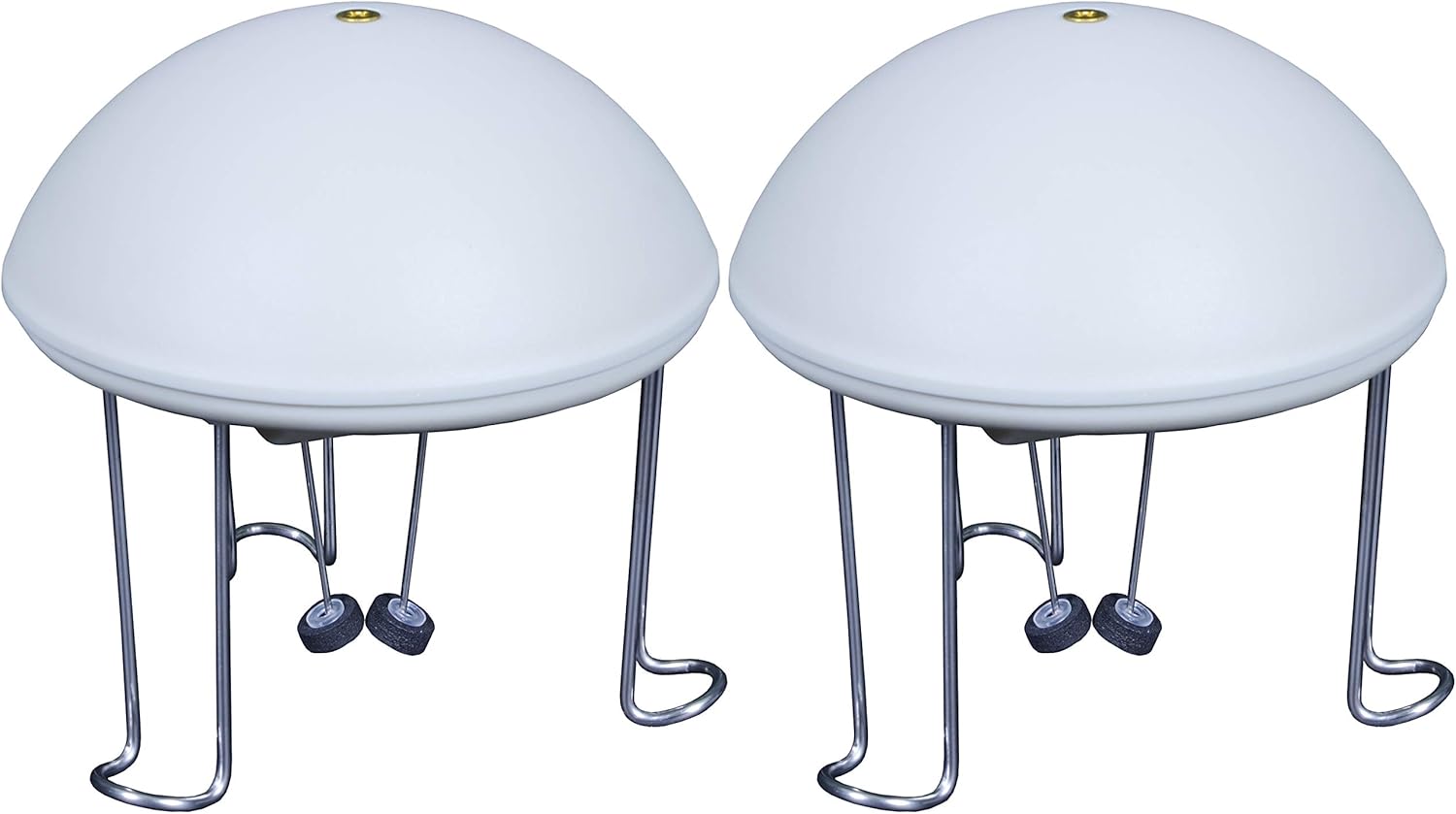
This compact 5.5 by 5.5 by 3 inch agitator creates continuous ripples that attract birds while preventing mosquitos from laying eggs in standing water. It runs silently on two D-cell batteries for up to two months of nonstop use, requires no wiring or plumbing, and works year-round including in heated winter bird baths.
Check on AmazonIf you click this link and buy, we earn a commission at no additional cost to you.
What to Do If You Already See Larvae
If you look into the basin and see active little “wigglers” moving through the water, mosquito larvae are a strong possibility. At that point, the easiest response is physical removal. Empty the bath completely onto dry ground where the water will soak in rather than collect in another container or puddle.
Do not stop at dumping the water. Some container-breeding mosquitoes lay eggs on the inner wall near the waterline, and those eggs can stick tightly to the surface. Scrub the sides, rim, and bottom with a stiff brush, paying particular attention to the old waterline, then rinse the basin before refilling it.
For routine cleaning, plain hot water and scrubbing may be enough for a lightly soiled bath. A diluted vinegar wash can also be used for cleaning, followed by a thorough rinse. Once the bath is clean, restart your maintenance routine and use water movement if you want an additional layer of mosquito prevention.
The 48-Hour Dump-and-Fill Rule
If you prefer a simple bird bath with no pump or agitator, an every-other-day dump, scrub, and refill routine is a conservative way to keep the water from becoming stable mosquito habitat. It also has a second benefit: birds leave feathers, droppings, seed debris, and dirt behind, so frequent water changes help keep the bath cleaner for them too.
The exact mosquito timeline is not one universal forty-eight-hour clock. Development speed varies by species and temperature, and some Aedes eggs can remain attached to a container even after it dries. Under favorable conditions, however, common container-breeding Aedes mosquitoes can go from egg to adult in roughly a week or a little longer, so changing the water every two days gives you plenty of opportunities to remove larvae before they mature.
The important part is replacing the old water, not merely adding more. Topping off a half-full bath leaves any larvae already in the basin exactly where they were, and it may also raise the waterline over eggs attached to the sides.
Noticing the water is low and spraying in enough fresh water to bring the level back up while leaving the old water and debris in place.
Emptying the basin completely, scrubbing or rinsing away debris around the sides and waterline, then refilling it with fresh water.
A hose can make the job fast, but pressure alone is not a substitute for scrubbing a dirty waterline. If the bath is easy to tip and refill, every other day is a practical routine. If that schedule is unrealistic, at minimum build a regular empty-and-scrub cycle into your week and check the basin for larvae between cleanings.
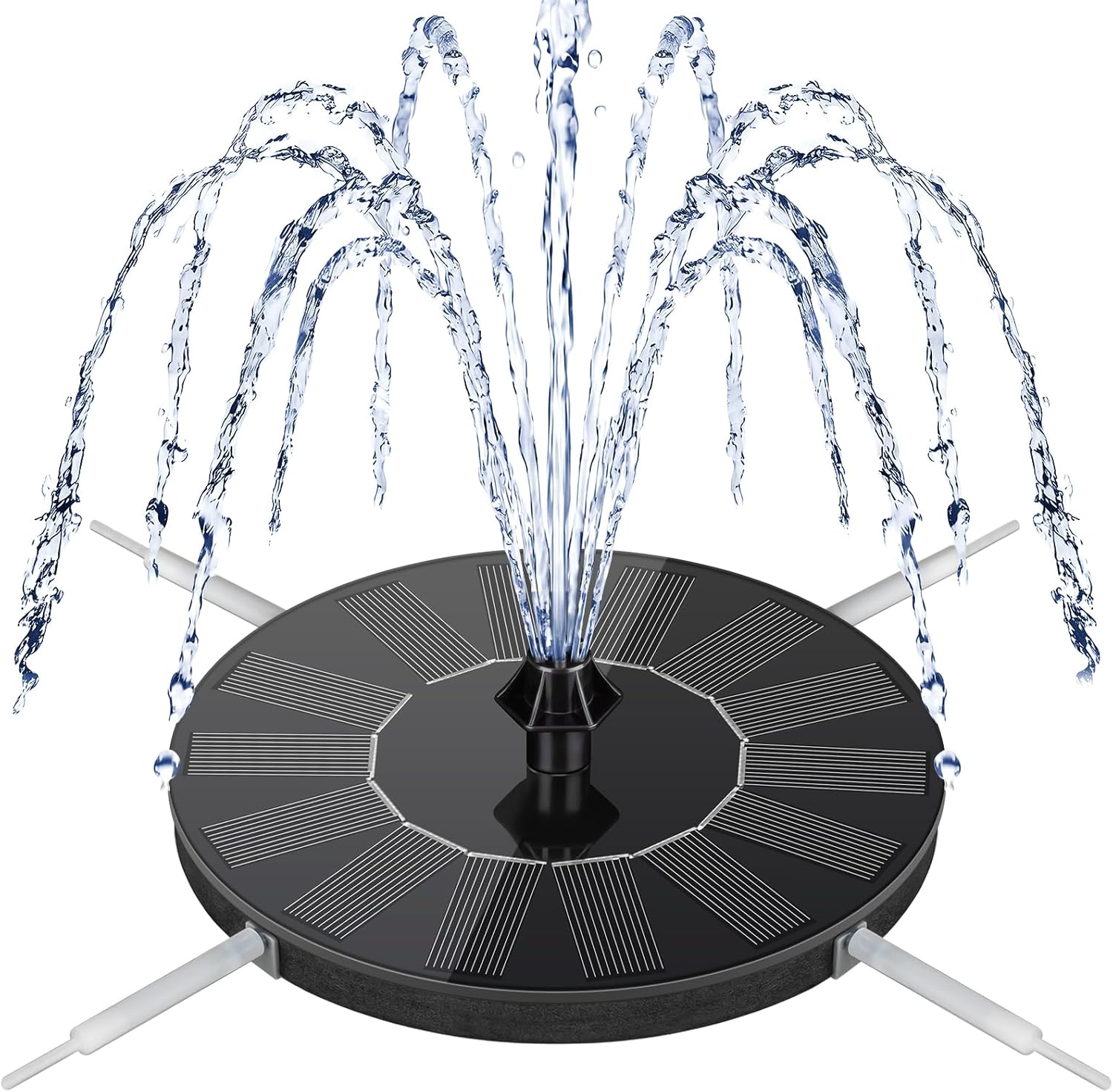
This solar-powered pump activates within 3 seconds of direct sunlight, shooting water 50 to 70cm high with no electricity or batteries required. It comes with 8 interchangeable nozzles and 4 adjustable brackets to customize spray patterns and prevent water from splashing outside the bath. Compatible with bird baths, fish tanks, and small ponds, though it requires direct sunlight to operate and does not function at night or on cloudy days.
Check on AmazonIf you click this link and buy, we earn a commission at no additional cost to you.
Are Mosquito Dunks Safe for Birds?
Sometimes you cannot dump and scrub a water feature on your normal schedule. That is where Bti products can be useful, but I would treat them as a targeted larval control rather than something every bird bath automatically needs.
Bti stands for Bacillus thuringiensis subspecies israelensis, a naturally occurring bacterium used as a mosquito larvicide. The EPA explains that Bti produces toxins that specifically affect the larvae of mosquitoes, black flies, and fungus gnats, and EPA-registered Bti products are used in many kinds of standing water, including bird bath water.
That does not mean every product can be tossed into every basin at any amount. Formulations and label directions differ. If you use Bti in a bird bath, choose an EPA-registered product whose label specifically allows use in bird bath water and follow the label rate rather than estimating a chunk size yourself.
This is especially useful when water cannot be dumped easily or when you will be away and the basin may sit longer than usual. In a small bath that you can empty in seconds, I still prefer fresh water and regular scrubbing as the first line of control. Bti is there when the maintenance schedule needs backup, not to replace basic sanitation.
| Control Method | How It Works | Best Use Case |
|---|---|---|
| The 48-Hour Flush | Frequently removes developing larvae and refreshes the water before it sits for long periods. | Small bird baths that are easy to empty, scrub, and refill. |
| Water Wigglers | Keeps the surface moving and makes the basin less suitable as stagnant mosquito habitat. | Anyone who wants an extra prevention layer that can also make the water more noticeable to birds. |
| Bti Mosquito Dunks | Uses a targeted biological larvicide to control mosquito larvae in standing water when applied according to the product label. | Water that cannot be emptied regularly, or periods when you will be away, using a product labeled for bird bath water. |
Regular maintenance is still the common thread in all three approaches. Movement reduces stagnant conditions, Bti can control larvae, and frequent dumping physically removes the problem, but none of them makes a neglected basin maintenance-free.
Final Thoughts: A Safe Summer Setup
You do not have to choose between offering birds fresh water and reducing mosquito breeding around your patio. The simplest setup is also the one I trust most: a shallow bath that is easy to empty, easy to scrub, and easy to refill before the water turns stagnant.
Add movement if it fits your setup, and use an appropriately labeled Bti product when regular emptying is not practical. The goal is not to make one gadget do all the work. Keep the water fresh, keep an eye on the basin, and remove developing mosquitoes before they have time to become adults.

This is the only product using BTI, a bacteria toxic exclusively to mosquito larvae and harmless to wildlife, pets, fish, and humans. Each application treats up to 100 square feet of surface water and remains effective for 30 days. EPA-labeled safe for organic gardening.
Check on AmazonIf you click this link and buy, we earn a commission at no additional cost to you.
FAQs
🦟 How fast do mosquitoes breed in a bird bath?
It varies by mosquito species and temperature. Under favorable conditions, common Aedes mosquitoes can develop from egg to adult in roughly seven to ten days, while eggs of some container-breeding species can persist on the basin wall until water covers them. Frequent dumping and scrubbing interrupts that development and removes eggs and larvae before they build up.
💧 Will a dripping hose prevent mosquitoes?
A steady drip or fountain can make the water less attractive as stagnant mosquito habitat, but I would not treat it as a guarantee. Keep the water moving if you can, then continue to empty and scrub the basin on a regular schedule.
🦅 Are Bti mosquito dunks safe for wildlife?
EPA describes Bti as a targeted larvicide whose toxins affect the larvae of mosquitoes, black flies, and fungus gnats, and registered Bti products include uses in bird bath water. Use only a product whose label permits that use and follow the label directions rather than assuming every dunk or dose is interchangeable.
🧪 Can I put vinegar in my bird bath to kill mosquitoes?
I would use vinegar as a cleaner, not as a mosquito treatment left in the drinking water. A diluted vinegar wash and a stiff brush can help clean the basin, but rinse it thoroughly before refilling with fresh water.
🌬️ Does shade make mosquitoes worse?
Adult mosquitoes often rest in cool, humid, shaded places, but moving a bird bath into harsh sun is not the main fix for mosquito breeding. In hot weather, shade can actually make a bird bath more comfortable for birds. Focus on fresh water, regular scrubbing, and preventing the basin from sitting stagnant.