Start With the Birds You Want to Feed
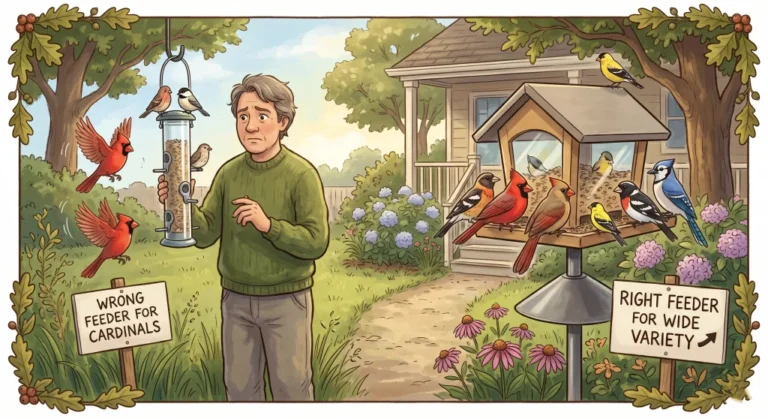
When beginners ask me what the best bird seed is, they usually expect one bag to attract every bird in the yard. The labels encourage that idea with broad promises and long species lists. A better decision starts with a simpler question: which seed-eating birds are already present, and where do they naturally feed?
Black oil sunflower is the most dependable broad starting point because its thin hull is accessible to many small and medium seed-eating birds. White proso millet is useful for juncos, towhees, doves, quail, and native sparrows that feed low or on the ground. Safflower is a more selective option for cardinals and several other thick-billed visitors, while nyjer seed is mainly for small finches using a dedicated feeder.
That does not mean every yard needs all four. Start with one food matched to the birds and feeder you have, offer a modest amount, and see what is eaten before adding another. A small trial bag tells you more about your local flock than the longest species list on a package.
Field Note: When a feeder is being emptied onto the ground, I look closely at what is left. Split sunflower hulls usually mean the kernels were eaten. Whole milo or oats suggest rejection, while intact white millet below a tube feeder may mean the food was offered in the wrong place for ground-feeding birds.

Wagner's Four Season Sunflower Seed is 100% black oil sunflower seed. Sunflower seed is the favorite seed of most wild birds. It is high in energy and has a thin shell making it easy for all birds to consume. Use tray feeders or hopper feeders to attract sunflower loving songbirds. Cardinals, Chickadees, Finches, Nuthatches, Woodpeckers and much more. Trust your backyard birds to the experts at Wagner’s.
Check on AmazonIf you click this link and buy, we earn a commission at no additional cost to you.
Read the Ingredient List Before You Buy
Price per pound tells you what the bag costs, not how much of it will be eaten. A low-cost mix can work when its main ingredients match the birds using your yard. An expensive blend can still create waste if it contains foods those birds ignore or if the pieces do not suit the feeder.
Read ingredients in order and distinguish useful food from ingredients that are frequently rejected in common backyard setups.
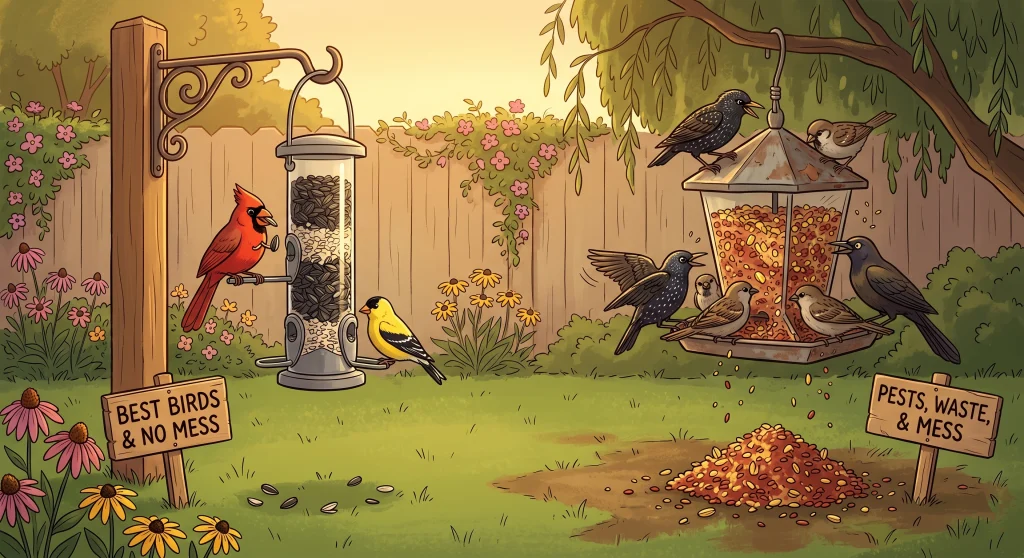
- Milo or Sorghum: Many feeder birds choose sunflower or white millet first, so reddish-brown milo often accumulates under mixed-seed feeders. Some ground-feeding species will eat it, which is why the result varies by region rather than making milo useless everywhere.
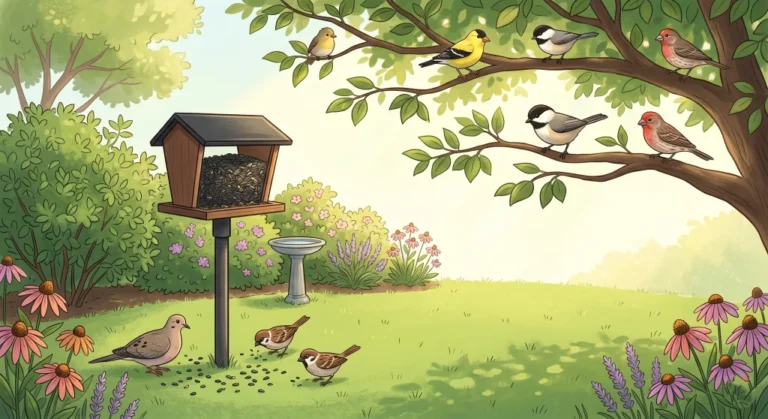
- White Proso Millet: This is not automatically filler. Juncos, towhees, doves, quail, cardinals, and many native sparrows use it readily when it is offered on the ground or in a low tray with good drainage. In a hanging tube feeder aimed at chickadees and nuthatches, the same millet may be swept aside.
- Red Millet, Golden Millet, Wheat, and Oats: These ingredients are frequently left behind by common feeder birds. A small amount is not proof that a mix is bad, but they should not dominate a bag unless you already know local birds eat them.
- Cracked Corn: Quail, doves, jays, crows, and other larger or ground-feeding birds may eat it. Corn can also attract raccoons, rats, starlings, and other heavy users, and wet or poorly stored corn carries a greater contamination risk. Offer only a small amount that can be cleared quickly.
What Sunflower Hulls Can Do to the Ground
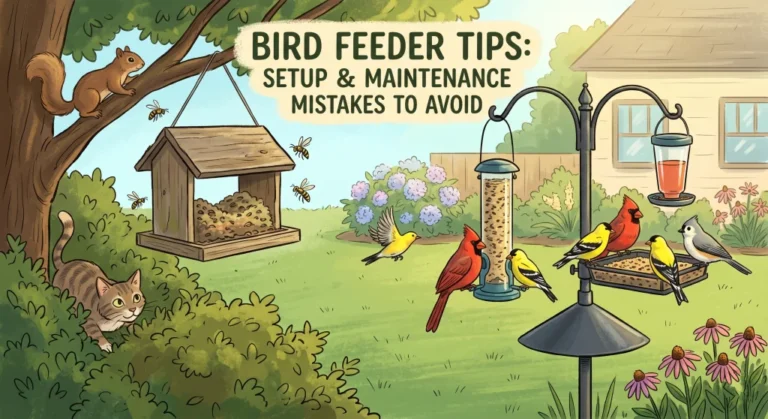
Sunflower hulls can build into a thick layer under a busy feeder. Compounds in the hulls may inhibit the germination or growth of some plants, but chemistry is not the only reason a bare patch develops. The hull layer can block light like mulch, squirrels and ground-feeding birds disturb the soil, and accumulated food and droppings can hold moisture.
Start by removing hulls before they form a mat. A catch tray can reduce the spread, and a feeder placed over a patio or another easy-to-clean surface keeps the debris out of a lawn or garden bed. Moving the feeder is an option when the ground needs recovery, but there is no reason to move it every year if cleanup is keeping accumulation under control.
If shell debris is the main concern, hulled sunflower seeds remove that particular byproduct. They do not make a feeding station waste-free. Birds can still scatter kernels, and the exposed food spoils faster when it becomes damp, so offer smaller amounts and protect it from rain.
Calculate the Cost per Eaten Pound
The most useful price comparison accounts for bag weight and the portion your birds actually consume. Use this calculation: cost per eaten pound equals bag price divided by the product of bag weight and the estimated fraction eaten. Compare bags of the same weight or include the weight in the math.
For example, imagine two ten-pound bags. An $8 mix with 60 percent eaten provides about six pounds of food, or $1.33 per eaten pound. A $14 hulled mix with 90 percent eaten provides about nine pounds, or $1.56 per eaten pound. In that example, the hulled food creates less shell debris, but it is not cheaper. Different prices and different rates of rejection can reverse the result.
The eaten fraction is an estimate, so use evidence from your own feeder. Empty sunflower hulls represent food that was consumed even though cleanup remains. Whole seeds piled below the feeder represent spilling or rejection. Damp clumps and sprouts point to weather exposure or overfilling rather than bird preference.
Key point: Buy a small bag first, offer a measured amount, and inspect what remains after several feeding days. The best value is the food your birds accept while it is still fresh, not the bag with the lowest price or the strongest no-waste claim.
A high-quality no-mess bird seed can justify its higher price on a deck or patio where cleanup matters. It still needs a real cost comparison, rain protection, and portions small enough to prevent exposed kernels from spoiling.

Our no-mess Whole Sunflower hearts are a high value bird feed - You aren’t paying for shells, dust, and debris that birds won’t eat and you will attract a vast variety of wild birds to your outside feeders.
Check on AmazonIf you click this link and buy, we earn a commission at no additional cost to you.
Matching the Seed to the Bird
Finding the top bird seed for your yard means matching food to the species present, the way they feed, and the feeder they can use. Beak shape matters, but so do feeder height, port size, natural food, and competition from other birds.
Black Oil Sunflower (The Broad Starting Choice)
If you want one broad starting food, black oil sunflower is difficult to beat. Its hull is thinner than striped sunflower, so chickadees, nuthatches, finches, cardinals, titmice, and several woodpeckers can reach the energy-rich kernel. It attracts squirrels as readily as birds, and the hulls require cleanup, so broad appeal comes with management costs.
Safflower (The Selective Trial)
Safflower has a thick shell that cardinals and grosbeaks can handle, and some chickadees, nuthatches, doves, and native sparrows also use it. Some squirrels, European Starlings, and other heavy feeder users avoid it, but that response is not universal and local animals may learn to eat it. A pure safflower seed strategy is best treated as a trial, not a squirrel-proof promise, and birds may need time to recognize the new food.

Wagner's Safflower Seed - Cardinals love it, squirrels don’t. Wagner's Safflower Seed is a great way to attract the birds you want - Cardinals, Chickadees, Titmice, Grosbeaks - and discourage the 'feeder hogs', like Grackles and Starlings, that keep them away. And best of all, squirrels don’t like the bitter taste so they will stay away as well.
Check on AmazonIf you click this link and buy, we earn a commission at no additional cost to you.
Nyjer (The Finch-Specific Option)
Nyjer is a tiny, oily seed produced by a daisy-like plant and heat-treated for import. Its size calls for a mesh feeder or tube with very small ports. American Goldfinches, Pine Siskins, redpolls, and other small finches often use it, but they may also choose sunflower hearts or black oil sunflower depending on season, local food, and individual flock preference.
If finches stop eating nyjer, freshness is one possibility rather than the only explanation. Check for a stale or rancid odor, damp clumps, blocked ports, and a feeder that needs cleaning. Confirm that finches are currently present in the area, then test a small fresh batch instead of refilling the entire feeder. Color alone is not a reliable pass-or-fail test.
| Seed Type | Primary Birds Attracted | Best Situation |
|---|---|---|
| Black Oil Sunflower | Chickadees, Titmice, Woodpeckers, Finches, Cardinals | The broadest starting point for a new feeding station when shell cleanup and squirrels can be managed. |
| Hulled Sunflower (No-Mess) | Many birds that already eat in-shell sunflower | Patios and decks where reducing hull debris matters and small, weather-protected portions are practical. |
| Safflower | Cardinals, Grosbeaks, Doves, Chickadees | Testing whether a thick-hulled food reduces pressure from squirrels or larger feeder crowds. |
| Nyjer | Goldfinches, Pine Siskins, Redpolls | Serving small finches with a clean mesh or small-port feeder when those species are locally present. |
| White Proso Millet | Juncos, Sparrows, Towhees, Doves, Quail | Low trays or ground-feeding areas where only a small daily amount is offered and cleaned up. |
Beyond the Bag: Seasons, Portions, and Regions
Even a well-matched food can become waste when it is offered in the wrong quantity or allowed to sit through wet weather. Use season and region as reasons to observe more closely, not as a rigid feeding calendar.
What to Prioritize by Season
Black oil sunflower remains useful throughout the year and is especially practical when birds are seeking energy-dense food in cold weather. Suet is a separate food category that may support woodpeckers and nuthatches, but it needs its own warm-weather handling. Offer nyjer when finches are present, and use safflower when you have a specific reason to test it. Neither becomes automatically better because spring or summer arrived.
How Much Seed to Put Out
A full feeder is not more useful when half the food becomes damp before birds reach it. Start with an amount your flock clears while it remains fresh, then adjust after rain, heat, humidity, or a change in traffic. Hulled sunflower needs smaller portions because the protective shell is gone. Ground-offered millet should be limited to what birds can clear that day so uneaten food does not accumulate.
A Note on Regional Differences
Regional bird communities change the answer. White proso millet may draw quail in one yard and native sparrows or juncos in another. Finches may concentrate on nyjer at one feeder and sunflower hearts at the next. Humid and rainy locations require smaller exposed portions than dry locations, but any feeder can collect moisture after a storm. Let local species, actual consumption, and weather decide the menu rather than copying a setup from another part of the country.
More Detail on Each Food Type
Once you know whether your priority is broad appeal, finches, reduced hull debris, or testing a less squirrel-friendly option, the next decision becomes much narrower. These pages cover the trade-offs and handling needs of each major category without requiring one bag to solve every feeding problem.
| Topic | What You’ll Learn |
|---|---|
| Sunflower Bird Seed | The differences between black oil, striped, and hulled sunflower, including shell debris and freshness trade-offs. |
| Safflower Bird Seed | How to introduce safflower, which birds may accept it, and why deterrence varies by yard. |
| Nyjer Bird Seed | How freshness, feeder condition, local finch presence, and alternative foods affect nyjer use. |
| Suet for Birds | How this separate high-energy food differs from seed and what changes in warmer weather. |
| No Mess Bird Seed | How to compare shell-free ingredients, reduced hull debris, faster spoilage, and real feeding waste. |
Final Thoughts: Watch the Ground
The material under a feeder is a simple record of what happened above it. Split hulls mean birds reached the kernels. Whole seeds suggest rejection, spilling, or a mismatch between the food and feeder. Sprouts point to moisture and accumulation, while damp clumps mean the portion or weather protection needs attention.
Change one variable at a time. Try a smaller bag of a single seed, keep the feeder type and location steady, and compare what is eaten over several days. The best choice is not the food that attracts the most impressive species list. It is the food your local birds can use safely with a level of cost, cleanup, and maintenance you can sustain.

This tiny delicacy is used in Finch feeders which have smaller holes and tiny perches - perfect for the Finches but discouraging to larger birds. Wagner’s Nyjer Seed is the perfect choice for nurturing Finches with its high fat and protein content.
Check on AmazonIf you click this link and buy, we earn a commission at no additional cost to you.
FAQs
🐦 What is the absolute best seed for a bird feeder?
There is no absolute winner for every yard. Black oil sunflower is the broadest starting choice for many seed-eating birds because its thin hull is easy to open. White proso millet is often better for ground feeders, while nyjer and safflower serve narrower situations.
💰 Is expensive bird seed actually worth it?
Sometimes, but the label and actual consumption matter more than the premium claim. Divide the bag price by the estimated pounds your birds eat, and include the value of reduced cleanup if that matters to you. An expensive blend can still be poor value when birds reject much of it.
🌱 Why is the grass dying under my bird feeder?
Accumulated sunflower hulls contain compounds that may inhibit some plants, and a thick layer can also block light and hold moisture. Rake or sweep the area, use a catch tray or easy-to-clean surface, or switch to hulled sunflower when reducing shell debris is worth the higher price and faster spoilage risk.
🐿️ Is there a bird seed that attracts most birds but stops squirrels?
No seed attracts most birds while reliably stopping every squirrel. Safflower is worth testing because cardinals and several other birds use it while some squirrels avoid it. Local squirrels may learn to eat it, so physical exclusion remains more dependable than food choice alone.
🟡 Why are finches not eating my nyjer seed?
Old or damp nyjer is one possibility, but color alone does not prove it is stale. Check for rancid odor, clumps, blocked ports, and a dirty feeder, then try a small fresh batch. Finches may also be using natural food or preferring sunflower in your area at that time.