Why Suet Adds a Different Kind of Feeder Traffic
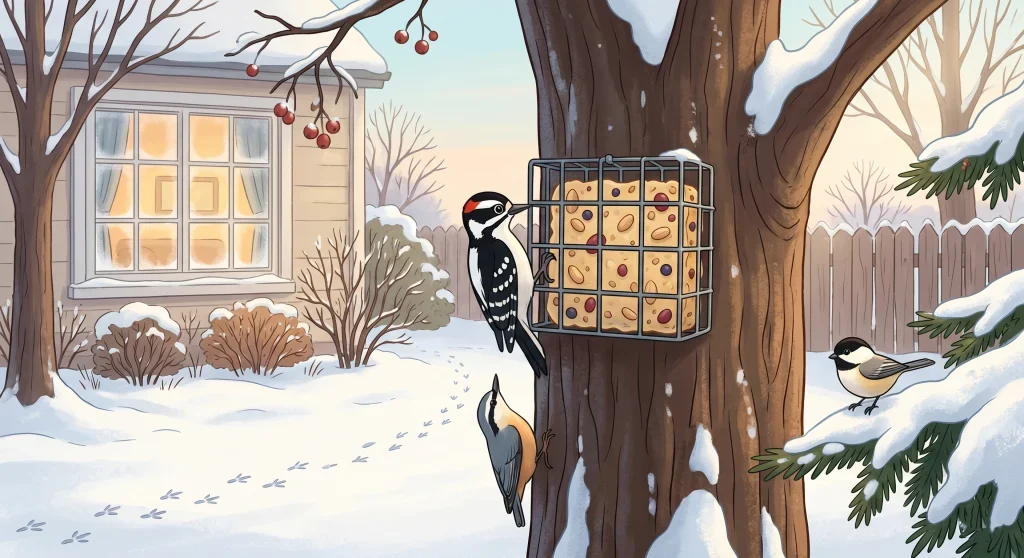
Most backyard feeding starts with seed, but suet gives insect-eating and bark-foraging birds another reason to stop. Cornell lists woodpeckers, nuthatches, chickadees, jays, and starlings among the birds particularly attracted to suet, with wrens, creepers, kinglets, Cardinals, and some warblers visiting more occasionally.
That is the appeal for me. A seed feeder and a suet feeder do not simply offer two flavors of the same food. They can pull in birds with different feeding habits, especially species that spend much of their time on trunks and branches.
Suet is also energy-dense, which makes it especially useful in cold weather when birds have high metabolic demands. That is one reason it fits naturally into how to attract birds in winter. But I would not call it a daily necessity or imply that wild birds depend on a backyard cake for survival. It is supplemental food.
The tradeoff is that fat is much less forgiving than dry seed in warm conditions. Before buying a stack of cakes, understand what kind of suet you are using, how quickly birds are eating it, and whether the weather is warm enough to soften or spoil it.
What Is Suet Exactly? Raw, Rendered, and Commercial Cakes
Technically, suet is the hard fat around the kidneys and loins of cattle or sheep. In backyard feeding, the word is also used more broadly for rendered animal-fat products and commercial cakes made with fat plus ingredients such as cornmeal, peanuts, fruit, or dried insects.
Raw suet is the least forgiving form. Cornell warns that it becomes rancid quickly when temperatures rise above freezing, so I reserve raw butcher suet for genuinely cold winter conditions.
Rendering means melting the fat and removing impurities before it cools again. Rendered fat keeps better than raw suet, which is why commercial cakes are easier to handle. But rendering does not make fat permanently shelf-stable outdoors. Commercial cakes can still soften, become rancid, or support microbial growth when they stay warm for too long.
| Suet Type | Best Use Case | Main Limitation |
|---|---|---|
| Raw Butcher Suet | Cold winter conditions | Turns rancid quickly when temperatures rise above freezing |
| Rendered Commercial Cakes | Cool-weather everyday feeding | Can still soften or spoil in warm weather |
| Heat-Resistant / No-Melt Cakes | Warmer conditions when the product remains firm and fresh | Still needs monitoring for softness, oiliness, rancidity, and spoilage |
For a first setup, a reputable commercial cake is the easiest place to start because the portion is predictable and it fits a standard cage. I still buy only what I can store properly and use while fresh, especially when the cake contains corn, cornmeal, or peanuts.

Pack of 10 premium melt-resistant suet cakes, each 4.5 x 4.5 x 1 inch. Attracts Woodpeckers, Cardinals, Chickadees, Blue Jays, Nuthatches, and more. Made with beef suet, cracked corn, millet, and pecan pieces. Easy-open, no-mess recyclable packaging. Made in the USA.
Check on AmazonIf you click this link and buy, we earn a commission at no additional cost to you.
Which Birds Actually Eat Suet?
Woodpeckers are the birds most people associate with suet, and for good reason. Downy and Hairy Woodpeckers are familiar suet visitors where they occur, and larger woodpeckers may use suet feeders that give them enough room and support.
Nuthatches and chickadees are also regular suet users. Cornell lists jays and starlings as common visitors too, while wrens, creepers, kinglets, Cardinals, and some warblers are more occasional. The exact mix in your yard depends on geography, season, habitat, and which species already move through the area.
That is why I do not promise that hanging one cake will suddenly produce every suet-eating species on a checklist. The food cannot attract a bird that is not already using the surrounding habitat. What suet can do is give those birds a concentrated food source once they discover the station.
A good suet feeder makes the food easy for clinging birds to reach while keeping the cake contained. Some designs also provide a tail prop for larger woodpeckers, while upside-down designs can favor agile birds such as woodpeckers and nuthatches over starlings.
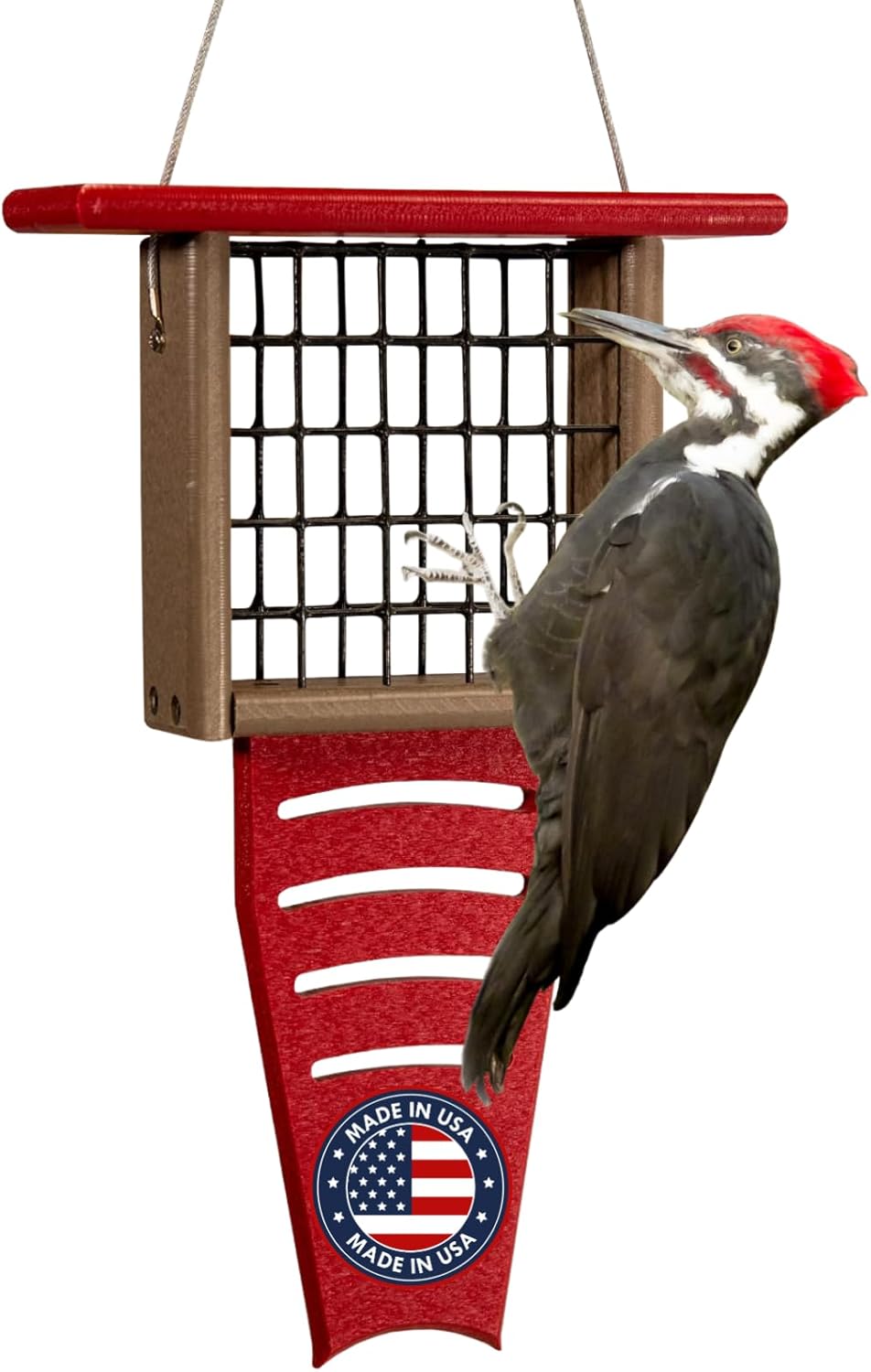
Handmade from recycled poly lumber in natural colors that attract a wide variety of birds. Built-in tail prop helps larger birds like woodpeckers balance while feeding. Will never fade, peel, rot, crack, or warp. Backed by a lifetime warranty.
Check on AmazonIf you click this link and buy, we earn a commission at no additional cost to you.
The Cardinal Myth: Possible Visitor, Wrong Main Target
One expectation I heard at the store was that adding suet would automatically bring Northern Cardinals. That is not how I would choose food for them.
Cornell does include Cardinals among the birds that occasionally visit suet feeders, so saying they never eat suet would be wrong. But they are much more predictably associated with seed, including sunflower and safflower. If Cardinals are the goal, I would build the feeding station around foods and feeder surfaces they use regularly, then treat a Cardinal at the suet as a bonus.
Buying suet as the main food for attracting Northern Cardinals and assuming a quiet cage means the yard has no Cardinals.
Using suet primarily for common suet-eating birds while offering Cardinals appropriate seed in a feeder they can use comfortably.
If you specifically want Cardinals, start with the best bird seed for that job rather than trying to make suet do something it does only occasionally.
Why Suet Sometimes Sits Untouched
A quiet suet feeder does not automatically mean the cake is bad or the feeder is defective. The birds most likely to use suet may simply be uncommon around your yard, may be finding abundant natural food elsewhere, or may not have discovered the new station yet.
Field Note: I saw a wide range of results with new suet setups. Some people had a Downy Woodpecker on the cage almost immediately. Others saw little activity even though the food and feeder were perfectly usable. The first thing I checked was whether woodpeckers, nuthatches, or chickadees were already being seen in the yard, not how many days the cake had been hanging.
Habitat matters because many regular suet birds spend much of their day working bark, branches, and wooded edges for natural food. A yard with mature trees and regular woodpecker traffic gives a suet feeder a better starting audience than an open site where those birds rarely pass through.
Keep the cake fresh, place it where birds have a reasonable approach and nearby cover, and give the setup time. But do not leave one cake outdoors indefinitely just to prove a point. If it is not being eaten, reduce the amount offered or take it down before age and weather turn it into a food-safety problem.
The Real Warm-Weather Risk
Warm-weather suet is not just a mess problem. Cornell warns that raw suet becomes rancid quickly above freezing, while rendered suet can soften as temperatures climb. Its current feeder guidance says most rendered bird-food suet stays hard up to about 90 degrees Fahrenheit, but above that it can soften enough to foul feathers.
Warning: Soft or oily suet can coat belly feathers. Cornell specifically warns that this is especially concerning in spring and summer because an incubating bird may transfer grease to the eggs, where it can clog tiny shell pores and interfere with oxygen exchange for the developing embryo.
That is a real risk, but I would not turn it into a universal 70-degree cutoff. Products differ, shade differs, direct sun matters, and a cake can become soft before or after any single air-temperature number.
Use the condition of the food as the final check:
- Do not offer raw butcher suet once conditions are warm enough for it to become rancid.
- Keep commercial suet out of direct hot sun and check it more often as temperatures rise.
- Remove any cake that becomes soft, greasy, dripping, rancid-smelling, moldy, or otherwise spoiled.
- Do not assume a “no-melt” label means the product cannot spoil in high heat.
- During sustained hot weather, taking the suet down entirely is safer than trying to keep a questionable cake outside.
Cornell also advises that cakes containing corn, cornmeal, or peanuts may be prudent to refrigerate until use because those ingredients can support bacterial growth.

A no-melt suet dough made with beef suet and roasted peanut pieces, staying solid up to 100F for year-round use in any climate. Fully consumable with no shells or waste, keeping feeders clean. Rich in healthy fats and protein to support daily activity, nesting, and migration. Attracts woodpeckers, nuthatches, chickadees, wrens, and other songbirds. Made in the USA.
Check on AmazonIf you click this link and buy, we earn a commission at no additional cost to you.
Navigating No-Melt and Homemade Options
Heat-resistant or “no-melt” cakes are designed to stay firmer than ordinary suet in warmer weather. Cornell notes that some prepackaged no-melt products are rendered multiple times so they hold together at higher temperatures.
I treat that as extra margin, not permission to ignore heat. Cornell’s summer-feeding advice warns that even no-melt products can soften or spoil during high heat. If the cake turns oily, smells rancid, grows mold, or begins fouling feathers, remove it regardless of what the package promises.
Homemade suet also needs conservative handling. Use a tested bird-feeding recipe built around appropriate rendered fat, make small batches, and store perishable ingredients cold until use. Avoid improvising with leftover kitchen fats just because they harden in the refrigerator.
Bacon drippings are a specific example I leave out. Cornell does not recommend bacon fat because cooked bacon can contain nitrosamines formed from preservatives during high-temperature cooking. That is a much better reason to avoid it than vaguely saying every leftover fat is interchangeable with bird suet.
If you are choosing among commercial and homemade options, freshness and temperature tolerance matter more than flavor names. A cake that stays firm, is being eaten steadily, and can be kept clean is more useful than a large stash of specialty suet sitting warm for weeks.
Final Thoughts: High Energy, With a Heat Limit
Suet is one of the simplest ways to add another food type to a feeding station, and it is particularly effective for woodpeckers, nuthatches, chickadees, and other birds that may not dominate a standard seed feeder.
The part that deserves attention is temperature. Raw suet belongs in cold weather. Rendered and heat-resistant cakes buy you more flexibility, but none of them should stay outside after they become soft, oily, rancid, or spoiled.
Start with one fresh cake, watch who actually uses it, and replace or remove it based on condition rather than a rigid seasonal date. That gives you the upside of suet without pretending fat is as forgiving outdoors as dry seed.

Packed with real mealworms and roasted peanuts to attract bluebirds, sparrows, cardinals, and other insect-loving birds. Stays solid up to 100F, perfect for year-round feeding even in hot weather. More economical than traditional seeds and easy to use with any wire feeder. Made in the USA, trusted since 1986.
Check on AmazonIf you click this link and buy, we earn a commission at no additional cost to you.
FAQs
🧊 Can I freeze suet cakes to make them last longer?
Yes, freezing unopened or properly wrapped extra cakes can help slow rancidity during storage. Follow the manufacturer’s storage instructions for commercial products, especially cakes containing corn, cornmeal, or peanuts. I would thaw only what I expect to use and still check the cake for odor, mold, or oiliness before offering it.
🐿️ How do I keep squirrels from eating all my suet?
Use physical exclusion first, such as a properly placed baffle or a suet feeder designed to restrict squirrel access. Capsaicin-treated products may deter some mammals, but Project FeederWatch notes that research on high doses in wild birds is limited, so it discourages adding untested substances to bird food. I would not call hot-pepper suet a guaranteed solution.
🐦 Will smaller birds use a suet feeder?
Yes. Chickadees and nuthatches are regular suet visitors, and their ability to cling makes a simple cage easy for them to use. Titmice and wrens may also visit depending on where you live.
☀️ Should I stop feeding suet in the summer entirely?
You do not have to use the same rule in every climate, but Cornell advises taking suet down during hot weather because even rendered or no-melt products can soften, become rancid, or foul feathers. If you continue during mild warm weather, keep it shaded, offer small fresh amounts, and remove it immediately if it softens or spoils.
🪵 Do I need to hang the suet on a tree?
No. Suet feeders can be attached to a tree trunk, suspended from a branch, or mounted on other feeder systems. Choose a location that the target birds can approach comfortably and that you can reach easily for cleaning and replacement.