The Hidden Cause of the Bare Spot
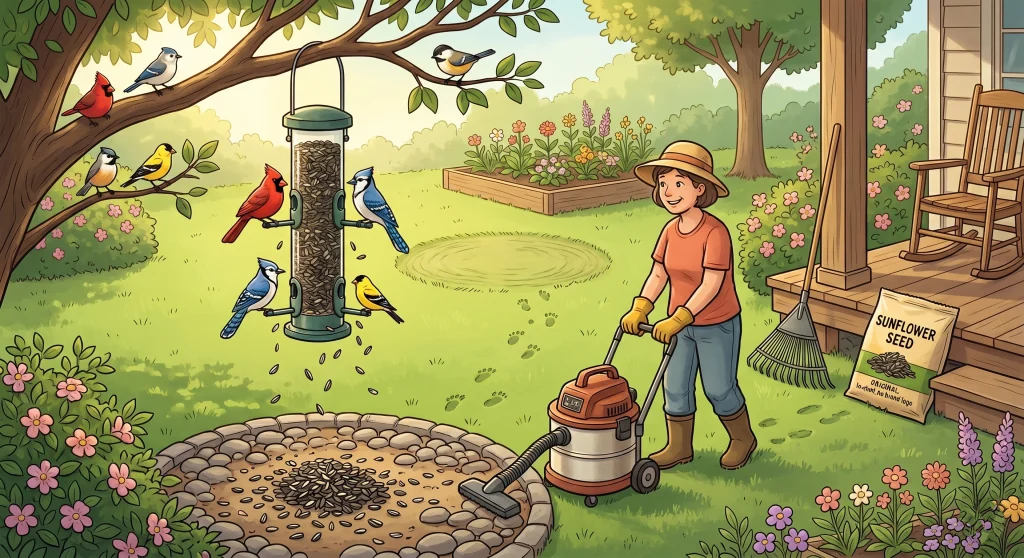
At the store, a bare patch directly below a sunflower feeder was a familiar kind of complaint. My first question was not what grass seed to buy. I wanted to know how thick the hull layer had become and whether old seed and droppings were mixed into it. Reseeding before you remove that buildup usually means treating the symptom while leaving the cause in place.
A bare feeder patch can have more than one cause. A dense layer of hulls can physically mat over grass, and sunflower plants are also known for allelopathy, meaning they produce compounds that can suppress the germination or growth of some other plants. University of Illinois Extension specifically warns that sunflower hulls accumulating below feeders can contribute to bare turf. That makes cleanup more useful than arguing over whether the problem is only shade, traffic, or chemistry.
When birds repeatedly drop sunflower hulls in the same place, you create a concentrated layer of plant residue right on the soil surface. Research confirms that sunflower tissues and germinating seeds can have species-selective allelopathic effects, but that does not mean every lawn or ornamental plant will fail under every feeder. In a backyard, the safer conclusion is that heavy hull buildup can contribute to poor growth while also trapping moisture, mixing with droppings, and physically covering the grass.
Field Note: When I troubleshoot a bare feeder patch, I treat the hull layer as something to remove rather than useful mulch. If you can see a dense mat of shells, old seed, and droppings, clean that material up first. Then you can judge whether the soil actually needs reseeding or whether the grass was simply buried under months of feeder waste.
Solution 1: The Annual Feeder Rotation
One simple way to prevent a permanent drop zone is to move the feeder before waste becomes heavily concentrated in one patch. Cornell and Penn State both recommend rotating feeding areas as part of keeping the ground below feeders cleaner and reducing the buildup of old seed, hulls, and droppings.
If your feeder is on a movable pole, an annual relocation can be an easy routine, especially after a winter of heavy sunflower use. The exact distance and month are not magic numbers. Move the feeder far enough that most new waste lands on a different patch, while still keeping the new location safe from windows, predators, and other placement problems.
After moving the feeder, rake up the old hulls, uneaten seed, and droppings rather than tilling the debris into the lawn. Then inspect the turf. Some patches recover once light and air reach the grass again; others need fresh soil contact and reseeding. There is no reliable promise that the spot will recover within a few months, so let the condition of the lawn determine the next step.

A heavy-duty stainless steel bow rake with a 17-tine, 17-inch wide head for loosening soil, spreading mulch, leveling ground, and clearing debris. Tines are 2.5 inches long and 3mm thick, triple-welded at the connection for lasting durability. The adjustable multi-section handle can be customized to any preferred length and disassembles for compact storage. Backed by a 100% satisfaction guarantee.
Check on AmazonIf you click this link and buy, we earn a commission at no additional cost to you.
Solution 2: Active Monthly Cleanup
If the feeder is fixed in place, regular cleanup becomes more important because every hull lands in roughly the same zone. Do not wait for a thick mat to form. Accumulated hulls, old seed, and droppings can smother grass, hold moisture, attract rodents when edible seed is mixed in, and create a less sanitary feeding area.
A monthly cleanup is a reasonable baseline for a lightly used site, but busy feeders or wet conditions may need attention sooner. Cornell recommends keeping the ground below feeders free of accumulated hulls, uneaten seed, and other waste. Use whatever tool removes the debris without tearing up the turf:
- The Wet/Dry Shop Vacuum: If you don’t already have a small, dedicated wet/dry vacuum for the garage, it is absolutely worth picking one up just for this. On a dry afternoon, you simply suck up the top layer of shells. It pulls up the hulls effortlessly without damaging the roots of the grass.
- A Stiff, Metal-Tined Rake: A standard plastic leaf rake will just slide right over the top of a compacted shell mat. You need to invest in a stiff, metal-tined garden rake or a specialized landscaping rake to actually scratch the surface and pull the hulls into a pile.
- Heavy-Duty Landscaping Fabric: If you know a massive flock of winter visitors is coming and you feed heavily during the cold months, do yourself a favor and buy a roll of breathable landscaping fabric. Pinning a pre-cut piece under the feeder makes cleanup effortless. You just unpin the corners, dump the shells in the trash, and put it back.
Warning: Sunflower hulls do not automatically have to go in the trash. University of Illinois Extension says feeder hulls can be added to a compost pile or bin. Mix them into the pile with other materials rather than spreading a fresh concentrated layer directly around seedlings, and keep droppings or spoiled seed out of compost you would not normally accept.

A compact 1-gallon wet/dry vacuum with a 1.0 peak HP motor for quick cleanups at home, in the garage, workshop, or vehicle. Handles both wet and dry pickups with ease. Includes a 6-ft power cord, 4-ft suction hose, gulper nozzle, and crevice tool, with onboard cord storage. Wall-mountable for convenient storage.
Check on AmazonIf you click this link and buy, we earn a commission at no additional cost to you.
Solution 3: The Hard Surface Strategy
If shell cleanup keeps damaging the same patch of lawn, moving the drop zone onto an easy-to-clean surface can simplify the problem. The point is not that hard surfaces eliminate feeder maintenance. They simply make hulls easier to see, sweep up, and remove before they accumulate.
A concrete patio, stone area, or dedicated gravel zone removes turf from the equation and makes dry hulls easy to sweep. You still need to clean up edible seed and droppings instead of letting them collect on the surface. Cornell recommends cleaning the ground or hard surface below feeders because spoiled food and waste can be unhealthy for birds and can attract rodents.
If you do not have a suitable patio or walkway, you can create a dedicated gravel or mulch drop zone below the feeder. Size it to the actual spread of hulls in your yard rather than assuming a three-foot circle will catch everything. The surface still needs periodic cleanup, and any mulch that becomes mixed with moldy seed or heavy droppings should be removed rather than left in place because the shells are visually hidden.
| Surface Under Feeder | Impact of Sunflower Shells | Best Cleanup Gear/Method |
|---|---|---|
| Lawn Grass | High (compounds can inhibit growth, causing bare spots) | Wet/dry vacuum or stiff metal rake monthly; annual feeder rotation |
| Concrete Patio / Deck | None (visual mess only) | Push broom or standard sweeping weekly |
| Wood Mulch / Gravel Bed | Low (shells blend in, but can mold over time) | Scoop and replace top layer of mulch twice a year |
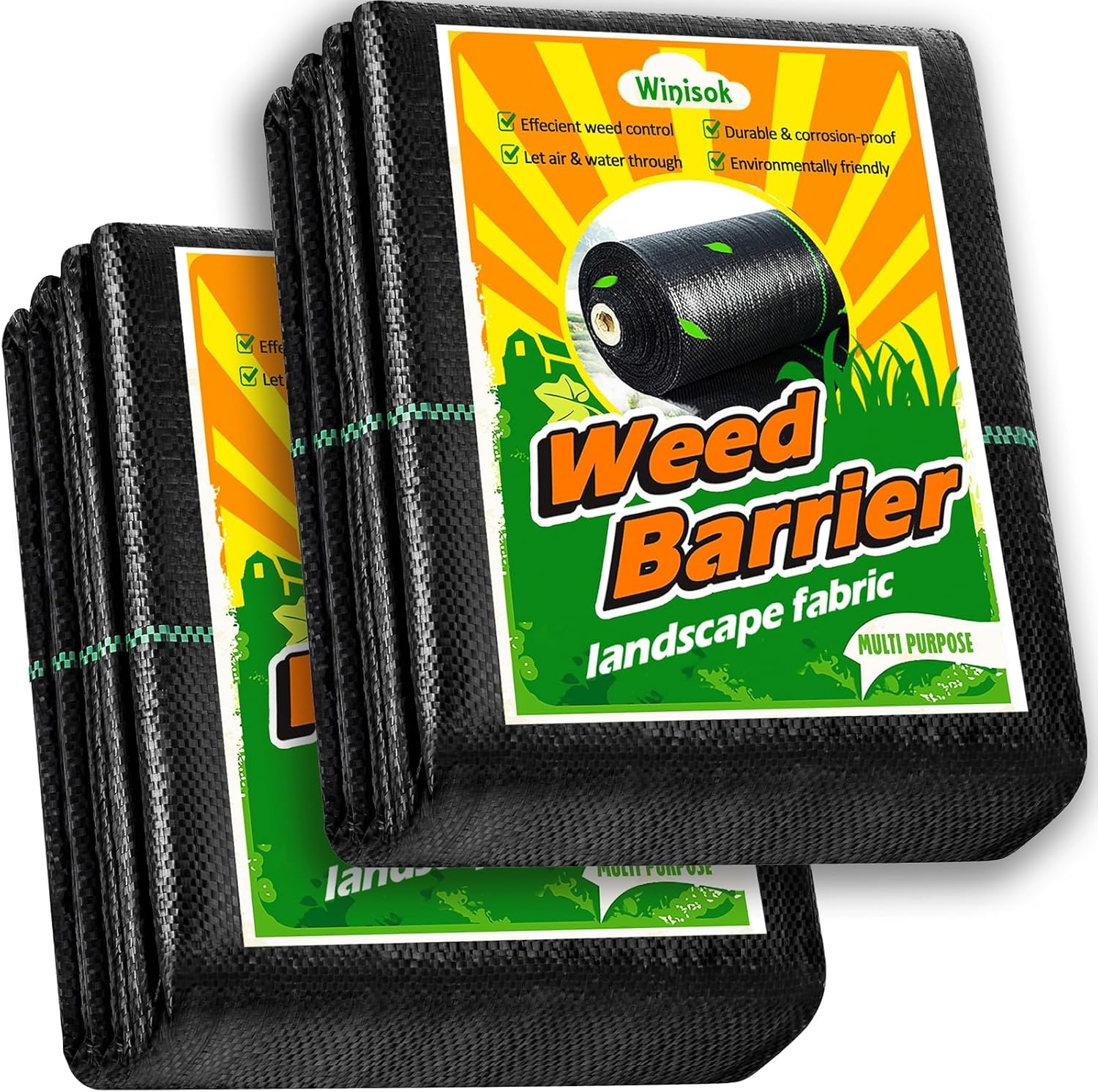
A 3.2oz heavy-duty weed barrier fabric that suppresses weed growth by blocking sunlight while remaining permeable enough to let air and water reach plant roots. Features green alignment stripes for easy planting and trimming. Suitable for landscaping, raised beds, French drains, erosion control, pond underlayment, and more. Simply unfold, cut to size with scissors, and lay directly over existing weeds or cleared soil. No tools required.
Check on AmazonIf you click this link and buy, we earn a commission at no additional cost to you.
The Hulled Alternative: When to Finally Switch
The cleanup strategies above work well when you have room to move the feeder or clean below it, but some locations make shell management awkward. A balcony over another unit or a feeder directly above a carefully planted bed gives you much less tolerance for falling hulls. In those situations, changing the seed can be more practical than constantly chasing debris.
In those cases, a no mess bird seed option based on hulled sunflower can sharply reduce shell debris because the outer hull has already been removed. It will not create a literally mess-free floor: birds can still drop edible pieces and leave droppings, and hulled kernels need better moisture control because the protective shell is gone.
I would not rush to switch if the current seed is working well and the drop zone is manageable. As I explain in the best bird seed comparison, hulled sunflower usually costs more because you are paying only for edible kernel. In-shell seed also protects the kernel until a bird opens it. Our sunflower bird seed comparison covers the trade-offs without assuming that every caching species universally prefers one form.
Final Thoughts on Feeder Maintenance
You do not have to stop feeding sunflower seed because the ground below the feeder looks rough. Heavy hull buildup can both mat over grass and add sunflower residues that inhibit some plants, so the practical answer is removal and prevention. Move the feeder when you can, clean a fixed drop zone before a thick layer forms, or put the feeder over a surface you can sweep easily.
If the shell mess is still overwhelming, look at the feeder itself. A catch tray or a feeder that contains discarded hulls more effectively can reduce how much debris reaches the ground, although the tray becomes another surface that needs regular emptying and cleaning.

This 12.8-inch hanging platform bird feeder uses a wide open tray that gives wild birds easy access to seed while also helping contain scattered food. The tray design provides room for multiple birds to perch and feed, and its hanging chain makes it suitable for backyard and garden feeding stations. Its open construction also makes the seed level easy to see and simplifies routine refilling and cleaning.
Check on AmazonIf you click this link and buy, we earn a commission at no additional cost to you.
FAQs
🌱 Will sunflower seed shells permanently kill my grass?
Not necessarily. Remove the accumulated hulls, old seed, and droppings first, then rake the surface and see what turf is still alive. Sunflower residues can inhibit some plant growth, but the effect is species- and concentration-dependent. A badly thinned patch may need reseeding rather than simply waiting for the next season.
🧹 Can I just mow over the seed shells to clean them up?
Mowing does not actually remove a heavy hull layer. It can chop and scatter the material while leaving the same old seed, droppings, and plant residue in the feeding area. Rake, sweep, or vacuum up the bulk of the debris first, then mow the lawn normally.
🐦 Do any birds actually eat the sunflower shells?
Most feeder birds taking sunflower seed are after the kernel and discard the hull after opening it. Some birds crack seeds at the feeder, while others carry a whole seed away before processing it. I would not turn that into a claim that no bird ever ingests any hull material or that every species handles the seed the same way.
🔥 Is it safe to burn old sunflower seed shells in a fire pit?
I would not make burning feeder debris the default disposal method, especially when hulls are mixed with droppings, spoiled seed, or other waste. Clean sunflower hulls can be composted according to University of Illinois Extension guidance. Otherwise, use your normal yard-waste or trash route and follow local fire and waste rules.
🐿️ Does leaving the shell mess on the ground attract squirrels?
Empty hulls are not the main food reward for squirrels or rodents, but feeder debris is rarely perfectly sorted. Whole seeds and edible fragments mixed into the drop zone can attract rodents and other ground foragers. That is another reason to remove the buildup regularly instead of waiting for a thick shell mat to form.