What Safflower Actually Changes at a Feeder
If you spend enough time feeding birds, you eventually run into the same tradeoff: the foods that attract a lot of songbirds can also attract squirrels, starlings, grackles, and other visitors that empty a feeder quickly. Safflower bird seed is worth knowing because its appeal is narrower than sunflower, and that can sometimes work in your favor.
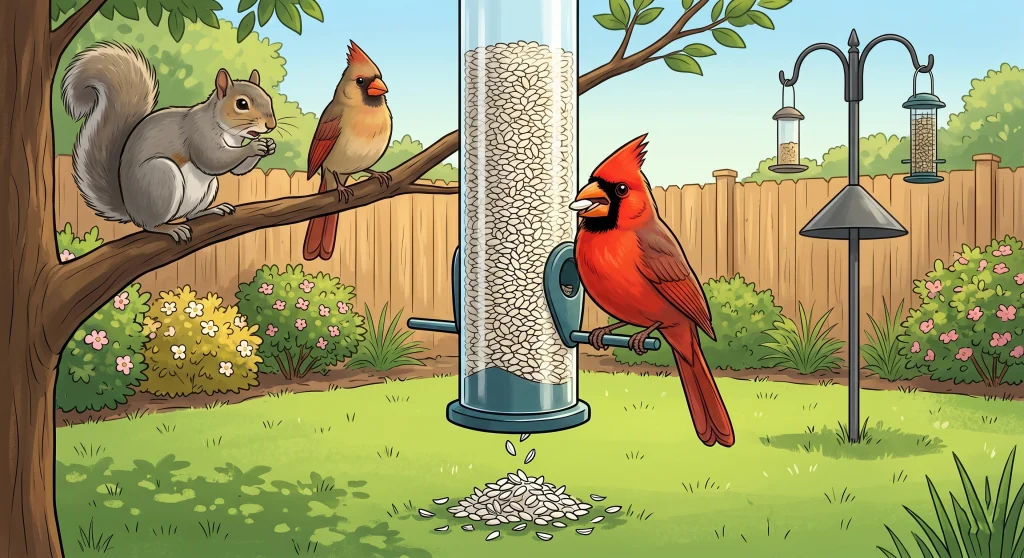
Safflower is a pale, hard-shelled seed produced by the safflower plant, an oilseed crop. Cornell describes it as a favorite of cardinals, with some grosbeaks, chickadees, doves, and native sparrows also eating it. The same Cornell guidance notes that House Sparrows, European Starlings, and squirrels are often reported to dislike it, while also warning that some populations develop a taste for it.
That is a much more useful way to think about safflower than calling it a miracle seed. It changes the menu. Some birds accept that menu readily, some prefer sunflower, and some animals you hoped to discourage may eat safflower anyway.
From what I saw in specialty bird retail, the people happiest with safflower were usually the ones who treated it as a feeding experiment rather than a guaranteed pest fix. They watched which birds actually used it, adjusted the mix if activity fell off, and still used physical squirrel control when a persistent squirrel refused to cooperate.
Which Birds Actually Eat Safflower?
Northern Cardinals are the clearest reason to try safflower. Their heavy bills handle the hard hull well, and Cornell specifically lists safflower among the seeds they eat. Grosbeaks are another strong fit, while chickadees, titmice, nuthatches, doves, House Finches, and several sparrows may also use it depending on the local birds and what other foods are available.
The important caveat is preference. Project FeederWatch says that, in its experience, most birds prefer sunflower over safflower. So a cardinal eating safflower does not mean safflower is automatically its favorite food, and a feeder full of safflower may draw fewer total birds than the same feeder filled with black oil sunflower.
The reverse is also true for the birds people hope safflower will exclude. Thick shells can make safflower less convenient for some blackbirds, and Cornell suggests switching to hard-shelled safflower or striped sunflower may help when grackles and other blackbirds dominate a feeder. But European Starlings and House Sparrows can still eat safflower, so seed choice alone is not a reliable species filter.
| Bird Species | Reaction to Safflower |
|---|---|
| Northern Cardinals | Often eat it readily, although sunflower may still be preferred when both are available. |
| Chickadees & Titmice | Can use safflower, especially where birds are already accustomed to it. |
| Mourning Doves | Will eat safflower from trays or seed that reaches an appropriate ground-feeding area. |
| Starlings & House Sparrows | May be less interested in some yards, but neither species is reliably excluded by safflower. |
| Goldfinches | Not the main target for safflower. Nyjer and sunflower products are generally more dependable choices for finches. |
Use that table as a starting point, not a promise. The species living around your yard, the feeder style, season, natural food supply, and competing seed choices can all change what you see.
The Honest Truth About Squirrel Deterrence
When people ask me does safflower deter squirrels, the most accurate answer is: often, but not reliably enough to call the feeder squirrel-proof. Cornell says squirrels are commonly reported to dislike safflower but also notes that squirrels in some areas seem to develop a taste for it. Audubon likewise describes safflower as a seed squirrels generally avoid, not one they are physically unable to eat.
That distinction matters. A squirrel that has easy access to the feeder can sample the seed repeatedly, and individual animals do not all make the same choices. If safflower reduces squirrel visits in your yard, great. If one squirrel keeps eating it, the seed has not failed biologically. You simply have an animal whose preference does not match the usual pattern.
The same caution applies to grackles and starlings. Hard-shelled safflower may slow or discourage some blackbirds, but there is no good basis for claiming that their beak shape makes the seed prohibitively difficult or that they will always get bored and leave. Audubon specifically notes that starlings can eat safflower.
For a persistent squirrel problem, seed choice is the softer layer of control. A correctly positioned baffle or a feeder designed to restrict squirrel access is more dependable because it changes physical access instead of depending on taste.
Give Birds Time to Test a New Seed
One of the easiest ways to misjudge safflower is to replace a familiar seed overnight, see feeder traffic fall, and conclude that no birds in the yard will eat it. Birds may take time to use an unfamiliar food, and specialty bird-feeding guidance commonly recommends introducing safflower gradually when a sudden switch is not working.
Field Note: I saw people give up on safflower after only a few quiet days because the same feeder had been busy with sunflower. When they wanted to give safflower a fair test, I preferred mixing some into the familiar seed first and watching whether the birds actually began taking it before increasing the proportion.
There is no scientifically established three-week or four-week transition period that every yard needs. Some birds may use safflower immediately. Others may barely touch it even after a long trial because sunflower, natural food, or another nearby feeder is more attractive.
Assuming that a quiet feeder after one abrupt switch proves safflower will never work in your yard.
Starting with safflower as part of the familiar food, then increasing it gradually if the birds are actually eating it.
If you want numbers to make the process easy, 25 percent safflower is a reasonable starting mix. Once you see regular use, you can move toward half safflower, then mostly safflower, and finally test it alone if that matches your goal. Those percentages are a practical progression, not biological deadlines.
The other option is simpler: put pure safflower in a separate feeder and leave your existing feeder unchanged. That lets you see which species choose safflower without suddenly removing a food source they already know.

A premium safflower seed that attracts cardinals, chickadees, titmice, and grosbeaks while naturally deterring squirrels, grackles, and starlings. Its bitter taste keeps unwanted visitors away without any extra effort. Can be used alone or gradually mixed with other seed blends to transition your feeder to a more desirable bird-friendly environment.
Check on AmazonIf you click this link and buy, we earn a commission at no additional cost to you.
What Golden Safflower Changes
Golden safflower is a bird-feeding variety developed as an alternative to traditional white safflower. Specialty bird-food sellers describe it as having a thinner hull and higher oil, protein, and fat levels than standard safflower, which can make the kernel easier for birds to access.
That makes the category worth trying if the hard hull of white safflower seems to be limiting use. A thinner shell can expand the range of birds physically able to open the seed comfortably, and several specialty retailers list cardinals, chickadees, nuthatches, grosbeaks, House Finches, and some woodpeckers among the visitors they see using golden safflower.
I would keep the deterrence claim in perspective. Golden safflower is still marketed as less attractive to squirrels and some blackbirds, but that does not mean every squirrel, grackle, or starling will reject it. There is also no need to assume it will shorten acceptance to a particular number of days in every yard.
When we carried golden safflower in specialty retail, the thinner hull was the feature I found most useful to explain. If you try it, judge it the same way you would standard safflower: watch which birds eat it, how much is wasted, and whether the nuisance animals you are trying to discourage actually change their behavior.

A premium golden safflower seed that offers more nutrition and less waste than white safflower. Easy to eat and digest, it attracts cardinals, woodpeckers, and many other wild birds while being naturally unappealing to squirrels. Packaged with an oxygen scavenger packet to ensure freshness.
Check on AmazonIf you click this link and buy, we earn a commission at no additional cost to you.
When Safflower Doesn’t Work
Safflower can fail in two different ways. The first is simple: the animals you hoped to discourage decide to eat it anyway. Cornell explicitly notes regional variation in squirrel, House Sparrow, and starling acceptance, so a persistent squirrel eating safflower is within the range of normal behavior.
Food availability can also change choices. When preferred foods are scarce, animals may spend more time investigating foods they previously ignored. That does not justify a rule that winter hunger makes every squirrel eat safflower, but it is another reason not to treat deterrence as permanent.
The second failure is on the bird side. If the species around your yard prefer sunflower or your local habitat does not support many safflower-using birds, activity can stay low. Penn State emphasizes that feeder attendance depends first on the birds and habitat already present around the feeder. A seed cannot attract a species that is absent from the area.
If your goal is simply maximum feeder activity, black oil sunflower remains the broader option. Safflower makes more sense when you specifically want to test a narrower menu, encourage cardinals and other suitable seed eaters, or reduce pressure from some squirrels and blackbirds.
Serve It Alone When You Want a Clean Deterrence Test
You do not have to stop mixing safflower once birds accept it. Mixed seed is perfectly valid if your goal is variety. The tradeoff is that a blend containing sunflower, peanuts, or other highly attractive foods gives squirrels and blackbirds a reason to visit even if they would have ignored pure safflower.
That is why offering safflower by itself can be useful when deterrence is the experiment. If squirrels keep visiting a mixed feeder, you cannot tell whether they are interested in the safflower or simply sorting through it for sunflower and peanuts.
Separate feeders are another good solution. You can keep one station focused on safflower while offering more broadly attractive foods elsewhere with better physical exclusion. That preserves bird variety without asking one seed to solve every feeder problem.
Warning: If you want to offer multiple types of food to maximize the variety of birds in your yard, use separate feeders. Keep one feeder exclusively for safflower, and place your suet or sunflower feeders on a dedicated pole equipped with a proper physical squirrel baffle.
If a squirrel eats pure safflower anyway, stop escalating the seed experiment. At that point, physical access control is the more reliable fix.
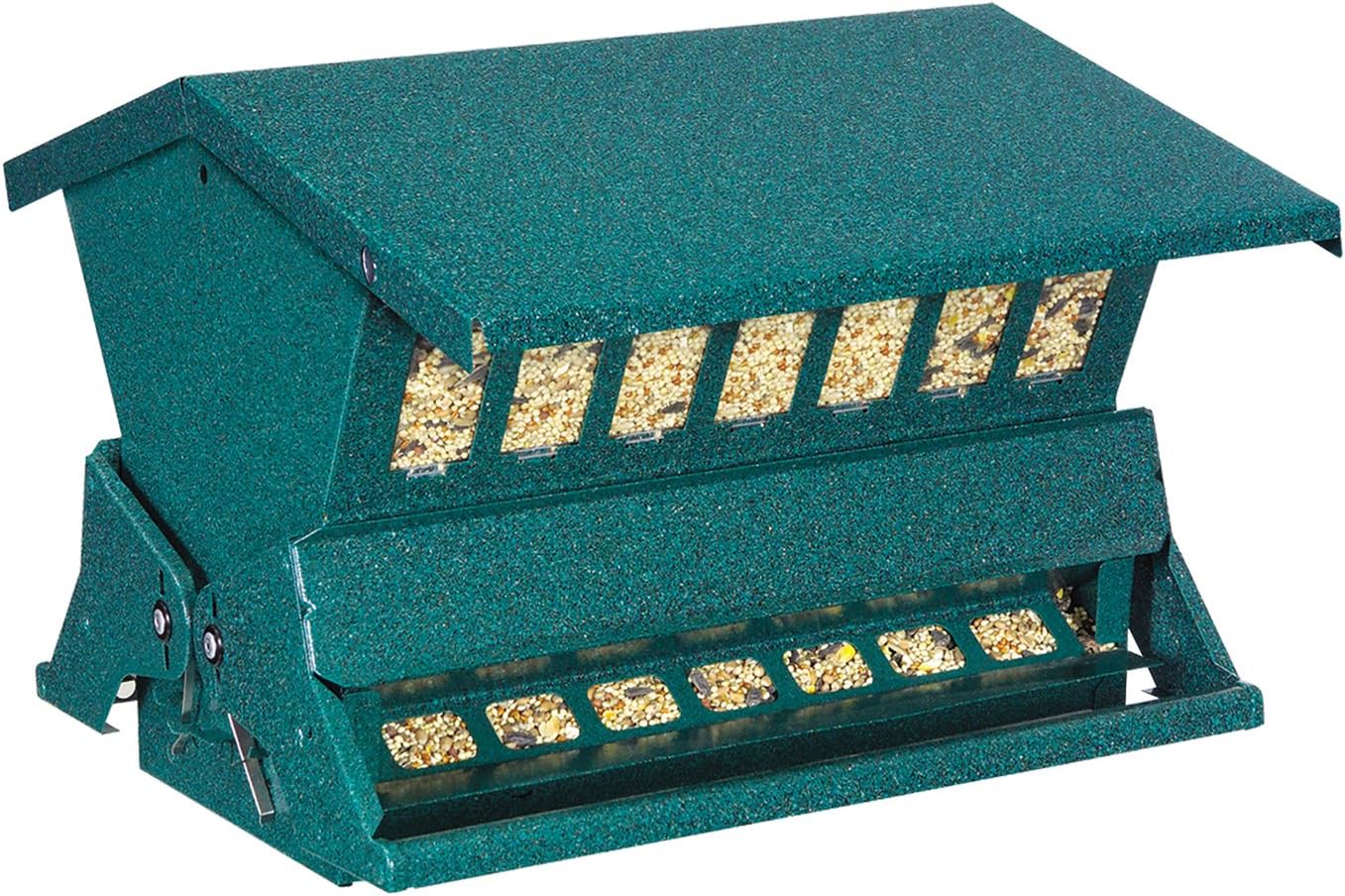
A large-capacity, all-metal squirrel-proof feeder holding up to 12 lbs of seed. Features spring-activated perches adjustable to three weight settings - when a squirrel or unwanted bird steps on, a metal shield instantly blocks seed access. A locking top prevents squirrels from entering from above. Built from chew-resistant powder-coated steel with a no-waste seed saver baffle and a seed level indicator window. The overhanging roof keeps seed dry in all weather. Can be hung or pole-mounted - all hardware included.
Check on AmazonIf you click this link and buy, we earn a commission at no additional cost to you.
Connecting Your Seed Strategy
Safflower is most useful when you see it as a selective option rather than a universal replacement for sunflower. Sunflower attracts a wider range of feeder birds, while safflower can narrow the menu toward cardinals and other birds that handle the harder seed well.
If you want a broader comparison before changing what you buy, my page on the best bird seed explains where the major seed types fit and why no single choice is best for every yard.
If cardinals or squirrels are the specific reason you are considering safflower, these focused pages take the decision one step further.
| Topic | What You Will Learn |
|---|---|
| Safflower vs. Sunflower for Cardinals | How safflower and sunflower compare when cardinals are the birds you most want to feed. |
| The Truth About Squirrel Deterrence | What safflower can realistically change about squirrel visits, where it fails, and when physical exclusion is the better answer. |
The best test is the one in your own feeder. Watch the birds taking the seed, the animals sorting through it, and the amount left behind. That evidence is more useful than assuming the label on a bag predicts every visitor in your yard.
FAQs
🐿️ Will safflower keep chipmunks away too?
Do not count on it. Chipmunks are opportunistic seed eaters, and there is no strong basis for assuming they reject safflower just because squirrels often do. If chipmunks are emptying the feeder, placement and physical exclusion are more dependable than changing seed alone.
🐦 Do house finches like safflower bird seed?
House Finches can eat safflower, and some feeder guidance includes them among safflower visitors. Their use varies by yard, and sunflower is generally the more broadly preferred feeder seed, so do not assume House Finches will switch immediately or prefer safflower when several foods are available.
🪶 Does safflower seed leave a mess on the ground?
Standard white safflower has a hull, so birds that crack the seed can leave shells below the feeder. Golden safflower varieties may have thinner hulls, but they are still in-shell seed unless the product specifically says otherwise. Clean accumulated hulls and old seed as part of normal feeder maintenance.
🦌 Will deer eat safflower out of my feeders?
Safflower is not a reliable deer-exclusion method. Deer feeding behavior varies with local food availability, and I would not promise that a mammal will reject a feeder simply because it contains safflower. If deer can reach and empty a feeder, change the feeder height or access rather than relying on taste.
🌻 Can I mix safflower seed with black oil sunflower?
Yes. Mixing them is a practical way to introduce safflower and is also fine as a permanent blend if variety is your goal. Just remember that sunflower can keep attracting squirrels and blackbirds, so pure safflower gives you a cleaner test when deterrence is the reason you are using it.