
The Foundation of a Reliable Feeding Station
If you are setting up a backyard feeding station, you will likely spend hours researching the perfect feeder and the highest quality seed. Then, almost as an afterthought, you might grab the cheapest metal pole available at the hardware store to hang it all on. This is the exact backward logic that leads to collapsed setups and frustrated birders.
The bird feeder pole system is the actual foundation of your entire hobby. I have watched this pattern repeat more times than I can count over my years at the bird store. A customer invests in a beautiful, heavy-duty hopper feeder. They hang it on a thin piece of decorative metal. Two weeks later, a rainstorm adds moisture weight to the seed, a raccoon tries to climb the thin metal, and the entire rig is found bent flat against the lawn the next morning.
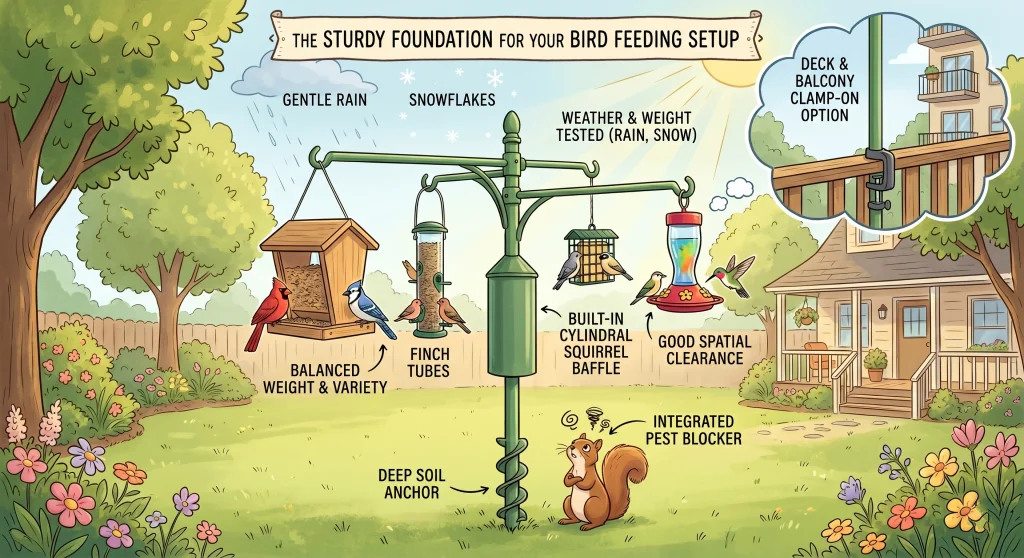
A properly selected pole does much more than hold food in the air. It determines where birds can feed comfortably, provides the necessary clearance for squirrel baffles to work, and withstands the serious torque generated by wind and weather. Before you buy anything, you need to understand the structural differences between basic shepherd hooks, heavy-duty multi-arm systems, and specialized deck mounts.
If you are still deciding what physical feeders to actually hang on your new hardware, my broad overview of the different bird feeder types is the best place to start matching specific feeder designs to the birds you want to attract.
Shepherd Hook vs Multi-Arm System: When to Use Each
When you start shopping, you will immediately notice two distinct categories of ground-mounted poles. The first is the classic shepherd hook, featuring a single or double curved arm at the top. The second is the multi-arm bird feeder pole, which features a central mast with three to six arms radiating outward.
| System Type | Best Used For | Weight Capacity | Footprint & Stability |
|---|---|---|---|
| Shepherd Hook | 1 or 2 lightweight tube or suet feeders | Low (Prone to leaning under heavy load) | Minimal, easy to step into soft soil |
| Multi-Arm Pole | 3+ heavy feeders (hoppers, large trays) | High (Balances weight on opposite sides) | Permanent, requires a deep ground anchor |
Shepherd hooks are the budget-friendly, entry-level option. They are excellent for lightweight setups and blend nicely into garden landscaping. If your goal is just to hang a single finch feeder, a standard shepherd hook works perfectly.
However, shepherd hooks fail quickly when you try to scale up. If you want to run a hopper feeder, a tube feeder, and a hummingbird dish all in the same viewing area, you absolutely need a multi-arm system. These heavy-duty central masts are built from thicker tubular steel and allow you to balance the weight evenly, creating a true, stable feeding station.
Field Note: The most frequent pole complaint I handled at the shop was crowding. A customer would buy a double-shepherd hook, hang two wide feeders on it, and then wonder why the birds were constantly fighting. The arms on cheap hooks are often too short. The feeders end up hanging too close to the central pole, making the birds feel boxed in. Multi-arm systems generally offer better horizontal clearance.

This 76-inch heavy-duty bird feeder pole uses three hanging hooks for bird feeders, planters, lanterns, wind chimes, and other outdoor accessories. The metal pole includes a five-prong base for improved ground stability and can be adjusted to several heights for different backyard setups. Its triple-hook design provides multiple hanging points while keeping feeders organized around one compact station.
Check on AmazonIf you click this link and buy, we earn a commission at no additional cost to you.
The Moisture Factor: Calculating True Weight Capacity
Weight capacity is the single most overlooked factor when buying a bird feeder pole. Manufacturers will list a maximum weight rating on the box, but consumers rarely do the actual math to see if their setup falls within that limit. More importantly, most people fail to account for weather.
A large hopper feeder full of sunflower seeds can weigh seven or eight pounds on a dry afternoon. But when a heavy rainstorm hits, or humidity remains high for days, that seed absorbs moisture. A wet feeder is significantly heavier than a dry one. Add a layer of wet snow on the roof of the feeder, and your eight-pound setup just became a twelve-pound anchor.
You also have to factor in the wildlife. A flock of mourning doves landing simultaneously adds instant, shifting weight. If your pole is rated for ten pounds and you hang an eight-pound feeder on it, you are asking for trouble the moment the weather changes.
Pro Tips: My golden rule for pole capacity is the 20% safety margin. Calculate the total weight of your feeder fully loaded with seed. Then, add 20% to account for moisture absorption, snow load, and the dynamic weight of birds landing. If that final number exceeds the manufacturer’s rating, you need a thicker pole.
The Physics of Why Shepherd Hooks Tilt
If you have ever used a standard shepherd hook, you have probably noticed a frustrating phenomenon. You install it perfectly vertical on a Sunday. By Wednesday, it is leaning slightly forward. By Friday, it looks like the Leaning Tower of Pisa. Most people blame the soil, but the actual culprit is basic physics.
A shepherd hook has a lever arm effect. Because the hook extends outward from the main shaft, any weight you hang on it creates rotational force, known as torque. The fulcrum point of this setup is exactly where the thin metal rod enters the ground. The heavier the feeder, the harder that lever pulls forward against the soil.
Over time, the constant, one-sided pressure compresses the dirt at the fulcrum point. Even in dense clay, a heavy side-hung load will eventually carve out a wider hole, causing the entire pole to tilt. This is a structural flaw inherent to the design.
Multi-arm systems combat this by allowing you to hang equal weight on opposite sides of the central mast. If you hang a five-pound feeder on the east arm and a five-pound feeder on the west arm, the torque cancels out. The downward force runs straight down the center of the pole, driving it firmly into the ground without causing it to lean.
Materials and Adjustability: Why Cheap Poles Rust
Beyond the design, the actual steel used to build the pole determines whether it lasts one season or a decade. Many budget poles found at big-box stores are made from thin, 18-gauge tubular steel. When exposed to rain and snow, water easily seeps into the weak joints, and the pole rusts from the inside out. For a setup that survives the elements, look for thicker 16-gauge steel that has been professionally powder-coated rather than just painted.
You also need to choose between a fixed-height pole and a telescoping pole. Telescoping poles feature adjustable segments, allowing you to raise or lower the entire station. This is incredibly useful when you need to lift the setup higher to accommodate a squirrel baffle, or lower it to easily refill a heavy hopper feeder. Fixed poles, while generally sturdier at the connection points, offer zero flexibility once they are anchored in the dirt.
Integrated Squirrel Baffles vs Add-Ons
If you feed birds, you will eventually feed squirrels. It is a universal truth of the backyard. When building a pole setup, you have to decide how you want to handle the inevitable climbing attempts.
You can purchase a basic metal pole and attach an aftermarket torpedo baffle to it. This involves sliding a metal cone over the pole and securing it with a clamp below the feeders. It is an effective method, provided the pole is tall enough to mount the baffle at least five feet off the ground.
However, the industry has responded to this common problem by producing squirrel-proof bird feeder pole systems with integrated baffles. Systems like the Squirrel Stopper Sequoia feature a spring-loaded cylindrical baffle built directly into the central mast. When a squirrel jumps onto the cylinder, their weight pulls it downward, preventing them from climbing any higher. These integrated systems are generally more aesthetically pleasing and highly effective, though they require a larger upfront investment.

This oil-coated rust-resistant pole features a spring-loaded squirrel baffle that drops on contact, sending climbers sliding back down the smooth iron surface. Eight adjustable heavy-duty hooks each support up to 20 pounds, while 360-degree rotating crossbars sit 5 to 6 feet off the ground for easy access. A threaded auger and twist rod drive the pole 17.7 inches into the ground in minutes, no tools required.
Check on AmazonIf you click this link and buy, we earn a commission at no additional cost to you.
Deck Mount Options: No Digging Required
Not everyone has a sprawling lawn. Many of the most enthusiastic birders I have met live in apartments, townhouses, or homes where the wooden deck is the only viable viewing area. You do not have to miss out on the hobby just because you cannot drive a steel auger into the dirt.
A deck mount bird feeder pole solves this problem elegantly. Instead of anchoring into the ground, these poles use heavy-duty steel clamps to attach directly to your wooden deck railing. They require no drilling, no permanent holes, and can be installed or removed in under five minutes.
The critical measurement here is your railing thickness. The vast majority of deck clamps are designed to fit standard 2-inch thick wooden railings. If your deck uses modern composite materials or unusually thick wooden beams, a standard clamp will not open wide enough to grip it securely.
Warning: Deck-mounted poles naturally have a lower weight capacity than ground-mounted systems because the clamp is the weakest point. They are excellent for lightweight tube feeders or small hopper setups, but they are generally not suitable for massive, ten-pound wooden platform feeders.

This powder-coated heavy-duty steel pole stands 41 inches tall with a 29.9-inch width and clamps onto horizontal deck rails up to 2.1 inches thick without any tools. The curved tip safely holds bird feeders, flower baskets, lanterns, wind chimes, and more. Hand-tightened nuts make repositioning or removal quick and easy.
Check on AmazonIf you click this link and buy, we earn a commission at no additional cost to you.
A Brief Word on Ground Installation
If a deck mount is not an option and you are planning a traditional yard setup, ground installation requires your full attention. Even the strongest industrial steel pole will fall over if you do not anchor it properly. A common mistake is buying a tall pole and only pushing the base prongs three inches into the grass. The taller the pole, the deeper the anchor needs to be.
Premium multi-arm systems often come with an auger base. This is a corkscrew design that you physically twist deep into the soil before attaching the main mast. This is vastly superior to the standard step-in prongs found on cheap shepherd hooks. It provides resistance against upward pulling forces and lateral wind loads, keeping your expensive setup exactly where you put it.
Making the Right Choice for Your Space
The hardware that holds your feeders is just as important as the food you put inside them. A sturdy, well-balanced pole system prevents seed spills, deters pests, and keeps your yard looking organized rather than chaotic.
Do not let a collapsed pole ruin your expensive feeders. If you are starting small, a sturdy shepherd hook might suffice, but if you want to attract a flock with multiple seed types, a heavy-duty multi-arm system is the only way to go. Take a look at the specific guides below to find the exact mounting hardware that fits your yard, check the current load ratings, and build a foundation that will actually last.
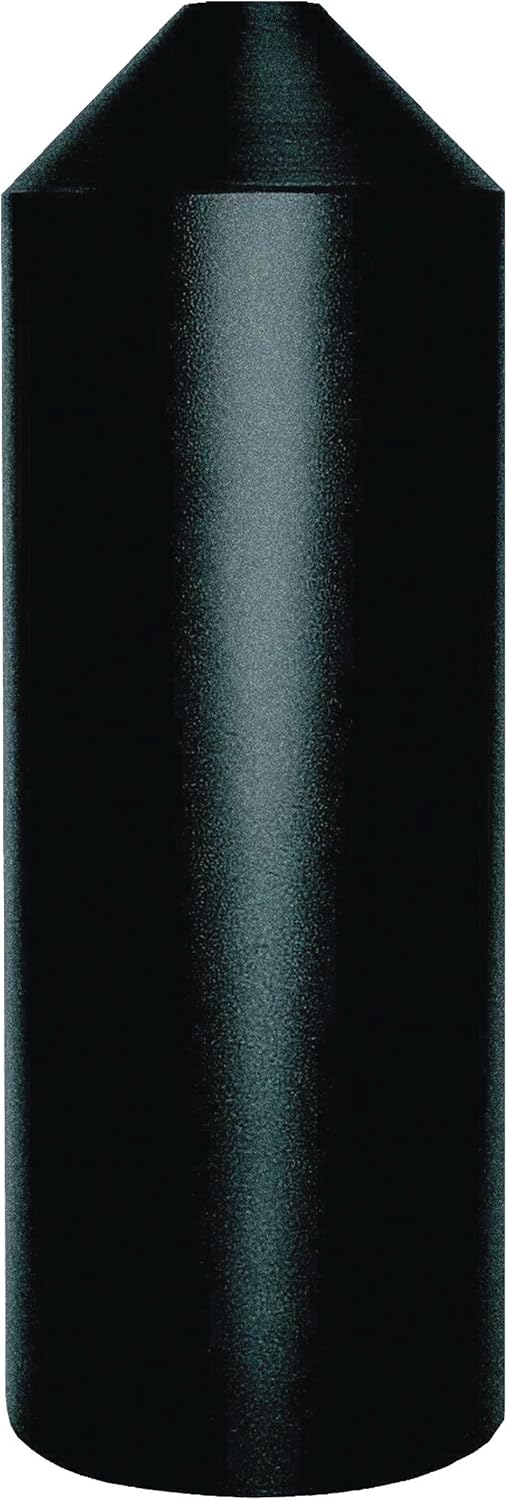
A torpedo-shaped steel squirrel baffle with a textured powder-coated finish. Measures 6.125 inches in diameter and slides onto any pole ranging from 1/2 to 1-3/8 inches in diameter via an included coupler. Easy to install - simply remove the zip tie and secure the coupler around the pole. Pole not included.
Check on AmazonIf you click this link and buy, we earn a commission at no additional cost to you.
Expanding Your Pole Setup
Depending on your yard size, your budget, and how many feeders you actually plan to run, your hardware needs will vary significantly. The guides below break down exactly what to look for when shopping for specific mounting solutions.
| Hardware Guide | Key Focus |
|---|---|
| Best Bird Feeder Pole | A progressive breakdown of exactly which pole thickness and style to buy based on your total feeder count. |
| Multi-Arm Bird Feeder Pole | Detailed instructions on spacing your arms correctly to prevent dominant birds from bullying the flock. |
| Deck Mount Bird Feeder Pole | The specific clamp measurements and weight limits you need to know before attaching anything to your balcony railing. |
FAQs
📐 How tall should a bird feeder pole be?
A good pole should keep your feeders suspended between five and six feet off the ground. This height is perfect for comfortable viewing and is tall enough to allow a squirrel baffle to be mounted effectively underneath.
⚖️ Why does my shepherd hook lean to the side?
Hanging a heavy feeder on one side creates torque, which compresses the soil at the base of the pole over time. Upgrading to a multi-arm pole and balancing the weight on opposite sides eliminates this leaning issue.
🐿️ Can squirrels climb metal poles?
Yes, squirrels can easily climb bare metal poles, especially if the metal is textured or dirty. You must install a torpedo-style baffle on the pole to block their upward progress.
🌧️ Does rain make hanging bird feeders heavier?
Absolutely. Seed absorbs moisture rapidly during rain or high humidity. Always leave a 20% safety margin in your weight capacity calculations to account for wet seed and snow accumulation.
🏢 Can I use a bird feeder pole on an apartment balcony?
Yes, provided your property rules allow it. Deck-mount poles use adjustable steel clamps to grip the railing without requiring any drilled holes or permanent modifications.


