Heavy Snow Changes the Load on the Whole Setup
If you are trying to figure out how to protect a bird feeder from heavy snow, start with the complete support system rather than one material. Wet snow and ice can add substantial weight, but there is no universal depth at which an acrylic dome, polycarbonate baffle, steel roof, hook, or pole will fail. Thickness, shape, age, UV exposure, mounting method, span, temperature, and the actual snow all matter. A cover that handled several light snowfalls can still become a problem if heavy accumulation is allowed to sit on it.
I treat visible sagging, cracking, loosened fasteners, or a pole that has started leaning as reasons to unload the setup instead of testing it further. Brush loose snow away when conditions are safe, and do not stand under heavily loaded branches just to service a feeder during a storm. If a cover has no stated load rating, assume it is a weather shield, not a structural roof. The practical goal is to prevent large accumulations from building up in the first place.
Field Note: The winter hardware problems I saw most often were less dramatic than a cover suddenly exploding under a precise amount of snow. A loose hanger, a tray packed with wet snow, or a pole that had already started leaning usually gave warning first. Those small signs are worth fixing before the next storm adds more weight.
Choose a Cover by Construction, Not by the Label
The words rain dome, weather guard, and squirrel baffle tell you what a product was marketed to do, but they do not give you a snow-load rating. A rigid hanging baffle can work as a bird feeder snow cover if it is large enough to shield the ports and its hardware is secure, but that does not make every baffle automatically stronger than every dome. Likewise, clear plastic is not automatically fragile just because it is transparent. Polycarbonate materials can retain good impact performance at low temperatures, but the finished part still depends on thickness, design, age, and mounting.
For winter use, I would check four things before worrying about the product name: enough overhang to keep ordinary falling snow away from the seed, a shape that sheds snow rather than holding a flat pile, hardware that does not wobble or pull loose, and a feeder that can still be removed for cleaning. A very large cover also catches more wind, so bigger is not always better. If your location gets both heavy snow and strong gusts, a more sheltered mounting point can do more than simply increasing the diameter of the cover.
| Cover or Feeder Feature | Winter Advantage | What to Check |
|---|---|---|
| Sloped rigid cover | Helps shed falling snow away from ports | Fasteners, cracks, overhang, and whether snow is collecting instead of sliding |
| Wide hanging baffle | Can provide useful overhead shelter while also deterring squirrels | Mounting method, wind exposure, feeder clearance, and manufacturer limits |
| Metal roof or guard | Durable outdoor option when properly supported | Sharp edges, corrosion, attachment points, and added weight on the support |
No material in that table is a promise of unlimited snow capacity. If accumulation is building faster than the cover is shedding it, the answer is to clear the load when it is safe, not to assume the material will keep taking more.
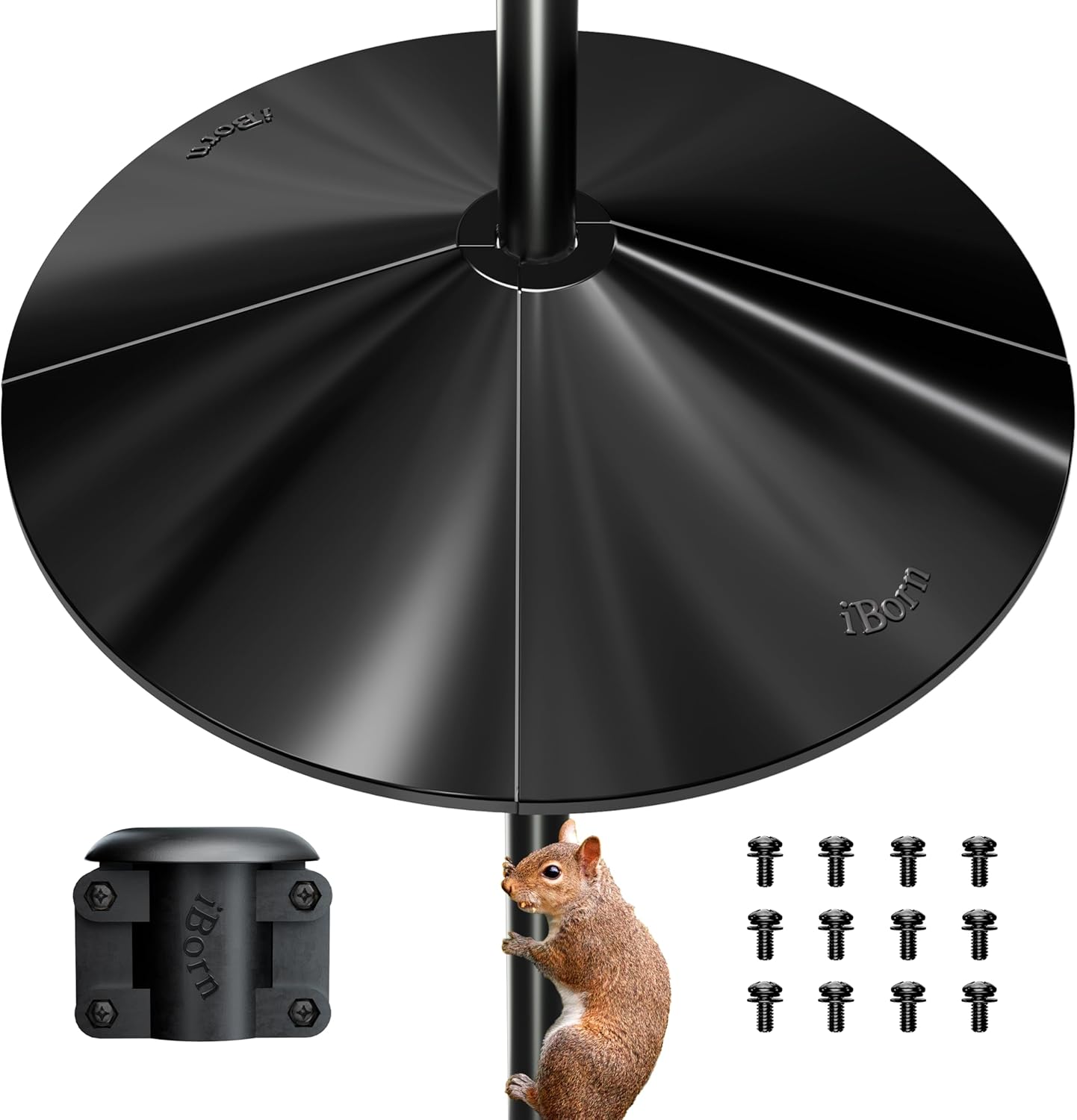
At 19.5 inches wide, this oversized baffle keeps squirrels from reaching the edges, while its wobbling collar design throws off their balance if they attempt to jump on from above. Heavy-duty 3mm polycarbonate resists chewing, warping, rust, and extreme temperatures far better than standard plastic or metal. A four-panel interlocking design also blocks rain and snow from reaching seeds below. Fits poles from 2/3 to 1 1/4 inches in diameter, backed by a 3-year guarantee.
Check on AmazonIf you click this link and buy, we earn a commission at no additional cost to you.
Which Feeder Designs Stay Accessible in Snow?
Snow affects feeder designs in different ways. An uncovered tray can disappear under accumulation quickly, which is why Audubon recommends covered ground-feeder designs for keeping snow off seed. Hopper feeders already have a roof that helps protect the food, while narrow tube feeders expose less horizontal surface to falling snow. None of those designs is automatically storm-proof, because blowing snow can still enter openings and wet seed can still spoil.
For a heavy-snow yard, I prefer a feeder that is easy to open, shake out, and dry rather than one that simply holds the most seed. Screened or well-drained trays are useful because meltwater has somewhere to go, and smaller fills make it easier to replace food that gets damp. After a storm, clear snow from ports and perches and discard seed that has become wet, compacted, moldy, or otherwise spoiled. Keeping the food usable matters more than keeping the feeder completely snow-free at every moment.

Squirrel weight automatically closes the shroud to block seed access, saving money on wasted feed over time. Chew-proof construction with 4 staggered ports and thick U-shaped metal perches for comfortable multi-bird feeding. Patented ventilation keeps seed fresher longer. Tool-free disassembly for easy cleaning. Works best with sunflower, safflower, and dried mealworms. Backed by live phone support Monday to Friday.
Check on AmazonIf you click this link and buy, we earn a commission at no additional cost to you.
Check the Pole and Hanger Before Winter Locks the Ground
A wide cover plus wet snow creates more weight high on the support, and wind adds sideways force at the same time. That does not mean every single-prong pole will fail, but it does mean a loose or leaning support deserves attention before the ground freezes. Check that ground-mounted poles are plumb, their stabilizing prongs are fully seated, and all collars, hooks, cables, and threaded connections are tight. If a permanent mount already moves noticeably by hand in calm weather, adding a larger winter cover is not the fix.
I also keep winter maintenance in mind when choosing the location. A feeder that can be reached without crossing deep drifts or standing under snow-loaded branches is much easier to keep clean and functional. The same basic setup principles in bird feeder tips still matter, but winter adds access, snow shedding, and wind exposure to the checklist. A sheltered spot near trees or shrubs can also give birds cover between feeding visits, provided the placement does not create an easy ambush point for cats.

The unique 7 prongs design of bottom enables the garden hanging stake to stand more firmly on the ground. Even in bad weather, the shepard hooks can still stand upright and is not easy to fall. Compared with ordinary 2 prongs products, it has higher stability and firmness.
Check on AmazonIf you click this link and buy, we earn a commission at no additional cost to you.
Use Temporary Canopies Only in Calm Snow
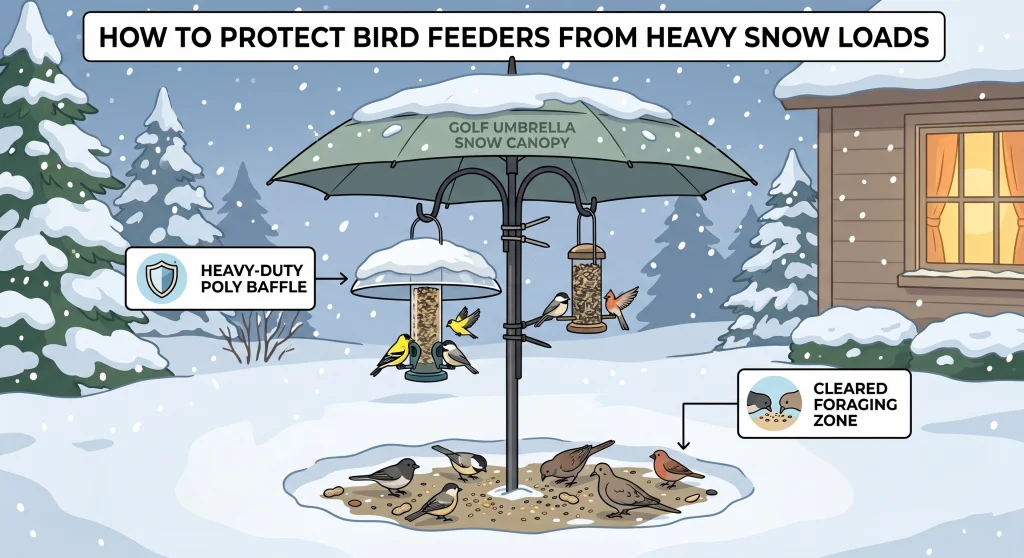
A large umbrella can create a broad dry area during calm, vertical snowfall, but I would not strap one to a feeder pole for a blizzard or high-wind event. The National Weather Service advises securing loose outdoor objects when strong winds are expected because broad objects can become dangerous or put extra load on whatever holds them. An open umbrella is essentially a large sail, even when the canopy is vented. That makes it a poor substitute for a permanently mounted cover when gusts are part of the forecast.
If you experiment with a temporary umbrella or similar canopy, use it only in light wind, attach it to a support that can safely carry it, and remove it before conditions deteriorate. A porch roof, deep eave, purpose-built rigid shelter, or temporarily relocated feeder is a better option when the storm combines heavy snow with strong wind. The useful idea here is increasing overhead shelter, not proving that one improvised canopy can survive extreme weather.
Pro Tip: Check the forecast for wind as well as snow. When a wind advisory or warning is in effect, remove or secure exposed accessories rather than adding more surface area for the wind to catch.

Tested to 100MPH, this compact umbrella features nine flexible fiberglass ribs, a vented canopy, and reinforced fabric that resists flipping and breaking in extreme conditions. At under 1 pound and folding to just 11 inches, it fits easily in purses, backpacks, and glove compartments. One-touch open and close deploys or stows it in seconds, and the quick-dry canopy blocks rain, snow, and UV light reliably storm after storm.
Check on AmazonIf you click this link and buy, we earn a commission at no additional cost to you.
Keep a Ground-Feeding Area Accessible Without Creating a Wet Seed Pile
Juncos, mourning doves, and several sparrows often feed low or on the ground, so deep snow can cover the places where they normally find fallen seed. The answer does not have to be scattering large amounts of food directly onto wet snow. A covered, screen-bottomed ground tray raised slightly above the surface keeps food easier to inspect and helps separate usable seed from meltwater and droppings. Audubon specifically notes that some ground-feeder designs include covers to prevent snow accumulation.
After the storm, make the feeding area usable again while keeping sanitation in mind:
- Clear snow from the feeder itself and from the path you use to service it.
- Use a covered ground tray or other low feeder if you want to serve ground-feeding species.
- Offer a modest amount of fresh seed so it is eaten before it becomes wet or buried again.
- Remove old, damp seed and accumulated hulls rather than repeatedly piling fresh food on top.
This gives low-feeding birds access without turning the thawing area beneath the station into a layer of spoiled food. During snowy periods, I would rather refill a small clean tray than shovel out a large mound of seed that was buried for several days.
Remove Snow and Ice Without Forcing Frozen Parts
Audubon recommends keeping winter feeders clear of snow and shaking seed feeders before refilling to loosen compacted food. That gentle approach makes sense for the hardware too. Brush or tap away loose snow rather than striking cold plastic, prying hard at frozen ports, or using sharp metal edges that can scratch or crack a feeder. If ice has locked moving parts together, forcing them is usually the fastest way to damage a hinge, perch, tube, or latch.
For a feeder that is frozen solid, bring it to a protected place and let the ice loosen gradually. Do not pour boiling water over cold plastic or glass, because a rapid temperature change can stress the material and any water left behind can refreeze outdoors. Once thawed, empty wet seed, clean away residue, dry the feeder completely, and refill with fresh food. The point is not to preserve every kernel through a storm; it is to return a clean, functional feeder to service.

Wagner's Four Season Sunflower Seed is 100% black oil sunflower seed. Sunflower seed is the favorite seed of most wild birds. It is high in energy and has a thin shell making it easy for all birds to consume. Use tray feeders or hopper feeders to attract sunflower loving songbirds. Cardinals, Chickadees, Finches, Nuthatches, Woodpeckers and much more. Trust your backyard birds to the experts at Wagner’s.
Check on AmazonIf you click this link and buy, we earn a commission at no additional cost to you.
Build a Winter Setup You Can Keep Working
Heavy snow does not require turning a backyard feeder into a miniature engineered roof. Use a cover that sheds ordinary precipitation, keep the mounting hardware stable, choose a feeder you can clear easily, and inspect the setup after accumulation or freezing rain. If the storm brings dangerous wind, protect people first and remove exposed accessories or feeders that could become loose. Once conditions are safe, clear the feeding points and replace any wet or spoiled seed.
Feeders are supplemental food sources, but they can become especially valuable when snow or ice temporarily buries natural food. Audubon notes that seed offered during a bad snow or ice storm can be life-saving for some birds. For the rest of the cold-weather setup, including placement, water, cleaning, and other physical adjustments, use winter bird feeder care. A winter station works best when you can maintain it safely after the storm, not when it depends on one piece of hardware surviving anything nature throws at it.
FAQs
❄️ Should I take my feeder down during a blizzard?
If the feeder and its support are secure and the storm is mainly snow, keeping food accessible can be useful. If strong winds make the feeder, cover, pole, or hanging hardware unstable, take exposed equipment down before conditions become dangerous. Put it back out with fresh food when it is safe to do so.
🌧️ Can I use a squirrel baffle to keep snow off my bird feeder?
A wide hanging baffle can provide useful overhead snow protection if it is securely mounted and gives the feeder enough clearance. Do not assume every baffle is rated for heavy accumulated snow, and clear buildup when conditions are safe.
🧊 How do I stop seed from freezing inside the tube?
Dry seed itself is not the main freezing problem. Moisture from snow, sleet, meltwater, or condensation can make seed clump and then freeze together. Keep the feeder dry, use drainage where appropriate, discard wet seed, and refill with a smaller fresh amount after the feeder is dry.
☂️ Can I use a golf umbrella as a snow cover?
Only treat an umbrella as a temporary cover in calm conditions. Do not leave an open umbrella attached to a feeder pole during strong wind, because the large canopy adds wind load and can become a hazard. A rigid, securely mounted cover or sheltered location is the better winter solution.
🧹 What should I do if my bird feeder snow cover breaks?
Take the damaged cover out of service and remove broken pieces from the feeding area. Inspect the feeder, hanger, and seed for damage or contamination before putting anything back out. Until the cover is replaced, use a sheltered location that remains safe for birds and easy for you to maintain.