
The Reality of a Bird Feeder Weather Guard
Adding a bird feeder weather guard can reduce one major source of moisture, but it cannot solve every mold problem. I have heard plenty of frustration from people who added a dome and still found damp or clumped seed afterward. That does not automatically mean the cover failed. A weather guard mainly reduces direct exposure to rain and snow; feeder drainage, wind, humidity, seed turnover, and cleaning still matter.
It helps to think of a bird feeder rain cover as an umbrella rather than a sealed roof. A wide dome can intercept a lot of falling precipitation, but wind-driven rain can still reach the feeder from the side. Humid air also moves freely around the seed. The cover changes exposure; it does not isolate the food from the outdoor environment.
If you are setting up a feeder that is exposed to frequent rain or snow, a cover is a useful preventive accessory. But if you are already dealing with mold in your bird feeder, remove the affected seed and clean the feeder rather than expecting a dome to rescue it. Cornell recommends discarding moldy seed and cleaning more often during wet weather.
Rain Protection Versus Ambient Humidity
The useful distinction is between direct precipitation and moisture already present in the air. A properly sized dome can reduce rain and snow reaching the feeder from above, especially in calm conditions. It cannot guarantee that feeding ports remain completely dry, because wind direction, feeder shape, overhang, and splash all affect how much water gets underneath.
Moisture does not have to arrive as rain. Cornell notes that bird seed can absorb moisture from humid air, and warm, humid conditions increase the potential for mold. A weather dome does not control relative humidity around the feeder because outdoor air still circulates underneath it. If seed is staying damp or beginning to clump even without obvious rain intrusion, reduce how long it sits in the feeder and inspect the drainage.
Field Note: When someone told me a dome was “not working,” I would separate two questions: is rain physically reaching the seed, or is the seed simply sitting too long in warm, damp conditions? A wider cover can help the first problem. Faster seed turnover and better feeder maintenance matter more for the second.
During warm, humid weather, do not rely on the cover alone. Cornell recommends filling feeders only partway in summer and refilling more frequently so seed does not sit for long periods. The benefit is faster turnover and less food at risk if conditions turn wet, not a special reduction in exposed surface area inside the tube.
Regional Rules and Fill-Level Adjustments
Climate changes how much value a weather guard provides, but there is no region where one accessory becomes universally mandatory. In places with frequent rain, a dome can be especially useful because it reduces direct wetting. Humidity can still be high in cool climates, so do not assume lower temperature removes the moisture problem. Watch how quickly seed is moving through your own feeder.
In warm, humid regions, direct rain and persistent atmospheric moisture can occur together. A dome can reduce the first problem while doing little to change the second. I would not assume the cover itself creates a trapped humid microclimate unless the feeder design actually restricts airflow; most open domes allow outdoor air to circulate freely.
In consistently humid weather, smaller refills are often more useful than filling a large tube to capacity. The goal is to have birds eat the seed before moisture and heat have much time to act on it. Check the feeder after storms, discard anything moldy, and clean more frequently when conditions stay wet.
What to Look for Before You Buy
When comparing covers, start with dimensions, material specifications, mounting method, and whether the manufacturer rates the product for year-round outdoor use. Acrylic and polycarbonate can both work outdoors, but durability depends on thickness, UV stabilization, hardware, and manufacturing quality. Do not assume every acrylic dome is fragile or every polycarbonate dome will survive any impact.
Mounting hardware matters because the cover has to stay centered over the feeder in wind and still come apart when you clean the setup. Look for hardware that is rated for the feeder’s hanging system and easy to inspect for loosening, cracking, or corrosion. There is no universal reason to prefer one specific metal or collar design as long as the attachment is secure and compatible.
UV stabilization is a useful specification for a plastic accessory that will stay outside for months or years. Sun exposure can age many plastics over time, but the rate varies widely by material and formulation. Treat UV resistance as a durability feature, not a promise that an untreated dome will fail within one season.

12-inch diameter universal dome. Protects any small or medium-sized feeder from rain and snow. Molded from uv stabilized polycarbonate, the strongest and most durable plastic available. Guaranteed for life.
Check on AmazonIf you click this link and buy, we earn a commission at no additional cost to you.
How to Size Your Cover Correctly
A cover that barely extends beyond the feeder will offer less protection from wind-driven rain than one with generous overhang. Size matters, but there is no single wind speed or overhang measurement that predicts whether the ports will stay dry. Compare the dome width with the widest part of the feeder, including trays and perches, and remember that rain angle changes with each storm.
Choose enough overhang to shelter the feeding area without crowding the birds. A wider dome generally protects better from angled rain, while a dome mounted very high above the feeder leaves more room for wind-driven rain to enter from the side. There is no universal rule that the cover must be twice the feeder diameter, so use the manufacturer’s fit guidance and judge whether the actual ports and tray remain sheltered.
| Feeder Type | Minimum Recommended Cover Diameter |
|---|---|
| Standard narrow tube feeder | Choose enough overhang to cover the ports and perches |
| Wide hopper feeder | Usually needs a wider dome than a narrow tube feeder |
| Small hummingbird bottle | Size to the bottle, ports, and hanging hardware |
| Platform or tray feeder | Wide coverage is useful because the food surface is exposed |
Pro Tips: Adjust the height so birds can approach and leave comfortably while the dome still shelters the feeding area from angled rain. If the feeder has a wide catch tray, include that tray when judging how much overhang you need rather than sizing the cover only to the narrow seed tube.
Domes Versus Squirrel Baffles
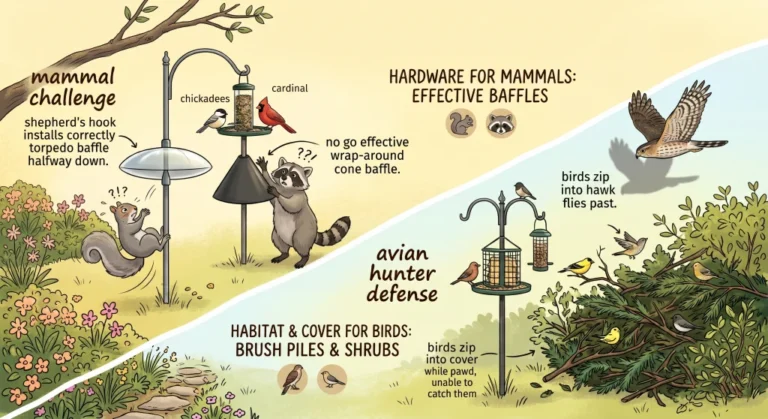
A weather dome and a squirrel baffle can look similar, but the intended function matters more than the shape. A weather guard is sold primarily to shield the feeder from rain, snow, or sun. A squirrel baffle is designed and positioned to block a squirrel’s route to the food. Some products are built to do both jobs, so check the manufacturer’s specifications rather than assuming every clear dome is weather-only.
Dedicated squirrel baffles are designed around exclusion, but their materials and load ratings vary. Do not assume a weather dome will shatter under one squirrel or that every baffle can support animal weight. In my bird feeder tips, I treat squirrel control as a placement-and-baffle problem: use a product specifically rated for that job and install it where squirrels cannot simply bypass it.
If squirrels can reach a hanging feeder from the branch, chain, trunk, or nearby launch point, a rain cover should not be assumed to stop them. Use a squirrel baffle or feeder system designed for that access route. A combination dome may provide both weather protection and squirrel resistance when the manufacturer specifically designs and installs it for both functions.

Clear 16-inch transparent dome blocks squirrels from reaching feeders from above or below. Hangs on top of any feeder or pole mounts underneath. Holds up to 12 lbs. Crystal clear design keeps birds comfortable and aware of their surroundings.
Check on AmazonIf you click this link and buy, we earn a commission at no additional cost to you.
Final Thoughts: Controlling the Outcome
A weather guard improves the odds of keeping seed dry, but it works best as one part of the setup. The habit that matters most is checking the seed itself. After wet weather, look for dampness, clumping, musty odor, or visible mold instead of assuming the dome protected everything.
If several wet or humid days are coming, put out less seed and refill more often. Let the dome reduce direct precipitation, make sure drainage remains open, and discard seed that becomes moldy rather than trying to dry and reuse it. That combination is more reliable than expecting any cover to make an outdoor feeder waterproof.

This 19.5-inch heavy-duty polycarbonate dome fits most hanging bird feeders, shielding seeds from rain, snow, and squirrel damage with an airtight four-panel interlocking design. At 3mm thick, it stays crystal clear for unobstructed 360-degree views while keeping seeds fresh and dry. Setup takes just seconds with included hardware, and a 3-year guarantee backs every purchase.
Check on AmazonIf you click this link and buy, we earn a commission at no additional cost to you.
FAQs
🌧️ Do weather guards scare the birds away?
Most birds can use feeders with weather covers, but a new dome changes the shape and approach space around the feeder, so some individuals may be cautious at first. Give them time and make sure the cover does not crowd the perches or ports. Clear material can preserve your view, but there is no solid basis for promising that birds adapt faster to clear acrylic.
💦 Why is my seed still getting wet under the dome?
Common causes include wind-driven rain reaching under the dome, poor feeder drainage, condensation or persistent humid conditions, and seed sitting too long after it becomes damp. A wider cover may improve rain protection, while smaller refills and faster turnover help during humid weather.
🐿️ Can a weather cover stop squirrels from climbing down the chain?
Not unless the product is specifically designed and installed as a squirrel baffle. Some domes are weather guards only, while others are combination weather-and-squirrel accessories. Check the product’s intended use rather than judging by thickness or appearance alone.
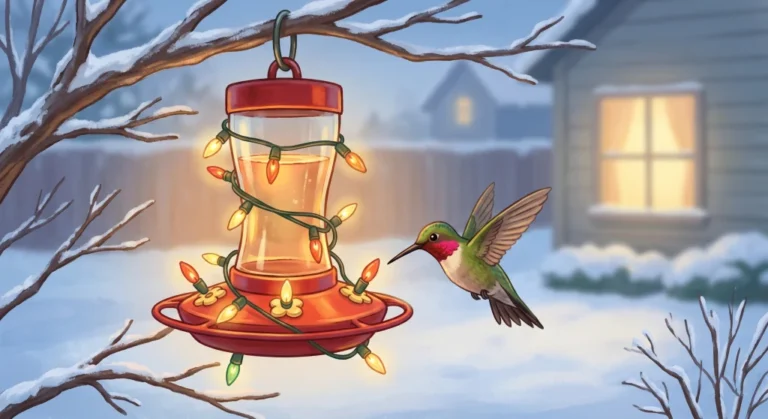
❄️ Can I leave the dome on during the winter?
A weather dome can help reduce snow reaching the feeding ports, and many are intended for year-round use. Follow the manufacturer’s winter and load guidance, clear excessive accumulation when practical, and inspect the mounting hardware after severe weather rather than assuming every dome has the same snow-load tolerance.