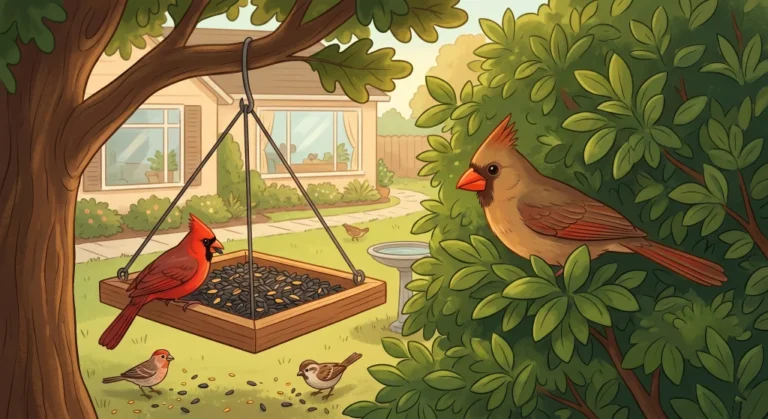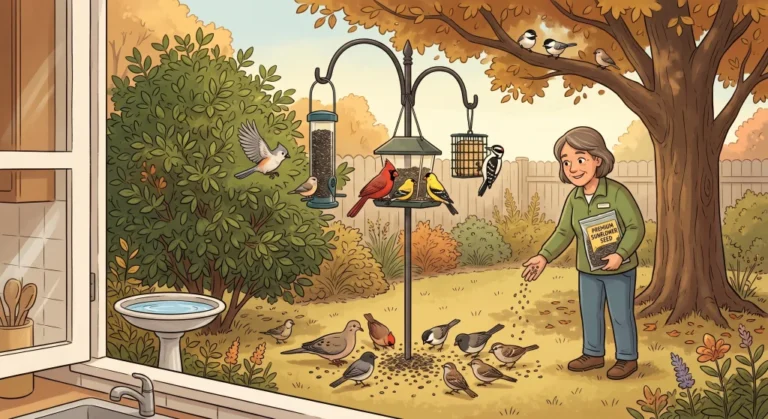
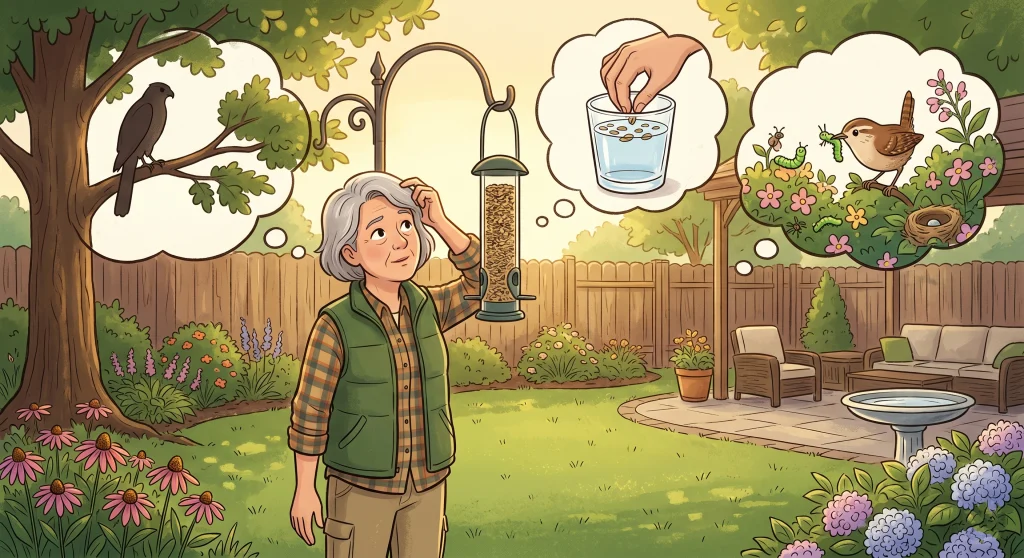
The Frustration of an Empty Feeder
You filled the feeder, the birds were showing up every morning, and you had a great routine going. Then, without warning, the activity dropped to zero. You check the seed level, and it is completely full. You step back, look at the setup, and wonder if the food has gone bad, if the location is suddenly wrong, or if the birds simply moved on. It is an incredibly frustrating situation for anyone who enjoys watching backyard wildlife.
From what I have seen in bird-feeding retail, people often blame themselves first. They assume they cleaned the feeder incorrectly, bought the wrong seed, or somehow made the yard less attractive overnight. Feeder maintenance matters, but birds also respond constantly to natural food, weather, predators, habitat, and seasonal changes. A feeder can stay exactly the same while the conditions that made birds use it change around it.
Sometimes the disruption is brief and activity returns without any intervention. Other times, the seed, feeder hygiene, surrounding habitat, or predator pressure really does need attention. I get better results by diagnosing the pattern of the decline before changing anything. A sudden drop and a slow seasonal decline do not point to the same first check.
The Invisible Seed Quality Problem
If you had steady feeder traffic and the decline began around the time you refilled, seed quality belongs near the top of the checklist. A bag can be newly opened and still have been stored poorly, exposed to moisture, or sitting long enough for oily seed to become stale. If birds inspect the feeder but leave most of the food untouched, compare the timing of the slowdown with the last refill before changing the entire setup.
Community discussions provide a useful reminder here: feeders sometimes lose activity immediately after a seed change, even when the new bag looks similar to the old one. That does not prove every sudden disappearance is caused by a bad batch, but it gives you a clean troubleshooting test. If the decline lines up with a refill, inspect the seed for dampness, mold, insects, musty odor, clumping, or an unusually high amount of empty material and replace questionable food rather than waiting for birds to accept it.
Oily foods such as sunflower seed, peanuts, suet, and nyjer do not stay in ideal condition forever, especially when heat and moisture are involved. Nyjer in particular can become stale quickly even when it still looks normal, and wet seed can develop mold that should never be offered. You do not need to guess how a bird detects a poor batch to act on the practical signal: if food has become damp, moldy, insect-damaged, musty, or stale, discard it. If storage is the weak point, my guide on how to keep bird seed fresh covers better ways to keep supplies cool and dry.
How to Check Your Seed Viability
One rough screening trick used in bird-feeding retail is the float test. I treat it as a way to spot an unusual amount of very light or empty material, not as a scientific test for rancidity or food safety. Seed can pass a float test and still be stale, moldy, or otherwise unsuitable, so the result should never override obvious signs of spoilage.
If you use the test, drop a small sample into water and look for an unusually large amount of floating, obviously empty material. A high proportion of light hulls can justify opening and inspecting more of the bag, but floating does not prove that the seed is rancid, and sinking does not prove that it is fresh. Use the test only as one clue alongside smell, moisture, mold, insects, clumping, and how long the seed has been stored.
Warning: Never put wet seed from the float test back into your feeder. Moisture causes mold to grow rapidly, which can make birds severely ill. Throw the tested handful away.

Wagner's Four Season Sunflower Seed is 100% black oil sunflower seed. Sunflower seed is the favorite seed of most wild birds. It is high in energy and has a thin shell making it easy for all birds to consume. Use tray feeders or hopper feeders to attract sunflower loving songbirds. Cardinals, Chickadees, Finches, Nuthatches, Woodpeckers and much more. Trust your backyard birds to the experts at Wagner’s.
Check on AmazonIf you click this link and buy, we earn a commission at no additional cost to you.
Predator Presence and Sudden Silence
A sudden drop across several species points me toward a different set of possibilities than a gradual seasonal decline. A Cooper’s Hawk, Sharp-shinned Hawk, cat, or another predator can sharply reduce visible feeder activity, and Project FeederWatch identifies predators as a common cause of dramatic local drops. That makes predator presence worth checking, but an empty feeder overnight is not proof by itself that a hawk is responsible.
Cooper’s Hawks and Sharp-shinned Hawks regularly prey on birds and can appear around feeding stations because feeders concentrate potential prey. They may approach quickly through cover or sit quietly nearby, so you may notice the effect on feeder traffic before you actually see the raptor. Some songbirds may avoid the feeder, shorten their visits, or use more cover while a predator is active nearby rather than disappearing from the entire neighborhood.
If you suspect a hawk, spend a little time watching the surrounding trees, fence lines, and the birds’ behavior instead of relying on one clue. Alarm calls, abrupt flushing, repeated low passes by a raptor, or feeder birds crowding into cover can all support the diagnosis. None of those signs is conclusive on its own, which is why a short period of observation is more useful than assuming every sudden lull is a hawk.
Field Note: One pattern I learned to check before changing seed or moving feeders was whether several species had gone quiet at the same time. When that happened, looking beyond the feeder often mattered more than looking inside it. A raptor using the yard, a roaming cat, or another sudden disturbance can change feeding behavior even though nothing about the feeder itself has changed.
Do not harass or attempt to remove a bird of prey. If a hawk is repeatedly hunting around the feeding station and you want to reduce the concentration of prey, taking the feeders down for several days can disperse the smaller birds. Cornell suggests trying the feeders again after roughly a week or two; by then the hawk may have shifted its hunting elsewhere, although there is no fixed timetable for every yard.

A weather-protected suet feeder that holds 3 suet cakes or 1 brick. Features a roof to keep rain and snow out, an EZ Fill design for quick refilling, and vinyl-coated wire that prevents birds' feet from freezing in winter or burning in summer.
Check on AmazonIf you click this link and buy, we earn a commission at no additional cost to you.
Competition from the Neighborhood
Sometimes the reason birds disappeared has nothing to do with threats or spoiled seed. Food availability changes constantly across a neighborhood, and birds shift where they forage as natural and supplemental food changes. A new feeder nearby can be part of that picture, but so can a berry crop, seed-producing plants, insects, weather, or a change in habitat.
I did see people from the same general area report very different feeder activity, and that is a useful reminder that bird traffic is highly local. If another yard offers food that matches the species already present, some birds may spend more time there, but I would not assume a neighbor has permanently “stolen” your flock. First check whether your own seed is fresh, your feeder is clean, and the food you offer matches the birds you are actually seeing nearby.
Assuming your yard is broken and giving up entirely when activity drops.
Upgrading a specific element of your setup, like adding a dedicated suet feeder or switching to pure black oil sunflower, to give birds a reason to add your yard back to their daily circuit.
You do not need to compete by buying a collection of new feeders. Focus on whether your current food is appropriate and fresh, then add a different resource only when it serves a real purpose for the birds present in your area. Our guide to the best bird seed explains which seed types fit different feeder visitors. Depending on season and climate, water or suet can also broaden what your yard offers without turning the solution into a shopping spree.

A 75-watt thermostatically controlled heated bird bath that activates only when needed, saving energy. Shallow saucer design holds 1 quart of water for easy bird access. Built from powder-coated metal for lasting durability. Mounts three ways - deck, clamp, or ground. Power cord tucks away for spring and summer use.
Check on AmazonIf you click this link and buy, we earn a commission at no additional cost to you.
The Seasonal Summer Disappearance
Seasonal feeder lulls are another pattern I heard about regularly, but the timing is not identical in every region. Late summer and early fall can bring noticeably lower feeder use when natural seeds, berries, and insects are abundant, while migration and breeding can change which species are present and how visible they are. That is why a gradual decline tied to the calendar needs a different diagnosis from a sudden overnight disappearance.
Breeding can change feeding behavior because many familiar backyard songbirds rely heavily on insects and other protein-rich foods when raising young. Parents that still eat seed themselves may spend more of the day searching for food suitable for nestlings or fledglings, so their feeder routine can change. This is not universal across every bird species, but it is one reason a feeder can become quieter even though birds are still active in the neighborhood.
Migration adds another layer. Some winter visitors leave, some summer species arrive, and resident birds change territories or become less conspicuous while breeding. The result can be a very different mix of feeder visitors from one month to the next, and the direction of that change depends heavily on where you live rather than following one nationwide calendar.
Natural food can be the simplest explanation of all. When berries, seeds, fruits, and insects are abundant, feeder use may drop because birds have more choices, not because your yard has become unsuitable. If the slowdown is clearly seasonal, my specific breakdown on why birds stop coming to your feeder in summer explains how natural food and breeding behavior can change what you see.
How to Diagnose Your Empty Feeder
When you are staring at a full feeder and an empty yard, run through a short process of elimination before making major changes. The pattern of the decline gives you useful clues, but no single symptom proves one cause. Here is the order I would use to narrow the possibilities:
- Did several species vanish suddenly? Watch for a hawk, cat, disturbance, severe weather, or another abrupt change. If a hawk is repeatedly hunting the feeder, taking feeders down for several days can help disperse the prey concentration.
- Did activity drop right after a refill? Inspect the new seed for dampness, mold, insects, clumping, stale odor, or excessive empty material. Replace questionable seed and clean out any wet or spoiled residue before refilling.
- Has it been a gradual decline over a few weeks? Consider seasonal movement, weather, habitat changes, and whether natural seeds, berries, fruits, or insects have become especially abundant nearby.
- Is the feeder holding old, wet, moldy, or compacted seed? Discard the food, scrub the feeder thoroughly with soap and an appropriate disinfecting routine, rinse it well, and let it dry completely before adding fresh seed.
| Symptom | What to Check First |
|---|---|
| Sudden drop to zero in one day | Predator, disturbance, weather, or another abrupt local change |
| Drop occurred after refilling | Seed freshness, moisture, mold, insects, and feeder cleanliness |
| Gradual seasonal decline | Natural food, breeding behavior, migration, and local weather |
| Drop during a period of abundant natural food | Natural food availability, habitat changes, and other nearby food sources |
If you are entirely new to this hobby and trying to figure out the broader mechanics of drawing a flock in, I highly recommend reviewing the foundational steps in our guide on how to attract birds, as well as the specifics of getting birds to a new feeder.
Closing Thoughts on Feeder Lulls
When your feeding station goes quiet, resist the urge to immediately move it or buy a different feeder. React to the pattern, not the silence. Check seed condition and feeder cleanliness, look for sudden changes such as predators or weather, then consider seasonal food, migration, and habitat before overhauling the setup.
Sometimes the right response is replacing spoiled seed or cleaning the feeder. Sometimes it is temporarily taking feeders down while a hawk is actively hunting nearby, and sometimes there is nothing to fix because birds are using abundant natural food elsewhere. Keeping the feeder clean, the food fresh, and your expectations tied to local conditions is more useful than trying to force traffic back immediately.

A premium nyjer seed with high oil content, specially suited for small songbirds like finches and buntings. Tiny, bite-sized seeds are easy for small beaks to handle and packed with energy. Best used in finch-specific feeders with small ports.
Check on AmazonIf you click this link and buy, we earn a commission at no additional cost to you.
More Troubleshooting Guides
If you are dealing with a specific disappearance issue, these detailed guides break down the exact steps to identify the problem and get your backyard activity back to normal.
| Topic | What You Will Learn |
|---|---|
| Summer Feeding Slowdowns | Why nesting season changes bird diets and how to adjust your offerings. |
| Seed Storage and Freshness | How to prevent rancid oils and keep your supplies viable longer. |
FAQs
🦅 Will a hawk stay by my feeder forever?
There is no fixed timetable. If a hawk repeatedly hunts around your feeder, taking the feeder down for several days can disperse the smaller birds; Cornell suggests trying it again after about a week or two. The hawk may move elsewhere once the concentrated prey is no longer available.
🌧️ Do birds stop eating after heavy rain?
Heavy rain can temporarily reduce visible feeder activity, and weather can shift where birds forage before and after a storm. The more important maintenance issue is wet seed: if it stays damp, clumps, smells musty, or shows mold, discard it and let the feeder dry before refilling.
🌻 Can I mix an old bag of seed with a new bag?
Do not mix seed you already suspect is stale, damp, moldy, or insect-damaged into a fresh bag. You will only make it harder to judge the condition of the new food. If the older seed is still dry, clean, and clearly in good condition, storage age and seed type matter more than the fact that the bags are different.
🐦 Why have birds left my feeder but still visit the bird bath?
That pattern can happen when birds are finding plenty of natural food while still using your yard for water. It can also be a reason to inspect the feeder and seed for moisture, spoilage, or cleanliness problems. The bird bath staying active does not by itself identify which feeder issue is responsible.
🐿️ Will squirrels scare all the birds away permanently?
Squirrels can monopolize a feeder and make some birds wait or use another feeding spot, but that does not usually mean the birds have permanently abandoned the yard. Watch whether birds return between squirrel visits before assuming the entire feeder location has failed.