
The Simple 1-to-4 Nectar Mix
If you are looking for a hummingbird nectar recipe, use refined white table sugar and water. Smithsonian’s National Zoo recommends exactly that combination and specifically advises against honey, corn syrup, raw sugars, and red dye. In practice, the simplest recipe is also the easiest one to make consistently.
Use one part refined white sugar to four parts water. That is the standard feeder recipe recommended by Smithsonian, Audubon, and Cornell. You do not need to make the solution sweeter to attract more birds, and changing the ratio introduces a variable with no practical benefit.
For a small batch, mix one quarter cup of sugar with one cup of water. For a larger batch, use one cup of sugar with four cups of water. Stir or shake until the sugar is fully dissolved, then fill only as much of the feeder as your birds are likely to use before the next cleaning.
Field Note: When people asked whether they needed a special bottled formula, I kept coming back to the same answer: start with the standard clear one-to-four mix and keep the feeder clean. If birds are not visiting, changing to a more complicated nectar usually does not address the real problem, which may be timing, placement, territorial behavior, or simply whether hummingbirds are present nearby.
If you are just getting started, the broader guide on how to attract birds covers feeders, water, placement, and habitat. For hummingbirds specifically, the nectar ratio matters, but feeder cleanliness and how often you replace the solution matter just as much.
Do You Actually Need to Boil the Water?
You will see conflicting advice about boiling because some older instructions recommend it while Smithsonian’s current nectar guidance says it is not required. The part that matters is using safe water and getting the sugar fully dissolved.
According to Smithsonian’s National Zoo, tap water is fine and the water does not need to be boiled. You can make nectar with drinkable tap water at room temperature or slightly warm water, as long as the sugar dissolves completely.
Warm water can make the job faster because granulated sugar dissolves more readily in it. There is no need to invent an extra treatment step for ordinary drinkable tap water. If your household water has a specific quality issue that makes it unsuitable for drinking, use the same safe alternative you would use for yourself.
Leaving a pot of sugar water on the stove to boil vigorously for ten minutes to sterilize it.
Using drinkable water, warm if convenient, and stirring until the measured sugar dissolves completely before filling the feeder.
Warning: If you heat or boil the water, avoid simmering a measured sugar-water mixture for a long time because evaporation changes the water volume and therefore the ratio. The easiest method is to measure the water and sugar accurately, dissolve the sugar, and let the solution cool before filling the feeder.
Why Refined White Sugar Is the Recommended Choice
For hummingbird feeders, “less processed” does not mean better. Smithsonian and Audubon both recommend refined white sugar and advise against raw, brown, organic, or other unprocessed sugars.
Brown, raw, turbinado, and similar sugars can contain compounds and minerals that refined white sugar does not. Audubon specifically warns that brown, raw, organic sugar and molasses can contain iron at levels that are inappropriate for hummingbirds.
You do not need to diagnose a specific disease mechanism to make the safer choice. Wildlife organizations consistently recommend refined white table sugar for feeders and advise against molasses-containing and unrefined alternatives. Follow that recommendation rather than substituting a sugar because it sounds more natural.
3 Things to Never Add to Your Feeder
The standard recipe does not need additives. These are the common substitutions I would leave out completely.
1. Red Dye
Hummingbirds notice bright colors, including red, but the nectar itself should remain clear. Red dye provides no nutritional benefit, is unnecessary for attraction, and Smithsonian and Audubon both advise against adding it because it could be harmful. Color on the feeder is enough.
2. Honey
Honey is not a substitute for refined white sugar. Smithsonian says not to use it, and Audubon notes that honey can promote dangerous fungal growth. It also contains a different mix of sugars than the standard feeder recipe, so there is no reason to experiment with it.
3. Artificial Sweeteners and Corn Syrup
Artificial sweeteners do not provide the carbohydrate energy the feeder is meant to supply, so they have no place in hummingbird nectar. Corn syrup is also specifically excluded by Smithsonian’s recipe guidance. Use refined white sugar rather than trying to match sweetness with a different product.
| Additive | Why to Avoid It |
|---|---|
| Red Food Coloring | Potentially harmful, zero nutritional benefit. |
| Honey | Not recommended; it can promote dangerous fungal growth. |
| Artificial Sweeteners | Does not provide the carbohydrate energy the feeder is intended to supply. |
How to Keep Ants Out of the Nectar
Ants can quickly discover leaking or exposed sugar water and may crowd the feeder or end up in the nectar. A few ants do not automatically make hummingbirds abandon a feeder, but preventing access makes the station cleaner and easier to maintain.
Avoid coating feeder poles or hanging hardware with oil, petroleum jelly, or sticky substances where birds can contact them. Cornell specifically advises against oils and other sticky materials around feeders because they can contaminate the feeding area and create risks for birds.
An ant moat is one practical option. It places a small water barrier between the hanging point and the feeder, which can stop many ants from reaching the nectar. Also check for leaks and spills, and consider moving the feeder if insects repeatedly overwhelm it. If you are learning how to attract hummingbirds without attracting pests, choose a feeder that is easy to clean and does not drip easily.

Two 16 oz saucer feeders each with 6 flower-shaped ports and raised petals to keep rainwater out. Built-in ant moat blocks insects from reaching the nectar. Clear reservoir with fill markings for easy monitoring. Hang with included brass rod or pole mount on a 5/8 inch dowel or 1/2 inch copper pole.
Check on AmazonIf you click this link and buy, we earn a commission at no additional cost to you.
Hot Weather Adjustments and Storage
Making the nectar is easy. Keeping both the solution and the feeder clean is the more important maintenance job, especially in hot weather. Sugar water supports mold and fermentation, so replacement frequency needs to increase as conditions get warmer.
Smithsonian recommends storing extra sugar water in the refrigerator for no more than one week. I would make only as much as you can use within that window and keep it in a clean, closed container. Outside, do not rely on the refrigerator timeline: feeder nectar needs much more frequent replacement and cleaning.
| Outdoor Temperature | Replacement Schedule |
|---|---|
| 70°F to 80°F (Mild) | About every 2 to 3 days; sooner if cloudy or contaminated |
| 81°F to 89°F (Warm) | Every 1 to 2 days is a safer routine |
| 90°F and above (Extreme Heat) | Check daily and replace daily when conditions are very hot |
Pro Tips: Do not wait for a fixed deadline if the nectar turns cloudy or you see mold, debris, or contamination around the ports. Replace the solution and clean the feeder immediately. In very hot weather, daily replacement is a sensible routine.
In hot weather, make smaller batches and fill only what local birds are likely to use before the next cleaning. There is no need to fill a large reservoir just because it holds more. It is also useful to know when do hummingbirds come back in your region so your feeder is ready when birds are present rather than sitting outside unused.

No-boil nectar maker ready in under 60 seconds. Just add white sugar and cold tap water, shake with the included stainless steel whisk ball, and pour. Precise fill lines for both hummingbirds (1:4 ratio) and orioles (1:6 ratio) so no measuring or math needed. Makes a full quart for a fraction of store-bought nectar cost. Leak-proof and fridge-safe for easy storage.
Check on AmazonIf you click this link and buy, we earn a commission at no additional cost to you.
Final Thoughts: Keep Hummingbird Nectar Simple
Commercial nectar is not necessary to feed hummingbirds successfully. A correctly measured homemade mix of refined white sugar and water follows the recipe recommended by major bird and wildlife organizations and gives you complete control over what goes into the feeder.
I would not make blanket safety claims about every commercial product without evaluating its ingredients. The simpler point is enough: you do not need preservatives, dye, vitamins, or specialty additives to make a suitable feeder solution at home.
Stick to the one-to-four sugar-water mix, use refined white sugar, and keep the feeder clean. Replace the solution frequently, especially in hot weather, and discard it immediately if you see cloudiness, mold, or contamination. Those maintenance habits matter more than adding anything extra to the recipe.
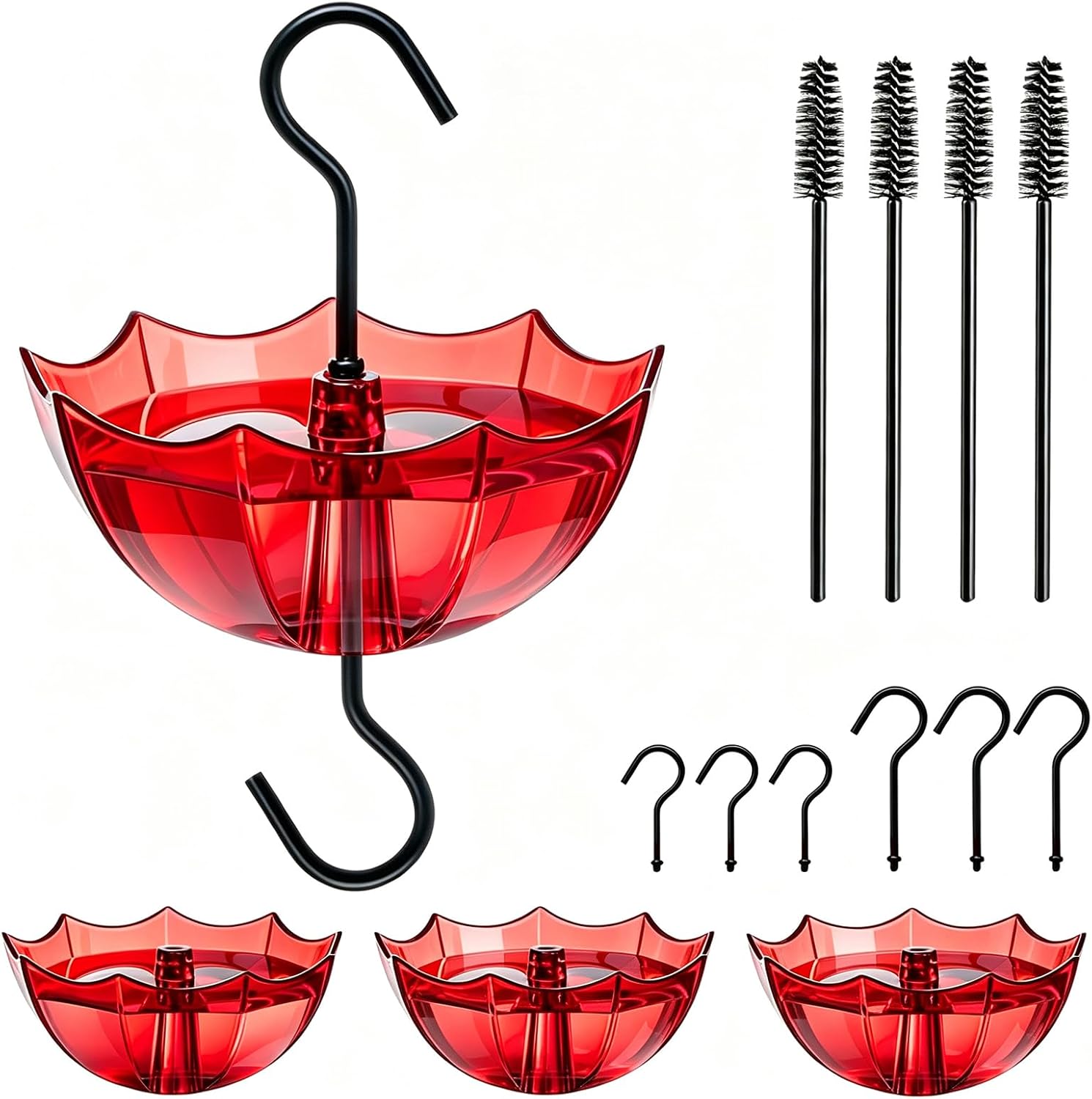
Large 3.94 inch clear cups hold up to 5 oz of water to block even big ants from reaching nectar. Bright red umbrella design adds a decorative touch to any garden. Includes 8 hooks in two sizes for easy top and bottom attachment.
Check on AmazonIf you click this link and buy, we earn a commission at no additional cost to you.
FAQs
🧊 Can I put cold nectar directly into the feeder?
Cool refrigerated nectar can be used after storage, but there is no advantage to serving it ice-cold. If convenient, let the amount you need warm toward room temperature while you clean the feeder. The more important rule is that the stored batch is still fresh and has been refrigerated for no more than about one week.
🚰 Should I use filtered water or tap water?
Drinkable tap water is fine for hummingbird nectar according to Smithsonian. If your household water is not suitable for drinking for a specific reason, use the same safe alternative you normally drink. There is no general requirement to buy spring or filtered water.
🥄 Do I need to measure the sugar exactly?
Measure one part refined white sugar to four parts water rather than guessing. There is no reason to deliberately make the mix stronger or weaker when the standard ratio is simple to reproduce. Measuring cups make consistency easy.
🐝 How do I keep bees away from my nectar?
Bees and wasps are more likely to exploit nectar they can physically reach, especially around leaks and spills. Keep the outside of the feeder clean and repair or replace dripping feeders. Saucer-style designs can make nectar harder for some insects to reach, although no feeder design is completely bee-proof.
🧽 Do I need to use soap when I change the nectar?
Clean the feeder thoroughly every time you replace the nectar, taking it apart so you can reach ports and crevices. Hot water and a bottle brush work for routine scrubbing; Cornell also describes dilute bleach as an option when needed, followed by very thorough rinsing and air drying. The key is removing residue and mold completely before refilling.