Why Window Feeders Need a Different Approach
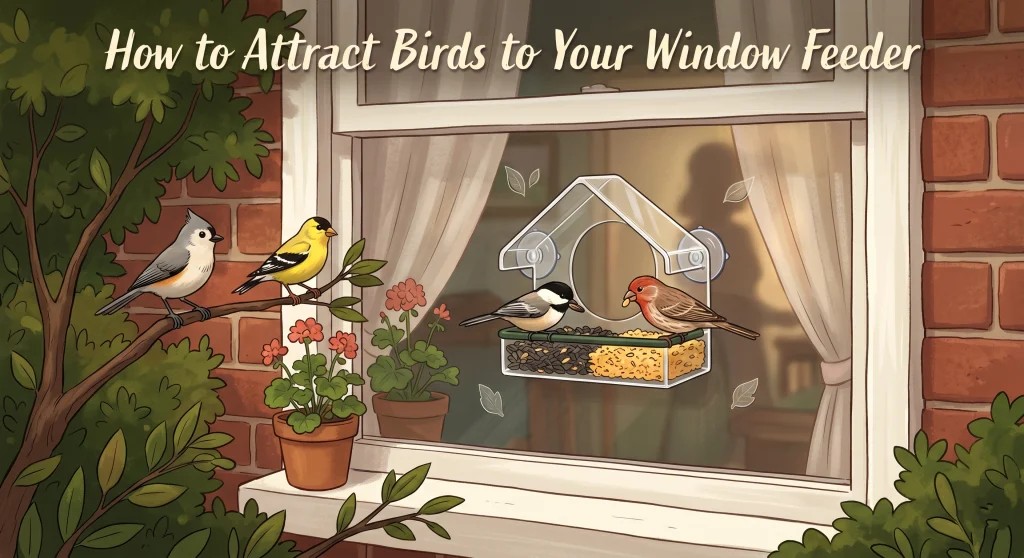
If you are searching for how to attract birds to window feeder setups because nothing is coming, you are in good company. A window feeder asks birds to approach much closer to a building than they may be used to, and the surrounding glass can reflect sky, vegetation, and movement from inside the room. Compared with a feeder out in the yard, that makes the approach feel different enough that some birds investigate quickly while others hang back.
Glass is a special problem because birds may see reflected sky or vegetation rather than recognize the pane as a solid barrier. When we talk about the basics of how to attract birds, the same general principle still applies: the feeding spot has to feel usable without creating an unnecessary collision hazard. On a bare apartment window with little nearby outdoor structure, the feeder may simply take longer to be noticed and accepted.
I have watched the same frustration repeat with people who put a window feeder in the most convenient viewing spot and expect immediate activity. Sometimes nothing is technically wrong with the feeder at all. The glass, indoor movement, surrounding cover, and local bird traffic can all affect how quickly it gets investigated. Before replacing the feeder or changing several things at once, I would check those factors one by one.
Solving the Suction Cup Failure Problem
Before worrying about whether birds like the location, make sure the feeder can stay securely mounted. A feeder that repeatedly slips, tilts, or falls is a maintenance problem first and an attraction problem second. A stable setup also makes it easier to keep seed dry, clean the tray properly, and avoid having to reposition the feeder every few days.
Suction-cup quality matters, but surface preparation and temperature matter too. Clean both the glass and the cups thoroughly before mounting, and make sure the contact surfaces are free of dirt, grease, or moisture. If the cups have become stiff in cold weather, warming them can make them more pliable before you press them firmly against the glass.
Here is my routine for keeping them securely stuck to the glass:
- Clean the specific target area of the glass with white vinegar or rubbing alcohol and let it dry completely.
- Soak the suction cups in warm water for five minutes to soften the plastic and make them pliable.
- Apply a tiny, almost invisible dab of cooking oil to the inside of the cup to create an airtight seal.
- Press the cups firmly against the window, pushing all the air bubbles out from the center to the edges.
You also have to respect the feeder’s weight rating. Count the feeder itself, the seed load, and the possibility of more than one bird landing at the same time rather than assuming the suction cups can hold whatever fits in the tray. If the mounted unit is regularly carrying more weight than it was designed for, a traditional setup covered in our guide to how to attract birds to a feeder may be the more dependable option.

A large window bird feeder made from 1/4-inch premium cast acrylic for exceptional durability. Holds over 4 cups of seed and attaches securely to any window via 3 ultra-strong suction cups, with 3 extras included. Features a slide-out tray for quick, mess-free cleaning and refilling. Backed by a lifetime guarantee.
Check on AmazonIf you click this link and buy, we earn a commission at no additional cost to you.
The Human Silhouette Issue (And the Curtain Fix)
Once the feeder is securely mounted, indoor movement becomes another variable worth watching. Some birds tolerate people behind the glass quickly, while others flush when someone walks past, a dog jumps onto the couch, or hands suddenly appear near the window. If birds approach but repeatedly veer away when the room is active, your silhouette may be part of the problem.
Field Note: One of the most common things I heard at the store was people saying their window feeder was a complete failure. I would ask where it was located, and they would usually say something like, “Right above the kitchen sink where I do dishes,” or “Right next to the couch where the dog sleeps.” They had unintentionally placed the feeder in the highest-traffic areas of their home.
Window feeders can have a ramp-up period while birds get used to activity on the other side of the glass. One practical tactic reported by r/birdfeeding users is to use a light, sheer curtain over the lower portion of the window if human movement seems to be spooking birds. It is a community-tested idea rather than a scientific rule, but it is a simple adjustment to try before moving the entire feeder.
If activity improves while the curtain is in place, you can gradually expose more of the window and see whether the visits continue. Some birds may become accustomed to routine household movement, while others remain more cautious. The useful lesson is to change one variable at a time so you can tell whether indoor movement was actually affecting the feeder.
Choosing a Window Location Without Adding Collision Risk
Indoor movement is only one part of the location decision. Birds also need to discover the feeder from the outdoor space they already use, so a window overlooking an area with regular bird activity may be noticed sooner than one facing a completely barren wall or upper story. At the same time, vegetation and reflected vegetation around windows must be handled carefully because anything that makes glass look like open habitat can increase collision risk.
If you are in an apartment or townhouse with little outdoor vegetation, do not try to create the illusion of cover by placing a tall houseplant immediately behind the glass. Indoor vegetation visible through a window can make the pane look more like open habitat. If you already have outdoor plants, balcony rails, or nearby shrubs, treat them as part of the overall approach route, but pair that location with proper window-safety treatment rather than assuming closer vegetation automatically makes the feeder safer or faster to accept.
There is also an important safety factor here: feeders mounted directly on the window fall within the close-to-glass side of the familiar 3-foot or 30-foot guidance, which can reduce the severity of some collisions because birds have less distance to build speed. That does not make the rest of the pane harmless. Treat the exterior surface of the glass with a dense, visible pattern rather than relying on one or two decorative decals, so birds can recognize the full window as a barrier instead of seeing reflected sky or vegetation.
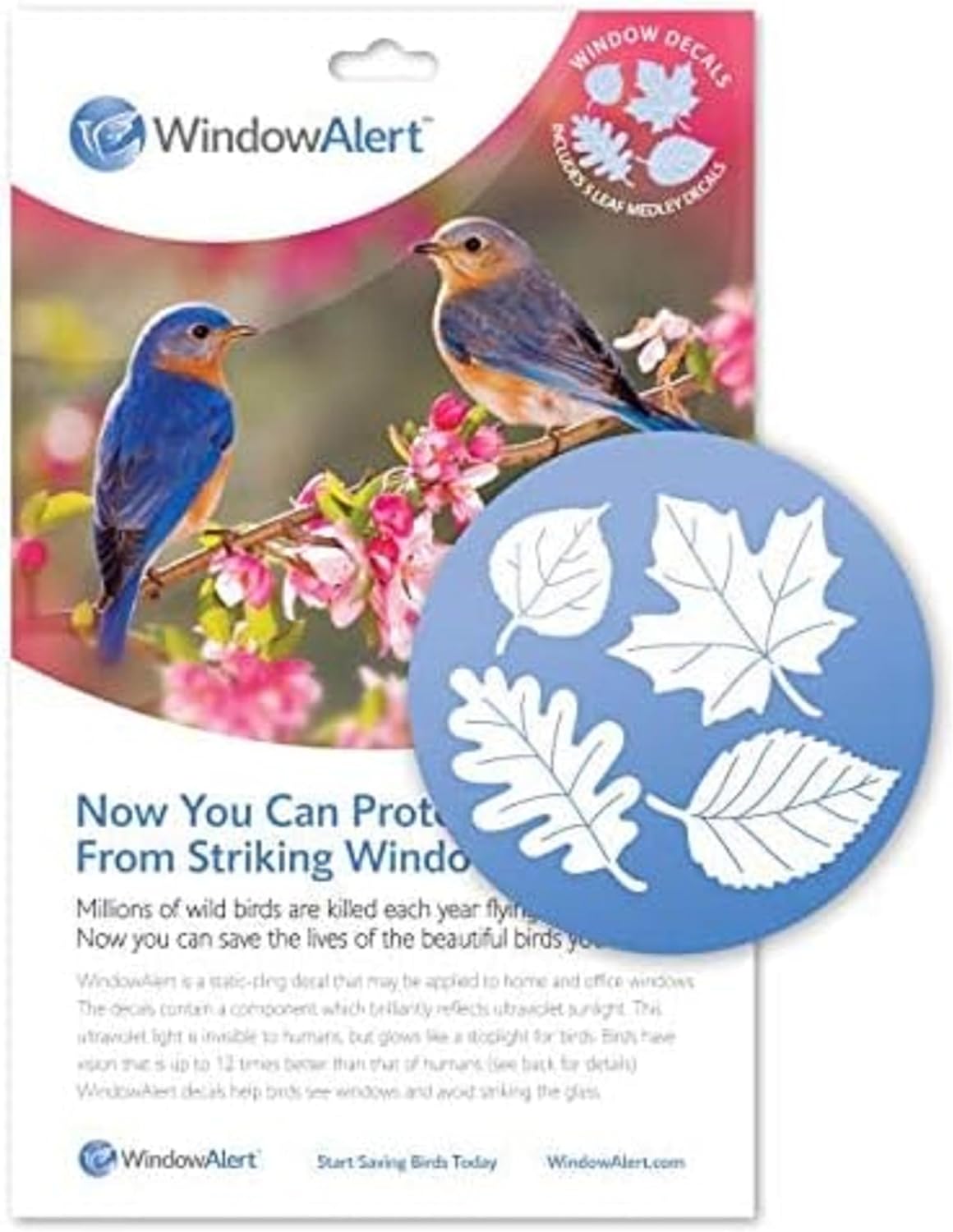
A pack of 5 semi-transparent leaf-design static-cling decals that prevent birds from flying into windows and sliding doors. Made from UV-reflective material that appears as a glowing warning to birds while looking like frosted glass to humans. Each decal measures 2.5-3.5 inches across. Apply to clean exterior glass surfaces. Made in the USA.
Check on AmazonIf you click this link and buy, we earn a commission at no additional cost to you.
The Best Seeds to Use for Window Feeders
Once you have the placement right and a safe approach established, you need to offer a reward that makes the trip worthwhile. When you are feeding birds right up against your house, the rules for seed selection change. If you use a cheap mixed bag of seed, the birds are going to sweep the filler seeds out onto your window sill, your patio, or your downstairs neighbor’s balcony.
In my experience, a simple seed choice makes troubleshooting easier because you can tell whether birds are accepting the food instead of sorting through a mixed bag. For a window feeder, mess matters more than it does at many yard feeders because hulls and spilled grain can collect on the sill, patio, balcony, or a neighbor’s space below. That makes shelled sunflower especially practical, although it still needs to be kept fresh and dry.
| Food Type | Best For | Window Feeder Pros & Cons |
|---|---|---|
| Sunflower Hearts (Chips) | Chickadees, Finches, Titmice | Very little hull mess and easy for many common seed-eating birds to handle, but shelled seed spoils faster once exposed. |
| Safflower Seed | Cardinals, House Finches | Useful for cardinals and some finches, and sometimes less attractive to squirrels or blackbirds, but results vary and the shells still create cleanup. |
| Black Oil Sunflower | Woodpeckers, Nuthatches, Jays | Attracts a broad range of seed-eating birds, but the hulls can create substantial mess on a sill or balcony below. |
| Suet Nuggets | Woodpeckers, Wrens | Can appeal to some suet-eating species and avoids seed hulls, but soft or greasy pieces may be messy in warm conditions. |
If birds are sorting through a mixed seed or leaving most of it behind, sunflower hearts are a reasonable single-food test. They are easy for many seed-eating birds to handle and eliminate most hull cleanup around the window. Because the protective shell has already been removed, however, put out modest amounts and replace anything that becomes damp, stale, or spoiled rather than filling a small window tray for long periods.

Shell-free, 100% consumable dehulled and chipped sunflower seeds with zero waste. Attracts finches, chickadees, sparrows, grosbeaks, flickers, titmice, and nuthatches. Compatible with hopper, tube, and platform feeders. Family owned, American made.
Check on AmazonIf you click this link and buy, we earn a commission at no additional cost to you.
Final Thoughts: Give It Time
There is no reliable countdown for when birds will begin using a window feeder. Some are investigated within days, while others take longer depending on local bird activity, the visibility of the food, surrounding habitat, and how much human movement occurs near the glass. If the window bird feeder is stable, clean, safely positioned, and stocked with fresh food, give the birds time before changing several parts of the setup at once.
Do not give up after only a few days and assume the feeder has failed. Keep the seed fresh, keep the tray and glass clean, reduce disruptive indoor movement if it clearly affects approaching birds, and make sure the rest of the window is visibly treated for collision prevention. A first visit is encouraging, but continued use will still depend on the species and conditions around your home.

Bite-sized peanut suet nuggets that offer a cleaner, mess-free alternative to traditional suet cakes. Soft texture and round shape appeal to a wide variety of birds. Can be served alone or mixed with 5-10 lbs of wild bird seed. Works great with any wire feeder.
Check on AmazonIf you click this link and buy, we earn a commission at no additional cost to you.
FAQs
🪟 Why are birds ignoring my window feeder?
Birds may ignore a window feeder because they have not noticed it yet, the surrounding glass is visually confusing, indoor movement is startling them, or the food is not appealing to the species nearby. If human movement seems to be the trigger, a sheer curtain over part of the window is one simple tactic worth testing.
🦅 Do window feeders increase the risk of bird strikes?
Mounting a feeder directly on the glass can reduce the speed birds build before some collisions, but it does not make the window safe by itself. Treat the exterior glass with a dense visible pattern so birds can recognize the pane as a barrier instead of relying on the feeder or a few scattered decals alone.
🧼 How often should I clean the suction cups?
Clean the suction cups and the mounting area whenever you remove the feeder for washing, and inspect the seal regularly between cleanings. Dirt, moisture, temperature changes, and aging cups can all weaken the mount, so re-seat or replace cups that no longer hold firmly.
🌧️ Does rain ruin the seed in a window feeder?
Yes, water blowing against the window can quickly soak the seed, leading to mold. Most quality window feeders have drainage holes, but you should still check the seed after a heavy storm and throw it out if it gets clumpy or starts to smell.