The Hardest Feeder With the Best Reward
If you want to set up a window bird feeder, you have to understand exactly what you are asking the birds to do. In a normal backyard setup, a bird lands on a feeder knowing it has a 360-degree escape route if a hawk suddenly appears. When you place a feeder directly against a glass window, you are asking that bird to fly up to a solid, highly reflective wall and turn its back to the open yard. It goes against all of their natural survival instincts.
Because of this, window feeders require significantly more patience than pole-mounted or hanging setups. I have seen customers put up a window feeder and take it down three days later because nothing showed up. The reality is that it often takes weeks for birds to trust a new feeding zone pressed right up against human territory.
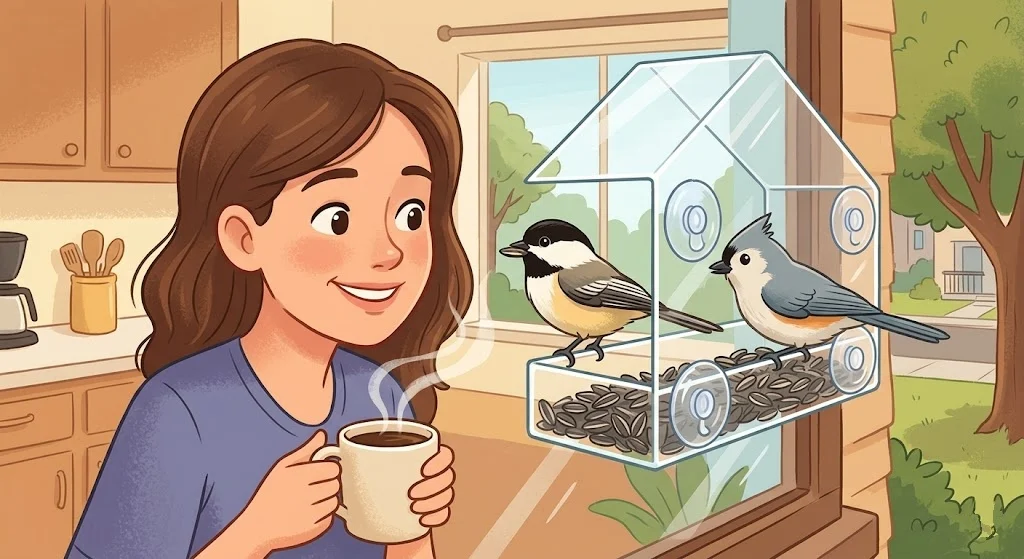
When people ask me about different bird feeder types, I always warn them that window feeding is a high-effort, high-reward project. You have to earn the trust of the local flock. You also have to master the physical mechanics of mounting a plastic box to a smooth piece of glass in unpredictable weather conditions. Once you get the placement, the suction, and the seed right, having a chickadee crack a sunflower seed twelve inches from your coffee cup is an unbeatable experience.
The Suction Cup Secrets Most People Miss
The single biggest frustration with any window mounted bird feeder is waking up to find it smashed on the ground in a pile of spilled seed. Most people stick the cups to the glass dry, press them a few times, and hope for the best. When the feeder falls, they assume the product is defective. In almost every case, the failure comes down to improper installation or temperature changes.
Field Note: I used to get an influx of complaints about window feeders falling specifically in November and December. Customers thought the plastic was aging. The actual problem was the cold weather. PVC suction cups become stiff and rigid when the temperature drops, which breaks the vacuum seal against the glass.
To keep a window bird feeder suction cup securely attached, you need to follow a specific three-step installation process. Skipping any of these steps guarantees a failure down the road:
- The alcohol wipe: Glass that looks clean to the naked eye is often coated in a thin layer of outdoor pollen, dust, or indoor glass cleaner residue. You must clean the exact mounting spot with rubbing alcohol and let it dry completely.
- The warm water dunk: If the weather is cold, or if the suction cups arrived stiff in the box, soak them in hot tap water for five minutes. This softens the plastic, allowing it to flatten out completely against the glass for a true vacuum seal.
- The center push: Do not just push the edges of the cup. You must press firmly directly on the center nub to force every tiny pocket of trapped air out from underneath the plastic.
If you perform this routine every time you mount the feeder, it will stay exactly where you put it through rain, wind, and changing seasons. For a deeper dive into troubleshooting, including what to do when cups get permanently deformed, check out my guide on fixing window bird feeder suction cups.

A large window bird feeder made from 1/4-inch premium cast acrylic for exceptional durability. Holds over 4 cups of seed and attaches securely to any window via 3 ultra-strong suction cups, with 3 extras included. Features a slide-out tray for quick, mess-free cleaning and refilling. Backed by a lifetime guarantee.
Check on AmazonIf you click this link and buy, we earn a commission at no additional cost to you.
The Overlooked Weight Rating
Even if you install the suction cups perfectly, you can still face catastrophic failure if you do not calculate your weight load. Most standard suction cups used in the birding industry are rated to hold between 5 and 15 pounds. A clear window bird feeder looks incredibly light when you take it out of the box, leading many people to completely ignore the weight limits.
The empty acrylic frame might only weigh a single pound. But the calculation does not stop there. You have to add the weight of a fully loaded seed tray, which can easily add two to three pounds depending on the density of the seed. Furthermore, you have to account for dynamic weight. When a heavy bird like a Mourning Dove or a Blue Jay lands hard on the edge of the tray, the downward force is significantly greater than the bird’s actual body weight.
If you buy a large-capacity window feeder designed to hold multiple cups of seed, you are operating very close to the maximum limit of standard suction cups. In my experience, if you live in an area with high winds or aggressive flocking birds, you should always fill large window feeders only halfway. This reduces the static load and gives the suction cups a much better chance of holding firm when a heavy bird lands abruptly.
The Human Silhouette Problem
You have the feeder securely mounted, it is filled with fresh seed, and birds are finally starting to land. Then, you walk into your kitchen to make a cup of coffee, and the entire flock scatters in panic. This is the human silhouette problem, and it is the main reason birds abandon perfectly good window setups.
Birds have highly sensitive vision tuned to detect sudden movement. From their perspective on the outside of the glass, the inside of your house is a dark cave. When a large human shape moves across that dark background, it looks exactly like a predator lunging toward them. Even if you walk slowly, the sudden shift in light and shadow is enough to trigger their flight response.
The most effective fix for this is surprisingly simple. You do not need to hide in your own house. Instead, install a light, sheer cafe curtain covering just the lower half of the window where the feeder is mounted. A sheer curtain breaks up your solid silhouette and masks your movement as you walk around the room. You can still easily watch the birds through the thin fabric or by looking over the top, but to the birds, the scary moving shadow completely disappears.
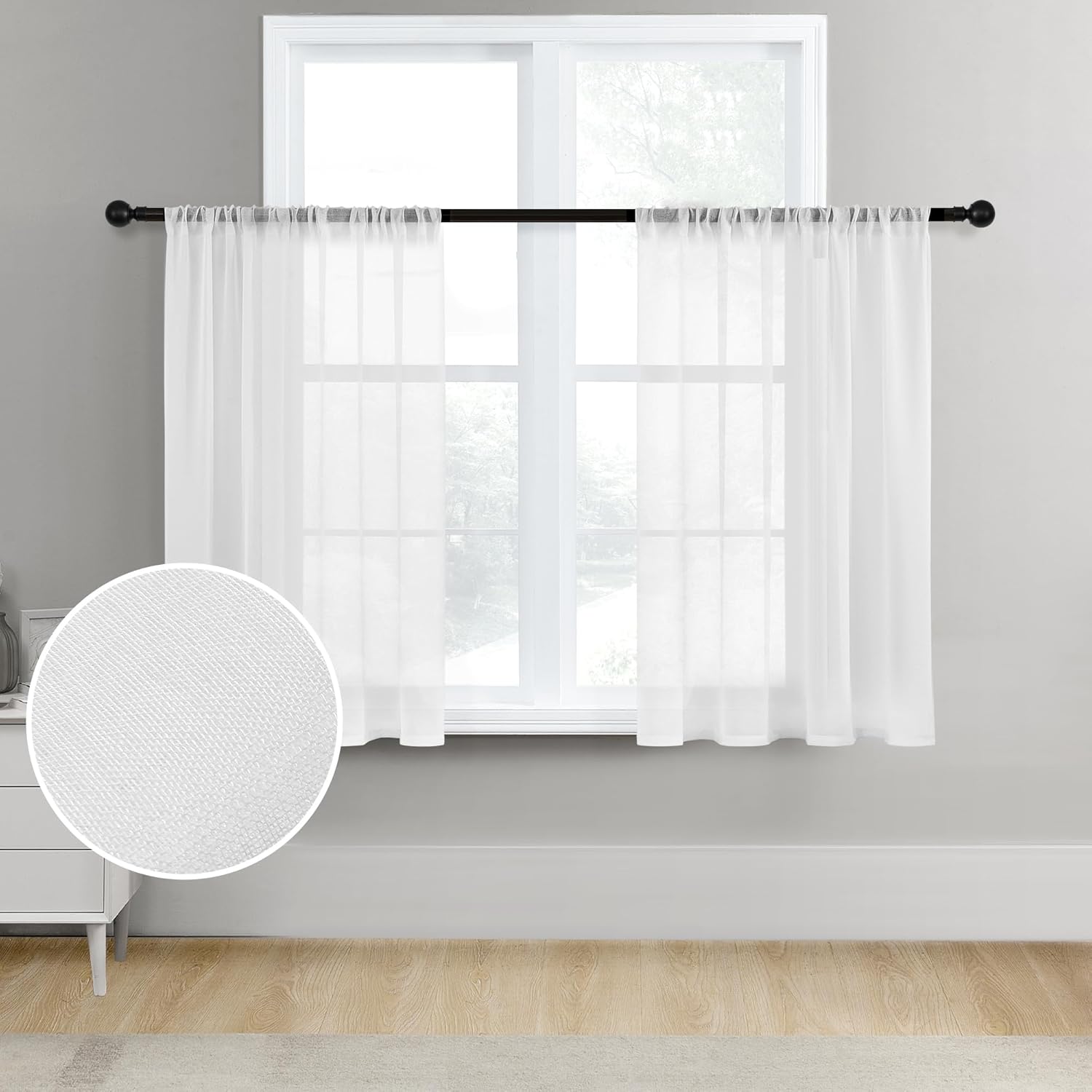
Soft voile panels measuring 50 x 30 inches total, hung via rod pocket or curtain clips. Filters natural light while maintaining privacy, wrinkle-free and breathable. Machine washable on gentle cold cycle. Works great in kitchens, bathrooms, bedrooms, nurseries, and offices.
Check on AmazonIf you click this link and buy, we earn a commission at no additional cost to you.
Which Birds Will Actually Use It
Managing your expectations about which species will visit is a crucial part of window feeding. Because of the close quarters and the lack of a wrap-around escape route, highly cautious birds will rarely visit a window setup. You will likely never see a shy woodland bird like a Wood Thrush pressed against your living room glass.
The species that adapt fastest to the best window feeder designs are the curious, bold clinging birds like Black-capped Chickadees, Tufted Titmice, and various species of nuthatches. These birds are “cachers”. They swoop in, grab a single seed, and immediately dart back to a nearby tree branch to crack it open or hide it. Because they do not linger, a small window feeder does not bother them. In contrast, House Finches and Goldfinches prefer to sit and eat, often occupying the tray for several minutes at a time.
Cardinals are a mixed bag. They are large, somewhat clumsy flyers that prefer a wide landing area. If your window feeder has a deep, broad tray with a sturdy perch, a Northern Cardinal might eventually figure it out. If the feeder is a small, narrow design, they will simply ignore it in favor of something easier to access.
The Best Seed for Window Setups
If you are setting up a window feeder for apartment living or a condo balcony, your seed choice is going to dictate whether or not you get to keep the feeder. Standard bags of mixed bird seed are filled with inexpensive fillers like milo and oats, plus black-oil sunflower seeds that are still inside their thick, messy shells.
When birds eat from a standard mix at a window, they rummage through the pile to find the pieces they like, tossing the rest over the edge. They also crack open the sunflower seeds and drop the empty hulls directly down. If you live on the third floor, all of that organic garbage is raining down onto your downstairs neighbor’s balcony or the manicured landscaping below. This is the fastest way to get a complaint filed against you with your homeowner’s association.
To avoid this mess entirely, you must use 100 percent hulled seed. Sunflower hearts or chips are the absolute best choice for window feeding. Because the shell has already been removed, the birds eat the entire piece of food. There are no hulls left behind to blow around in the wind, and no filler seeds for them to kick over the side. It costs slightly more upfront, but it ensures a completely clean feeding area right outside your glass. If you live in a building where falling hulls could trigger a complaint, setting up a dedicated no mess window bird feeder system is the only way to safely feed the birds.

Kaytee Sunflower Hearts & Chips attract more birds than any other seed. This highly nutritious food is made with 100% edible sunflower hearts, and the hulls have been removed to make it easier for birds to eat. This means less mess for you and more energy for your feathered friends.
Check on AmazonIf you click this link and buy, we earn a commission at no additional cost to you.
Final Thoughts on Window Feeding
Success with window feeding requires setting the right conditions and then stepping back. Clean the glass thoroughly, prep the suction cups with warm water, and use premium hulled seed that leaves no mess. Once the hardware is properly secured, the most important thing you can do is give the birds time to adjust to the new, highly exposed location.
Do not constantly move the feeder from one window to another hoping for faster results. Pick a window that receives good activity nearby, apply your sheer curtain trick to hide your movements, and wait. Once that first brave chickadee figures out the food is safe, the rest of the local flock will quickly follow its lead.
Next Steps for Window Feeding
If you are ready to set up your own glass-mounted station, or if your current setup is giving you trouble, these detailed guides cover exactly what hardware to buy and how to solve the most common apartment feeding problems.
| Topic | Description |
|---|---|
| Best Window Bird Feeder | What to look for regarding tray depth, wind protection, and high-quality cold weather suction cups. |
| Window Bird Feeder Suction Cup Fixes | A quick troubleshooting guide for the three most common reasons window feeders fall. |
| No Mess Window Bird Feeder | How to build an apartment-friendly setup that will never trigger an HOA complaint. |

Rental-friendly, no-mess seed blend with sunflower as the top ingredient. Attracts city birds like finches, sparrows, and mourning doves. Perfect for balcony feeders that attach to railings or windows. Made with natural ingredients. Amazon's Choice with 4.5 stars and 1,000 plus reviews.
Check on AmazonIf you click this link and buy, we earn a commission at no additional cost to you.
FAQs
🪟 Do window bird feeders increase the risk of bird strikes?
No, they actually decrease the risk. When a feeder is attached directly to the glass, a bird flying away from the feeder cannot build up enough speed to injure itself if it accidentally bumps the window.
🧼 How often should I take the window feeder down to clean it?
You should remove and clean the feeder every two weeks using a mild vinegar solution. This is also a good opportunity to re-clean the glass and re-apply the suction cups to maintain maximum grip.
🐿️ Will a window feeder attract squirrels to my house?
If your window is located right next to a tree branch or a low deck railing, a squirrel might jump to it. However, if the window is a flat vertical surface with no launch points nearby, squirrels cannot climb smooth glass to reach the seed.
💧 Why does my seed turn into a wet brick after it rains?
Standard window feeders often lack proper drainage. Look for designs that feature laser-cut drainage holes in the bottom tray to allow rainwater to flow straight through instead of pooling in the seed basin.