The Reality of Window Bird Feeder Suction Cups
When someone is shopping for a window setup, the first question is always whether the feeder is going to fall off the glass. It is a valid concern. However, in my experience, the failure is rarely a manufacturing defect in the suction cups themselves. The failure usually comes from a drop in temperature.
Window bird feeder suction cups are made of flexible PVC or silicone. In warm weather, these materials are highly pliable. When you press them against a clean pane of glass, they flatten out easily and create a tight, reliable vacuum seal. The problem starts when November arrives. Cold weather causes these materials to stiffen and harden. A stiff suction cup cannot maintain a micro-seal against cold glass. The moment a heavy jay lands on the rigid feeder, the stiffened cup pops loose, and the whole assembly falls to the patio.
If you want a setup that survives the winter, look for models that use premium, oversized silicone cups rather than cheap PVC. Oversized cups provide a larger surface area for the vacuum grip, which compensates for some of the stiffness that happens when temperatures drop below freezing.
The 10-Minute Cold Weather Fix
You do not necessarily need to throw away a feeder that falls in the winter. Before you buy a replacement, try a technique that I have seen rescue hundreds of failing setups. The trick is to temporarily reverse the stiffening process.
Take the failing suction cups off the feeder and bring them into the kitchen. Drop them into a bowl of very warm tap water for about ten minutes. The heat softens the plastic, making the cups extremely flexible again. While they are soaking, go outside and wipe your window down with rubbing alcohol to remove any invisible oily film. Dry the warm cups thoroughly with a lint-free towel, reattach them to the feeder, and press them firmly against the clean glass. This resets the vacuum seal and usually locks the feeder in place for the rest of the season.

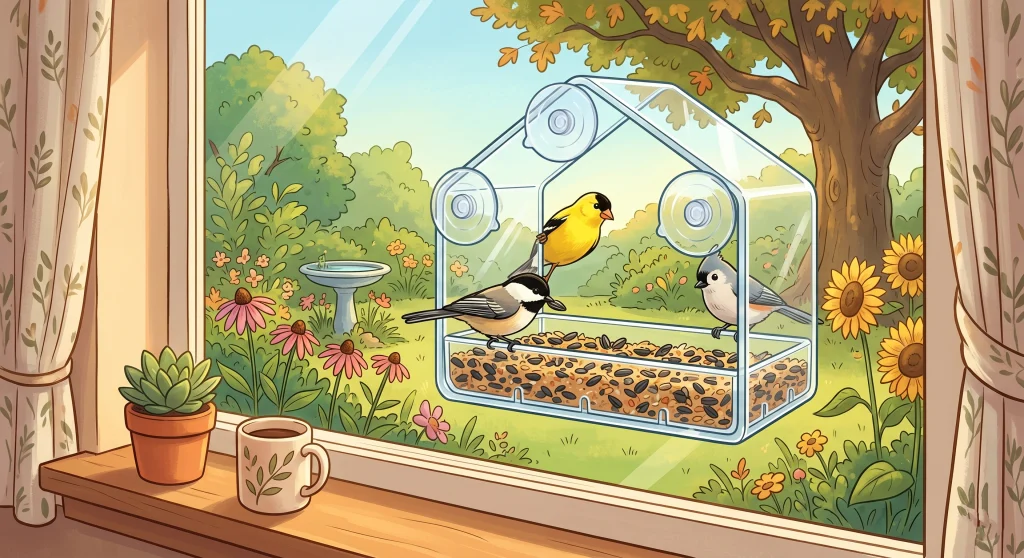
A large window bird feeder made from 1/4-inch premium cast acrylic for exceptional durability. Holds over 4 cups of seed and attaches securely to any window via 3 ultra-strong suction cups, with 3 extras included. Features a slide-out tray for quick, mess-free cleaning and refilling. Backed by a lifetime guarantee.
Check on AmazonIf you click this link and buy, we earn a commission at no additional cost to you.
Tray Depth: The Wind Protection Factor
The second biggest mistake I see with window setups has nothing to do with the mounting hardware. It involves the seed tray itself. Many aesthetic designs feature flat, shallow feeding platforms. They look sleek and minimalist right out of the box. But in practice, a shallow tray on a window is a disaster waiting to happen.
Field Note: I constantly heard from customers who thought the local birds were eating five pounds of seed a day from their new window feeder. The birds were not eating it. The feeder was mounted on a second-story window where the wind was much stronger than at ground level. A single gust of wind was scooping the seed out of the shallow tray and scattering it across the lawn below.
A top window bird feeder must have a deep basin. Look for a tray wall that is at least one and a half inches high. This creates a physical windbreak that keeps lightweight sunflower chips and safflower seeds inside the unit. A deep tray also prevents ground-feeding birds like mourning doves from sweeping half the seed onto the floor with their wings when they try to balance on the edge.
Beyond depth, a proper tray needs aggressive drainage. Rain will inevitably blow into a window feeder. If the tray does not have multiple, generously sized drainage holes, the seed will sit in a puddle of water and rot within twenty-four hours. Tiny pinholes are not enough because wet seed dust will clog them instantly. You want a tray with laser-cut slots or a removable micro-mesh bottom.

70% isopropyl alcohol formula that helps prevent infection from minor cuts, scrapes, and burns. Large 32 oz bottle for home first aid use. Keep away from heat sources.
Check on AmazonIf you click this link and buy, we earn a commission at no additional cost to you.
Material Quality: Why Clear Acrylic Wins
The entire point of this setup is to bring birds practically into your living room. If you are comparing different bird feeder types, remember that a window model is the only one you will be looking through directly. Material clarity is absolutely essential.
Cheap models are molded from basic polystyrene plastic. They look perfectly clear in the store, but they degrade rapidly under constant ultraviolet light from the sun. Within one or two seasons, that cheap plastic develops a cloudy, yellow tint. It also scratches easily from bird claws and routine scrubbing, leaving you with a permanently foggy view.
The best models are built from thick, premium cast acrylic. Look for feeders where the manufacturer explicitly lists a thickness specification rather than just calling it “plastic.” Acrylic is naturally UV resistant. It maintains its optical clarity for years, even in direct sunlight. It is also significantly more shatter-resistant than basic plastic, which is a major benefit if a squirrel decides to test the weight limit and sends the feeder crashing to the ground.
| Feature | Cheap Plastic Feeders | Premium Acrylic Feeders |
|---|---|---|
| Visual Clarity | Turns yellow and cloudy after one summer in the sun. | Stays optically clear for years without yellowing. |
| Tray Design | Shallow lips, minimal drainage pinholes that clog easily. | Deep basins, wide laser-cut drainage slots, thicker walls. |
| Mounting System | Small, rigid PVC cups that pop off in freezing weather. | Oversized, flexible silicone cups that handle temperature swings. |
Feeder Capacity: Why Smaller is Actually Better
The best acrylic models are incredibly sturdy, but that thick material adds a baseline weight to the unit before you even add food. This leads directly to the next common mistake: buying a window feeder that is simply too large.
Seed is surprisingly heavy. If you fill a massive window hopper with two pounds of sunflower seeds, and then three large jays land on the far edge of the tray at the same time, the twisting force pulling away from the top suction cups is extreme. In my broader guide to the window bird feeder, I explain why keeping the overall weight down is the most reliable way to prevent catastrophic failures.
Window feeder birds are usually small perching species like chickadees, titmice, and finches. A smaller, lighter clear window feeder designed to hold just a cup or two of seed is ideal. This smaller capacity forces you to refill it every few days. From a hygiene standpoint, this is exactly what you want. Small, frequent refills ensure the seed is always fresh, dry, and free of mold.

100% pure sunflower kernels with no shells, no filler, zero waste. Attracts finches, chickadees, cardinals, nuthatches, titmice, and more. Works in any tube, hopper, platform, or smart feeder year-round. A backyard favorite trusted for over 40 years.
Check on AmazonIf you click this link and buy, we earn a commission at no additional cost to you.
Red Flags in Product Listings
When you are browsing options online, the photos are often staged to make the product look larger and more robust than it actually is. Before you add anything to your cart, check the product specifications for these immediate red flags:
- No suction cup diameter listed: Tiny cups do not have the surface area to hold a loaded feeder in high winds. Check that the manufacturer lists a specific diameter, and skip models that hide this measurement.
- Missing tray depth measurements: If the specs do not list the tray depth, or the product photos show a tray with walls barely taller than the seed layer, the wind will blow your seed away.
- Vague material descriptions: If the listing just says “plastic” without specifying UV-resistant acrylic, you are likely buying cheap polystyrene that will turn yellow.
- No stated weight capacity: A reputable manufacturer will explicitly state how much weight their suction cup system is engineered to hold.
Final Thoughts: The Importance of Location
Once you have avoided the red flags and bought a solid, deep-tray acrylic unit, the final step is hanging it in the right spot. The window you choose makes a huge difference in how well the mounting hardware performs.
Try to avoid south-facing or west-facing windows that bake in direct afternoon sun. Extreme heat can cause the trapped air inside the suction cups to expand, which slowly pushes the cup away from the glass and weakens the vacuum seal. A window that gets gentle morning sun and afternoon shade is the ideal spot to apply the cleaning and mounting steps we covered earlier. Set it up there, keep the seed fresh, and you will have a perfect view all season long.

4 extra-strong 2.36 inch suction cups hold up to 12 lbs, staying put through storms and squirrel attacks. Extra-deep 4.35 inch tray holds more seed and needs fewer refills. Crystal clear heavy-duty acrylic gives an unobstructed up-close view, perfect for cats, kids, and seniors. Removable draining tray and dome design keep seed dry in any weather. A wonderful gift for any bird lover!
Check on AmazonIf you click this link and buy, we earn a commission at no additional cost to you.
FAQs
🪟 Do window bird feeders actually stick to the glass?
Yes, they stick very well if installed correctly. The glass must be cleaned with rubbing alcohol, not a standard glass cleaner, and the suction cups need to be warm and pliable during installation.
❄️ Why does my window feeder keep falling in the winter?
Cold temperatures cause the plastic or silicone suction cups to stiffen, which breaks the vacuum seal. Soaking the cups in hot water before reattaching them usually solves the problem.
🦅 Will cardinals or large birds use a window feeder?
Cardinals will occasionally use them if the perch is wide enough, but these feeders are primarily dominated by smaller, agile birds like chickadees, titmice, and finches that feel comfortable flying close to the house.
🧼 How often should I clean an acrylic window feeder?
You should wipe it out every time you refill it, and wash it thoroughly with mild soap and warm water every two weeks to prevent cloudy buildup and bacteria.
🌧️ How do I keep the seed dry when it rains?
You cannot keep it perfectly dry, which is why you must buy a feeder with generous drainage slots in the tray. Mount the feeder under a roof overhang if possible to block direct rainfall.