Why Northern Cardinals Ignore Your Standard Setup
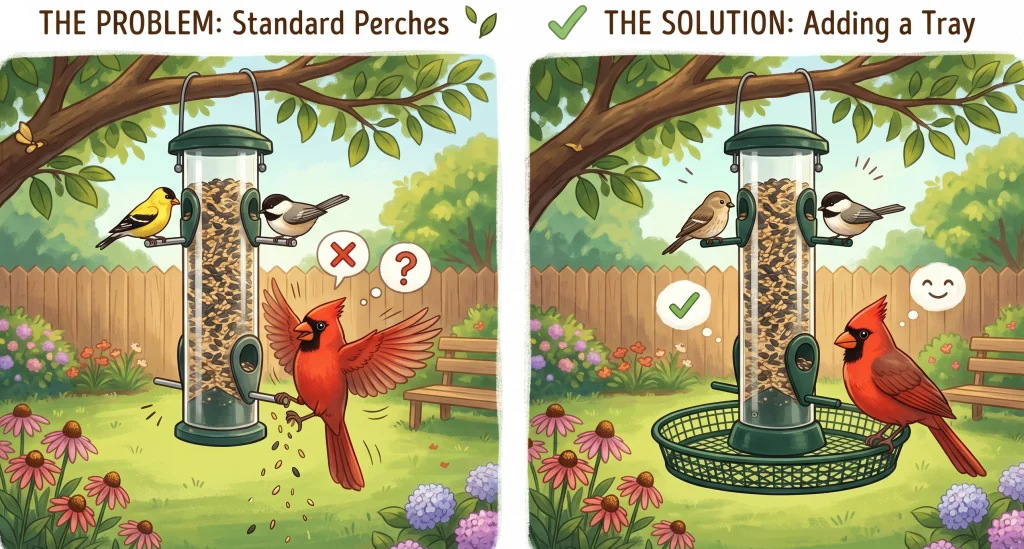
To understand why Northern Cardinals fly right past your new feeder, you have to look at how different birds are built to eat. A standard tube feeder features tiny, straight perches located just below deep feeding ports. For small birds like finches and chickadees, this is effortless. They are light, acrobatic, and perfectly comfortable hanging sideways or upside down to pull seeds out.
Northern Cardinals are built entirely differently. They have heavy bodies and thick, powerful beaks designed for crushing hard seed shells. To crack a heavy shell, a cardinal needs physical leverage. Feeder tests documented by WorldBirds confirm that deep seed ports are terrible for cardinals because the birds simply cannot get that leverage while balancing sideways on a one-inch metal stick.
Field Note: Over the years at the store, the most frequent complaint I heard from beginners was about missing cardinals. People would come in, point to a standard tube model they bought a month ago, and say it was broken. I always asked them to watch how a cardinal lands. They do not cling. They hop and land flat-footed. Once you understand their physical anatomy, you realize the feeder is not broken, it is just built for the wrong feet.
How a Tray Attachment Changes the Geometry
When someone is struggling to attract larger birds, most general guides will tell them to buy a brand new hopper feeder. While hopper feeders are fantastic, there is a much cheaper solution if you want to keep your current equipment.
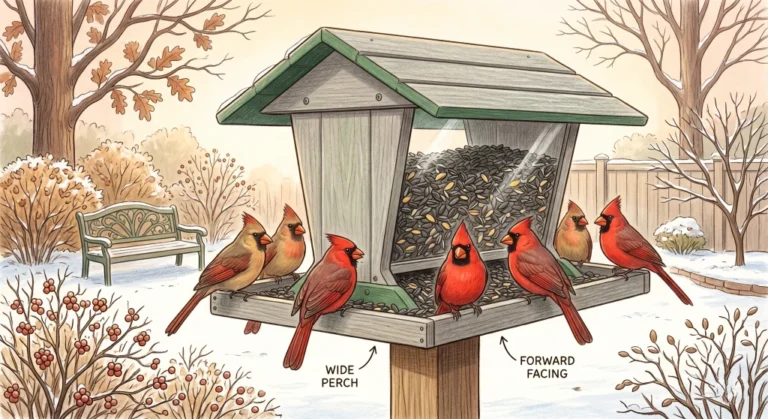
A tray attachment is a circular dish that fastens directly to the bottom base of your existing feeder. By simply screwing this piece into place, you give the birds a wide, stable runway. A cardinal can now land securely and face the feeding port head-on. They have the stability they need to pull the seed out and the flat surface area required to hold the seed down while they crush it.
Adding a tray effectively transforms a highly selective tube feeder into a universal platform. This simple modification turns an exclusive, small-bird-only setup into a welcoming station for almost every species in your neighborhood. If you are specifically trying to build a cardinal-friendly yard, this hardware fix is just step one. Reviewing a comprehensive guide to attracting Northern Cardinals will help you dial in the exact seed blends they prefer.
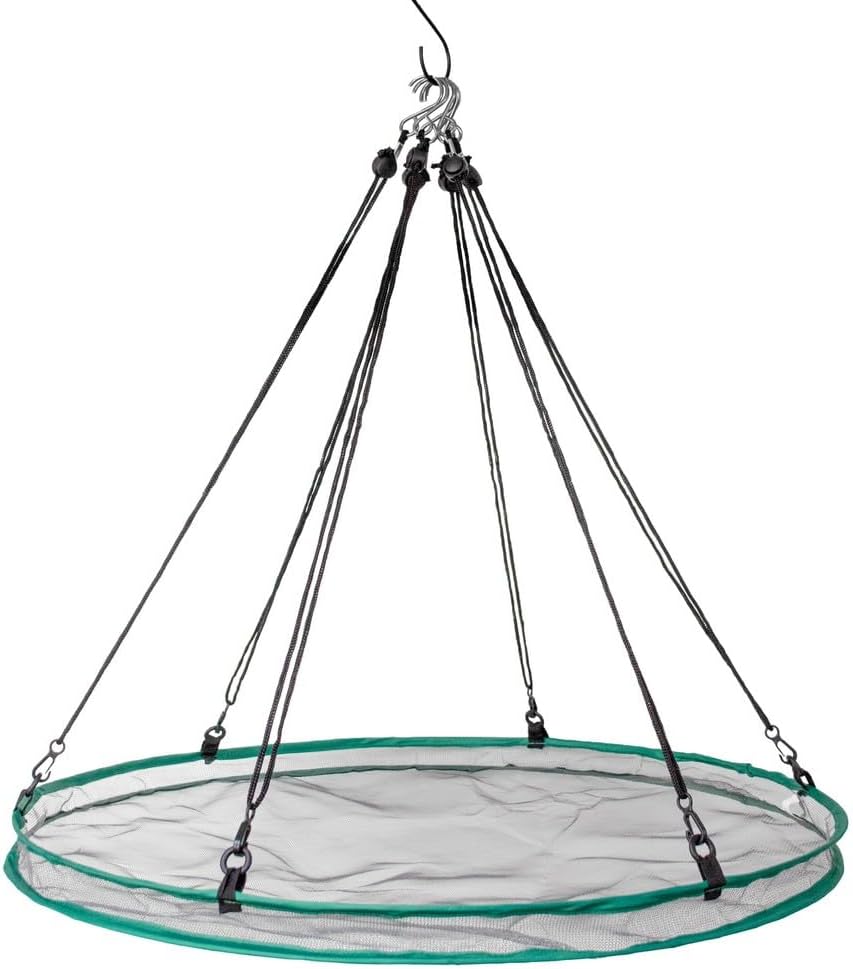
A 24-inch seed catcher and platform feeder designed to hang beneath an existing bird feeder and collect spilled seed and hulls. The wide hoop provides additional landing and feeding space while helping keep the lawn, deck, or garden cleaner. Its universal hanging design works with many feeder setups, making it a practical alternative when a dedicated screw-on seed tray is not required.
Check on AmazonIf you click this link and buy, we earn a commission at no additional cost to you.
The Trade-Off: More Birds Means More Seed Waste
Adding a tray is the fastest way to increase the variety of birds visiting your yard. However, it also introduces a new maintenance challenge. When you provide a flat surface beneath the feeding ports, you invite a different style of eating.
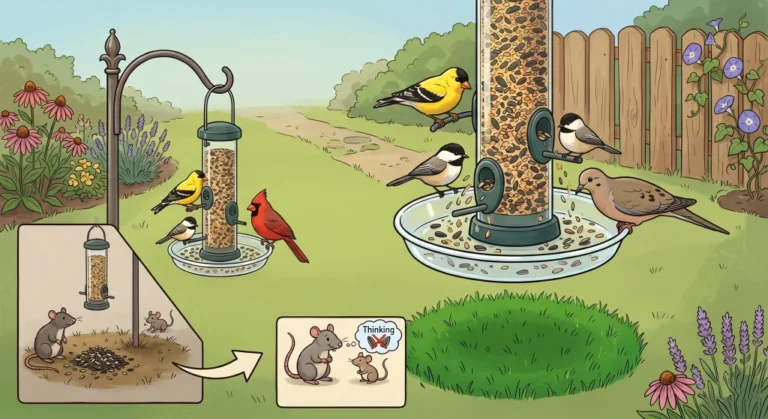
Birds like sparrows, Blue Jays, and Mourning Doves are notorious scatter-feeders. They will land on your new tray and actively sweep their beaks back and forth, tossing perfectly good seeds over the edge to find the specific pieces they want. A standard tube drops some empty hulls, but a tube feeder cardinal setup with a wide tray will generate significantly more ground mess.
Installing a tray attachment over a pristine garden bed or a wooden deck and expecting the area to stay clean. The concentrated pile of discarded seeds and hulls will eventually kill the grass.
Accepting the scatter and managing it proactively. You can significantly reduce the mess by switching to a shell-free seed blend. If hulls are still an issue, mount a dedicated tube bird feeder seed catcher much lower on the pole to protect your lawn and prevent rodent issues.

A premium no-mess seed blend featuring hulled sunflower seeds, shelled peanuts, and added calcium — 100% consumable with no shells or waste. Attracts a wide variety of birds including cardinals, finches, chickadees, nuthatches, woodpeckers, grosbeaks, and juncos. A high-energy, year-round mix that keeps your yard clean while bringing more birds to your feeders.
Check on AmazonIf you click this link and buy, we earn a commission at no additional cost to you.
Buying Guide: Materials, Sizes, and Top Picks
To modify your current setup, check the bottom of your feeder. Most high-quality brands design their tube feeders with a standard 5/8-inch threaded hole right in the center of the base. If your feeder has this hole, you can buy a universal tray attachment. Do not attempt to drill your own holes into a smooth-bottomed feeder, as it will crack the plastic and ruin the seed containment.
When selecting a tray, you have two main decisions to make: material and size.
Plastic vs. Coated Wire Mesh: Solid plastic trays are cheap and widely available, but they rely on tiny drainage holes that easily clog with wet seed hulls. Coated wire mesh trays are generally superior. They allow water to drain instantly and provide excellent airflow, keeping the fallen seed dry and fresh for much longer.
| Tray Diameter | Primary Bird Visitors | Mess Level |
|---|---|---|
| No Tray | finches, chickadees, titmice | Low (mostly empty hulls drop) |
| 8-inch Tray | Northern Cardinals, grosbeaks, sparrows | Medium (some seed sweeping occurs) |
| 10-inch Tray | Mourning Doves, Blue Jays, woodpeckers | High (large birds scatter seed rapidly) |
What to Look For: When shopping for an attachment, prioritize models made from coated wire mesh for maximum airflow. If you prefer the durability of polycarbonate, only buy models that feature a smartly sloped base, as this design drains significantly faster than standard flat-bottom trays. Ensure whatever you choose comes with a standard 5/8-inch screw to attach directly to your current setup. If your current model does not have a threaded base, you will need to buy a completely new tube bird feeder. Look for a dedicated tube feeder that comes with a matching, manufacturer-designed tray built right into the base. These integrated systems are incredibly sturdy and will not wobble when heavier birds land on them.

19 inch diameter design makes this squirrel stopper more effective than other sizes. Larger sizes have greater jitter, no matter if rodents fly up or climb up, they will not be able to stand stably on the baffle. Anything smaller than 19 inches cannot step over this baffle easily, which means that the foods in your bird feeder can be specially provided to feathery friends instead of greedy squirrels or raccoons.
Check on AmazonIf you click this link and buy, we earn a commission at no additional cost to you.
Stacking Accessories and Winter Maintenance
A tray attachment solves the landing problem, but it creates a wide target for rain and snow. To build the ultimate weather-resistant setup, you should stack your accessories. Placing a clear acrylic weather dome above the feeder acts as an umbrella, deflecting rain outward so it completely bypasses the tray below.
This setup is especially critical during the winter months. If you use a solid flat-bottom plastic tray instead of a mesh one, rain and melted snow will pool inside. When temperatures drop overnight, that water freezes solid. The expanding ice will eventually crack the plastic tray in half, and the frozen block of seed will be completely inaccessible to the birds the next morning. Polycarbonate trays with a sloped base drain fast enough to avoid this issue, so the freeze risk applies primarily to those flat-bottom plastic designs.
Key point: Always clear out wet seed from your tray before a hard freeze, or upgrade to a coated wire mesh tray that simply cannot hold standing water. It is a minor detail that saves you from replacing your equipment every spring. For a broader look at feeder categories and how they fit together, check out our guide on bird feeder types.

A heavy-duty metal dome that shields bird feeders from rain, snow, and squirrels. Its oversized design blocks weather and prevents squirrels from reaching the feeder below. Powder-coated for rust resistance and stable in strong winds, with a sturdy hook that holds up to 30 lbs. No assembly required — simply hang on any shepherd hook, wall bracket, deck hook, or tree branch. Compatible with most feeder styles including hummingbird, tube, tray, and suet feeders.
Check on AmazonIf you click this link and buy, we earn a commission at no additional cost to you.
FAQs
🐦 Will adding a tray attract squirrels to my tube feeder?
A tray gives squirrels a comfortable place to sit and eat, making your feeder much more appealing to them. If you add a tray, you absolutely must have a proper squirrel baffle installed on the pole below the feeder to keep them off.
🔧 Can I attach a tray to any brand of tube feeder?
No. You can only add a tray if your tube feeder has a threaded mounting hole built into the bottom base. Attempting to glue or tape a tray to a smooth-bottomed feeder will fail under the weight of the birds.
🌧️ How do I keep the seed in the tray from getting wet?
Prioritize either a coated wire mesh bottom or a polycarbonate tray with a sloped base. Both drain effectively, but you should avoid flat-bottom solid plastic. You should also consider adding a weather dome above the feeder to deflect rain before it hits the bottom tray.
🕊️ Will small birds like finches still use the feeder if I add a tray?
Yes. Small birds will continue to use the upper feeding ports just as they did before. They may even hop down into the tray to eat the loose seeds that fall from the top ports.
🦅 Do tray attachments attract larger bully birds?
Yes. A wide landing tray makes the feeder accessible to Blue Jays, grackles, and European Starlings. If these bully birds become a nuisance, you may have to remove the tray temporarily to force them to look elsewhere for food.