The Hidden Danger in Seed Scatter
Most beginners accept a little bit of seed mess as part of the backyard birding hobby. But over time, the constant shower of debris falling from a tube feeder creates a permanent, ugly problem. When birds sort through mixed seed, they drop the hulls. If you are serving black oil sunflower seeds, those discarded hulls accumulate on the ground and begin to decompose.
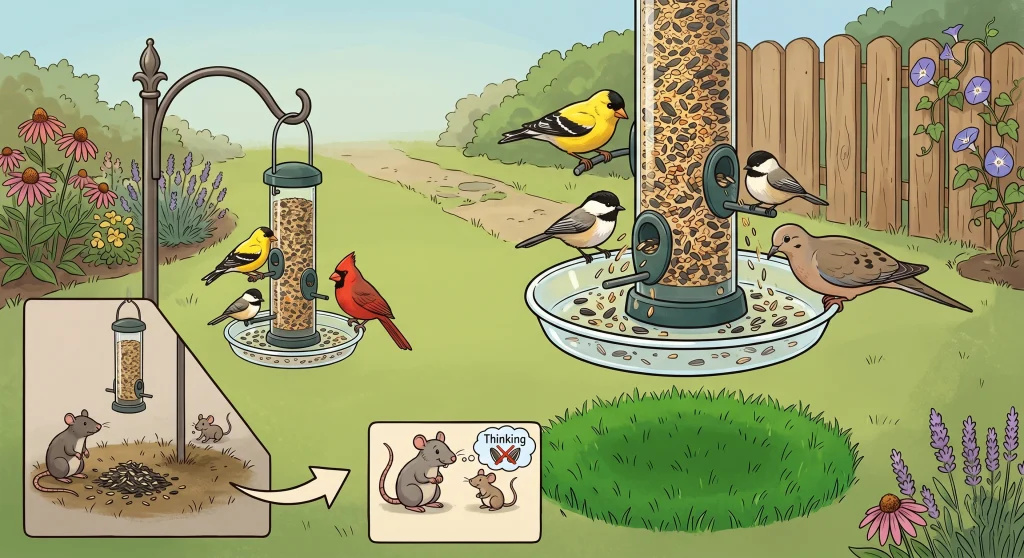
Sunflower hulls contain natural chemical compounds that prevent other plants from growing. This biological mechanism is called allelopathy. As it rains, those toxins leach directly into your soil. It is not the shadow of the feeder or the foot traffic of ground-feeding birds that kills your grass. It is the chemical buildup from the hulls themselves. Once the grass dies, the spilled seed sitting in the dirt becomes an open buffet that will quickly attract rats and mice to your yard.
Many people try to solve this by switching to a premium no mess bird seed blend. While hulled seed is fantastic and solves the sprouting problem, it is significantly more expensive per pound. If you are feeding a heavy volume of birds, that cost adds up fast. The more economical, permanent solution is to physically intercept the waste before it hits the ground using a tube bird feeder seed catcher.
Field Note: One of the most common complaints I heard at the store was about the notorious dead zone under the feeding station. Customers would bring in photos of perfect green lawns ruined by a perfect brown circle right under their pole. They usually assumed the birds had trampled the grass to death. When I explained the chemical nature of sunflower hulls, they immediately understood why raking wasn’t fixing the problem.
How Universal Seed Catchers Work
A bird feeder seed tray is fundamentally different from a platform feeder. A platform feeder is an open tray designed as the primary food source. A seed catcher is an aftermarket accessory. It is a shallow plastic, resin, or metal dish that mounts directly below your existing tube feeder. Its sole purpose is to act as a safety net.
When a finch pulls a seed from the port above, breaks it open, and drops the shell, the tray catches it. When a chickadee aggressively kicks out three seeds to find the one it wants, the tray catches them. This simple barrier breaks the cycle of soil contamination and removes the primary food source for rodents operating at ground level.
If you are exploring different bird feeder types for your yard, you will notice that almost all quality tube models are designed to accept these attachments. Adding a tray does not change how the birds use the ports, but it drastically changes your weekend cleanup routine.
Sizing: The 10.5-Inch Rule
When you start shopping for an attachment to catch seed from bird feeder setups, you will see trays in several diameters. The most common sizes are seven, eight, and ten-and-a-half inches. Buying a tray that is too small is a waste of money.
Birds do not drop seed straight down in a perfectly vertical line. They flick their heads. The wind catches the lightweight hulls. If you put a seven-inch tray under a standard tube feeder, the debris will simply bypass the rim and land on the grass anyway. A narrow tray only catches the seed that accidentally slips straight down from the bird’s beak.
To effectively protect your lawn, 10.5 inches is the minimum effective diameter for a catcher tray. This creates a wide enough safety net to capture the scatter effect from the feeding ports. If you have a particularly tall tube feeder, or if your yard gets heavy crosswinds, upgrading to a 12-inch tray is an even better investment.
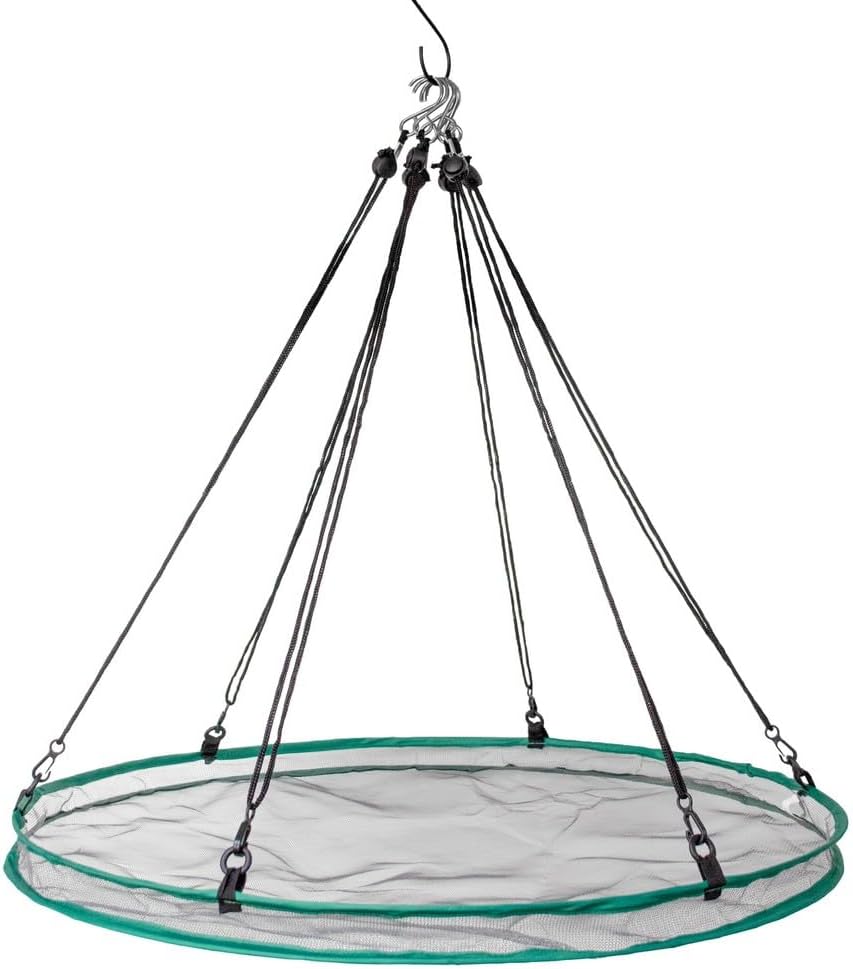
A 24-inch seed catcher and platform feeder designed to hang beneath an existing bird feeder and collect spilled seed and hulls. The wide hoop provides additional landing and feeding space while helping keep the lawn, deck, or garden cleaner. Its universal hanging design works with many feeder setups, making it a practical alternative when a dedicated screw-on seed tray is not required.
Check on AmazonIf you click this link and buy, we earn a commission at no additional cost to you.
Choosing the Right Tray Material
When shopping for a seed catcher, the size is crucial, but the material determines how long it will last. You will generally find three main options: standard clear plastic, heavy-duty resin or metal, and wire mesh.
Standard clear plastic is the most affordable option, but it is also the most brittle. Under constant UV exposure from the summer sun, cheap plastic eventually yellows and cracks. If your feeder is mounted on a pole in direct sunlight, spending a few extra dollars on a UV-resistant resin or powder-coated metal tray is a much better long-term investment.
You might also come across trays made of fine wire mesh. A micro-mesh tray is fantastic because it drains rainwater instantly, completely eliminating the standing water problem. However, there is a catch. If you are feeding very small seeds, they can sometimes slip through the mesh gaps, defeating the purpose of the tray. A solid resin tray with factory-drilled drainage holes usually offers the best balance of durability and waste capture.
How to Attach Tray to Tube Feeder
Before you buy anything, you need to check the bottom of your current feeder. You are looking for compatibility. The industry standard for a tube bird feeder features a central threaded hole right in the middle of the bottom base. This is usually a 5/8-inch threaded socket.
Most universal seed catchers come with a threaded plastic plug. You push the plug through the center hole of the tray and screw it directly into the base of the tube feeder. This creates a rigid, unified structure. Because it is physically screwed together, the tray will not swing independently in the wind or tip over when a bird lands on the edge.
If your tube feeder has a solid flat bottom with no threaded hole, you cannot use a standard screw-on catcher. You will have to look for hanging catchers, which suspend a tray beneath the feeder using strings or chains. Hanging catchers are clumsy, they sway violently in the wind, and they often spill the very seed they are trying to collect. If your feeder lacks a threaded base, it is usually better to upgrade the feeder itself rather than struggling with a hanging tray.

A 13-inch hanging tube bird feeder with six metal feeding ports for sunflower seeds, mixed blends, and other common wild-bird seed. The transparent tube makes seed levels easy to check, while the lift-up lid and removable parts simplify refilling and cleaning. Its metal components and weather-resistant construction make it a practical replacement for a classic multi-port tube feeder.
Check on AmazonIf you click this link and buy, we earn a commission at no additional cost to you.
The Maintenance Action Log
A seed catcher solves your lawn problem, but it does introduce a new maintenance step. You are collecting debris in a plastic bowl out in the weather. If you just leave it there, you will eventually end up with a wet, moldy mess hanging directly beneath your fresh seed supply.
Every time you take the feeder down to refill the main tube, you must empty the catcher tray. Just unscrew the plug, dump the collected hulls and uneaten seeds into the trash, and reattach it. This adds about thirty seconds to your refilling routine.
Moisture is the enemy here. If your seed catcher comes with factory-drilled drainage holes near the perimeter, you still need to monitor it. A thick layer of sunflower hulls can easily clog those tiny holes, leading to standing water after a rainstorm. If you see water pooling over the debris, dump it immediately to prevent dangerous bacteria from growing.
Pro Tip: If your new seed catcher does not have built-in drainage holes at all, you need to add them before installing it. Grab a power drill and a small bit to carefully create three or four tiny holes around the outer edge of the plastic tray.
Final: A Small Change With a Big Impact
You do not have to accept ruined landscaping and rodent visitors as the cost of enjoying backyard birds. The mess associated with tube feeders is entirely manageable once you stop letting gravity win.
By investing in a properly sized, threaded seed catcher, you protect your grass from toxins, cut off the food supply for ground pests, and keep your feeding station looking clean. It is one of the most practical, cost-effective upgrades you can make. Before you spend money on a brand new bird feeder setup, go check the bottom of your current tube model for that threaded hole, and grab a compatible $15 tray to solve the problem permanently.

Shell-free sunflower hearts packed with essential fats, protein, vitamins, and carbohydrates for wild birds. 100% consumable with no shells, dust, or debris - pure value in every bag. Attracts finches, chickadees, titmice, nuthatches, cardinals, and more. Compatible with tube, hopper, window, and covered tray feeders. Available in a 40-pound bulk poly-woven bag. Made in the USA.
Check on AmazonIf you click this link and buy, we earn a commission at no additional cost to you.
FAQs
🐀 Will a seed tray stop rats and mice completely?
A tray removes the primary food source from the ground, which drastically reduces rodent interest. However, if squirrels are knocking large amounts of seed out of the tray itself, rodents may still visit to clean up the secondary spill.
🕊️ Will larger birds try to sit on the catcher tray?
Yes. Doves, jays, and sometimes cardinals will use the edge of a 10.5-inch tray as a perch to access the fallen seed. This is actually a bonus, as it allows larger birds to feed from a tube feeder they normally could not use.
🌧️ Does the caught seed rot in the rain?
Seed will rot if it sits in standing water. You must ensure your tray has drainage holes and that you dump the collected debris regularly, especially after a stretch of wet weather.
🔩 Can I drill a hole in the bottom of my old feeder to attach a tray?
I do not recommend this. Standard tube feeder plastic is prone to cracking when drilled. It is also very difficult to securely anchor a heavy tray without the molded, reinforced threads found on compatible feeders.