
The Geometry of a Bee-Free Feeding Station
If you are looking for the best hummingbird feeder to keep bees away, you need to stop looking at chemical repellents and start looking at the physical shape of the hardware. Every summer, people try to solve their yellowjacket problems by spraying essential oils, hanging sticky traps, or rubbing petroleum jelly on their feeder poles. None of these tricks work long-term, and many of them can actually harm the birds you are trying to feed.
When a swarm of wasps or bees claims a nectar source, hummingbirds will almost always abandon the area. Hummingbirds are fiercely territorial against each other, but they will not waste their limited energy reserves fighting a dozen aggressive yellowjackets. If your setup is swarming with insects, it will soon be empty of birds.
The secret to solving this issue has nothing to do with buying an expensive, complex gadget. It comes down to exploiting a simple biological difference between birds and bugs. When exploring the different types of bird feeders available for your backyard, you will quickly notice that nectar setups are completely unique. They handle liquid food, which means you have to manage fluid dynamics. By choosing a design that controls exactly where that liquid sits, you can create a barrier that bees simply cannot cross.
The Biological Difference: Hummingbird Tongue vs Bee Proboscis
To understand how to defeat a wasp, you have to understand how both animals eat. A hummingbird does not suck nectar through its beak like a straw. Instead, it has an extraordinarily long, specialized tongue. This tongue features microscopic grooves and acts almost like a fluid pump. A hummingbird can extend its tongue far past the tip of its bill, allowing it to reach deep inside long, tubular flowers to lap up hidden nectar.
Bees and wasps, on the other hand, have very different anatomy. They feed using a proboscis, which is relatively short. In order to drink, a bee or a wasp must get its mouthparts directly against or extremely close to the surface of the liquid. They do not have the physical equipment to reach down into a deep crevice.
This anatomical limitation is your ultimate weapon. If you can keep the surface of the sugar water at least half an inch below the feeding port, a hummingbird can easily dip its tongue down to drink, but a bee physically cannot reach the food. It is a foolproof mechanical lockout.
| Feeding Trait | Hummingbirds | Bees and Wasps |
|---|---|---|
| Feeding Mechanism | Long, grooved tongue acting as a micro-pump | Short proboscis requiring close contact |
| Reach Capability | Can extend far beyond the feeding port | Limited to surface-level access |
| Reaction to Deep Nectar | Easily reaches down to feed naturally | Cannot reach the liquid and gives up |
Why Bottle Feeders Always Fail Against Bees
The vast majority of beginners purchase gravity-fed bottle feeders. These are the classic designs where a glass or plastic bottle is filled with nectar, screwed into a base, and flipped upside down. While they look charming, they are practically engineered to attract stinging insects.
Bottle models rely on a vacuum seal to hold the liquid inside. The problem with this design is thermal expansion. When the cool morning air trapped inside the top of the bottle is heated by the afternoon sun, that air pocket expands. The expanding air pushes down on the liquid, forcing a small amount of sugar water out through the feeding ports.
This creates a sticky drip on the outside of the hardware. Once the sugar water is on the exterior of the plastic or metal, the biological disadvantage of the bee is completely erased. The insect no longer has to reach inside the port. It can simply land on the outside of the base and lick the dried sugar right off the surface. As long as the unit continues to leak, the swarm will never leave.
The Dish Feeder Geometric Advantage
The definitive mechanical solution to the insect problem is a saucer or dish-style feeder. A dish design is exactly what it sounds like. It is a simple plastic bowl. You pour the nectar directly into the basin, and then you snap a lid containing the portholes over the top.
Because there is no inverted bottle, there is no vacuum seal. Because there is no vacuum, thermal expansion cannot push the liquid out of the ports. The nectar simply sits peacefully in the bowl, entirely unpressurized. This structural difference is the core reason I recommend them so heavily in my primary hummingbird feeder setup guide.
Field Note: Customers at the birding store would often ask me for the most advanced, high-tech bee-proof model we carried. They were usually disappointed when I handed them a plain, circular plastic dish. They expected complex moving parts or mechanical baffles. It usually took a full explanation of the vertical distance between the lid and the liquid for them to trust that a simple bowl was actually the ultimate defense.
When a wasp lands on a dish-style lid, it will poke its head into the porthole. It will quickly realize that the liquid is sitting half an inch out of its reach. Without any sticky drips on the outside to keep it interested, the wasp will quickly conclude that the food is inaccessible and fly away to find a real flower. The pest problem resolves itself naturally through geometry.

Dish-style feeder with 5 feeding ports and 360-degree perch lets multiple hummingbirds feed at once. Built-in ant moat and 2mm bee-proof ports keep nectar clean. Clear reservoir with measurement markings for easy monitoring and one-step refill. Fully disassembles for quick cleaning, dishwasher safe up to 176F.
Check on AmazonIf you click this link and buy, we earn a commission at no additional cost to you.
Why Aftermarket Bee Guards Are a Waste of Money
If you already own a leaking bottle model, you have likely seen small plastic attachments sold in stores labeled as bee guards. These are usually tiny yellow plastic cages or mesh caps designed to snap over your existing feeding ports. The theory is that the mesh allows the bird’s tongue to pass through while blocking the wider body of an insect.
In my experience, these attachments are a complete waste of money. Yellowjackets and bees are incredibly persistent foragers. They will crawl all over the plastic guards. If your gravity-fed bottle is already dripping due to heat expansion, the sticky syrup will simply coat the outside of the plastic guard. The bees will happily sit on the guard and drink the residue.
Buying a cheap gravity bottle, watching it drip in the sun, and then spending extra money on plastic snap-on guards that only give the wasps a convenient place to perch while they lick the spills.
Investing in a leak-proof dish design from the very beginning, ensuring that the nectar remains permanently contained below the surface where insects cannot physically touch it.
Furthermore, hummingbirds do not enjoy forcing their delicate bills through sharp plastic mesh. A clean, open port on a saucer lid is much more inviting and much safer for their anatomy.
What to Look for in a Dish Feeder
When you are ready to upgrade your setup, you will find that not all dish models are created equal. To ensure maximum pest protection and bird comfort, look for a feeder that checks these specific functional boxes.
- Port Depth: The lid must have enough thickness or raised ports to maintain that crucial half-inch gap between the plastic and the nectar surface. Avoid ultra-thin lids where the liquid sloshes directly against the ports.
- Lid Material and Seal: Look for lids made of rigid polycarbonate that snap or screw tightly onto the basin. Flimsy plastic can warp in the hot sun, breaking the seal and allowing ants or wasps to squeeze inside the bowl.
- Basin Capacity: A capacity of 10 to 16 ounces is ideal. This moderately small size provides plenty of room for birds to feed comfortably but forces you to clean and refill the nectar every few days before it ferments in the summer heat. Keeping the nectar fresh also prevents the sticky, spoiled buildup that attracts pests.
- Dishwasher Safe: You want a model that separates into two simple, flat halves that can go directly on the top rack of your dishwasher. If a feeder requires specialized tiny brushes to clean, you will avoid doing it.
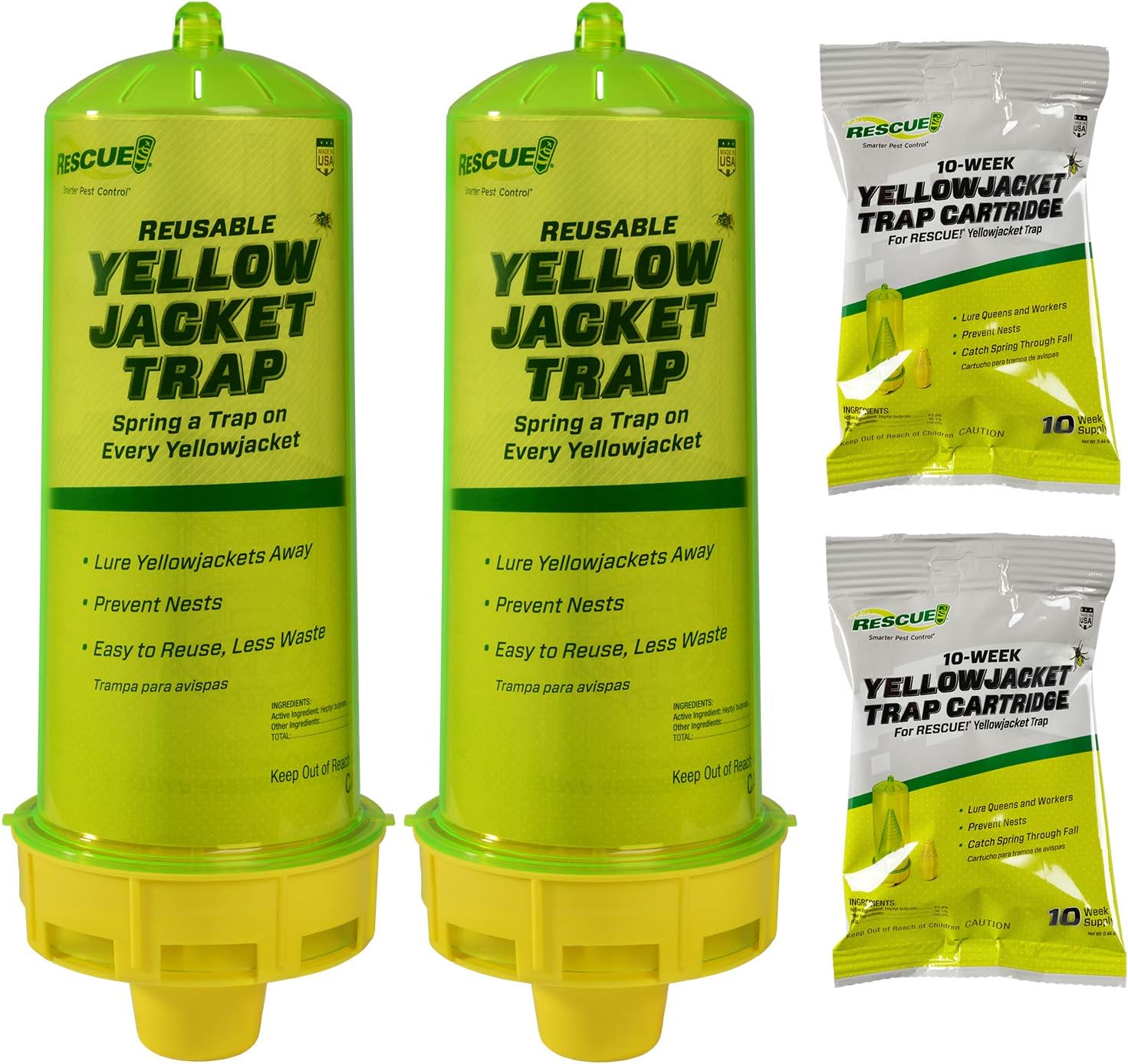
The original yellowjacket trap that lures all North American species with a specially formulated attractant. Insects fly in through the bottom holes and cannot escape, dying from dehydration with no toxic killing agent needed. Targets yellowjackets only, not beneficial honeybees. Lasts for weeks without daily maintenance. Made in the USA.
Check on AmazonIf you click this link and buy, we earn a commission at no additional cost to you.
Action Log: Setting the Correct Nectar Level
Even the best dish feeder in the world can fail if you set it up incorrectly. The entire system relies on maintaining that vertical gap between the porthole and the surface of the sugar water. If you eliminate that gap, you invite the pests right back to the table.
The most common mistake beginners make is overfilling the basin. If you pour the nectar all the way to the absolute brim before snapping the lid down, the liquid will sit flush against the underside of the feeding ports. When a wasp lands on the port, it will easily be able to reach the liquid because the vertical distance has been completely erased.
To ensure your geometric defense works flawlessly, follow this simple routine every time you wash and refill your station:
- Never fill the basin to the top rim. Always leave at least half an inch of empty space between the liquid level and the top edge of the bowl.
- Carefully snap or screw the lid down on a flat, level surface to avoid splashing the sugar water up onto the underside of the ports.
- When carrying the unit outside to hang it, walk smoothly. If you slosh the liquid violently, it can splash out of the ports and dry on the exterior lid.
- If you have an aggressive existing swarm, hang a yellowjacket decoy trap about 20 to 30 feet away from your feeding station. This companion strategy draws the stragglers away while they learn the nectar is no longer accessible.
By simply leaving a small air gap inside the bowl, you activate the structural advantage of the dish. The birds will have zero trouble reaching down, and the wasps will be entirely locked out.

4 feeding ports with raised flowers that divert rain, built-in ant moat, and drip-proof design. Made from brass and polycarbonate for durability. Easy to fill and clean.
Check on AmazonIf you click this link and buy, we earn a commission at no additional cost to you.
Final Thoughts on Stopping Stinging Pests
Battling swarms of angry insects is not the experience anyone wants when they start feeding backyard birds. Fortunately, upgrading your hardware solves the problem immediately. You never need to resort to using oils, sticky traps, or harsh chemicals near your patio.
By selecting a high-quality polycarbonate dish with raised ports and a tight seal, you eliminate the vacuum leaks that attract pests in the first place. Pairing this setup with a distant decoy trap gives you immediate relief. It is a quiet, permanent, and highly effective way to reclaim your yard and enjoy watching your hummingbirds in total peace all summer long.

16 oz leak-proof saucer design with 5 raised ports, circular perch, and built-in ant moat keeps nectar clean and ants out. Transparent BPA-free plastic with measurement scale for easy monitoring and accurate refills. Disassembles in minutes for quick cleaning, dishwasher safe up to 176F. Includes 2 feeders and cleaning brushes.
Check on AmazonIf you click this link and buy, we earn a commission at no additional cost to you.
FAQs
🌿 Will rubbing peppermint oil on the ports keep bees away?
No, peppermint oil is not a reliable long-term deterrent for wasps. More importantly, strong essential oils can irritate a bird’s sensitive respiratory system and should never be placed near their food source.
🐝 Do bees and yellowjackets actually hurt hummingbirds?
While they rarely sting hummingbirds, a swarm of aggressive yellowjackets will actively chase the birds away to protect the sugar source. The birds will simply give up and stop visiting your yard.
💧 What happens if a bug gets inside the dish?
Flying insects rarely get inside a dish design, though crawling ants sometimes can. If bugs drown in the sugar water, they release acids that ruin the batch. You should throw the liquid away, wash the basin, and refill it.
🎨 Do yellow flower decorations attract more wasps?
Yes, insects like bees and wasps are highly attracted to the color yellow. If your unit has yellow plastic accents around the ports, it will draw in more pests. Sticking to entirely red hardware is much safer.
🕷️ Will taking the feeder down for a few days make the bees leave permanently?
Taking it down for three to four days will cause the wasps to search elsewhere. However, if you hang the exact same leaking bottle back up, they will quickly find the drips and return. You must fix the hardware to solve the problem.