Winter Bird Feeder Care: Setup Adjustments for Freezing Temps

Winter Bird Feeder Care

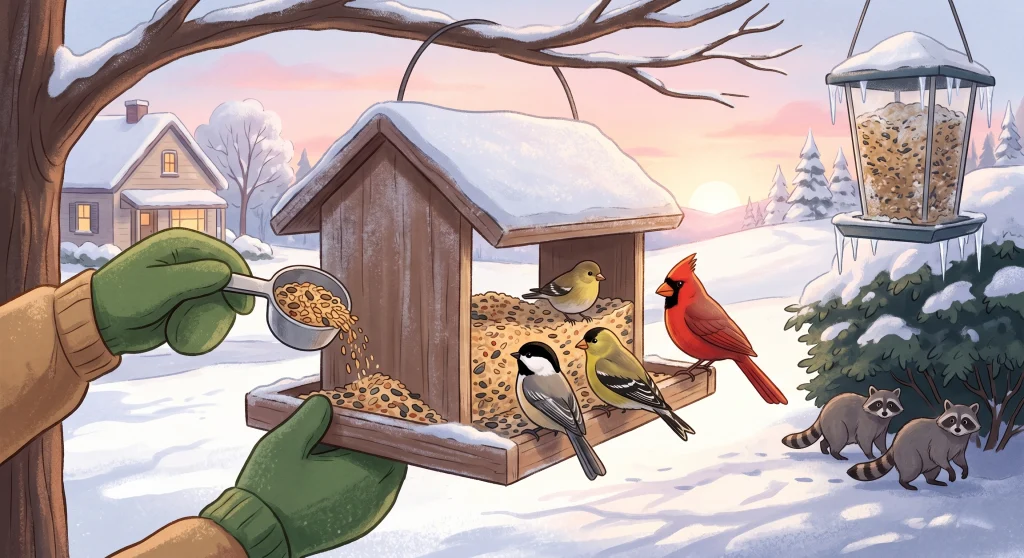
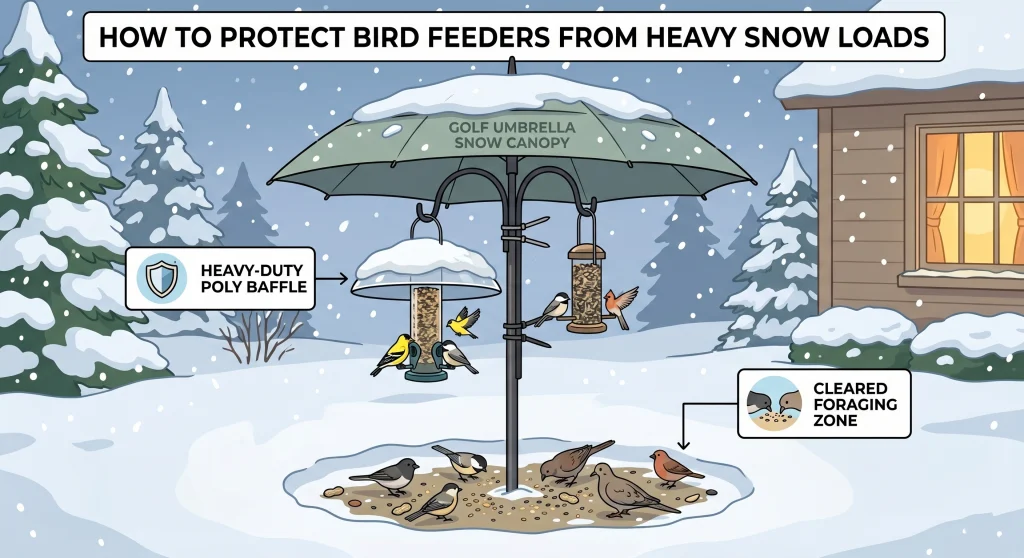
Winter bird feeder care is mostly about keeping food dry, keeping the station usable after snow and ice, and giving birds a safe place to feed near protective cover. You do not need to abandon the safety rules that matter in summer, and you do not need a completely different feeder for every cold snap. … Read more

Bird Feeder Weather Guard: What It Does, What It Doesn’t, and Which Type to Buy

Bird Feeder Weather Guard

A bird feeder weather guard can reduce the rain and snow reaching exposed seed, but it does not make a feeder weatherproof. Wind-driven rain can still get underneath a dome, and humid air can keep seed damp enough for mold to become a problem even when no raindrops hit the ports. The best setup combines … Read more

How to Prevent Mold in Your Bird Feeder: The 4 Things That Work Together

How To Prevent Mold In Bird Feeder

If mold keeps returning after you clean a bird feeder, the problem is usually not the cleaning alone. Preventing mold means keeping seed dry before it reaches the feeder, giving rainwater a way to drain, putting out only as much seed as birds will use reasonably quickly, and cleaning often enough for the weather and … Read more

How to Clean a Moldy Bird Feeder: Step-by-Step for When It’s Really Bad

How To Clean Moldy Bird Feeder

When you find fuzzy growth, damp clumps, or sour-smelling seed in a feeder, stop feeding from it and remove the spoiled food. A quick rinse is not enough because visible debris has to come off before a disinfectant can reach the feeder surface effectively. The practical sequence is simple: discard contaminated seed, scrub away residue, … Read more

Mold in Your Bird Feeder: How to Clean It and Make Sure It Doesn’t Come Back

Mold In Bird Feeder

Black spots inside a feeder are not automatically dangerous “black mold,” and color alone cannot tell you what species of fungus is present. What matters is whether you have visible fungal growth, musty or spoiled seed, trapped moisture, or residue that keeps returning after a rinse. When mold is present, remove the food, scrub away … Read more

Bee Guard for Hummingbird Feeder: What to Buy and How to Use It

Bee Guard For Hummingbird Feeder

A bee guard can help keep bees and wasps from reaching hummingbird nectar, but it only works when the guard matches the feeder and the nectar stays where it belongs. Replacement parts are not automatically universal, yellow guards may attract more insect attention, and a leaking feeder can defeat the whole setup. I would choose … Read more

How to Keep Wasps Away From Your Bird Feeder: The Decoy Strategy That Works

How To Keep Wasps Away From Bird Feeder

Wasps at a hummingbird feeder are usually best handled by removing the attraction first, then changing the feeder or using a trap only when the pressure is high enough to justify it. Yellow jackets and other social wasps can be beneficial predators and occasional pollinators, so the goal is not to kill every wasp in … Read more

How to Keep Bees Away From Your Hummingbird Feeder (Without Moving It Every Day)

How To Keep Bees Away From Hummingbird Feeder

Moving a hummingbird feeder can temporarily reduce insect traffic, but it is not the only fix and it may not last. For a recurring bee problem, start by eliminating leaks and sticky nectar, then make the nectar physically harder for insects to reach. Saucer-style feeders and properly fitted bee guards can help because hummingbirds can … Read more

Bees and Wasps at Your Hummingbird Feeder: Why Moving It 3 Feet Changes Everything

Bees And Wasps At Bird Feeder

Bees and wasps are coming to your hummingbird feeder for accessible sugar, especially when nectar leaks or sits within reach of the ports. Moving a problem feeder a few feet can temporarily disrupt repeat visits, but there is nothing magical about an exact three-foot distance and insects may find it again. The stronger fixes are … Read more

How to Get Rid of Ants Around Your Bird Feeder (Not Just at It)

How To Get Rid Of Ants Around Bird Feeder

An ant moat can stop ants from crossing a hanging route to nectar, but it does not solve ants foraging on the ground below a feeding station. Ground activity is usually a food-source problem first: spilled seed, suet crumbs, nectar drips, and other debris give workers a reason to keep returning. I start by removing … Read more

Ant Moat for Bird Feeder: How It Works and Which Type Actually Lasts

Ant Moat For Bird Feeder

An ant moat for a bird feeder is a simple water barrier that can stop ants traveling down a hanger from reaching nectar. The most useful moat is not automatically glass, plastic, built-in, or clip-on; it is the one that stays filled, sits in the ants’ path, fits your hardware, and is easy to check. … Read more

How to Keep Ants Out of Your Hummingbird Feeder (Without Harming the Birds)

How To Keep Ants Out Of Hummingbird Feeder

The safest way to keep ants out of a hummingbird feeder is to remove the sugar leaks that attract them and put a water-filled ant moat between the feeder and the route ants use to reach it. Plain water is enough. Do not add vegetable oil, petroleum jelly, cooking spray, or other greasy substances, because … Read more

Ants in Your Bird Feeder: The $5 Fix That Actually Works

Ants In Bird Feeder

Ants at a hummingbird feeder are usually easiest to stop with a simple physical barrier, not a pesticide or a slippery coating. Place a water-filled ant moat above the feeder so crawling ants have to cross it before reaching the nectar, then keep the moat filled and clean up any leaks or sticky residue that … Read more

Bird Seed Catcher for Feeder: Does It Actually Help? (The Honest Answer)

Bird Seed Catcher For Feeder

A bird seed catcher can reduce the hulls and spilled food that reach your lawn, deck, or balcony, but it does not make feeder cleanup disappear. It concentrates that debris in one place. If seed and droppings stay wet in the tray, mold and contamination become the new problem. A catcher is most useful when … Read more

How to Stop Bird Seed From Sprouting in Your Feeder

How To Stop Bird Seed From Sprouting

Finding green shoots in or under a feeder usually means viable seed stayed wet long enough to germinate. Cheap mixed seed can make the problem worse when birds toss low-preference grains aside, but sprouting by itself is not proof that a blend is poor quality. The most reliable fixes are keeping seed dry, putting out … Read more

Bird Feeder Clogged? Here’s the 2-Minute Fix (and How to Stop It Happening Again)

Bird Feeder Clogged

A clogged bird feeder can come from two different problems: dry seed bridging across a port, or seed that has become wet and started clumping. Treat those differently. A clean wooden skewer can free a dry mechanical jam without dismantling the whole feeder, but wet, sour, sprouting, or moldy seed should be discarded rather than … Read more