
Ants in Your Bird Feeder: Start With the Route They Use
When someone came into the store asking about ants in bird feeder setups, the first useful question was not which spray they had tried. It was how the ants were getting to the food. At a hanging hummingbird feeder, the route is often easy to trace: support, hook, wire, feeder, nectar.
Moving the feeder a few feet may interrupt activity temporarily, but ants forage by following chemical trails and exploring for food. If the new location is still accessible and still offers leaking sugar water, moving alone does not solve the underlying problem.
The cleaner approach is to block the route without coating the feeder in something birds can contact. For a hanging hummingbird feeder, that usually means a water-filled ant moat placed between the support and the feeder. It is inexpensive, simple to inspect, and does not require killing the ants around the feeding station.
That physical-barrier approach also keeps the problem separate from flying insects. If bees or wasps are using the nectar ports, an ant moat will not stop them because they do not need to walk down the hanger.
Why Ants Keep Finding Hummingbird Feeders
Sugar water is an accessible food source for many insects, and a leaking or sticky hummingbird feeder makes it even easier to discover. Ants do not need a large spill. Residue around a port, nectar running down the side after a refill, or drops beneath the feeder can give foraging workers something worth returning to.
Once a food source is found, many ant species use chemical trail cues that help other workers travel between the colony and the food. That is why you may see a neat line of ants rather than random individuals wandering around the pole.
Before adding any barrier, inspect the feeder itself. Wipe off spilled nectar, check the base and ports for leaks, and avoid overfilling a design that tends to drip. If nectar repeatedly ends up on the outside of the feeder, you are continually renewing the food signal even after you stop one access route.
This is also a maintenance issue. Dead ants inside nectar, sticky residue around the ports, and contaminated sugar water are reasons to empty and clean the feeder rather than simply topping it off. The ant moat works best when the feeder below it is clean and not advertising itself with a trail of spilled nectar.
If the insects reaching the feeder are flying rather than crawling, switch tactics instead of adding more ant barriers. The page on bees and wasps at your hummingbird feeder covers that separate problem.
The Ant Moat: Put the Barrier Above the Feeder
A traditional ant moat is a small cup or reservoir that holds water in the hanging path above the feeder. Ants traveling down the hanger encounter the water before they can reach the nectar. University extension and hummingbird-care sources commonly recommend this type of physical barrier because it does not require spraying insecticide around the feeding ports.
The placement is the part that matters. The moat needs to interrupt the route the ants are actually using. On a feeder suspended from a branch, bracket, or shepherd’s hook, that generally means support first, then moat, then feeder.
Field Note: I have seen ant-control accessories blamed when the real problem was installation. If ants can travel down a chain, wire, branch, or side support that bypasses the water cup, the moat is not defective. The route simply never crosses it. Before buying another device, watch one ant make the trip and see exactly where your barrier belongs.
Built-in Moats vs. Add-on Moats
Some hummingbird feeders have a small water reservoir built into the top. Others use a separate moat clipped into the hanging line. Both can work if they actually interrupt the ant route and hold water long enough to remain a barrier.
The useful difference is capacity and maintenance, not a universal rule that one style always works and the other does not. A shallow built-in cup may need more frequent refilling in hot, windy weather, while a larger add-on moat may stay filled longer. On the other hand, a deep moat that tilts or lets ants bypass the water is not an improvement just because it holds more.
Choose a design you can see and refill easily. Check it whenever you service the nectar feeder, remove dead insects or debris that accumulate in the cup, and make sure no leaf, twig, cord, or other object has created a dry bridge across the water.
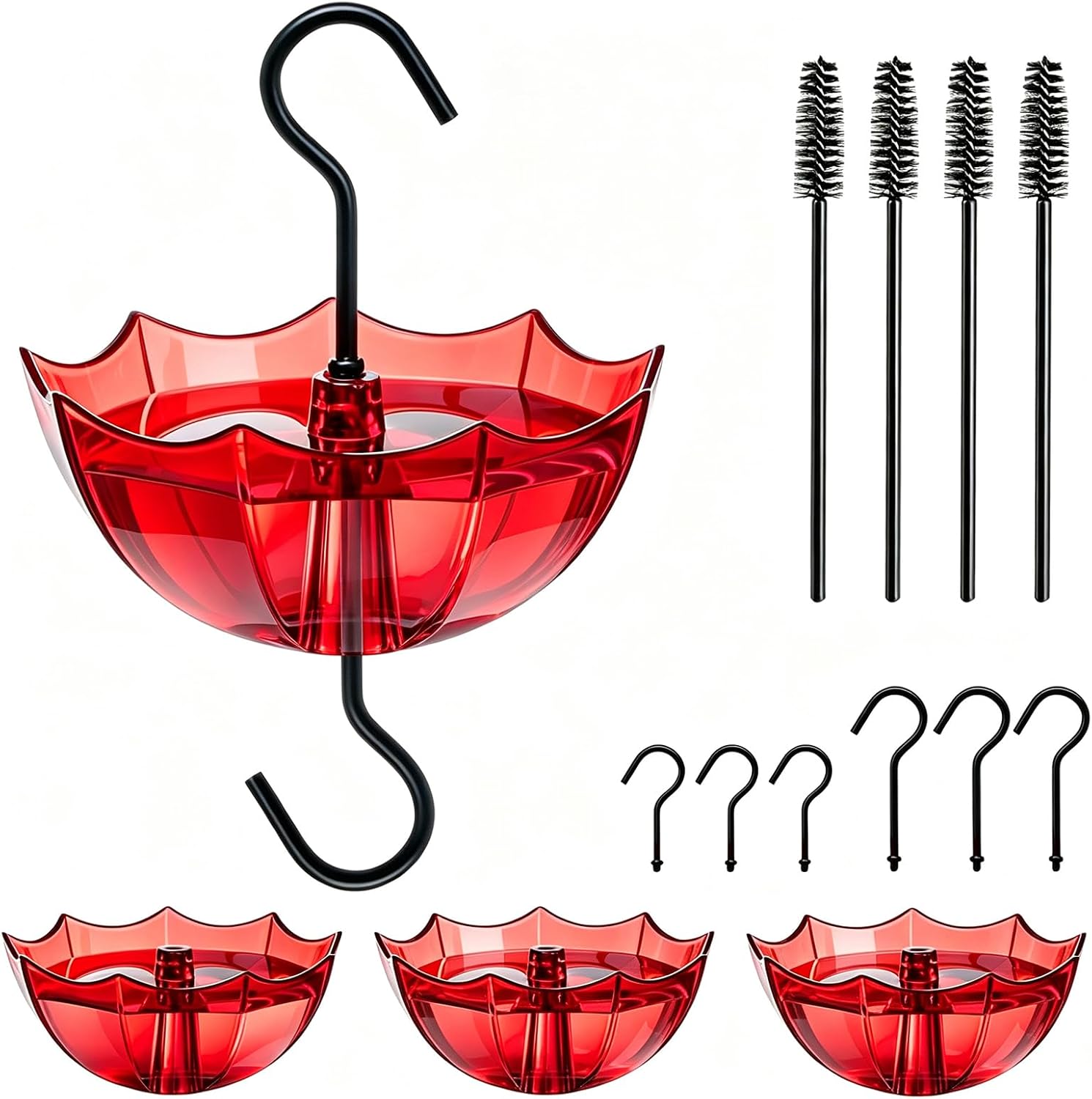
Large 3.94 inch clear cups hold up to 5 oz of water to block even big ants from reaching nectar. Bright red umbrella design adds a decorative touch to any garden. Includes 8 hooks in two sizes for easy top and bottom attachment.
Check on AmazonIf you click this link and buy, we earn a commission at no additional cost to you.
Hot Weather: Keep the Moat Filled With Plain Water
Hot, dry, or windy weather can empty a small moat surprisingly quickly. That is a real maintenance problem, because an empty cup stops being a barrier the moment ants can walk across the dry surface.
You may run across advice to add cooking oil to the moat or coat the hanger with oil to slow evaporation or make the route slippery. I would skip that around a hummingbird feeder. Current Hummingbird Society guidance specifically recommends avoiding cooking oil, petroleum jelly, and other sticky or oily treatments around feeders because birds and other wildlife can contact them.
A safer solution is less clever but easier to control: use plain water and choose a moat with enough capacity for your conditions. If a tiny built-in cup dries out too quickly, switch to a larger water moat or move the feeder to a location where the moat is not baking in intense sun all day, as long as the new position is still safe for the birds.
Make checking the water part of your nectar routine. In extreme heat, that may mean looking at the moat daily. The goal is not to make one filling last a predetermined number of days. It is to keep an unbroken water barrier whenever ants are active.
Key point: If water disappears too fast, solve the capacity, heat, or refill problem rather than adding oil to the feeder system. Plain water gives you an effective barrier without putting a greasy substance where a bird might contact it.
Clean the Ant Route After Installing the Moat
Do not be surprised if ants continue investigating the old route after the moat is installed. A barrier prevents access to the nectar, but it does not instantly remove the chemical trail cues ants used on the hanger or nearby surface.
University of Minnesota Extension notes that a mild vinegar-and-water solution can be used to wipe ant trails and temporarily disrupt ant activity. That is a reasonable cleanup step on a suitable metal hook or other washable support, but it should not be described as permanently erasing every pheromone trail or eliminating the colony.
Wipe away sticky nectar first, then clean the route the ants were using. Plain soapy water is useful for removing food residue; a mild vinegar-and-water wipe can temporarily disrupt trail-following on surfaces that tolerate it. Keep either cleaner away from fresh nectar and rinse any feeder surface that was accidentally contacted.
The important part is what happens next. If ants still reach the feeder, trace the route again. They may be bypassing the moat on a branch, chain, wall, or adjacent hanger rather than following the original path.
What Not to Put on a Hummingbird Feeder
Ant problems produce a lot of slippery and sticky home remedies: petroleum jelly, cooking spray, grease, sticky insect barriers, and pesticides applied to whatever the ants are climbing. The problem is that a hummingbird, or another bird using the same support, can contact those materials too.
Wildlife and extension guidance is not perfectly consistent on petroleum jelly or oil placed on inaccessible sections of a hanger. Some older sources recommend them. More recent hummingbird-focused guidance takes the more conservative position and recommends avoiding cooking oil, petroleum jelly, sticky traps, and insecticides around feeders because contact can foul feathers or otherwise harm wildlife.
That is the standard I would use here. A water moat does the same basic job without requiring you to judge whether a greasy section is truly unreachable from every angle.
Warning: Do not spray insecticide, cooking spray, or sticky grease on feeder ports, perches, feeder surfaces, or supports that birds can contact. Water-filled physical barriers and leak control are safer first-line options.
If you are considering any pest-control product near a feeder, read the pesticide label rather than assuming that “natural,” “food grade,” or “organic” automatically means safe for direct exposure to birds. The location and method of application matter as much as the ingredient name.

This hanging bird seed catcher tray sits below a feeder to collect dropped seed and husks before they reach the ground. It can also be used as an open platform feeder and is designed to fit many common bird feeder setups. Three drainage holes help water escape, while the black chains and S-hook provide a simple hanging attachment for backyard feeding stations.
Check on AmazonIf you click this link and buy, we earn a commission at no additional cost to you.
Managing Ants at Seed and Suet Feeders
Ants at a seed or suet station are a different layout problem because a hanging water moat may not fit the feeder or the route they are using. Start by finding the food that is drawing them. Spilled seed, pieces of suet, oily residue, and damp food collected in a tray or on the ground can all support insect activity.
A seed catcher can reduce how much food reaches the ground, but it only helps if you empty and clean it. A tray full of wet seed simply moves the food source closer to the feeder. Sweep or rake up persistent spills, remove spoiled food, and clean any surface where residue is accumulating.
Do not assume a squirrel baffle is an ant baffle. A metal or plastic cone that stops a squirrel from climbing or jumping can still provide a perfectly usable surface for a tiny insect. If ants are climbing the pole, watch where they go and use a barrier designed for ants or address the colony away from bird-access areas according to an appropriate product label.
Diatomaceous earth is sometimes suggested for crawling insects on the ground. It is not correct to call it completely risk-free simply because a product is labeled food grade. The National Pesticide Information Center describes diatomaceous earth as low in toxicity to wildlife but also notes that the dust can irritate airways when inhaled. If you use a registered diatomaceous-earth insecticide, follow its label exactly and keep loose dust away from feeder surfaces, seed, birdbaths, and places where birds are likely to forage or dust-bathe.

19 inch diameter design makes this squirrel stopper more effective than other sizes. Larger sizes have greater jitter, no matter if rodents fly up or climb up, they will not be able to stand stably on the baffle. Anything smaller than 19 inches cannot step over this baffle easily, which means that the foods in your bird feeder can be specially provided to feathery friends instead of greedy squirrels or raccoons.
Check on AmazonIf you click this link and buy, we earn a commission at no additional cost to you.
More Ways to Control Ants Around Your Yard
Once you know whether the ants are reaching nectar from above or simply foraging around spilled food on the ground, the next step becomes much easier. These related pages separate the hanging-feeder problem from moat selection and ground-level control.
| Topic | What It Covers |
|---|---|
| How to Keep Ants Out of Your Hummingbird Feeder | How to trace the ant route, position a moat above the nectar feeder, and maintain the barrier without coating feeder surfaces. |
| Choosing an Ant Moat | What to look for in built-in and add-on water moats, including capacity, placement, refill access, and bypass routes. |
| Controlling Ants on the Ground | How to deal with spilled food, visible ant trails, and ground-level activity without turning the feeder itself into a pesticide-treated area. |
The best fix is usually the one that matches the route you can actually observe. If ants are descending a hanger, block that path. If they are feeding on spilled seed below a station, remove the food source first. Treating those as separate problems keeps the solution simple.
Final Thoughts: Block Access Without Coating the Feeder
For hummingbird feeders, an ant moat is useful because it solves a narrow problem with a narrow tool. It interrupts a crawling route while leaving the nectar ports, perches, and feeder body free of pesticide, grease, or sticky material.
Install the moat above the feeder, keep it filled with plain water, clean leaking nectar from the feeder and hanger, and watch for alternate routes. If ants remain on the pole or ground but can no longer reach the nectar, that does not mean the moat failed. It means the physical barrier is doing its job without pretending to eliminate the entire ant colony.
For seed and suet stations, put the same observation-first approach to work. Clean spills, inspect catch trays, and identify how the ants are reaching food before adding another piece of hardware. If you are troubleshooting several feeder problems at once, the broader bird feeder tips page covers the surrounding placement and maintenance decisions.

Harris Diatomaceous Earth Crawling Insect Killer is a ready-to-use powder for controlling ants and other listed crawling insects. The 4-pound formula can be applied indoors or outdoors and remains effective while the powder stays dry. A powder duster is included for more controlled application around cracks, crevices, and other problem areas.
Check on AmazonIf you click this link and buy, we earn a commission at no additional cost to you.
FAQs
🐜 Why do ants keep crossing my ant moat?
First check whether there is still an uninterrupted water barrier. An empty moat, floating debris, a leaf touching both sides, or another hanger or branch can give ants a route around the water. Trace one ant’s path before assuming the moat itself has failed.
💧 Will a few drops of dish soap in the moat work better than oil?
Plain water is the safer default. You do not need soap or oil for a moat to function as a physical barrier, and current hummingbird-focused guidance recommends avoiding oily or sticky substances around feeders. Keep the moat clean, filled, and positioned where ants must cross it.
🌿 Does peppermint oil repel ants from feeders?
Peppermint-based products may affect ant activity, but I would not put essential oil on feeder ports, perches, or other surfaces birds contact. A water moat, leak cleanup, and wiping the ant route are better-supported first steps for a hummingbird feeder.
🐿️ Can ants climb up a metal squirrel pole?
Yes. A smooth-looking metal pole is not necessarily a meaningful barrier to ants, and a squirrel baffle is designed for a much larger animal. If ants are climbing the pole, trace their route and use ant-specific prevention rather than assuming squirrel hardware will stop them.
🐦 Is diatomaceous earth safe to put around the pole base?
Diatomaceous earth is generally considered low in toxicity to birds and other wildlife, but the dust can irritate airways and products must be used according to their labels. Keep loose powder away from seed, feeder surfaces, birdbaths, and places where birds forage or dust-bathe, and do not treat “food grade” as a blanket safety guarantee.