
How to Keep Ants Out of Your Hummingbird Feeder Without Harming the Birds
When people ask me how to keep ants out of hummingbird feeder setups, they are often looking for something to spray on the pole or smear on the hanger. I start somewhere simpler. Ants are there because they found sugar, so the first job is to stop nectar from leaking or collecting where they can reach it.
A physical barrier is usually the next step. A properly placed ant moat can interrupt the route between the hanger and the feeder without putting any repellent on surfaces birds may touch. That is why I prefer it to sticky coatings, grease, or insecticide around the feeding station.
If the problem is spread across several feeders or the whole patio, the broader page on ants in your bird feeder covers the larger setup. For one hummingbird feeder, though, I would troubleshoot the leak, the moat, and the ant route before doing anything more complicated.
Why Ants Target Hummingbird Feeders
Hummingbird nectar is concentrated sugar water, so a leaking feeder creates exactly the kind of food ants are good at locating. The standard homemade recipe is one part plain white sugar to four parts water. Natural flower nectar varies in sugar concentration, so I would not describe the feeder mix as an exact copy of every flower. The important point here is simply that it is an attractive carbohydrate source.
A small leak can be enough to start the problem. Bottle-style feeders are especially worth checking because warming air inside the reservoir can push nectar outward, and wind can make any feeder spill. Once ants discover the sugar, workers can establish a chemical trail that helps other ants follow the same route.
Before buying anything, wipe down the feeder exterior and inspect the base, ports, seams, and reservoir for drips. Make sure the feeder is assembled correctly and is not touching a branch, wall, railing, or leaf. A moat cannot protect the feeder if ants can simply walk around it on another surface.
The Ant Moat: Put It in the Ants’ Path
A water-filled ant moat works by putting a water barrier in the route ants use to reach the feeder. Many saucer-style hummingbird feeders already have a built-in moat. For a separate hanging moat, the usual arrangement is hanger first, moat second, feeder below it.
That position matters because the moat has to sit between the access point and the nectar. If ants are coming down a shepherd’s hook, branch hanger, rod, wire, or chain, they should encounter the moat before reaching the feeder body.
Field Note: A recurring setup mistake I saw was a moat attached somewhere on the feeder without actually interrupting the ant route. I would ask the person to trace the path with a finger from the pole or hook to the nectar. If that imaginary ant could reach the feeder without crossing water, the moat was in the wrong place or there was a bypass touching the feeder.
The practical test is simple. Look at every solid connection leading to the feeder. The ant moat should interrupt the main hanging route, and no nearby leaf, twig, wall, cord, or decorative piece should give ants a second bridge around it.

Large 5 oz capacity cup keeps ants away from nectar without frequent refilling. Bright red flower shape attracts hummingbirds and adds a pop of color to any garden. Simply rotate hooks into place, fill with water or oil, and hang alongside any feeder on a tree or shepherd hook. A lovely gift for any bird lover!
Check on AmazonIf you click this link and buy, we earn a commission at no additional cost to you.
Moat Maintenance: Use Water, Not Oil
An ant moat only works while it holds enough clean water to remain a barrier. In hot, dry, or windy weather, that may mean checking it often. Evaporation rates vary too much by moat size, sun exposure, temperature, and wind for me to promise that any one moat will last a day, a week, or some other fixed interval.
Do not use vegetable oil, canola oil, petroleum jelly, or another greasy liquid to make the moat last longer. Plain water is effective, and grease creates an unnecessary risk if a hummingbird or another bird contacts it. Oil on feathers can mat them and interfere with normal feather function.
Also watch for bypasses. Dead insects, leaves, or other debris can reduce the open water barrier, and vegetation touching the feeder can give ants a completely different route. Empty dirty water, rinse the moat, refill it with plain water, and keep nearby foliage from resting against the feeder or hanger.
| Why the Moat Is Failing | How to Fix It |
|---|---|
| Installed outside the ant route | Place it between the hanger or support and the feeder so ants must encounter the water. |
| Water evaporated | Refill with plain water and check more often during hot, dry, or windy conditions. |
| Debris is reducing the water barrier | Empty the moat, rinse it, and refill with clean water. |
| Leaves, twigs, wall, or railing touch the feeder | Remove the contact point so ants cannot bypass the moat on a solid bridge. |
If evaporation is the recurring problem, I would solve it by using a larger-capacity moat, adding shade where practical, or checking the water more often. That is safer than trying to slow evaporation with an oily surface.
What to Look For When Buying an Ant Moat
I care less about a specific depth measurement than about whether the moat holds enough water for your conditions and stays stable when the feeder moves. A shallow decorative cup may work in mild weather but demand constant refilling in a hot, exposed yard.
- Useful water capacity: Choose a moat large enough that normal evaporation does not empty it between the times you can reasonably check the feeder.
- Secure hanging points: The upper and lower hooks or rod should hold the feeder steadily without letting the moat tip and dump its water.
- Easy cleaning: Look for a smooth cup you can empty, rinse, and refill quickly. A complicated moat that traps dead insects becomes another maintenance problem.
- Compatibility: Make sure the moat fits between your existing hanger and feeder without forcing the feeder against a branch, wall, or other ant bypass.
Color is a secondary consideration. I would not buy a moat based on a promise that one color will produce a predictable refill interval. Capacity, stability, placement, and easy maintenance matter more.
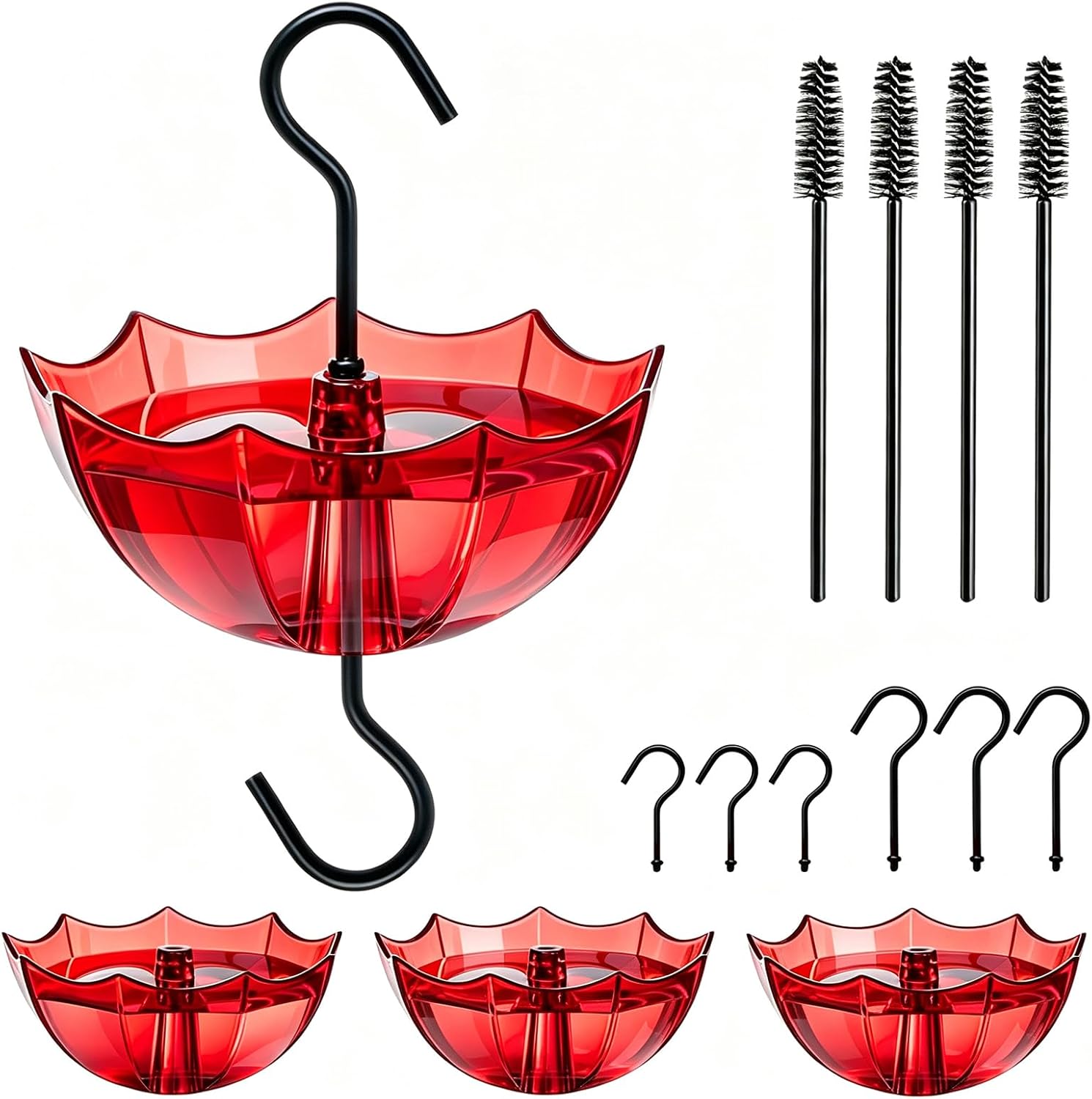
Large 3.94 inch clear cups hold up to 5 oz of water to block even big ants from reaching nectar. Bright red umbrella design adds a decorative touch to any garden. Includes 8 hooks in two sizes for easy top and bottom attachment.
Check on AmazonIf you click this link and buy, we earn a commission at no additional cost to you.
Clean the Trail After You Block the Nectar
Ants commonly use chemical trails to recruit nestmates to a food source. That helps explain why you may still see ants walking the same pole or hanger after a moat has started blocking access to the nectar.
Cleaning the route can help remove or disrupt that trail, but I would not promise that vinegar “neutralizes pheromones instantly” or permanently stops the colony. Ant species differ, trails can be renewed, and new scouts can rediscover the feeder if sugar is still leaking.
A practical cleanup looks like this:
- Take the feeder down so you can clean the support without contaminating the nectar.
- Wipe away spilled sugar water from the feeder exterior, hanger, bracket, pole, and nearby hard surfaces.
- Use soapy water or a vinegar-and-water cleaning solution on suitable support surfaces, then wipe or rinse away the residue.
- Clean the outside of the moat and refill the reservoir with plain water.
- Rehang the feeder so no vegetation or structure creates a new route around the moat.
If ants continue following the support but cannot cross the moat, give the setup some time and keep the sugar spills cleaned up. If they keep finding a different access route, trace that route and fix the physical bypass. Moving the feeder a short distance can also help because ants may be slower to relocate it than hummingbirds.

Each glass feeder has 4 flower-shaped ports with U-shaped perches for multiple birds to feed at once. Built-in ant moat and bee guards create a dual defense to keep nectar clean. Wide-mouth bottle for easy filling, fully disassembles for thorough cleaning. Perfect size for smaller yards and patios.
Check on AmazonIf you click this link and buy, we earn a commission at no additional cost to you.
What Not to Put on a Hummingbird Feeder
The biggest safety mistake is turning the feeder support into a sticky or greasy ant barrier. Cooking spray, petroleum jelly, oily coatings, and other substances can transfer to a bird that brushes against the hanger, pole, or feeder.
That concern is enough for me to leave those remedies out of the setup. I also would not add dish soap, oil, or another chemical to the ant moat when plain water already provides the barrier you need.
Coating the pole, hanger, wire, or feeder with cooking spray, petroleum jelly, essential oil, or another sticky or greasy substance.
Fixing nectar leaks, using a plain-water ant moat in the actual access route, and removing any solid bypass around the moat.
The same caution applies to pesticides around the feeding station. Hummingbirds and other birds also eat insects, and insecticides can harm birds directly or reduce and contaminate their insect food. I prefer an insecticide-free feeding area and physical exclusion methods for this problem.
Warning: Keep grease, sticky traps, oil, and insecticide off the feeder and the surfaces birds may touch. If you use a water moat, fill it with plain water and keep it clean.
That is the same reason I avoid improvised sticky or greasy barriers when discussing how to keep squirrels off a bird feeder. A deterrent is not useful if it creates a new hazard for the birds.
Final Thoughts: Block the Route and Remove the Sugar
For most hummingbird-feeder ant problems, I work through the same order: stop leaks, clean up spilled nectar, place a plain-water moat in the access route, and remove any branch or surface that lets ants bypass it. Then I watch the route rather than reaching for another chemical.
If ants are still climbing the support after that, clean the trail surface again or move the feeder a short distance and see whether activity drops. The goal is not to eliminate ants from the yard. It is to make this particular sugar source difficult to reach without creating a risk for hummingbirds.
For the rest of the feeding-station maintenance, my bird feeder tips cover the setup and cleaning issues that often show up alongside pest problems.
FAQs
🐜 Why are ants still crossing my ant moat?
First check whether they are truly crossing the water. The moat may be dry, dirty, installed outside the ants’ route, or bypassed by a leaf, branch, wall, wire, or other solid contact. Refill it with plain water and trace the full path from the support to the feeder.
💧 Should I put dish soap in the ant moat?
I would not. Plain water is enough to create the barrier, and there is no need to put soap or oil where birds might contact or drink from the moat. Keep the water clean and refill it when evaporation lowers the level.
🌿 Does peppermint oil keep ants away from nectar?
I would not put peppermint oil on or near a hummingbird feeder. Even if a strong scent temporarily changes ant behavior, it adds a substance birds can contact and does not fix leaks or physical access. A plain-water moat and a clean feeder are more predictable solutions.
🐿️ Will a squirrel baffle stop ants from climbing the pole?
Usually not. A squirrel baffle is designed around the size and movement of squirrels, while ants can travel across small seams, wires, poles, and surfaces that a squirrel cannot use. Use an ant moat in the actual ant route instead.
🐦 Is it safe to spray insecticide around the base of the feeder pole?
I avoid insecticide around hummingbird feeding stations. Birds eat insects as part of their diet, and pesticides can harm birds and other wildlife or reduce the insect food available to them. For a feeder-specific ant problem, fix nectar leaks and use physical barriers first.