The Two-Week Rule (And When to Ignore It)
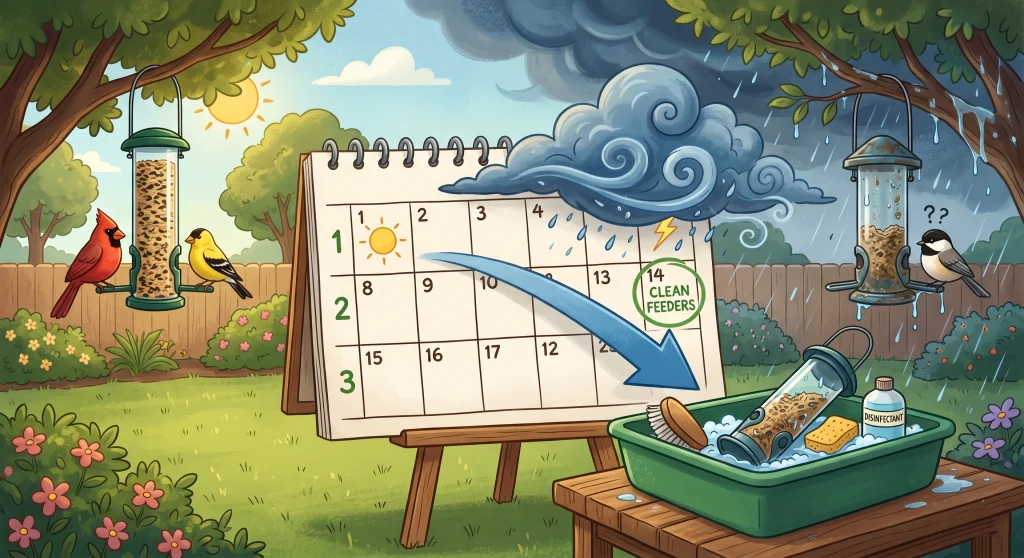
Cornell Lab recommends cleaning seed feeders about once every two weeks, with more frequent cleaning during heavy use, wet weather, or when sick birds or disease reports raise concern. That is the baseline I use too. It is simple enough to remember, but it should never stop you from cleaning sooner when the feeder is visibly dirty or the food has gotten wet.
What matters is what is happening inside and around the feeder. Damp seed, mold, accumulated droppings, clogged drainage, or a buildup of hulls under the feeding station are reasons to act before the next date on your calendar. A clean-looking feeder in dry weather may make the routine feel easy, while one week of rain can create a very different maintenance job.
The Weather Trigger: Rain and Humidity
Dry weather generally makes seed easier to manage. Wet weather does the opposite. Moisture can enter around lids, ports, seams, and drainage holes, and once seed stays damp it can clump, mold, or begin to decompose.
I would not use a fixed forty-eight-hour spoilage rule because the timing depends on temperature, humidity, feeder design, seed type, and how wet the food became. Instead, inspect the feeder after prolonged or heavy rain. If the seed is damp, stuck together, sprouting, moldy, or smells off, discard it and clean the feeder rather than waiting for the normal two-week interval.
Field Note: One recurring problem I saw at the store was a tube feeder that looked fine from across the yard but had a packed layer of damp seed around the bottom ports. The useful habit was not memorizing how many rainy days had passed. It was checking the lowest part of the feeder, where moisture and old seed tend to collect.
After cleaning, let every part dry completely before refilling. Drying matters because adding fresh seed to a damp feeder puts the new food right back into the conditions you were trying to fix.

A 6-port tube feeder with 1.7-inch perches sized for small birds like goldfinches, siskins, and house finches. Metal lid, base, and perches resist squirrel damage with a rust-resistant powder-coated finish. Enclosed seed compartment and drainage holes keep seed dry. Clear tube for easy monitoring, lift-top lid for easy refilling, and removable base for quick cleaning.
Check on AmazonIf you click this link and buy, we earn a commission at no additional cost to you.
The Heavy-Traffic Trigger
A lightly used feeder and a crowded feeder do not accumulate contamination at the same rate. More birds mean more contact with ports and perches, more droppings and hulls around the feeding area, and more opportunities for pathogens to move through a concentrated group.
At the store, I used a simple practical cue: if a feeder was losing roughly half its seed in a few days, I treated it as a busy feeder and checked it more often. That is not a scientific threshold. It is a reminder that a feeder being refilled frequently should also be inspected frequently. If the ports, tray, or perches are getting dirty within a week, clean them within a week rather than waiting for day fourteen.
The same idea applies to the ground below the feeder. Heavy traffic can leave a dense layer of hulls, spilled seed, and droppings even when the feeder itself still looks acceptable. Clean up that material regularly, and consider smaller seed loads or a feeder with good drainage if food is sitting long enough to become damp or spoiled.

A small handcrafted cedar platform feeder made from reforested, kiln-dried inland red cedar with screwed construction for lasting durability. Open design allows birds to feed from all sides. Features a powder-coated metal screen bottom for drainage. Includes an attached hook and cable for hanging. Made in the USA.
Check on AmazonIf you click this link and buy, we earn a commission at no additional cost to you.
The Sick Bird Trigger: A Complete Reset
A sick or dead bird changes the situation from routine maintenance to disease control. Signs such as lethargy, fluffed feathers, abnormal growths, or crusty eyes can occur with several illnesses, but appearance alone does not tell you which disease is present. Do not try to diagnose or handle a sick wild bird yourself.
If you find a sick or dead bird in your yard, current CDC guidance is to remove bird feeders and birdbaths for two weeks and clean them outdoors. Project FeederWatch also recommends removing feeders used by a sick bird for a couple of weeks, while noting that disease situations can differ. If your state wildlife agency has issued instructions for a local outbreak, follow that guidance rather than a generic cleaning schedule.
This is one place where routine bird feeder tips give way to disease precautions. Remove old food, clean and disinfect the feeder, clean accumulated waste beneath the feeding area, and wash your hands after handling feeders or birdbaths. For disinfection, a one-part-bleach-to-nine-parts-water solution is a commonly recommended option when the feeder material can tolerate it. Rinse thoroughly and let the feeder dry completely before storing or eventually returning it.
Managing Nectar: The Hummingbird Exception
Hummingbird feeders need a much shorter maintenance cycle than dry-seed feeders because sugar water supports rapid microbial growth and fermentation. Temperature matters, but I would not use eighty or ninety-five degrees as hard thresholds. If the nectar turns cloudy, develops visible mold, or smells fermented, empty and clean the feeder immediately regardless of the weather.
Audubon recommends emptying and cleaning hummingbird feeders about twice a week in cooler weather, around every three days in temperate conditions, and every day or every other day in hot weather. Cornell gives a slightly less aggressive baseline of changing nectar every three to five days and cleaning the feeder at least weekly, with more frequent attention in heat. When two reputable recommendations differ, I prefer the more conservative schedule during hot weather.
For routine cleaning, hot water and a bottle brush are useful because hummingbird feeders have narrow ports where residue can hide. If you need the full cleaning process, including how to disassemble and rinse different feeder types, see how to clean a bird feeder.
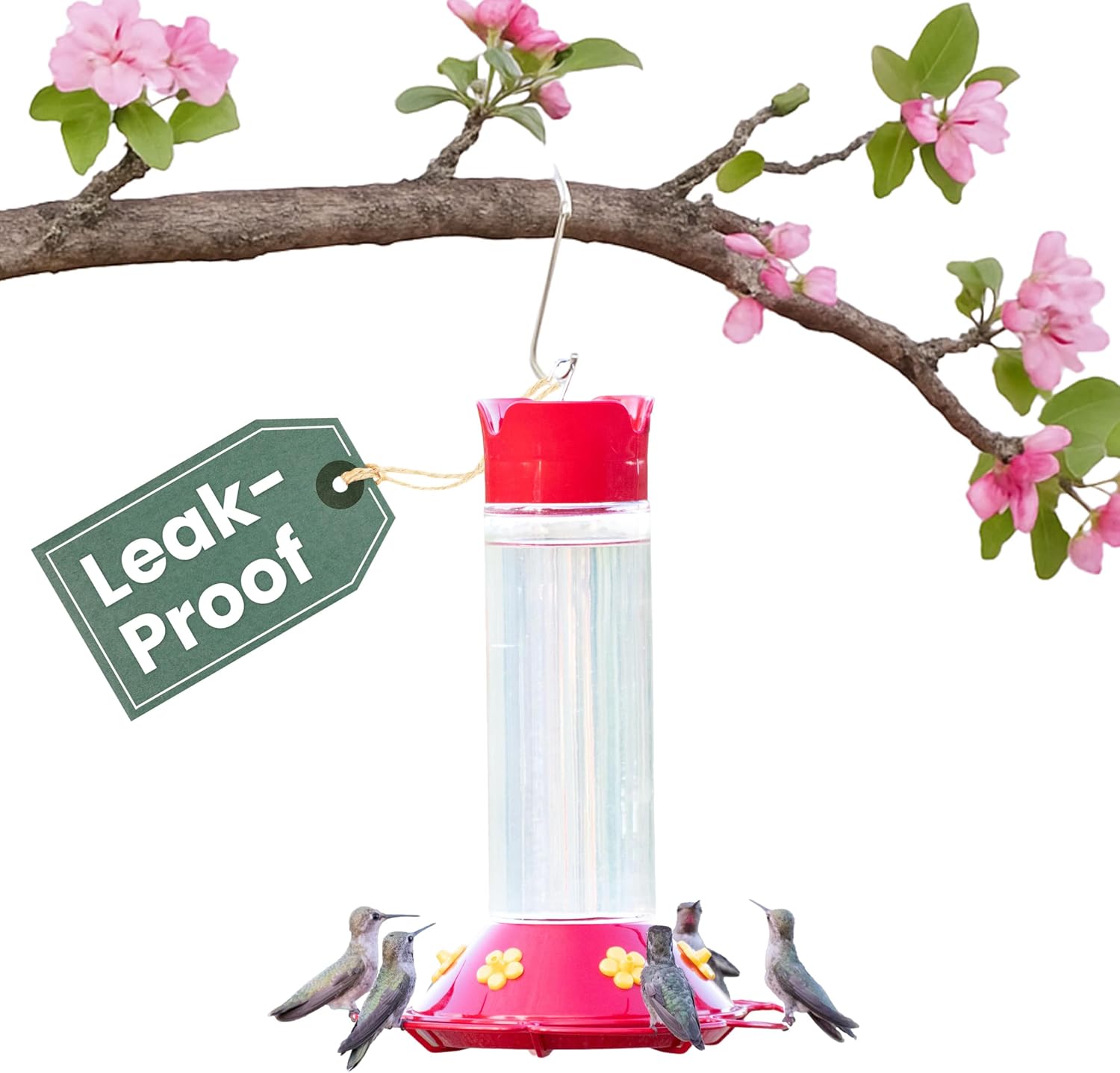
A glass hummingbird feeder with a 30 oz nectar capacity and wide-mouth bottle for easy, mess-free filling. Flower-shaped feeding ports naturally attract hummingbirds while tapered tips and a built-in ant moat keep bees and ants away from the nectar. Fully separable parts for thorough cleaning.
Check on AmazonIf you click this link and buy, we earn a commission at no additional cost to you.
Your Master Bird Feeder Cleaning Schedule
The easiest way to manage feeder cleaning is to separate the baseline schedule from the conditions that override it. I still like putting the last-cleaned date on a piece of tape under the feeder or on the seed bin, but I treat that date as a reminder to inspect, not permission to ignore a dirty feeder until the deadline arrives.
Use this chart as a practical starting point. Local wildlife agencies may give different instructions during disease outbreaks, and hummingbird feeders should always be cleaned sooner if nectar looks or smells wrong.
| Condition or Feeder Type | When to Clean It |
|---|---|
| Standard seed feeder in normal conditions | About every 2 weeks as a Cornell baseline, sooner if dirty |
| Hummingbird feeder in cooler weather | About twice per week |
| Hummingbird feeder in warm or hot weather | About every 3 days, increasing to daily or every other day in hot weather |
| High-traffic seed feeder | Inspect frequently and clean as soon as ports, perches, or trays become dirty |
| After heavy rain or prolonged damp weather | Inspect immediately and clean if seed or feeder surfaces stayed wet or became soiled |
| Sick or dead bird found | Remove feeders and baths, clean and disinfect them, and follow wildlife guidance before returning them |
The schedule works best when it makes you look at the feeder more closely. A date can remind you to clean, but moisture, visible contamination, spoiled food, and disease concerns should always move the job forward.
Final Thoughts: Observation Over Routine
A two-week seed-feeder schedule is a useful default because it is easy to remember and matches Cornell’s current guidance. What keeps a feeding station safer, though, is noticing when conditions have changed. Rain, heavy traffic, spoiled food, and signs of illness can all make the next cleaning date irrelevant.
I would rather clean a feeder early than defend a calendar that no longer fits the yard. Check the food, ports, perches, tray, and ground underneath when you refill. That small inspection is what turns a generic cleaning schedule into a routine that actually responds to the birds using it.

A no-scratch foam cleaning mop with a long arm designed for cleaning hummingbird and oriole feeders. Removes harmful residue and water buildup to keep birds healthy. Features a built-in hook for convenient hanging storage.
Check on AmazonIf you click this link and buy, we earn a commission at no additional cost to you.
FAQs
🌧️ Do I need to wash my feeder after every single rainstorm?
Not automatically. Check whether water actually reached the seed and whether the feeder stayed damp or became visibly soiled. If the seed is wet, clumped, moldy, sprouting, or smells off, discard it and clean and dry the feeder before refilling.
❄️ Should I wash feeders as often in the winter?
Do not assume winter automatically makes a three- or four-week schedule safe. Cornell’s roughly two-week seed-feeder baseline still works as a starting point, with more frequent cleaning when feeders are heavily used, wet, or dirty. Snowmelt and freeze-thaw cycles can create moisture problems even when the air feels cold.
🧼 Can I just wipe the feeder down instead of a full wash?
A quick wipe can remove visible dirt between cleanings, but it is not a substitute for periodically taking the feeder apart and cleaning the surfaces birds and food contact. When disease is a concern, use an appropriate disinfecting method such as a dilute bleach solution, rinse thoroughly, and let the feeder dry completely before reuse.
🕊️ How do I know if the seed has gone bad before the two weeks are up?
Look for damp or clumped seed, visible mold, sprouting, insects, or a musty or rancid smell. Also check the bottom of tube feeders and areas around ports, where old wet seed can pack together even when the top of the feeder looks fine. When in doubt, discard questionable seed rather than mixing fresh food into it.