
The Trade-Off of Catching Your Seed
People often ask me whether a bird seed catcher for feeder setups is worth adding. A wide tray can intercept a useful share of hulls and spilled seed before they reach grass, decking, or a balcony below. It can also reduce some food on the ground, which matters because scattered bird food can attract rodents. What it cannot do is catch every piece or remove the need to keep the feeding area clean.
The trade-off is concentration. Hulls, uneaten seed, and sometimes droppings that would have landed over a wider area now collect on one surface. If that material stays wet, seed can spoil or mold and the tray can become a contaminated feeding surface. Cornell specifically warns that moldy or decomposing seed and hulls on feeder trays can make birds sick.
Field Note: The maintenance mistake I watch for with any catcher is treating it like a trash bin instead of part of the feeder. If wet seed and hulls are allowed to build up, the tray stops being a cleanup aid and becomes another dirty feeding surface. I would rather use a smaller tray that gets emptied regularly than a huge one that quietly collects weeks of debris.
A tray can be a very practical tool for a tidy yard, especially over a deck or balcony. The condition is simple: check what is collecting in it and remove wet or spoiled material promptly. The cleaner the tray stays, the more useful the accessory actually is.
What a Seed Catcher Does (and Doesn’t Do)
Before adding one, be clear about its job. A seed catcher is simply a tray, mesh hoop, or platform positioned below the feeding ports to intercept some falling hulls and seed. When a bird opens an in-shell sunflower seed or knocks food from the feeder, part of that debris lands on the catcher instead of directly below the station.
This simple physical barrier offers a few very specific benefits for your yard.
- It can reduce the layer of hulls and spilled seed accumulating directly below the feeder.
- It can reduce the number of viable seeds reaching soil and sprouting below the feeder.
- It can double as a platform used by birds that are comfortable feeding from broad, flat surfaces, including doves and cardinals.
- It can reduce food reaching the ground, although it does not make a feeder rodent-proof.
A tray will not fix the underlying bird feeder seed problems caused by rain or poor drainage in the feeder itself. In fact, an uncovered tray adds another place where food can get wet. Think of it as a collection surface, not a weather shield.
Installing a tray, filling the feeder, and ignoring the tray until it overflows with wet, rotting debris.
Installing a well-drained tray, checking it regularly, and removing wet seed, droppings, and accumulated hulls before they become a persistent layer.

This two-pack of 30-inch hanging bird seed catcher trays sits beneath outdoor feeders to catch dropped seed and help keep the ground cleaner. Each hoop uses fiberglass mesh with a steel wire frame, providing a broad feeding surface while allowing the trays to remain lightweight and easy to store. The removable hanging hardware and foldable construction make the catchers convenient to install beneath a variety of backyard bird feeders.
Check on AmazonIf you click this link and buy, we earn a commission at no additional cost to you.
Choosing the Right Seed for Your Tray
Seed choice changes what lands in the tray. In-shell sunflower produces hulls by design, while mixed seed can add uneaten ingredients if the birds at your feeder selectively discard them. A cleaner mix can reduce waste, but no seed eliminates droppings or accidental spills.
Some inexpensive mixes contain ingredients that many common feeder birds use less readily, which can increase sorting and waste. Whole sunflower also leaves hulls behind after the kernel is eaten. If most of what you empty from the catcher is uneaten seed rather than shells, the mix itself deserves a closer look.
Pro Tip: Hulled sunflower or another shell-free blend can substantially reduce hull cleanup. It will not cut maintenance by a predictable percentage, because the tray can still collect spilled food, droppings, and debris.
A no-mess bird seed blend is mainly useful because removing hulls reduces one large source of debris. The exact ingredients vary by product, and dropped edible food is not guaranteed to be eaten. Anything left in a wet tray can still spoil, mold, or attract rodents, so shell-free does not mean maintenance-free.
Hulled seed is usually more expensive per pound, and without the shell protecting the kernel it needs especially good moisture control. Use quantities that move through the feeder quickly and discard anything that becomes wet or moldy. The payoff is less hull waste, not freedom from tray cleaning.

Rust-free black powder-coated mesh tray stays stable when birds perch on the sides, with built-in drainage to keep seeds dry. Lightweight and weather-resistant for years of outdoor use. Easy to clean, just flip over and rinse. A great gift for any garden or nature lover.
Check on AmazonIf you click this link and buy, we earn a commission at no additional cost to you.
When a Seed Catcher is Actually Worth It
Not every feeding station needs a catcher. The decision depends on what is below the feeder, how much waste actually reaches that surface, whether rodents are an active concern, and whether you are willing to maintain another feeding surface.
I would start by looking directly below the feeder. A deck, balcony, or carefully maintained lawn gives you a stronger reason to intercept debris. A naturalized area may tolerate some hulls better, but even there Cornell recommends cleaning up accumulations of old seed, droppings, and spoiled food rather than assuming the ground can handle unlimited waste.
| Setup Location | Is a Seed Catcher Tray Worth It? |
|---|---|
| Over a wooden deck or concrete patio | Often. A tray can reduce seed and hull cleanup on the surface, but it will not catch every dropping or prevent every stain. |
| Over an apartment balcony railing | Often yes, especially where falling debris affects another unit. Check building or lease rules before mounting one. |
| Over a manicured grass lawn | Often useful if hulls and spilled seed are visibly accumulating or damaging the lawn. |
| Over a natural woodland edge | Often optional. Monitor the area and remove concentrated old seed, droppings, or moldy material if they build up. |
| Over a mulch or garden bed | Usually optional. A catcher may still help if seed is sprouting, rodents are active, or debris is building up faster than you want. |
If you decide to use a tray, drainage and cleanability matter more than appearance. Cornell specifically recommends a screened rather than solid bottom for tray-style feeders because it drains better. A mesh or well-screened catcher also makes it easier to shake out hulls, although wet food still needs to be removed rather than left to dry in place.
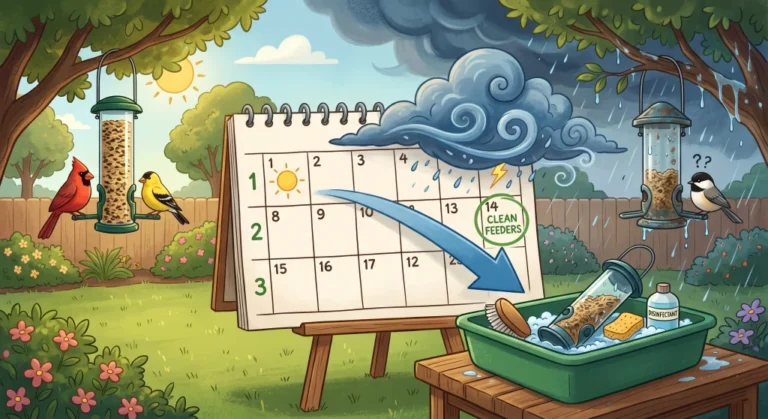
Weather changes the maintenance burden. In a damp, rainy climate, an open tray may need much more frequent attention. Letting wet seed accumulate on the ground is not automatically safer, so if the tray becomes impractical, consider reducing the amount of seed, improving weather protection, changing feeder placement, or skipping the catcher while keeping the ground below clean.

This 9.75-pound wild bird food blend is designed for cleaner backyard feeding with a shell-free, 100% edible mix that leaves less debris beneath feeders. The blend includes hulled sunflower hearts and chips and is formulated to attract cardinals, grosbeaks, nuthatches, woodpeckers, and other common songbirds. It works well for regular outdoor feeding where reducing hulls and leftover waste is a priority.
Check on AmazonIf you click this link and buy, we earn a commission at no additional cost to you.
A Fair Assessment of Catchers
A seed catcher can be very effective at reducing the debris that lands directly below a feeder, provided the tray is large enough and positioned well. It can also reduce some food available to rodents on the ground. It does not create a perfectly clean yard, eliminate rodents, or remove the need to maintain the feeding area.
The trade-off is maintenance. If you are willing to check the tray, remove wet food, and include it in regular feeder cleaning, it can be a useful addition. If you want fewer surfaces to maintain, a shell-free seed may reduce the mess enough that you can skip the catcher, while still cleaning whatever seed and droppings accumulate below the feeder.

Shell-free mix of sunflower hearts, chips, and peanut pieces keeps patios and decks spotless. Attracts finches, cardinals, thrushes, wrens, buntings, and more. Works in any tube, tray, hopper, or platform feeder year-round.
Check on AmazonIf you click this link and buy, we earn a commission at no additional cost to you.
FAQs
🧹 How often should I empty the seed catcher tray?
Check the tray often enough that hulls, droppings, and wet seed do not accumulate. After rain, inspect it promptly and discard soaked or spoiled food. A fixed two-to-three-day rule is less useful than responding to weather, feeder traffic, and how quickly debris is building up.
🐿️ Will a seed catcher stop squirrels from reaching the feeder?
No. A seed catcher is not a squirrel baffle, and a wide tray can even provide another landing or feeding surface. If squirrels are a problem, use a feeder location and baffle system designed for squirrel exclusion rather than expecting the catcher to do that job.
🌧️ Do bird seed catchers need drainage holes?
Good drainage is strongly recommended. Cornell favors screened bottoms on tray feeders because wet seed can sprout, mold, or spoil and droppings can soil the food. A solid tray requires especially close attention after rain so water and wet seed do not sit in it.
🕊️ Will birds actually eat out of the tray underneath?
Yes. Doves, juncos, cardinals, and other birds may use a broad tray or platform when the food suits them. That can increase the tray’s value as a feeder, but it also means the surface needs to be kept clean because birds are standing directly where food collects.