Why You Keep Running Into Bird Feeder Seed Problems
You fill the feeder, come back after a stretch of wet weather, and find seed packed around the ports or stuck to the bottom. That is a common feeder problem, but I would not blame rain alone. The bigger question is whether moisture got into the food and then had a chance to leave before the seed began to spoil.
Feeder design matters because some trays and reservoirs drain and ventilate better than others. Fill level matters because a small amount of seed can turn over quickly while a full tube may leave the bottom layer sitting for days. Weather matters because heat and humidity make wet food harder to manage. All three can work together.
One detail I always check is the seed below the lowest feeding port. In some tube feeders, birds can never reach that bottom layer. Cornell specifically warns that unused seed can sit there and become moldy. If your feeder repeatedly develops a damp plug at the base, the useful fix is not a stronger shake. It is getting the old food out, cleaning the feeder, and changing how much seed you put in.
The Hidden Flaw: Why Feeder Design Matters in Wet Weather
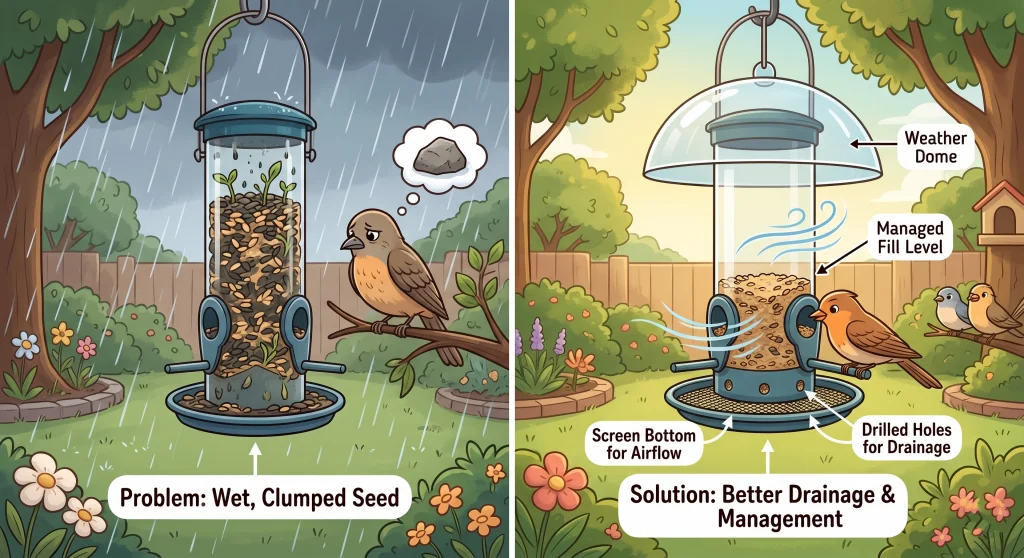
When people find wet seed, the first fix they often reach for is a weather dome. A dome can help reduce direct rain, but I also look underneath the seed. Water that enters a feeder needs somewhere to drain, and damp food needs enough airflow and turnover that it does not remain trapped.
Cornell recommends screened rather than solid bottoms for tray feeders because they drain better. The same principle is useful when comparing other feeder designs: look for drainage openings that are not blocked by old hulls, a base that can be removed for cleaning, and corners where seed cannot sit indefinitely. A roof or dome helps only if the food inside the feeder is still able to stay dry.
Assuming an overhead cover solves the entire moisture problem while old seed remains packed against a solid, poorly drained bottom.
Using a feeder with effective drainage, checking the lowest seed areas after rain, and emptying old food instead of repeatedly topping it off.
I would not automatically drill holes into a feeder. Some trays can be safely modified, but drilling the wrong material can leave sharp edges, weaken a base, create cracks, or change how the feeder sheds water. If a manufacturer provides a drainage insert or removable screen, use that. If the feeder repeatedly traps water and cannot be cleaned or drained well, replacing it with a better-designed model is the cleaner fix.

This hanging bird feeder combines a cylindrical mesh-style feeding body with a protective dome lid and a wraparound feeding area. It holds up to 2.5 pounds of seed and can be used with sunflower seed, mixed seed, and other common wild bird blends. The wide top opening makes refilling and routine cleaning easier, while the covered design provides some protection from sun and rain.
Check on AmazonIf you click this link and buy, we earn a commission at no additional cost to you.
The Overfill Mistake During Slow Seasons
A large feeder is convenient only when birds are actually emptying it. During a slow period, filling a big tube to the top can leave seed outdoors much longer than necessary. That becomes a bigger problem in hot, humid weather, when food absorbs moisture more readily and mold can develop if the seed stays damp.
Cornell recommends filling seed feeders only about halfway during summer and refilling more frequently instead of packing them full. Georgia wildlife guidance takes the same basic approach and recommends putting out only enough seed to last a couple of days. I like that logic because it matches the fill level to actual feeder traffic rather than to the feeder’s maximum capacity.
Field Note: A pattern I heard often at the store was, “The seed used to disappear, and now it just sits there.” The brand had not necessarily changed. What changed was bird traffic. My first move was to reduce the amount in the feeder, make sure the old bottom layer was gone, and see how quickly a fresh batch actually moved.
You do not need a fixed one-quarter or one-half rule in every season. If a feeder is emptied quickly and the seed stays dry, you can add more. If food sits for several days, especially through humid or rainy weather, scale the fill level down. Fresh turnover matters more than making the feeder look full.
Weather Guards: What They Can (and Cannot) Fix
A weather dome is useful when it keeps rain from landing directly on exposed seed and ports. The wider the cover is relative to the feeder, the more protection it can provide from rain that arrives at an angle. But no dome makes a feeder weatherproof, and wind can still carry water toward feeding openings.
Humidity is a different problem because it does not have to fall as visible rain. Cornell notes that seed can absorb moisture from warm, humid air, which is one reason summer food spoils faster. In that situation, the solution is not simply a larger roof. I use smaller fills, check seed more often, keep drainage clear, and clean the feeder before damp residue builds up.
That is where a regular cleaning schedule matters. A clean feeder cannot make humid air disappear, but it removes old seed, dust, droppings, and residue that otherwise stay in contact with the next batch of food.

Steep dome design sends squirrels sliding off with no moving parts, no gimmicks. Made in the USA from UV-resistant polycarbonate built to withstand rain, sleet, snow, and hail for years. Fits any bird feeder or birdhouse, easy to clean and assemble. Backed by a lifetime warranty with real humans available to help.
Check on AmazonIf you click this link and buy, we earn a commission at no additional cost to you.
When You Have a Bird Seed Clogged Feeder
A clogged feeder can have two very different causes. The first is wet or spoiled seed that has packed together around a port. The second is dry seed that simply does not flow well through that feeder’s openings. I treat those situations differently because I do not want to push questionable wet food back into circulation.
If the clog feels damp, smells off, shows mold, or has formed a solid mass, empty the feeder. Do not poke a channel through the clump and leave the rest in place. Cornell’s feeder guidance is clear that wet or moldy seed should be discarded, followed by cleaning and complete drying before fresh food goes back in.
If the seed is dry and sound, then a gentle mechanical check makes sense. Empty enough seed to see the port, remove dry debris, and make sure the opening is not blocked by hull fragments. If the same dry seed repeatedly bridges over the same port, the feeder and seed may simply be a poor match. Different tube feeders are designed for different seed sizes, so check the feeder specifications instead of assuming every port will handle every seed.
Why Clumped Seed Needs More Than a Shake
Seed mixes naturally contain small particles from broken kernels and hulls. When moisture enters the feeder, those fines can pack together with whole seed around the base and feeding ports. You do not need a special “glue” mechanism to explain the result. Wet organic material becomes sticky, compacts under its own weight, and can remain damp inside a dense clump.
That is why shaking the tube is not a reliable fix once the food has become wet and packed. You may loosen the outside while leaving damp seed inside the mass. If the clump formed because water reached the food, I would rather discard the affected seed than stir it around and hope it dries safely in the feeder.
Prevention is simpler. Do not keep burying old seed under new seed. Empty the remaining dry food before a refill when necessary, clear powder and hull fragments from the base, check drainage openings, and use smaller batches when wet weather is likely. If a storm leaves the seed itself wet, remove it rather than trying to dry it in place.
Why Is Seed Growing in My Feeder?
Sprouting tells you something useful: viable seed has stayed moist long enough to germinate. It does not tell you, by itself, that the seed was cheap. Black oil sunflower, millet, and other whole seeds are still seeds, and viable ones can germinate when moisture and temperature are suitable.
Cheap mixes can create a different problem because birds may sort through ingredients they do not prefer and throw more of them onto the ground. Cornell notes that mixes high in red millet, oats, and similar ingredients can create substantial waste. If viable discarded seed lands on damp soil, some of it can sprout. That is a waste-and-moisture problem, not evidence that premium whole seed is somehow unable to germinate.
Hulled or chipped “no-mess” blends can reduce the amount of intact seed and hull material accumulating under a feeder, which often means fewer volunteer plants. But I would not promise zero sprouting from every product. More importantly, Cornell warns that sunflower hearts and chips spoil faster without the shell and should be offered only in amounts birds can finish quickly.
Pro Tips: If sprouts appear inside the feeder itself, focus first on moisture and turnover. Empty the food, clean and dry the feeder, clear the drainage, and refill with less. Changing seed may reduce waste under the feeder, but it does not fix water trapped inside the feeder.
Summer Heat and Seed Spoilage
Moisture is the biggest feeder problem, but heat can shorten the useful life of bird food too. Cornell notes that bird seed spoils more easily in hot weather, especially when it gets wet, and recommends keeping stored seed in a cool, dry place.
I do not try to diagnose spoilage by one exact smell. Check the whole picture. Seed that smells musty, sour, stale, or otherwise wrong, shows mold, feels damp, contains insects, or has changed noticeably in texture should not be mixed with a fresh batch. Birds may avoid spoiled food, but that is not a reason to leave questionable seed available and wait for them to decide.
During hot, humid periods, I buy and put out amounts I can turn over reasonably quickly. The same principle applies to shelled sunflower and nut pieces because removing protective shells exposes more of the food. Smaller fresh batches are more useful than a large bargain bag that sits warm and damp for too long.

This 10-pound no-mess wild bird seed blend is made with 100% edible ingredients to reduce hulls, waste, and cleanup beneath feeders. The mix includes sunflower hearts, peanuts, tree nuts, pumpkin seeds, raisins, and papaya to attract cardinals, chickadees, finches, grosbeaks, woodpeckers, and other backyard birds. It works with tube, hopper, tray, platform, and other common outdoor feeders and is a practical choice for cleaner feeding areas.
Check on AmazonIf you click this link and buy, we earn a commission at no additional cost to you.
The Hard Rule: When to Throw It Out
The part people dislike most is throwing away seed they paid for, but wet food is not where I try to save a few dollars. Cornell advises discarding wet seed so it does not become moldy, and Georgia wildlife guidance likewise says to dispose of wet seed before mold develops.
If only the exterior of a weather-resistant feeder got rained on and the seed inside stayed dry, there is nothing to discard. But when the food itself is wet, heavily clumped, moldy, sprouting inside the feeder, or has an off smell, remove it. Do not mix it into fresh seed, bake it dry, or spread it on the ground for other animals.
Warning: Moldy or decomposing seed can make birds sick. If you find mold or spoiled food, empty the feeder, dispose of the seed where birds and pets cannot eat it, clean the feeder thoroughly, and allow it to dry completely before refilling.
Also clean the ground beneath the feeder if wet seed and hulls have accumulated there. That material can mold, attract rodents, and keep the same moisture problem going outside the feeder. If you are already dealing with visible fungal growth, the separate page on mold in your bird feeder area covers the next stage of cleanup.
Final Thoughts: Managing Moisture and Flow
Keeping bird seed in good condition is less about defeating every rainstorm and more about limiting how long food sits in conditions that can spoil it. A feeder with decent drainage, a fill level matched to actual bird traffic, and regular checks at the bottom and ports solves more problems than simply adding another accessory.
The routine I use is straightforward: keep seed dry, put out an amount birds can finish reasonably quickly, discard food that becomes wet or spoiled, and clean before refilling. That protects the food and also makes troubleshooting easier because you can tell whether the next problem is weather, feeder design, or the seed-feeder match.
For the broader maintenance side of the setup, these bird feeder tips cover the placement and cleaning problems that often show up alongside bad seed.

Wagner's Four Season Sunflower Seed is 100% black oil sunflower seed. Sunflower seed is the favorite seed of most wild birds. It is high in energy and has a thin shell making it easy for all birds to consume. Use tray feeders or hopper feeders to attract sunflower loving songbirds. Cardinals, Chickadees, Finches, Nuthatches, Woodpeckers and much more. Trust your backyard birds to the experts at Wagner’s.
Check on AmazonIf you click this link and buy, we earn a commission at no additional cost to you.
FAQs
🌧️ How do I keep bird seed dry in my feeder?
Choose a feeder that sheds rain and drains well, keep drainage openings clear, and avoid filling more seed than birds can use reasonably quickly. Cornell also recommends screened rather than solid bottoms for tray feeders and only enough seed for a couple of days at a time in exposed trays.
🧊 Why is my bird seed clumping together?
Moisture makes seed and the small particles in a mix stick and compact, especially around low points and feeding ports. If the clump is wet, moldy, or smells off, discard the seed and clean the feeder rather than trying to shake it loose for birds to eat.
🌱 Can I stop seed from sprouting in the feeder tray?
You can reduce it by keeping seed and trays dry, cleaning spilled food regularly, and avoiding more seed than birds will use. Hulled or chipped blends often reduce volunteer plants because less intact seed reaches the ground, but sprouting is mainly a sign that viable seed has had enough moisture to germinate.
☀️ Can bird seed go bad in the summer without rain?
Yes. Cornell notes that bird seed spoils more easily in summer heat, and humid air can add moisture even without a direct rainstorm. Keep stored seed cool and dry, use smaller feeder loads, and discard food that develops mold or an off smell.
🗑️ Should I throw away wet bird seed?
If the food itself has become wet, the safest approach is to discard it rather than leave it in the feeder to dry. Wet seed can mold and support harmful microbial growth, so clean and dry the feeder before adding a fresh batch.
🥢 How do you fix a clogged tube feeder?
First check whether the clog is wet or dry. Wet, spoiled, or moldy seed should be discarded. If the food is dry and sound, empty enough of the feeder to clear dry debris from the port and check whether the seed size is appropriate for that feeder design.
☂️ Do weather domes stop humidity from ruining seed?
No. A dome can reduce direct rain, including some wind-driven rain depending on its size and placement, but it cannot remove moisture from humid air. In humid conditions, smaller fills, good drainage, airflow, and frequent inspection matter more.