Why Rain Damages Seed (It’s Not Just the Rain)
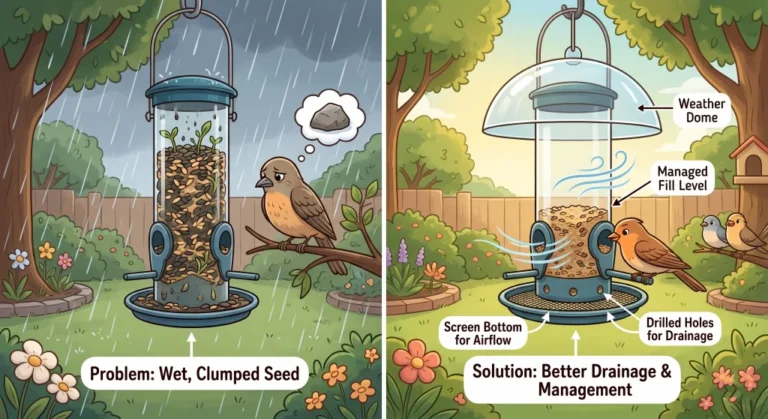
If you are trying to figure out how to keep bird feeder from getting wet, start by separating direct rain from lingering dampness. A roof, dome, or sheltered location can reduce the water that reaches the food, but no cover makes an exposed feeder waterproof. Wind-driven rain can still enter feeding ports and trays, and warm, humid air can keep seed damp after the storm has passed.
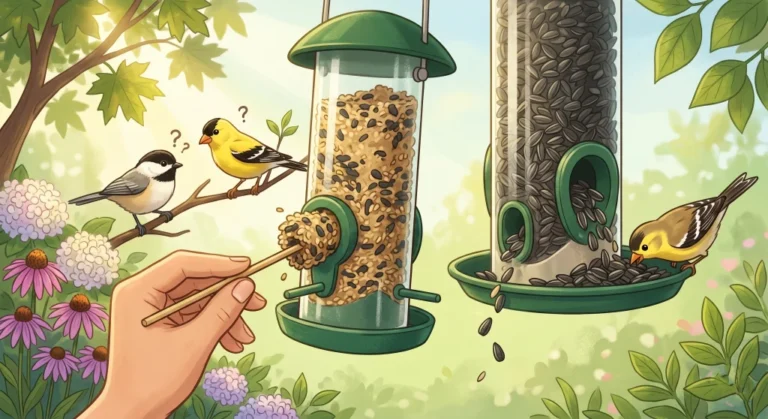
That matters because moisture changes how long seed can sit safely. Wet or persistently damp seed can clump, sprout, spoil, and support mold growth, while wet hulls and debris around a feeder create another sanitation problem. A pattern I saw repeatedly at the store was people blaming the seed itself when the real issue was a feeder that stayed damp after every storm. I look at three things first: how water reaches the food, whether it can drain away, and whether the feeder is holding more seed than the birds can finish quickly.
Choosing and Positioning a Bird Feeder Rain Cover
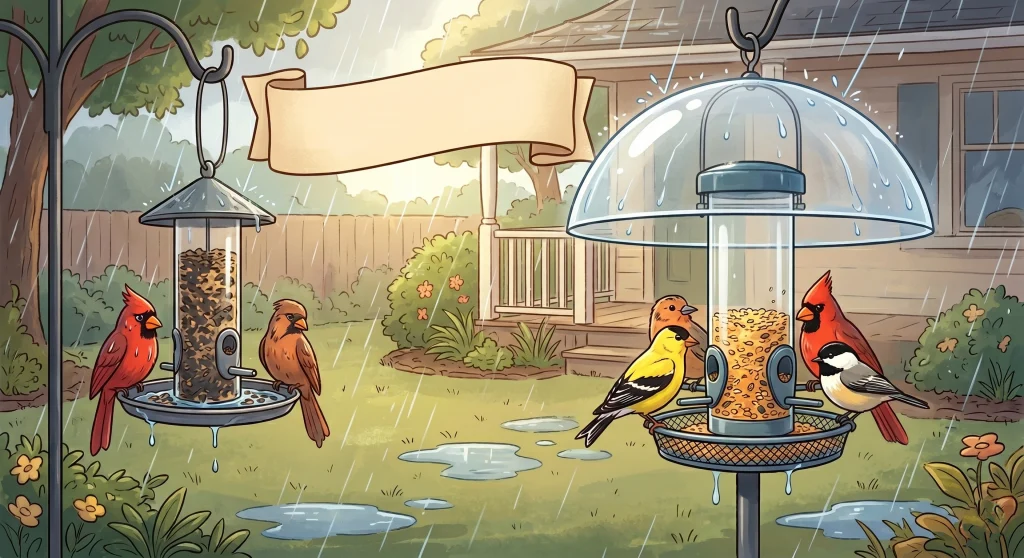
A bird feeder rain cover can be a useful first layer of protection, especially over an open tray or a feeder with exposed ports. The key is coverage, not simply having a piece of plastic somewhere above the feeder. A small dome over a wide tray may stop straight-down rain while doing very little against wind-driven rain, so I prefer a cover that extends beyond the part of the feeder where the seed is actually exposed.
Position matters too, but there is no universal clearance in inches that works for every feeder. Put the cover close enough to provide meaningful overhang without crowding the birds’ approach or interfering with the lid, hanging hardware, or cleaning access. If the feeder is still getting soaked from one direction, changing the location to a calmer, more sheltered spot can sometimes do more than adding an even larger cover.
Field Note: One of the recurring weather-guard problems I saw at the store was a perfectly good dome hanging so far above a feeder that sideways rain could blow underneath it with almost no obstruction. The useful adjustment was not a magic measurement. It was lowering or widening the cover until it actually overlapped the exposed feeding area without blocking bird access.
When you are shopping for a protective cover, ignore broad promises and check the physical setup instead.
- Useful overhang: The cover should extend beyond the exposed ports or tray rather than ending directly above them.
- Bird clearance: Leave enough open space for the birds that normally use that feeder to land, perch, and leave without squeezing under the cover.
- Stable hardware: Use mounting hardware that stays secure in wind and does not let the cover swing into the feeder.
A cover helps most when the rest of the setup is sound. If you are setting up your yard for the first time and want to make sure your overall mounting strategy makes sense, taking a look at a comprehensive bird feeder tips guide can help you avoid the most common placement mistakes before the rain even starts.

12-inch diameter universal dome. Protects any small or medium-sized feeder from rain and snow. Molded from uv stabilized polycarbonate, the strongest and most durable plastic available. Guaranteed for life.
Check on AmazonIf you click this link and buy, we earn a commission at no additional cost to you.
The Hidden Role of Feeder Drainage
The feeder itself determines what happens to the water the cover misses. Open trays expose more seed to rain and snow, while hopper and tube designs usually shelter more of the supply. But any feeder can develop a wet-seed problem if water enters and then collects where the food sits.
This is why I pay close attention to the bottom of a feeder, not just the roof. A solid tray with no drainage can hold water around seed and hulls, while a screened bottom or functional drainage openings give that water somewhere to go. Cornell specifically recommends screened rather than solid tray bottoms for better drainage, and Georgia wildlife guidance likewise favors screen-bottom feeders during warm, wet conditions.
Drainage is a backup system, not permission to leave soaked food in place. If seed has become wet, clumped, sprouted, musty, or visibly moldy, remove it rather than waiting for the feeder to dry it out. Then clear the drainage area before refilling, because seed dust and hulls can plug openings that looked perfectly adequate when the feeder was new.
This sounds simple, but it is easy to miss in practice. A feeder with several small drain holes may work well when those holes stay open, while a larger screened area gives wet debris fewer places to form a complete blockage. Either design still needs inspection after storms, because drainage only helps when water can actually escape.

All-metal construction with a bird-shaped safety lock to deter squirrels, deer, and raccoons. Holds 6.5 lbs of corn, peanuts, nuts, or large seeds. Four-sided mesh panels with fold-out perches let birds feed from every angle. Bottom drainage system keeps seeds fresh year-round. Hangs easily on any shepherd hook or tree.
Check on AmazonIf you click this link and buy, we earn a commission at no additional cost to you.
The Turnover Strategy for Humid Weather
Filling less during wet or humid weather is one of the simplest changes you can make, but the useful reason is turnover, not a precise surface-area formula. Seed can absorb moisture from humid air, and a large load that sits in a feeder for many days has more time to deteriorate. Cornell recommends putting out smaller amounts during hot, humid weather so the birds finish the food before it sits long enough to mold.
I use the birds’ actual consumption rate instead of a fixed percentage. If they normally empty a feeder in two days, there is little benefit to loading enough seed for a week just because the reservoir can hold it. During a damp stretch, put out an amount the birds are likely to finish within a couple of days, check it after rain, and refill with fresh seed as needed.
This is especially useful when feeder traffic slows. A half-empty feeder that turns over quickly is usually a better rainy-weather setup than a full reservoir that looks convenient but leaves the bottom layer sitting through several humid days. If you keep finding clumped or stale food even after improving drainage and cover, the broader bird feeder seed problems are worth checking because moisture may be combining with poor turnover or trapped old seed.
| Weather and Feeder Use | Practical Fill Approach |
|---|---|
| Dry weather with steady feeder traffic | Use an amount the birds can finish while it is still fresh, and empty old seed before topping up. |
| Humid or frequently wet weather | Use smaller batches and refill more often so seed does not sit through repeated damp days. |
| Slow traffic or a multi-day storm | Cut the amount further, or temporarily remove the feeder if keeping the food dry is not realistic. |
The useful test is simple: if seed is still sitting there when the next wet spell arrives, you probably put out more than the birds needed. Adjust the next fill downward rather than relying on a universal quarter-full or half-full rule.
Knowing When to Just Bring It Inside
Even a well-covered feeder can lose the battle against prolonged, wind-driven rain. If a storm repeatedly pushes water into the ports or tray, temporarily taking the feeder down can be more sensible than leaving a full load of seed outside to soak. Another option is moving it to a calmer, more sheltered location if you can do that without creating a window, cat, or access problem.
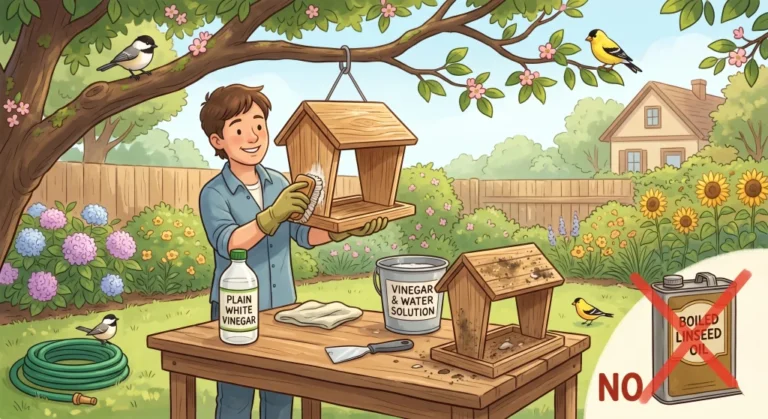
I would not treat a short feeder interruption as an emergency for the birds. Feeders are supplemental food sources, and wild birds continue to use natural foods and other feeding locations. Once the weather improves, inspect the feeder, discard any wet or suspect seed, make sure the feeder itself is clean and dry, and then put it back out with a fresh, modest fill.
Pro Tip: If a major storm is forecast and feeder traffic is already slowing, stop topping the feeder off. Let the remaining dry seed run down, then either protect the empty feeder or take it down before the worst weather arrives.
That small bit of planning is often easier than trying to rescue food after it has been saturated. The goal is not to keep a feeder full through every hour of every storm. It is to keep the food you do offer in good condition.
Final Thoughts: Layering Your Weather Defenses
Keeping bird seed dry works best as a layered setup. Use a cover or sheltered position to reduce direct rain, choose a feeder that can drain the water that still gets in, and put out only as much seed as the birds can move through reasonably quickly. None of those steps is perfect alone, but together they greatly reduce the time seed spends wet or humid.
After a storm, make inspection part of the routine. Check the lowest seed in the feeder, clear wet hulls and blocked drainage, and discard food that is wet, clumped, sprouting, musty, or moldy rather than trying to save it. That approach costs less than repeatedly filling a feeder to the top and throwing away the bottom half after every rainy week.

Wagner's Four Season Sunflower Seed is 100% black oil sunflower seed. Sunflower seed is the favorite seed of most wild birds. It is high in energy and has a thin shell making it easy for all birds to consume. Use tray feeders or hopper feeders to attract sunflower loving songbirds. Cardinals, Chickadees, Finches, Nuthatches, Woodpeckers and much more. Trust your backyard birds to the experts at Wagner’s.
Check on AmazonIf you click this link and buy, we earn a commission at no additional cost to you.
FAQs
🌧️ Will a squirrel baffle work as a rain cover?
Sometimes. A large hanging baffle positioned above a feeder can block some rain as well as deter squirrels, but its weather protection depends on its diameter, shape, and how far it overlaps the exposed seed. A pole baffle mounted below the feeder will not protect seed from rain.
🌬️ How do I protect seed in sideways blowing wind?
A dome cannot stop every direction of wind-driven rain. Move the feeder to a calmer, sheltered location when practical, keep drainage openings clear, and put out smaller amounts of seed so less food is at risk. During severe multi-day weather, temporarily taking the feeder down can be the cleaner option.
💧 Is it safe for birds to eat wet seed?
Do not use a one-day or 48-hour rule to judge wet seed. If seed is soaked, clumped, sprouting, smells musty, or shows any mold, discard it and let the cleaned feeder dry before refilling. Wet seed can deteriorate quickly, especially in warm or humid conditions.
🛡️ Are clear plastic or solid metal domes better?
Either material can work. Coverage, stability, safe edges, and enough clearance for the birds matter more than whether the dome is clear or opaque. Choose the design that actually shields the exposed feeding area and stays secure in your weather.