The Recipe That Actually Holds Together
If you are looking to make homemade suet for birds, start with the right expectation. Traditional suet is a cool-weather food. Cornell notes that raw suet can become rancid quickly above freezing and that even rendered suet can soften in warm weather. So the goal of a good homemade recipe is not to make an indestructible July block. It is to make a clean, firm cake that holds together well in appropriate temperatures and can be removed before it becomes soft or oily.
At the store, one of the biggest sources of confusion was the phrase “no melt.” People assumed that if they rendered beef fat twice or added enough dry ingredients, a homemade cake would behave like a commercial warm-weather formula. That is not a safe assumption. Commercial products can use different fat blends and processing, while a backyard recipe made from beef fat and peanut butter still responds to heat.
Making your own can still be worthwhile if you want a simple seasonal food and control over the ingredients. It also gives you another option beyond commercial bird seed. Just treat it as a rich supplemental food, keep the batch clean, and let the weather decide when it belongs outside.

Anti-rust steel cage with protective roof keeps suet from melting in summer and spoiling in rain. Square design fits standard suet cakes perfectly, allowing multiple birds to feed at once. Attracts chickadees, nuthatches, titmice, and woodpeckers. Easy to fill and clean, just soak in water.
Check on AmazonIf you click this link and buy, we earn a commission at no additional cost to you.
The Essential Rendering Step
Raw beef fat is not the same thing as a finished suet cake. Traditional suet is the hard fat around the kidneys and loins of cattle or sheep, although other beef fat is also commonly used for bird feeding. Raw trimmings can contain bits of tissue and other material that spoil faster outdoors. Rendering melts the fat slowly so those solids can be separated from the usable fat.
The basic process is straightforward. Cut the plain, unseasoned fat into small pieces, heat it gently until the fat liquefies, and strain out the solids through a fine strainer or cheesecloth. Audubon recommends straining at least twice when making traditional suet. Letting the first strained batch cool and then remelting and straining it again is a practical way to get a cleaner finished fat.
Field Note: I still like the double-strain routine because it produces a cleaner, more consistent base and leaves fewer meat particles behind. What I would not tell someone is that the second pass magically creates a higher-temperature fat. The real benefit is purification and better keeping quality, not turning beef fat into a summer-proof material.
Using seasoned pan drippings or raw fat scraps with bits of meat still attached, then assuming freezing the finished cake makes it suitable for warm weather.
Starting with plain beef fat, rendering it slowly, straining out the solids thoroughly, and offering the finished cake only while it remains firm and clean outdoors.
Once the fat is well rendered, you have a much better base for a homemade cake. It will generally keep better than raw suet, but Cornell still recommends caution in warm weather because rendered fat can soften enough to coat feathers.
The Core Suet Recipe
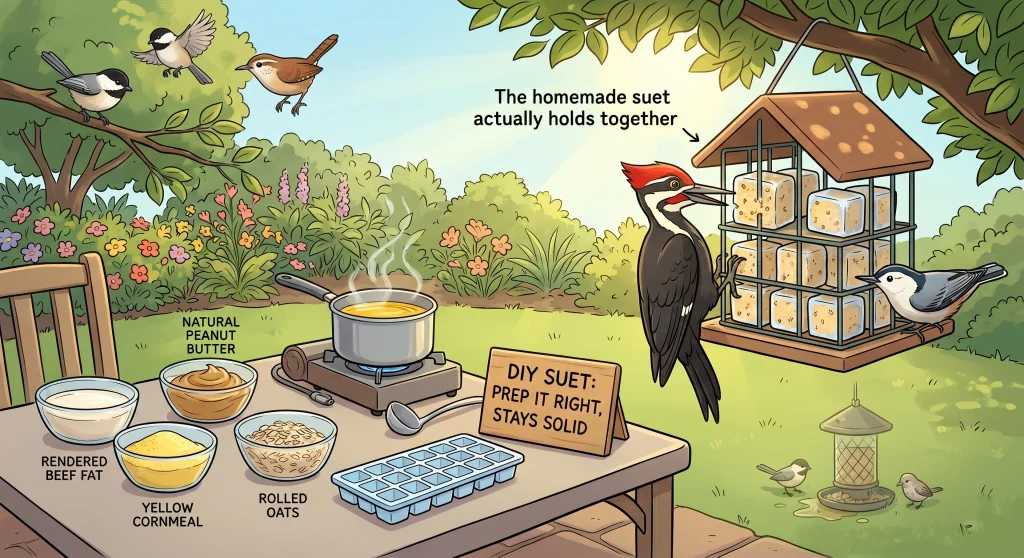
There is no single scientifically required homemade suet ratio. Audubon and Penn State publish several workable combinations using rendered fat or shortening with ingredients such as peanut butter, cornmeal, oats, flour, seed, nuts, and fruit. The version below is best treated as a cool-weather starting recipe, not a guaranteed no-melt formula.
You will need:
- 1 cup rendered plain beef fat
- 1 cup plain peanut butter without artificial sweeteners
- 2 cups plain yellow cornmeal
- 1/2 cup plain rolled oats
| Ingredient | Purpose in the Recipe |
|---|---|
| Rendered Beef Fat | Provides a concentrated fat base and helps the mixture firm as it cools. |
| Plain Peanut Butter | Adds fat and protein and helps bind the dry ingredients. Keep peanut mixtures out only while they remain firm. |
| Yellow Cornmeal | Adds dry bulk and gives the mixture a less oily, more crumbly texture. |
| Rolled Oats | Adds dry texture and makes the mixture easier to portion into a cake. |
Here is the process:
- Warm the rendered fat and peanut butter gently over low heat until they can be mixed smoothly. Do not boil the mixture.
- Remove the pot from the heat.
- Stir in the cornmeal and oats until the mixture is thick and evenly combined.
- Portion it into molds, let it cool, then refrigerate or freeze the portions you are not using immediately.
If the finished mixture stays oily or runny even when cool, add a little more dry material rather than pouring a loose fat mixture into the feeder. More important, check the cake outdoors. If it softens enough to smear onto the cage or a bird’s feathers, take it down.

An upside-down suet feeder that naturally deters nuisance birds like blackbirds and grackles, while welcoming woodpeckers, titmice, nuthatches, and chickadees that feed comfortably in an inverted position. Built from naturally rot-resistant cedar with stainless steel screws for lasting durability. Holds 1 standard suet cake.
Check on AmazonIf you click this link and buy, we earn a commission at no additional cost to you.
What Never to Use: The Bacon Fat Warning
Bacon grease is one leftover I would leave out of bird food. Cornell specifically advises against bacon drippings because bacon can contain nitrosamines, carcinogenic compounds associated with cured bacon and high-temperature cooking. Birds may eat the fat, but that does not make it a good long-term feeder ingredient.
Warning: Do not use bacon drippings as a homemade suet base. Use plain, unseasoned beef fat or another recipe from a reputable bird-feeding source instead of repurposing cured-meat grease.
I also avoid general pan drippings from burgers, roasts, or seasoned meat. They can contain salt, spices, sauces, cooking residues, and softer fats that were never intended as a feeder ingredient. Starting with plain raw beef fat gives you control over what goes into the final cake.
Peanut butter is different. Cornell says grocery-store peanut butter can be offered to birds in cool weather, and adding cornmeal can make it less sticky. The main caution is temperature: soft or separated peanut oils can coat feathers, and peanut-and-corn mixtures can support bacterial or fungal growth when conditions are warm and damp.
I would also leave honey and artificial sweeteners out. Honey is unnecessary in a fat cake and is specifically discouraged in nectar feeding because it can promote fungal growth. Artificial sweeteners provide no useful reason to be in a wild-bird suet recipe. Plain ingredients keep the recipe easier to evaluate and maintain.
Warm-Weather and Storage Rules
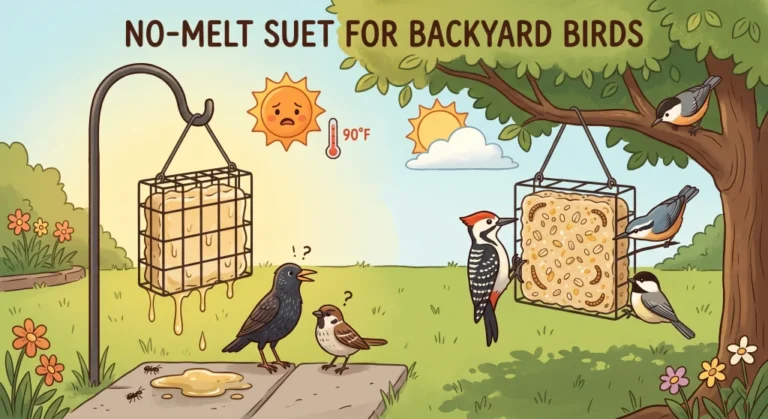
Homemade suet deserves more caution as temperatures rise. Cornell notes that rendered suet can remain firm to roughly 90°F in some formulations, but above that it may soften enough to foul feathers. Audubon is even more conservative with some homemade peanut-butter mixtures, recommending them only in cool weather. Those are good reasons not to give one homemade recipe a universal summer temperature rating.
Store extra portions covered in the refrigerator or freezer rather than leaving a large homemade batch on a warm counter for days. Cornell specifically notes that mixtures containing corn, cornmeal, or peanuts may provide good growth media for bacteria, so refrigeration before use is a sensible precaution.
Outdoors, put out a small portion and inspect it rather than following a fixed two- or three-day rule. Heat, shade, rain, humidity, feeder exposure, and bird traffic change how quickly a cake deteriorates. Remove it immediately if it develops mold, smells rancid, becomes wet and decomposing, or softens enough to smear.
If visible mold develops, discard the cake rather than trimming the surface and continuing to feed it. Then clean the feeder before replacing the food. Cornell recommends regular feeder cleaning and thorough rinsing and drying before refilling.
If your summer conditions routinely make homemade fat mixtures soft, the better answer may be to stop offering homemade suet until cooler weather or use a commercial warm-weather formulation according to its instructions. That is more reliable than trying to make rendered beef fat do something it was never guaranteed to do. For the broader seasonal trade-offs, see suet for birds.

Ready-to-use soft dough pressed into cake form, the only true no-melt suet in the world. High-energy formula attracts a wide variety of wild birds year-round. Great value, made in the USA.
Check on AmazonIf you click this link and buy, we earn a commission at no additional cost to you.
Final Thoughts
Homemade suet works best when you keep the goal simple: provide a clean, energy-rich supplemental food in cool conditions. Render plain beef fat thoroughly, use uncomplicated dry ingredients, keep spare portions cold, and watch the cake itself once it goes outside.
The biggest mistake is trying to turn a winter recipe into a summer engineering project. Double-straining the fat improves the base, but it does not make it heat-proof. If the cake becomes soft, oily, rancid, wet, or moldy, remove it. That keeps the homemade approach useful without asking birds to deal with spoiled food or greasy feathers.

This bird suet feeder with tail prop holds 2 suet cakes, providing high-energy food for birds. The tail prop gives woodpeckers a sturdy place to rest while feeding. The hanging cable makes it simple to set up in your yard or garden.
Check on AmazonIf you click this link and buy, we earn a commission at no additional cost to you.
FAQs
🥓 Can I use leftover hamburger grease instead of beef fat?
I would not use ordinary pan drippings as the base for homemade bird suet. Cooked hamburger grease may contain salt, seasonings, sauces, or other residues, and its fat composition may stay softer than traditional suet. Start with plain, unseasoned beef fat and render it yourself so you know what is in the cake.
❄️ Can I freeze my homemade blocks for later?
Yes. Homemade suet portions can be frozen for later use, and Penn State specifically notes that peanut-butter mixtures can be frozen into blocks. Seal the portions so they do not pick up freezer odors or moisture, then take out only what you expect to use. Freezing is storage, not a way to make a cake safe in hot outdoor weather.
☀️ Will this homemade suet hold up in the summer?
Do not count on a homemade beef-fat and peanut-butter cake as summer no-melt suet. Cornell warns that even rendered suet can soften in warm weather and potentially coat feathers. If the cake starts getting soft or oily, remove it and wait for cooler conditions or use a commercial warm-weather product as directed.
🥜 Does it matter what kind of peanut butter I use?
Use plain peanut butter intended for human consumption and avoid artificial sweeteners or flavored spreads. Cornell considers ordinary peanut butter safe for birds in cool weather, but soft peanut butter and separated oils are a concern when temperatures rise. Mixing it with cornmeal gives the mixture more texture, and the feeder should be cleaned regularly.
🧊 Do I need to use an ice cube tray to mold them?
No. An ice cube tray is simply one convenient portioning method. Audubon has published a homemade bird-food recipe that uses an ice cube tray and freezes the mixture before placing pieces in a suet feeder, but muffin cups, saved suet trays, or other clean food-safe molds can work too. Choose a portion size that fits your feeder and is likely to be eaten while still fresh.