
The Three-Part Foundation for a Clean Deck
When it comes to using no mess bird seed for deck feeding, people often assume that buying the right bag of food solves the entire problem. Feeding birds on a deck is completely doable, but it requires three things working together. In my experience at the store, customers who tried to rely on seed alone always ended up frustrated with the results.
The problem usually started when someone bought a standard hanging tube feeder, filled it with an expensive bag of hull-free seed, and assumed their bird feeder deck cleanup days were over. A few days later, the wind or a clumsy Mourning Dove would knock pieces out of the ports, scattering expensive food all over the wooden boards. Keeping a patio completely free of debris requires a systematic approach, not just a product switch.
To eliminate the mess, you have to control what goes into the feeder, how the birds access it, and what happens when they inevitably drop something. You need 100% hulled seed, a tray-style feeding surface, and a dedicated catch system directly underneath. When you combine these three elements, you create an environment where birds can eat freely without making your outdoor space a maintenance headache.
Seed Choice: Why Hulled Is Non-Negotiable
The foundation of this clean setup begins with what you put in the feeder. If you are feeding birds over a hard surface, any seed with an outer shell is a non-starter. Finding the best bird seed overall usually means balancing cost and variety, but on a deck, your only priority is eliminating waste. You must use 100% hulled seed, which means the tough outer shells have already been removed mechanically before the bag is even sealed.
Standard black oil sunflower seeds are fantastic for birds, but they generate massive amounts of debris. For every pound of whole sunflower seeds you offer, almost half of that weight ends up discarded as empty husks on your deck. Those husks pile up in corners, rot when they get wet, and contain chemical compounds that can stain your wood or kill the potted plants below. A pure hulled seed mix, often called sunflower chips or hearts, solves this instantly because every single piece is 100% edible.
When you are looking for bird seed patio no mess solutions, you need to read the ingredient label very carefully. Many cheap bags labeled “waste-free” still contain cracked corn or red milo, which most songbirds will aggressively toss out of the way to find the good stuff. Look for blends that consist entirely of medium sunflower chips, peanut pieces, and perhaps some hulled white millet. If a bird drops a piece of hulled seed, another ground-feeding bird will usually come along and eat it, leaving absolutely nothing behind.
Key point: Hulled seed is more expensive per pound than in-shell seed, but you are not paying for the weight of the shells that end up in the trash. When you calculate the true cost-per-meal, hulled seed is actually cheaper per bird because 100% of the bag is consumed. The time you save on sweeping is just a bonus.

100% dehulled, shell-free sunflower seeds with zero waste and zero mess. Attracts finches, chickadees, sparrows, grosbeaks, titmice, nuthatches, and more. Works in hopper, tube, or platform feeders. Family owned, American made.
Check on AmazonIf you click this link and buy, we earn a commission at no additional cost to you.
Feeder Type: The Platform Advantage
Most beginners assume a tube feeder is the cleanest option because the food is enclosed inside a plastic cylinder. On an elevated deck, a tube feeder is often one of the worst choices you can make. Birds have to pull seeds out of the small ports, knocking two or three pieces to the ground just to secure the one they want in their beak.
Instead, you want to use an open tray or platform. This sounds counterintuitive to most people. Wouldn’t an open flat surface be messier? From what I’ve seen over the years, a platform bird feeder placed at deck level reduces scatter significantly. When birds feed from a flat surface, they do not have to fling seeds out of the way to reach a hidden port. They simply stand inside the food source and eat what is directly in front of them.
Because hulled seed has no natural shell to protect it from rain, weatherproofing your tray is critical. A platform feeder with a built-in roof, or a clear weather dome hung directly above an open tray, is essential to prevent the seed from turning to mush. For mounting, you don’t necessarily need a traditional wooden railing. There are clamp-on brackets for wood, and specialized wrap-around straps for metal or glass balcony railings. Choosing the right hardware ensures your setup is secure regardless of your deck’s construction.
If you don’t have the space for a freestanding platform, attaching a window bird feeder with a deep, enclosed tray to your glass door works incredibly well. Because the birds are sitting inside a bowl of food, any pieces they accidentally drop simply fall right back into the tray rather than plummeting onto your deck furniture.
Hanging a swinging tube feeder over your patio table. The wind will blow it, and birds will knock seeds out of the ports directly onto your seating area.
Mounting a stationary tray feeder to the deck railing. The food stays flat, the birds stand still while eating, and the mess remains contained.

3-in-1 station with two metal seed trays and one water tray clamps tool-free onto any deck or balcony railing from 0.48 to 2.75 inches wide. Heavy-duty rust-proof black powder-coated metal built to last outdoors. Trays remove easily for quick rinsing. A thoughtful gift for any bird and garden lover!
Check on AmazonIf you click this link and buy, we earn a commission at no additional cost to you.
The Seed Catcher: Your Safety Net
Even with pure hulled seed and a flat tray, birds are chaotic eaters. They get startled by a passing shadow, they flap their wings aggressively to establish dominance, and pieces of food will inevitably get knocked over the edge. To make a no mess bird seed setup truly foolproof, you need a physical safety net beneath the action.
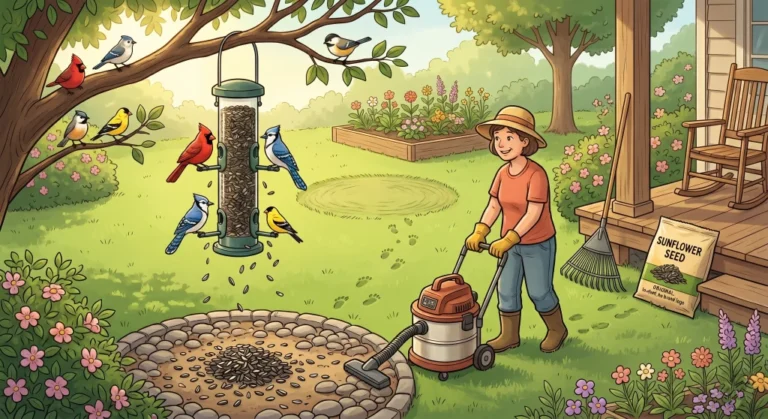
The easiest solution is to install a dedicated bird seed catcher for a feeder. This is essentially a wide hoop covered in a fine mesh net that hangs a few inches below the main feeding station. Anything the birds knock over gets caught directly in the netting. The birds will frequently hop down into the mesh hoop to eat the spilled pieces, effectively cleaning up their own mess before it ever reaches your floorboards.
If you are setting up a bird feeding apartment balcony seed station and cannot hang a hoop, placing an outdoor rug or a wide, shallow planter box directly underneath the feeder works just as well. The goal is simply to create a drop zone that stops the seed from bouncing across your deck. A wide planter box filled with soil is excellent because dropped sunflower chips will just compost into the dirt rather than creating a slip hazard on your patio tiles.
Field Note: I once had a customer whose landlord threatened to evict them because of bird seed debris falling onto the balcony below theirs. We switched them to sunflower chips and added a 24-inch mesh seed hoop under their tray feeder. The complaints stopped that same week, and they kept feeding their birds for years without another issue.

This two-pack of 30-inch hanging bird seed catcher trays sits beneath outdoor feeders to catch dropped seed and help keep the ground cleaner. Each hoop uses fiberglass mesh with a steel wire frame, providing a broad feeding surface while allowing the trays to remain lightweight and easy to store. The removable hanging hardware and foldable construction make the catchers convenient to install beneath a variety of backyard bird feeders.
Check on AmazonIf you click this link and buy, we earn a commission at no additional cost to you.
Deck-Specific Squirrel Defense
If you have a deck, you likely have squirrels trying to climb it. Elevated patios present a unique challenge because squirrels can often walk right up the stairs or scale the wooden support posts with ease. A squirrel getting into hulled seed is an expensive problem because they can eat the shell-free food much faster than standard seed.
To defend a deck feeder, you need to mount it on an extended arm pole that reaches outward, away from the railing, rather than sitting directly on top of it. However, an arm with a three-foot reach alone will not stop a squirrel, as they can easily jump four to five feet horizontally. The trick is combining that extended reach with a standard pole baffle, while ensuring the feeder is positioned completely out of jumping range from your deck furniture, stair rails, or the roof overhang. This setup forces the squirrel to try climbing the pole where the baffle will stop them, keeping your expensive hulled seed strictly for the birds.
Ground Cleanup: Managing What Inevitably Falls
Let’s be completely realistic about having a no mess feeder deck: “no mess” is an industry marketing term. Hull-free seed absolutely guarantees no empty shells, but it does not mean zero scatter. A stray piece of sunflower heart or a chipped peanut will eventually find its way to your deck surface, and you need a plan for handling it.
Because hulled seed lacks a protective outer shell, it is highly vulnerable to moisture. If a dropped piece of hulled sunflower sits on a damp wooden deck for a few days, it will leave a dark stain and become difficult to scrape off. You cannot treat a deck feeder like a yard feeder where you let nature handle the cleanup. You still need to manage your space regularly.
You should plan to sweep the area beneath your feeder at least once a week. The major difference is the workload. Sweeping up a dozen whole sunflower chips takes ten seconds with a small hand broom, whereas trying to sweep up hundreds of splintered, sticky seed husks requires a shop vacuum and a lot of patience.
Pro Tips: Keep a small dustpan and brush stored right next to your patio door. If you make it incredibly easy to quickly sweep up the three or four pieces that fell overnight, it never turns into a massive weekend cleaning project.

Rental-friendly, no-mess seed blend with sunflower as the top ingredient. Attracts city birds like finches, sparrows, and mourning doves. Perfect for balcony feeders that attach to railings or windows. Made with natural ingredients. Amazon's Choice with 4.5 stars and 1,000 plus reviews.
Check on AmazonIf you click this link and buy, we earn a commission at no additional cost to you.
What Birds to Expect at Deck Level
Feeding close to the house on an elevated deck changes the demographic of the birds you will attract. Ground-feeding birds like Mourning Doves, Juncos, and native sparrows are much less likely to visit a second-story balcony because they prefer foraging in the cover of grass and shrubs. However, many of the most popular backyard birds adapt perfectly to elevated deck setups.
You can expect a steady rotation of agile, clinging birds that don’t mind the proximity to your windows. Once they discover a reliable source of hulled sunflower chips presented on an open tray, they will make your deck a regular stop on their daily patrol route. The lack of shells allows smaller birds to eat faster, increasing the turnover rate at your feeder.
- Chickadees and Titmice: These birds are the quickest to adapt to deck feeders. They will dart in, grab a single sunflower chip, and fly to a nearby railing to eat it.
- Goldfinches and House Finches: Finches love hulled seed and will happily sit in a platform tray for extended periods, peacefully eating right outside your window.
- Downy and Hairy Woodpeckers: Woodpeckers will frequently visit deck trays if you offer peanut pieces mixed in with your sunflower chips.
| Bird Species | Deck Feeder Preference | Behavior at the Feeder |
|---|---|---|
| Chickadees | High (Very comfortable near houses) | Grab and go. Takes one piece and leaves. |
| Finches | High (Loves open trays) | Stays and eats. Will sit in the tray for minutes. |
| Cardinals | Medium (Requires a very stable tray) | Cautious. Prefers early morning or late evening visits. |
| Mourning Doves | Low (Prefers natural ground) | Rarely visits elevated balconies unless desperate. |
Portion Control: The Last Piece of the Puzzle
Setting up a feeding station on your deck is one of the most rewarding ways to watch birds because it brings the action right to your living space. By committing to 100% hulled seed, using a flat tray feeder, and placing a mesh hoop underneath, you effectively eliminate the shell mess and the sprouting weeds that ruin most patio setups.
The last thing to remember is portion control. Because hulled seed goes bad quickly when exposed to humidity or rain, you should never fill the feeder to the brim. Only put out enough seed that the birds can finish in one or two days. This prevents the food from spoiling, stops you from having to throw away expensive seed, and ensures your deck stays clean and active all season long.
FAQs
🐀 Will no mess seed attract rats to my deck?
It can if you overfeed. Hulled seed is much easier for rodents to eat because they do not have to crack shells. To prevent this, only offer exactly what the birds will finish before sunset so nothing is left on the deck overnight.
🌧️ Does no mess seed go bad faster in the rain?
Yes. Without a protective shell, the exposed seed kernel absorbs moisture instantly. If it gets rained on, it will quickly turn into a mushy paste and mold. Using a feeder with a wide weather dome is highly recommended.
🏢 Can I feed birds on a balcony if my lease bans it?
Lease rules usually exist because of shell debris falling on neighbors or attracting pests. While a no-mess setup with a seed hoop eliminates the debris, you should always check with your property manager before setting anything up to avoid eviction risks.
🌻 What is the absolute cleanest seed to use?
Medium-sized sunflower chips are the cleanest option. They are small enough that most birds can swallow them whole without biting them in half, which prevents small crumbs from scattering across your patio.