
What “No Mess” Actually Means at the Feeder
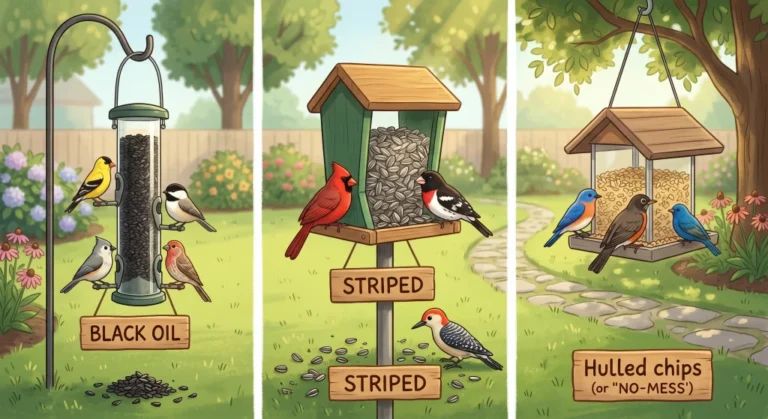
The most common frustration I heard at the store was from people who were tired of the pile of sunflower hulls building up under their feeders. That is where no mess bird seed earns its name. Most blends rely heavily on hulled ingredients, so you are not paying for shells that will immediately be discarded. But the label should not be read as a promise that nothing will ever land below the feeder.
Birds can spill seed while landing, pull pieces out while selecting food, or drop part of what they are handling. With a shell-free blend, much of that fallen material is still edible rather than empty husk. That is an advantage, but it does not make the waste harmless. Edible seed left on the ground can become wet or moldy and can attract rodents, so the area below the feeder still needs attention.
Some dropped pieces may be eaten by mourning doves, juncos, sparrows, cardinals, and other birds that forage on or near the ground. Do not count on them to clean up every kernel. If your goal is to reduce shell piles, sprouting from intact sunflower seed, and the amount of material you have to rake, hull-free seed can make a noticeable difference without creating a literally maintenance-free feeding area.
The Three Places Hull-Free Seed Makes the Most Sense
When you are evaluating the best bird seed options for your yard, removing the shell is one of the biggest practical changes you can make. It is especially useful where cleanup space is limited, but it is not mandatory. The right choice depends on what sits below the feeder, which birds you want, how quickly the seed is eaten, and how much maintenance you are willing to do.
Decks, patios, and apartment balconies are where shell-free seed is easiest to justify. In-shell sunflower can leave husks between boards or send light debris into neighboring spaces. A bird seed catcher can intercept part of the remaining scatter, but it will not keep the area spotless. The tray itself also needs to be emptied before wet seed and droppings accumulate.
Field Note: A bare patch under a sunflower feeder can have more than one cause. Heavy hull buildup can physically mat over grass, and sunflower residues contain allelopathic compounds that can inhibit some plant growth. The effect varies by plant and amount of accumulation, so I do not tell people that the shells alone are always “killing” the lawn. Removing the hull source is still a useful part of fixing the drop zone.
If your feeder sits over a manicured lawn or planted bed, hull-free seed can remove one major source of buildup. It does not guarantee healthy turf or soil, because spilled kernels, droppings, shade, foot traffic, and moisture can still affect the area. Think of it as reducing the debris load rather than creating a protected circle under the feeder.

12-inch polycarbonate tray that catches falling seed to eliminate waste and provide extra perching space. Fits Aspects tube feeders.
Check on AmazonIf you click this link and buy, we earn a commission at no additional cost to you.
Caching Birds: The Trade-Off Is More Complicated
Chickadees, titmice, nuthatches, and jays are well known for caching food, including feeder foods such as sunflower. That makes it tempting to assume they need the hull intact for storage, but the evidence is not that simple. These birds handle, open, carry, and cache food differently by species and situation.
There is no good basis for saying caching birds as a group strongly prefer in-shell sunflower or that hulled kernels are unsuitable for caches. Cornell notes that Mountain Chickadees often shell sunflower seeds before flying off to stash them. A field study of White-breasted Nuthatches went even further: the birds cached a significantly greater proportion of sunflower seeds when the shell had already been removed. The shell may protect a kernel physically, but it is not a universal requirement for caching behavior.
If jays, chickadees, titmice, or nuthatches visit less after a seed change, do not jump straight to the conclusion that they left because the hulls disappeared. Feeder use changes with weather, natural food, local flock movement, competition, feeder design, and the ingredients in the new blend. A shell-free mix that replaces large sunflower seeds with mostly millet or tiny fragments may change your visitors, but that is an ingredient and access issue, not proof of a caching requirement.
A two-feeder setup can still make sense if you want variety. Use hulled seed where shell cleanup matters most, and offer traditional sunflower bird seed somewhere that can tolerate the hulls. That gives birds different food forms and lets you compare actual use in your yard without claiming one form is biologically necessary for caching.

Shell-free whole sunflower hearts with no mess, no waste, and no cleanup. High in fat, protein, Vitamin E, Iron, Magnesium, and Vitamin B - free from harmful chemicals or additives. Attracts the same wide variety of birds as traditional sunflower seeds. A year-round favorite across North America.
Check on AmazonIf you click this link and buy, we earn a commission at no additional cost to you.
Without the Shell, the Clock Ticks Faster
The clearest trade-off with hulled sunflower is freshness. Cornell specifically warns that sunflower hearts and chips spoil quickly without the protection of the shell and can harbor harmful bacteria. That is why shell-free feeding works best when the food moves through the feeder quickly and stays dry.
Do not pack a large feeder with hulled sunflower and assume it can sit through several wet days. Cornell recommends offering only as much sunflower hearts or chips as birds can finish in about a day or two and specifically cautions against tube feeders where moisture can collect. Whatever feeder you use, drainage and fast turnover are more important than capacity.
| Weather Conditions | Practical Handling Rule |
|---|---|
| Dry, Cold Winter | Use small fills and inspect daily; do not rely on a fixed multi-day shelf life |
| Moderate Spring / Fall | Offer only what birds are likely to finish promptly |
| Hot, Humid Summer | Keep fills especially small and discard any damp or moldy seed |
| After Heavy Rain | Discard soaked seed and clean and dry the feeder before refilling |
Warning: Hulled seed is less forgiving of moisture than in-shell sunflower. If you see damp clumps, mold, residue, or a musty smell, discard the food and clean the feeder before refilling. Cornell recommends regular feeder cleaning and more frequent attention during wet weather or heavy use.
Bulk buying only saves money if you can keep the seed dry and use it while it is still in good condition. Store the reserve in a cool, dry place in a closed container, and buy smaller quantities if a large bag would sit for months. You do not need a climate-controlled room, but a hot, damp shed or garage is a poor storage location.
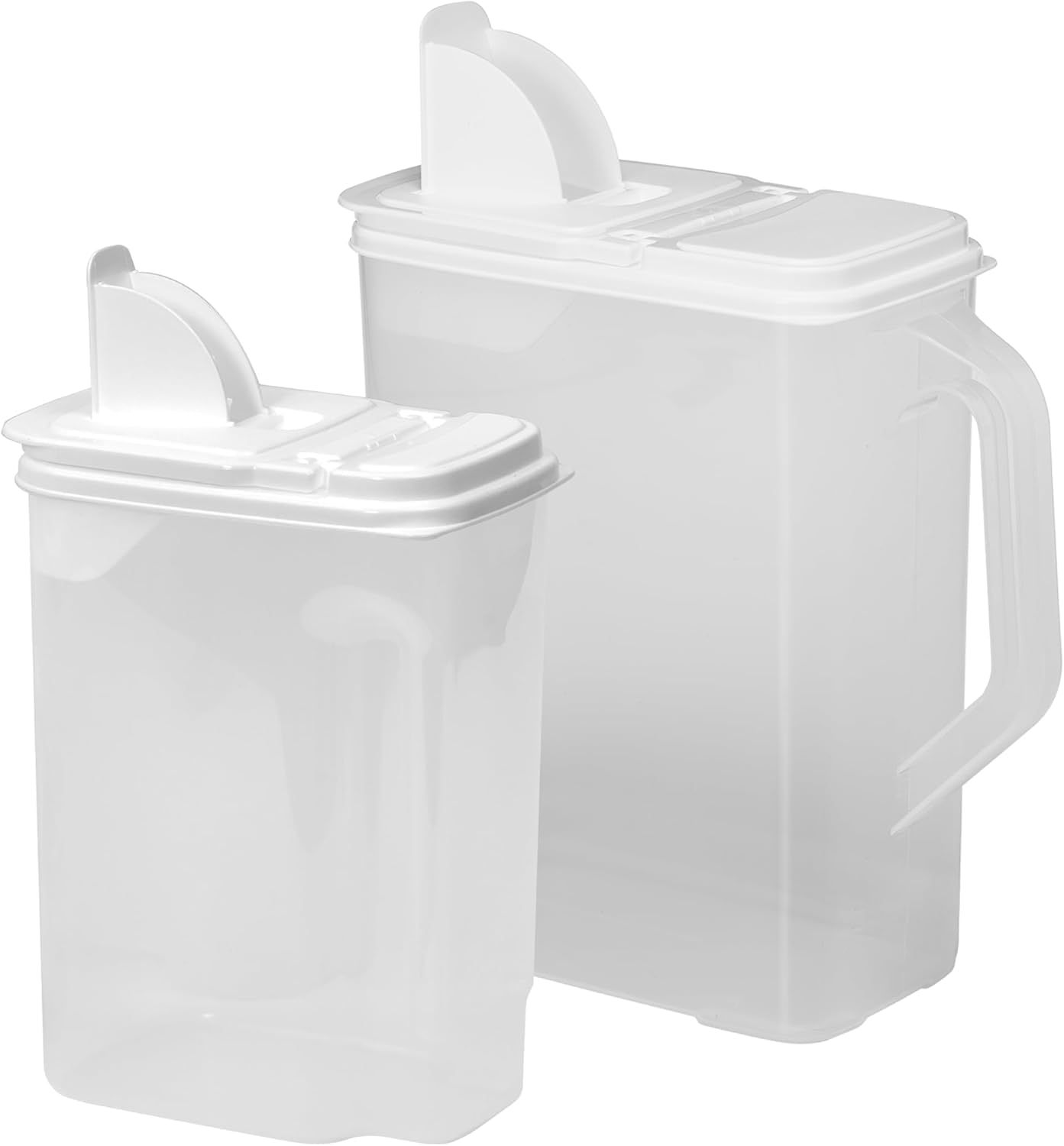
Crystal clear BPA-free bins with EZ flip lid and pour spout keep food fresh and odor-free. Stackable design saves pantry space, ergonomic side handle makes pouring easy even when full. Top rack dishwasher safe. Great for pet food, bird seed, and dry goods.
Check on AmazonIf you click this link and buy, we earn a commission at no additional cost to you.
The Urban Rodent Warning
Freshness is not the only reason to watch the drop zone. In any yard with an existing rodent problem, shell-free seed deserves extra attention because anything spilled below the feeder is still edible food.
Sunflower hearts and chips are attractive to squirrels, and scattered bird food can attract rodents. The important point is access, not a precise claim about how much faster a squirrel or rat can eat without a hull. Shell-free seed removes the husk waste, but it also means a dropped piece is immediately edible.
Do not assume hull-free seed will automatically create a rat problem, but do not treat it as rodent-proof either. Cornell advises cleaning scattered bird food from the ground because it can attract unwanted rodents. If rats are already active in the area, use smaller fills, prevent overflow, clean beneath the feeder, and stop feeding temporarily if you cannot keep food off the ground.
If squirrels are the problem, use a properly positioned baffle or a feeder designed to limit squirrel access. If rats are feeding below the station, controlling spilled food matters more than simply changing the seed type. The same shell-free blend that keeps a deck cleaner can still become a pest food source when kernels are allowed to accumulate underneath.

A weight-activated squirrel-proof bird feeder with a metal, anti-rust powder-coated construction built for year-round outdoor use. When a squirrel climbs on, its weight automatically closes all feeding ports. Holds up to 3 lbs of most seed types, with a wide-mouth opening for spill-free refilling and a transparent body to monitor seed levels. The removable base allows quick, tool-free cleaning. Attracts finches, cardinals, and chickadees.
Check on AmazonIf you click this link and buy, we earn a commission at no additional cost to you.
What to Look for in a Shell-Free Blend
The words “no mess” tell you about hulls, not which birds the blend will attract. Read the ingredient list. Sunflower hearts and chips have very broad feeder appeal. White proso millet is also a legitimate bird food, but it is especially attractive to ground-feeding species such as sparrows, doves, juncos, towhees, quail, and cardinals. Whether that is a benefit depends on the birds you want.
Do not assume millet is too fine for cardinals. Cornell lists white proso millet among the foods cardinals use, while sunflower remains one of the strongest all-around choices for them. A blend dominated by tiny ingredients can change which species spend time at a particular feeder, especially if the feeder itself is better suited to small birds, but a decline in cardinals cannot be diagnosed from particle size alone.
Buying a shell-free blend without checking whether its main ingredients match the birds and feeder types you actually want to support.
Use sunflower hearts or chips for broad appeal, then add millet, peanut pieces, or other ingredients only when they fit the species and feeder style you are targeting.
The table below is more useful when read as a species-and-feeder comparison than as a simple “good ingredient versus filler” ranking. Several foods that are less universal than sunflower are still valuable for the right birds.
| Ingredient | Value to Birds | Feeder Performance |
|---|---|---|
| Whole Sunflower Hearts | Excellent. High fat, high protein. | Broad appeal, but avoid tube designs where moisture can collect around hearts or chips. |
| Peanut Pieces (Split) | Excellent. High energy for woodpeckers. | Useful in feeders designed to hold peanut pieces without letting large amounts spill. |
| Hulled White Millet | Good for many ground-feeding birds, including sparrows, doves, juncos, and cardinals. | Best suited to ground feeding or low, well-drained trays where appropriate. |
| Cracked Corn | Eaten by many birds, but also attractive to several mammals and nuisance species. | Must be kept dry; corn has a notable aflatoxin risk when contaminated or moldy. |
Final Thoughts on Managing the Mess
Switching to shell-free seed can sharply reduce hull cleanup and makes especially good sense on patios, balconies, and other places where husks are a constant nuisance. The trade-off is that sunflower hearts and chips need better moisture control and faster turnover. If you can keep the food dry and avoid overfilling, the higher price per pound may be worth paying for less shell waste.

Shell-free mix of sunflower hearts, chips, and peanut pieces keeps patios and decks spotless. Attracts finches, cardinals, thrushes, wrens, buntings, and more. Works in any tube, tray, hopper, or platform feeder year-round.
Check on AmazonIf you click this link and buy, we earn a commission at no additional cost to you.
More on Shell-Free Feeding
Depending on your specific yard setup, choosing the right blend and the right feeder makes a huge difference. Here is a closer look at how to select the best mix and how to configure a clean station for tight spaces.
| Topic | What It Covers |
|---|---|
| Best No Mess Bird Seed | How to read the ingredient label and avoid cheap fillers in shell-free blends. |
| No Mess Bird Seed for Deck or Patio | The exact feeder and seed combination that actually keeps floorboards clean. |
FAQs
🧱 Why is my no mess seed turning into a solid block?
Hulled seed has lost the protective outer shell, so moisture reaches the edible kernel directly. Wet hearts and chips can swell, clump, mold, and spoil. Use a feeder with excellent drainage and put out only a small amount that birds can finish quickly rather than leaving several days of exposed food sitting wet.
🕊️ Will birds eat seed that has fallen on the ground?
Yes, many species including mourning doves, juncos, sparrows, and cardinals may eat seed that falls below a feeder. Do not rely on them to remove everything. Rake or sweep up food that accumulates, becomes wet, or mixes with droppings.
❤️ Do cardinals eat hulled sunflower seeds?
Yes. Cardinals readily eat sunflower and can use hulled sunflower hearts or chips. There is no reliable rule that they must have whole hearts rather than smaller chips. Feeder design, ingredient mix, competition, and what other foods are available can all affect how often they visit.
⏱️ How long does hull-free seed last in a feeder?
Do not use a fixed five-to-seven-day shelf life. Cornell recommends offering only as much sunflower hearts or chips as birds can finish in about a day or two because hulled sunflower spoils quickly without the shell. In warm, humid, or wet weather, inspect it even more closely and discard anything damp or moldy.
🐿️ Will shell free seed attract more squirrels?
Sunflower hearts and chips are very attractive to squirrels, but there is no useful universal multiplier for how much faster they empty a feeder. Use a baffle or squirrel-resistant feeder if necessary, and keep spilled edible seed off the ground so it does not become an easy food source for other mammals.
🧹 Why are birds throwing the no mess seed on the ground?
Birds can spill or discard pieces while selecting and handling food, especially in a mixed blend. With hull-free seed, much of what falls is still edible, but it is not guaranteed to be eaten later. Remove any accumulation before it becomes wet, moldy, or attractive to rodents.