The Three Options in the Seed Aisle
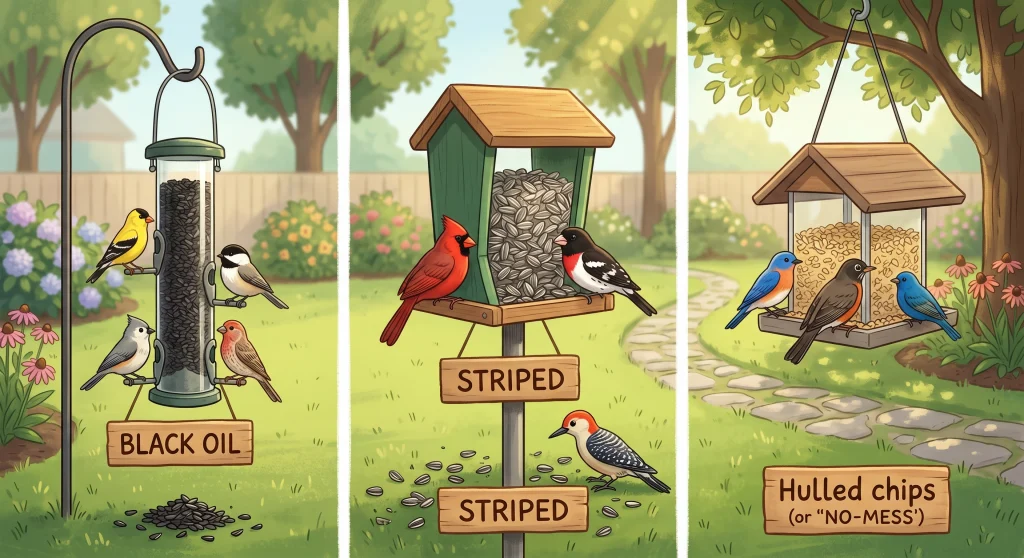
Sunflower bird seed usually shows up in three practical forms at the store: black oil, striped, and hulled sunflower sold as hearts or chips. They overlap in the birds they attract, but they differ in shell thickness, mess, moisture tolerance, and how well they move through different feeders. That is why two bags that both say sunflower can behave very differently in the same yard.
When people asked me which sunflower to start with, I rarely made the decision complicated. Black oil was usually the first choice when the goal was broad appeal, while hulled sunflower made more sense when shells under a deck or patio were the real problem. Striped sunflower was useful when someone specifically wanted a larger, tougher in-shell seed rather than the easiest seed for every visitor to handle.
- Start with black oil when you want one dependable sunflower seed for a mixed backyard crowd.
- Try striped sunflower when you want a tougher in-shell seed and do not mind that some birds may use it less.
- Choose hulled hearts or chips when shell cleanup matters most and you can keep the food dry.
The important part is not treating these as three completely different foods. They are three ways of offering sunflower, and the shell changes both how birds handle the seed and how you have to manage the feeder. Once you separate those practical differences, choosing a bag gets much easier. This short decision check also gives you something practical to test against what your own birds actually do.
Black Oil vs Striped vs Hulled Compared
When you are looking at black oil sunflower seeds for birds, you are looking at the most useful all-purpose sunflower option for a typical backyard feeder. The seeds are relatively small, the shells are thin, and the kernels are energy-rich. Cornell’s Project FeederWatch lists black oil sunflower among the favorite feeder foods of cardinals, chickadees, finches, and sparrows, with woodpeckers using it as well.
Striped sunflower is larger and has a thicker shell. That extra shell makes it harder to open than black oil, so it can reduce use by some birds that handle the thinner black oil seed more easily. It is still eaten by birds such as cardinals, grosbeaks, jays, titmice, and nuthatches, so I would think of striped sunflower as a more selective option, not a seed reserved only for large birds.
Hulled sunflower, often sold as hearts or chips, is sunflower with the outer shell removed. Birds that already eat sunflower can use it without spending time opening the hull, and you do not get the same pile of empty shells underneath the feeder. The trade-off is weather resistance: once the protective hull is gone, the exposed kernel can spoil much faster if it gets wet, so smaller fills and a dry feeder matter more.

Wagner's Four Season Sunflower Seed is 100% black oil sunflower seed. Sunflower seed is the favorite seed of most wild birds. It is high in energy and has a thin shell making it easy for all birds to consume. Use tray feeders or hopper feeders to attract sunflower loving songbirds. Cardinals, Chickadees, Finches, Nuthatches, Woodpeckers and much more. Trust your backyard birds to the experts at Wagner’s.
Check on AmazonIf you click this link and buy, we earn a commission at no additional cost to you.
Which Birds Prefer Which Type
It is tempting to turn sunflower choice into a strict species chart, but feeder birds are not that tidy. Black oil sunflower has the broadest usefulness because the shell is thin enough for many seed-eating birds to open, which is why it is such a reliable first choice for chickadees, titmice, nuthatches, cardinals, finches, sparrows, and several other regular feeder visitors. If your goal is simply to start with one dependable seed, our page on the best bird seed overall puts that choice in context with the other major foods used at backyard feeders.
Striped sunflower can shift the traffic rather than neatly sorting birds by body size. Cornell notes that its thicker shell is harder for House Sparrows and blackbirds to crack, while many heavier-billed or experienced sunflower eaters still use it. I would test it when you want a tougher in-shell option, but I would not promise that every small bird will disappear or that only cardinals and grosbeaks will remain.
Hulled sunflower removes shell strength from the equation. Project FeederWatch notes that any bird that eats sunflower can also be attracted to hulled sunflower, and some birds may favor the easier meal. That can make hearts and chips useful in finch setups and mixed feeding stations, but local traffic still depends on which species are present, the feeder design, season, and what other food is available nearby.
Caching Is Not a Reason to Avoid Hulled Sunflower
Jays, chickadees, titmice, and nuthatches are well known for carrying food away and storing it for later. That behavior is real, but it does not support a simple rule that caching birds need the shell left on every sunflower seed. Birds may eat a seed immediately, carry it away, or cache it depending on species, season, competition, and the individual bird.
I would not tell someone to abandon hulled sunflower because it will supposedly make caching birds leave the yard. Hulled sunflower can still be carried away, and the cleaner feeding area may be a worthwhile trade when shells are a serious maintenance problem. If you specifically enjoy watching birds haul whole seeds away, keeping some black oil sunflower available gives them that option without turning it into a biological requirement.
Field Note: When customers asked whether switching to a no-shell food would change which birds they saw, I treated it as a yard test rather than a guarantee. Jays, chickadees, and nuthatches can all use hulled sunflower, so I watched feeder traffic, spoilage, and ground mess before deciding whether the cleaner option was actually an improvement for that setup.
The practical distinction is easier to defend than the caching story: hulled sunflower creates less shell debris, but the exposed kernels need better moisture control. If the feeder stays damp or food turns over slowly, intact black oil sunflower is more forgiving. That is the trade-off I would use to make the buying decision.

This 13-inch tube bird feeder provides six metal feeding ports with perches so several backyard birds can feed at the same time. The clear seed chamber holds up to 1.5 pounds of sunflower seed, mixed seed, or other compatible blends, while the metal lid and base add durability for outdoor use. A wide lift-up top simplifies refilling, and the removable components make routine cleaning easier.
Check on AmazonIf you click this link and buy, we earn a commission at no additional cost to you.
What the Word “Chips” Does and Does Not Tell You
The words hearts, kernels, and chips describe sunflower after the shell has been removed, but they do not reliably tell you which sunflower variety the kernel came from. Commercial hulled sunflower can come from black oil or striped sunflower, and a bag labeled simply “sunflower chips” may not give you enough information to identify the original seed type. The processing description tells you more about the shell than it does about the cultivar.
That matters because the old shortcut of treating every chip as “black oil without the shell” is too simple, but the opposite claim is also risky. I would not assume that most chips are striped-sunflower by-products or assign them a specific fat profile unless the manufacturer actually identifies the source. For feeding purposes, the more useful facts are that the shell is gone, the pieces are easy for birds to handle, and the exposed kernels need to stay dry.
If you want to compare shell-free feeding with intact sunflower on practical terms, check our comparison on sunflower seeds or chips for birds. Pay attention to freshness, feeder design, and how quickly your birds empty the food rather than trying to infer nutrition from the word “chips” alone. Those are differences you can actually observe and manage in the yard.
Why Sunflower Hulls Can Thin Plants Below a Feeder
If you feed sunflower in the shell, discarded hulls can build up beneath the feeding station. Bare or weak plant growth in that spot is not always caused by one thing, because trampling, scratching, shade, spilled seed, and accumulated debris can all contribute. Sunflower hulls add another factor: extension specialists note that sunflower residues contain allelopathic compounds that can inhibit the germination or growth of some plants.
That does not mean every hull creates a dead patch or that every plant responds the same way. The more useful warning is about accumulation. A thick layer of sunflower hulls sitting in the same bed month after month is worth removing, especially around young plants or areas you are trying to reseed.
Pro Tips: Rake or vacuum up heavy shell buildup instead of waiting for it to disappear into the soil. If the feeder sits over a patio, balcony, or sensitive planting bed, hulled sunflower can remove most of the shell problem at the source.
If moving the feeder is not an option, regular cleanup usually gives you more control than shifting the pole by an arbitrary number of feet once a year. For a deeper look at the cleanup side of this problem, read our page on dealing with sunflower seed shell mess. If shells and sprouting seed are simply incompatible with the space you have, you can also explore no mess bird seed instead.

This 12.8-inch hanging platform bird feeder uses a wide open tray that gives wild birds easy access to seed while also helping contain scattered food. The tray design provides room for multiple birds to perch and feed, and its hanging chain makes it suitable for backyard and garden feeding stations. Its open construction also makes the seed level easy to see and simplifies routine refilling and cleaning.
Check on AmazonIf you click this link and buy, we earn a commission at no additional cost to you.
Feeder Compatibility by Sunflower Type
Not every form of sunflower behaves the same way in every feeder. The important variables are seed size, port size, drainage, and how much moisture can collect around the food. A feeder that handles black oil cleanly may not dispense large striped seeds as smoothly, while hulled chips need more protection from damp conditions because they spoil faster once the shell is gone.
| Sunflower Type | Best Feeder Styles | Feeder Warnings |
|---|---|---|
| Black Oil | Tube, Hopper, Platform | Works in a wide range of feeders; match the port size to whole sunflower seed and keep drainage clear. |
| Striped | Platform, Large Hopper | Larger seeds need enough port and throat clearance; narrow openings can reduce flow. |
| Hulled / Chips | Covered Tray, Mesh Silo | Use smaller fills and keep the food dry; avoid enclosed areas where moisture collects around the kernels. |
A covered feeder with good drainage is especially useful for hulled sunflower. Cornell specifically cautions against offering hearts and chips in tube feeders where moisture can collect, so the design matters more than the word “tube” by itself. Whatever feeder you use, discard food that becomes wet, sticky, sour-smelling, or moldy rather than trying to dry it and put it back.
Choosing the Sunflower That Fits Your Yard
If you want one dependable starting point, black oil sunflower is still the easiest recommendation because its thin shell and broad feeder appeal work for many common backyard birds. Choose striped sunflower when you specifically want a larger, tougher in-shell seed and are willing to accept that some birds may use it less. Choose hulled hearts or chips when reducing shell mess matters enough to justify tighter moisture control and usually a higher cost per pound.
I would make the final decision by watching three things for a couple of refill cycles: which birds actually use the feeder, how much food ends up on the ground, and whether the seed stays fresh before it is eaten. Those observations tell you more about the right sunflower for your yard than a rigid species list ever will. If one choice creates waste or spoilage, change the seed or feeder combination rather than assuming the birds are the problem.

Kaytee Sunflower Hearts & Chips attract more birds than any other seed. This highly nutritious food is made with 100% edible sunflower hearts, and the hulls have been removed to make it easier for birds to eat. This means less mess for you and more energy for your feathered friends.
Check on AmazonIf you click this link and buy, we earn a commission at no additional cost to you.
Specific Sunflower Deep Dives
The broad comparison gets you to the right form of sunflower. The pages below handle the narrower decisions that come up after you start feeding it, especially shell cleanup, moisture management, and the trade-off between intact and hulled seed. Use them when one of those specific problems becomes the reason you are considering a change.
| Topic | What You Will Learn |
|---|---|
| Black Oil Sunflower Seed for Birds | Why its thin shell and broad appeal make it a strong starting seed for many feeder setups. |
| Sunflower Seeds or Chips for Birds | The practical trade-offs between shell mess, moisture tolerance, cost, and easy feeding. |
| Sunflower Seed Shell Mess | How to control hull buildup and protect the ground below an in-shell sunflower feeder. |
Use the narrower page that matches the problem you actually have. If the feeder is working and the birds are eating the seed cleanly, there is no need to optimize a setup that is already doing its job. A change should solve a real problem, not create a new one.
FAQs
🐦 Can I put sunflower chips in a standard tube feeder?
You can use hulled sunflower in some tube-style feeders, but moisture control is the deciding factor. Cornell cautions against hearts and chips in tubes where moisture can collect, because the exposed kernels spoil faster than sunflower in the shell. A dry, well-drained feeder with small, frequent fills is the safer setup.
🐿️ Do squirrels prefer one type of sunflower over the others?
Squirrels readily eat sunflower, whether it is black oil, striped, or hulled. Changing among these three forms is not a dependable squirrel-control method. If squirrels are taking over the feeder, solve the access problem with placement or a properly designed exclusion system instead.
🌱 Will black oil sunflower seeds sprout in my lawn?
Whole black oil sunflower seeds can sprout if viable seed lands in suitable soil with enough moisture. Regular cleanup or a seed-catching tray reduces how much intact seed reaches the ground. Hulled chips create far fewer volunteer seedlings because the hull is removed and the kernels are commonly broken, but I would not treat every whole hulled kernel as guaranteed sterile.
💧 Why do sunflower chips go bad faster than whole seeds?
The hull protects an intact sunflower kernel from the environment. Once the shell is removed, the exposed kernel is more vulnerable to moisture and spoilage, which is why Cornell recommends offering only amounts that can be eaten quickly and keeping hulled sunflower dry.
🦅 Will striped sunflower seeds attract bigger birds?
Striped sunflower has a thicker shell, so some birds handle it more readily than others. It can favor strong-billed sunflower eaters such as cardinals, grosbeaks, and jays, but it does not create a clean size filter because titmice, nuthatches, and other smaller birds may use it too. Think of striped sunflower as more selective, not “large birds only.”