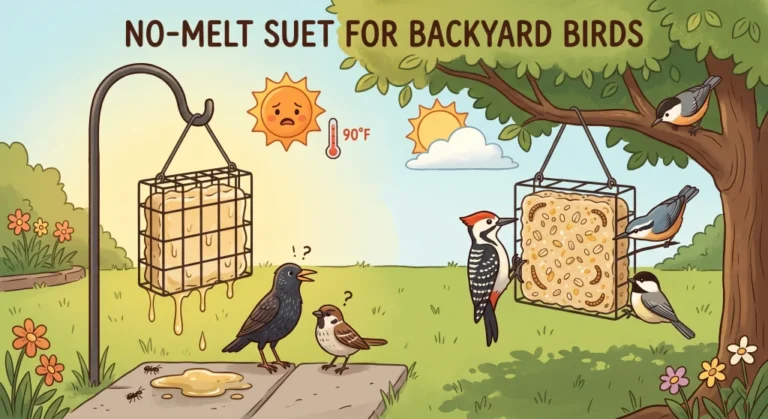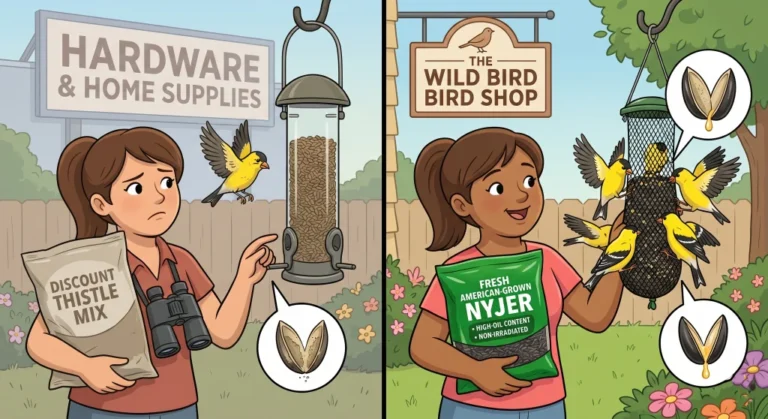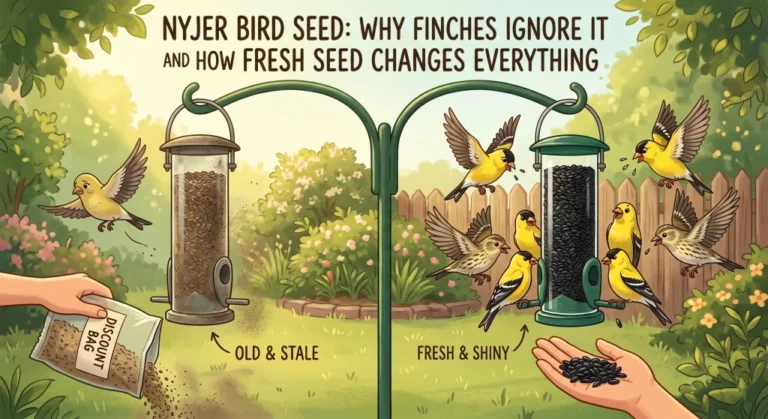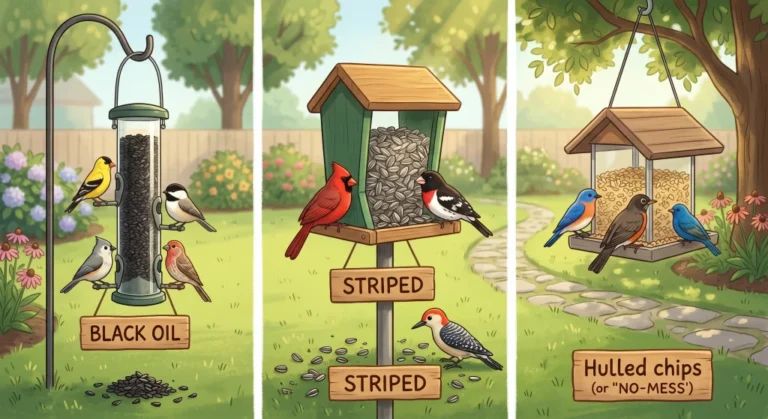

Wagner's Four Season Sunflower Seed is 100% black oil sunflower seed. Sunflower seed is the favorite seed of most wild birds. It is high in energy and has a thin shell making it easy for all birds to consume. Use tray feeders or hopper feeders to attract sunflower loving songbirds. Cardinals, Chickadees, Finches, Nuthatches, Woodpeckers and much more. Trust your backyard birds to the experts at Wagner’s.
Check on AmazonIf you click this link and buy, we earn a commission at no additional cost to you.
Caching Behavior: Why Whole Seeds Still Have Advantages
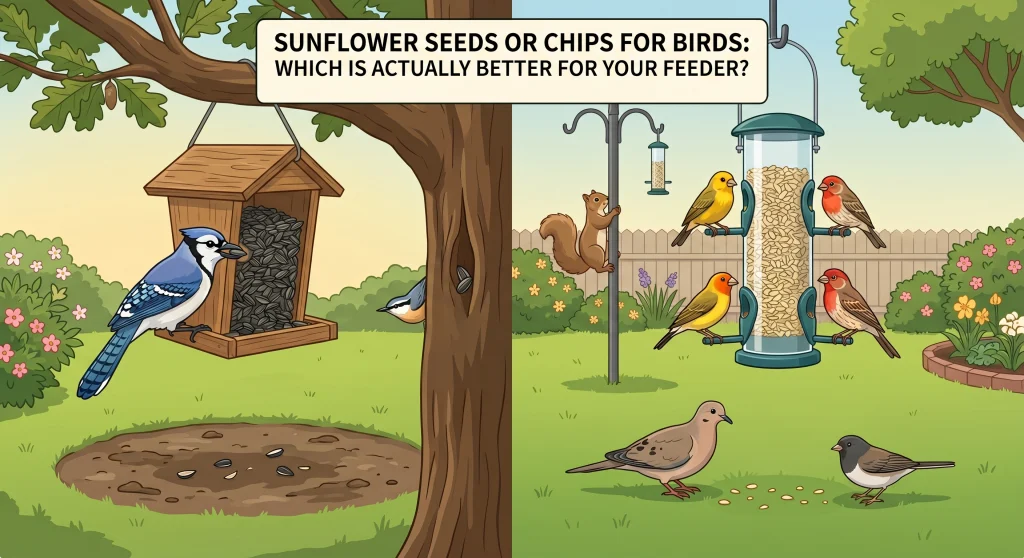
Whole sunflower works especially well for birds that grab food and leave the feeder to handle it elsewhere. Blue Jays commonly carry sunflower seeds away, and titmice, chickadees, and nuthatches often take a seed to a branch before eating or storing it. Watching that behavior is one reason I still like offering some whole sunflower even in a yard that also uses chips.
The shell is not, however, required for caching. Cornell describes Mountain Chickadees and Tufted Titmice shelling sunflower seeds before flying off to hide them, and Tufted Titmice often cache the shelled kernel in bark crevices. Blue Jays can also carry intact seeds away before processing them. Different species handle food differently, so I would not turn the shell into a biological necessity.
Field Note: One of the easiest ways to see the difference between feeder styles is to watch what the bird does after landing. Finches may sit and work through seed at the feeder, while jays, chickadees, titmice, and nuthatches often grab one item and leave. Whole sunflower gives you more of that carry-and-open behavior, but those same birds can still use hulled sunflower when it is offered.
The practical advantage of the intact hull is protection before the bird opens the seed. A whole seed tolerates ordinary handling and exposure better than an exposed kernel. That matters in a feeder that sees occasional damp weather or slower turnover. It does not make whole seed spoil-proof, and wet seed of either type still needs to be removed.
Whole black oil sunflower can also be the more forgiving choice when you want broad species access without paying the premium for shelled kernels. Its thin shell is one reason Cornell recommends it so widely. Many small feeder birds can crack it, while thicker striped sunflower excludes some birds with weaker bills.
The Cleanup Problem Chips Actually Solve
The clearest advantage of sunflower hearts and chips is simple: there are no intact sunflower hulls for birds to drop beneath the feeder. On a deck, balcony, patio, or small landscaped area, that can matter more than a small difference in price. You buy mostly edible material and avoid the layer of empty shells that whole sunflower creates.
I would be more careful with the common claim that sunflower hulls are solely responsible for a dead patch of lawn through allelopathy. Research does show that sunflower plants and residues can contain compounds capable of inhibiting the germination or growth of some other plants, but the effect varies with plant part, concentration, target species, and conditions. A bare patch beneath a feeder can also involve heavy foot traffic, shade, accumulated hulls, spilled seed, droppings, and repeated disturbance. Sunflower chemistry may contribute, but it is not an automatic explanation for every damaged lawn.
Switching to chips removes the hull accumulation part of that problem immediately. It also reduces the amount of bulky waste you have to rake or sweep. Spilled chips are edible to birds and mammals, although I would not say every fallen piece gets cleaned up before it can spoil. In wet weather, exposed kernels on the ground can still become damp, moldy, or attractive to rodents.
Hulled sunflower is also easy for birds to use because there is no shell to crack. That can be helpful for small-billed species, but black oil sunflower already has a thin shell that many small seed eaters handle successfully. Think of chips as reducing handling effort and mess rather than unlocking sunflower for birds that otherwise could never eat it.

This 15-pound bag contains 100% shell-free sunflower hearts for wild birds, providing a high-energy food source without the hull mess associated with whole sunflower seed. The kernels attract finches, chickadees, nuthatches, sparrows, juncos, and other common backyard birds. It can be served in tube, hopper, or platform feeders and is a practical choice for regular feeding where a cleaner seed option is preferred.
Check on AmazonIf you click this link and buy, we earn a commission at no additional cost to you.
The Cost Illusion
Sunflower hearts and chips usually cost more per pound because the hull has already been removed and the product requires additional processing. Whole seed looks cheaper at the shelf because part of what you are buying is the hull that birds discard. The mistake is trying to turn that observation into one universal percentage. Hull-to-kernel proportions vary with seed type and lot, so I would not claim that every bag of whole sunflower is exactly forty percent waste.
The fairest comparison is what happens in your own setup. If whole black oil disappears quickly and you do not mind cleaning up hulls, the lower purchase price may be the better value. If shells create constant sweeping, clogged planters, or cleanup problems on a balcony, paying more for hulled seed may save enough labor and waste to justify it.
| Feature Comparison | In-Shell Seeds | Hulled Chips / Hearts |
|---|---|---|
| Cost Per Pound | Usually lower | Usually higher |
| What You Buy | Kernel plus hull | Mostly edible kernel with little shell waste |
| Caching and Carry-Away Behavior | Excellent for birds that grab whole seeds and leave | Also usable by caching species; shell is not required |
| Cleanup | Produces discarded hulls beneath the feeder | Much less shell debris |
| Spoilage Risk | Hull gives the kernel some protection | More exposed to moisture; use faster in wet weather |
There is no honest way to declare the chips automatically cheaper “per meal” without knowing the actual bag prices, seed variety, bird use, and amount spilled. Compare the price you pay with how fast each product disappears and how much cleanup it creates. That gives you a real cost comparison instead of a made-up conversion.
Making the Right Choice for Your Setup
Choose hulled sunflower when cleanup is the main constraint. It makes particular sense above decks, balconies, patios, tidy garden beds, or any location where a pile of empty shells becomes a nuisance. Use a feeder that drains well, offer amounts that move quickly, and be more aggressive about replacing wet food because exposed kernels spoil faster.
Choose whole black oil sunflower when you want a durable everyday seed, lower purchase cost, and the broad bird appeal that comes from its thin shell and high-energy kernel. It is also satisfying for people who enjoy watching jays, chickadees, titmice, nuthatches, and other birds carry seeds away to process elsewhere.
You can also use both. A hopper or platform with whole sunflower can serve larger birds and active carry-away feeders, while a smaller weather-protected feeder with hearts or chips can reduce mess closer to the house. The better setup is the one that keeps the food fresh and matches the birds actually using your yard.

A large-capacity, squirrel-proof bird feeder that pays for itself in saved seed. When a squirrel climbs on, its weight automatically closes the feeding ports — keeping squirrels out without harming them. A patented weight-adjustable spring lets you control which animals can access the food. Built with UV-stabilized, chew-proof materials for long-lasting outdoor use.
Check on AmazonIf you click this link and buy, we earn a commission at no additional cost to you.
Final Thoughts: Finding Your Balance
Sunflower seeds and chips are not competing foods so much as different formats for different feeding situations. Whole black oil gives you a protective hull, broad bird appeal, and a lower shelf price. Hearts and chips trade that protection for convenience, lower shell waste, and easier access to the edible kernel.
Watch what your birds use, how quickly the feeder empties, and what accumulates underneath it. If cleanup is becoming the bigger problem, shift more of the station toward hulled sunflower. If wet-weather durability and budget matter more, keep whole black oil in the rotation. For a broader comparison of sunflower options, see sunflower bird seed, or compare it with the other best bird seed choices for your setup.

A charming addition to any outdoor space, this beautiful feeder features a weight-activated perch bar that closes to prevent squirrels from accessing the seed supply. Adjustable springs can be calibrated to accommodate different bird sizes and keep away nuisance birds as well as squirrels.
Check on AmazonIf you click this link and buy, we earn a commission at no additional cost to you.
FAQs
🌧️ Do sunflower chips go bad faster in the rain?
Yes, exposed sunflower hearts and chips are less protected from moisture than kernels still inside an intact hull. Cornell advises offering only amounts of shelled sunflower that birds can eat quickly because wet hearts and chips can spoil and harbor harmful microbes. Good drainage and smaller fills matter more than relying on a weather guard alone.
🐦 Will finches eat whole sunflower seeds?
Yes. House Finches and many other finches readily eat black oil sunflower, and its thin shell is one reason it works for a wide range of seed-eating birds. Goldfinches and Pine Siskins also use sunflower, although they are especially well known for eating Nyjer. Hulled chips make the food easier to handle, but they are not required for finches to eat sunflower.
🐿️ Do squirrels prefer chips or whole seeds?
Squirrels readily eat both whole sunflower and hulled kernels. I would not assume chips always disappear faster solely because they are already shelled, since feeder design and squirrel access matter much more. If squirrels are emptying either type of sunflower, fix the access problem with placement, a baffle, or a squirrel-resistant feeder.
🌱 Can I compost the leftover sunflower shells?
Yes, sunflower hulls can go into a mixed compost system rather than being left in a thick layer beneath the feeder. Sunflower residues have shown allelopathic effects on some plants under some conditions, so I would avoid using a concentrated layer of fresh hulls as mulch around sensitive plants. Mix the hulls with other compost materials and let the pile break down normally before using the finished compost.