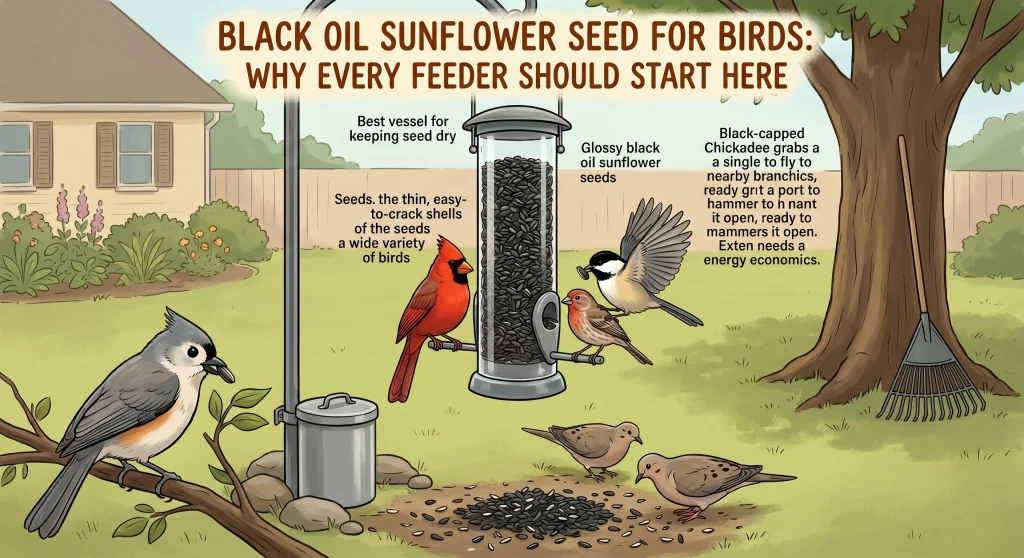
Why the Thin Shell Matters
When someone asked me why I started so many feeder setups with black oil sunflower, I usually gave two reasons: birds like the food inside, and many species can get through the shell. Guaranteed analyses vary by crop and product, so I would not promise one fixed fat or protein percentage for every bag. The dependable point is that black oil sunflower is an oilseed with a high-energy kernel and a thinner hull than striped sunflower.
The shell is one reason black oil sunflower reaches such a broad audience. Cornell notes that black oil sunflower has a very thin shell that is easy for virtually all seed-eating birds to crack, while striped sunflower has a thicker shell that excludes some smaller or less powerful seed-crackers. That does not mean every small bird eats black oil sunflower or every larger bird prefers it. It means the seed presents fewer mechanical barriers than striped sunflower for many feeder species.
Chickadees and titmice often take a sunflower seed away from the feeder and open it at a nearby perch, while finches may sit and crack seeds directly at the feeder. A thinner shell makes that handling easier. I would not turn this into a calorie equation and claim a bird abandons striped sunflower because opening it costs more energy than the kernel provides. The supported distinction is simply that black oil shells are easier for a wider range of seed-eating birds to open.
Which Birds Black Oil Sunflower Attracts
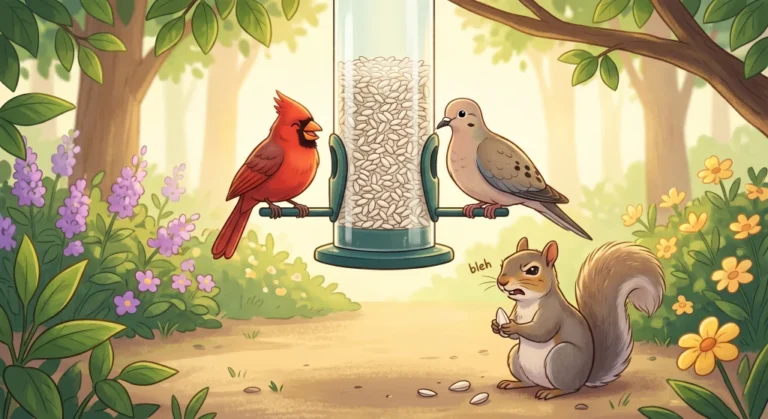
Cornell describes black oil sunflower as the most widely used feeder seed and a strong starting choice for attracting a broad range of species. Cardinals, chickadees, finches, sparrows, nuthatches, and some woodpeckers commonly use it where they occur. Mourning Doves and other ground-feeding birds may also pick up sunflower that reaches a platform or the ground. What appears in your yard still depends on range, season, habitat, and feeder style.
A few visitors do surprise beginners. Pine Warblers are unusual among warblers because they regularly eat seeds and may take sunflower at feeders in winter. Downy Woodpeckers also eat black oil sunflower even though suet is a more familiar feeder food for them. I would not put bluebirds in the same category for whole black oil sunflower: bluebirds are primarily insect and fruit eaters, and when they use feeder foods they are better known for mealworms, fruit, suet, or sometimes hulled sunflower rather than cracking whole sunflower seed.
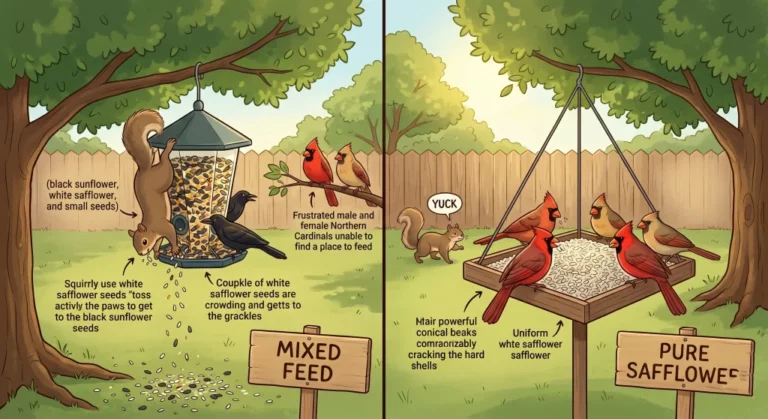
Pro Tips: If you are starting fresh and comparing the best bird seed options, black oil sunflower gives you a clean baseline because birds are not sorting through several ingredients at once. I would not reject every inexpensive mix, though. White proso millet, for example, is useful for several sparrows and ground-feeding birds. The mixes I avoid are the ones dominated by ingredients your local birds repeatedly toss aside.
| Bird Species | Feeding Style | Why They Love It |
|---|---|---|
| Northern Cardinals | Perching | Strong conical bills handle sunflower readily, and cardinals commonly use black oil sunflower at feeders. |
| Rose-breasted Grosbeaks | Perching | Large seed-cracking bills handle sunflower easily; grosbeaks may use either black oil or striped sunflower. |
| House Finches | Perching | Black oil sunflower is a common feeder food for House Finches, which usually crack seeds while perched. |
| Chickadees | Grab and go | They often carry a seed away and open it at a nearby perch. |
| Tufted Titmice | Grab and go | They commonly take large seeds away from the feeder and open them on a perch. |
| White-breasted Nuthatches | Clinging / Caching | Nuthatches take sunflower and other large seeds, often wedging food against bark while handling it and sometimes caching food. |
| Woodpeckers | Clinging | Some feeder-visiting woodpeckers eat black oil sunflower in addition to foods such as suet and peanuts. |
| Pine Warblers | Clinging / Perching | Pine Warblers are unusual among warblers because they regularly eat seeds and can take sunflower at elevated feeders in winter. |
| Mourning Doves | Ground feeding | They forage on the ground and can take sunflower and other seeds that are accessible below or on platform feeders. |

This 35.3-pound bag contains 100% black oil sunflower seeds for outdoor wild bird feeding. The thin shells make the seeds accessible to many common backyard birds, while the naturally high fat and protein content provides a concentrated food source. It can be served on its own or mixed with other bird seed and works well in tube, hopper, and platform feeders.
Check on AmazonIf you click this link and buy, we earn a commission at no additional cost to you.
What to Look for When Buying Black Oil Sunflower
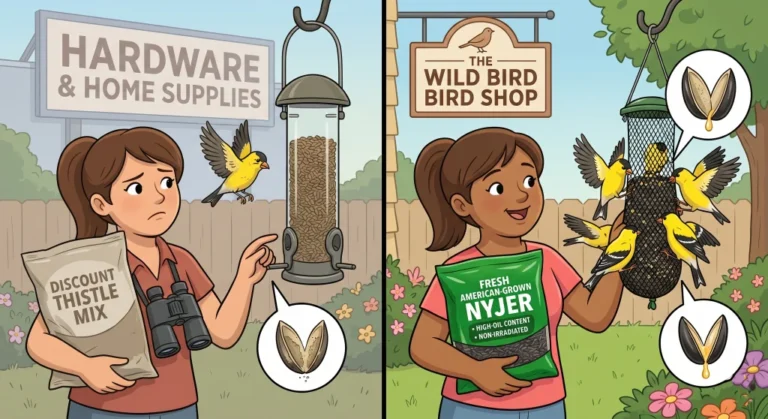
If black oil sunflower is going to be the main food in your station, freshness and cleanliness matter more than a fancy label. Bags vary in the amount of dust, plant debris, broken seed, and empty hulls they contain. Excess debris wastes space and can interfere with narrow feeder ports.
Look for seed that is dry, clean, and free of obvious mold, musty odor, insects, or excessive debris. A glossy shell by itself is not a quality test. Buy a bag size you can use while the seed remains fresh. Bulk can be economical in a busy yard, but a smaller bag is smarter when you are still learning how quickly birds empty the feeder. Store the reserve in a cool, dry location inside a clean container with a tight lid that rodents cannot easily defeat.

Proudly Made in the USA, these galvanized trash cans are made to be durable and hard-wearing. Features an offset bottom to keep the can off the ground, durable drop-down solid steel handles for easy portability, and tight-fitting lid. A more durable and longer-lasting alternative to plastic.
Check on AmazonIf you click this link and buy, we earn a commission at no additional cost to you.
Why the Ground Under a Sunflower Feeder Can Go Bare
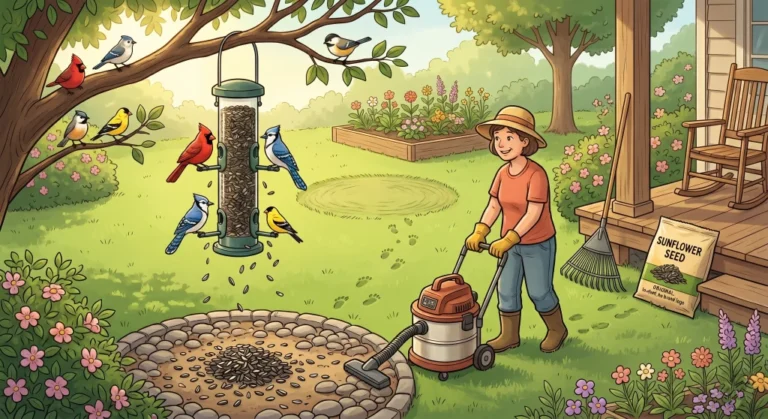
A busy sunflower feeder can leave a conspicuous bare or thin patch below it, but I would not blame one mechanism every time. Thick layers of hulls can physically smother plants, spilled seed can mold, birds and squirrels disturb the soil, and heavy traffic changes the surface. Sunflower material also has documented allelopathic effects that can inhibit the germination or growth of some plants.
Extension specialists have specifically noted that black sunflower hulls can contribute allelopathic chemicals to the area under feeders. The effect is not identical for every plant, and research on sunflower allelopathy shows that responses vary with plant species, tissue, concentration, and conditions. So the practical conclusion is that hulls can inhibit growth, not that the shells function as a guaranteed natural herbicide that kills the lawn.
Field Note: When customers showed me the bare circle below a sunflower feeder, the first thing I asked was how deep the hull layer had become. Fertilizer does not solve a mat of old shells and spilled seed. Raking the area regularly, using a catch tray, switching part or all of the station to hulled sunflower, or moving the feeder when the site is getting damaged are all more useful than following a fixed five- or ten-foot annual relocation rule.
If moving the feeder is not practical, remove accumulated hulls before they form a deep mat. The exact cleanup interval depends on feeder traffic. A catch tray or hardscape area can make the job easier. If you want to compare the broader sunflower bird seed options, sunflower seeds or chips for birds explains the main trade-off: hulled seed creates less shell waste, but without the hull it spoils faster when exposed to moisture.
Choose a Feeder That Keeps the Seed Dry
Any sunflower seed can become a problem when it sits wet. I could not find good support for the idea that intact black oil sunflower spoils faster than striped sunflower simply because its hull is thinner. The practical rule is to keep seed dry, inspect it after heavy weather, and discard anything that smells sour or musty, has visible mold, or has become badly clumped.
Black oil sunflower works in tube, hopper, tray, and window feeders, so there is no single required feeder type. A tube feeder is an easy starting point and protects much of the reserve seed, while a hopper gives larger birds more comfortable access and a platform serves species that do not use narrow perches well. Whatever design you choose, look for a roof or enclosure that sheds rain, drainage where water can collect, and parts you can clean easily.
Putting far more sunflower on an exposed tray than the birds will use before wet weather, then leaving damp seed in place after the storm.
Using a weather-resistant feeder that suits your target birds, adding enough weather protection to keep most precipitation off the food, and checking the seed after storms instead of assuming any dome guarantees dryness.

Caged tube bird feeder designed to help keep squirrels and larger nuisance birds away from the seed. The sturdy powder-coated steel cage surrounds a clear mixed-seed tube with four feeding ports, allowing smaller songbirds to feed inside. It holds about one quart of seed and provides a simple hanging setup for backyard feeding stations.
Check on AmazonIf you click this link and buy, we earn a commission at no additional cost to you.
Final Thoughts: Your “Start Here” Checklist
Wild bird food shelves can look more complicated than they need to be. Black oil sunflower gives a beginner a useful starting point because many common feeder birds recognize it and several feeder styles can serve it. Start simple, watch who actually shows up, and add other foods only when they solve a specific need.
- The Seed: Start with clean, dry black oil sunflower and buy only as much as you can store well and use while it stays fresh.
- The Feeder: Choose a tube, hopper, or platform that fits the birds you want, sheds rain, drains well, and comes apart for cleaning.
- The Maintenance: Remove wet or spoiled seed, keep the ground below the station from accumulating a deep hull layer, and adjust the setup if lawn damage becomes a problem.
Black oil sunflower works so well because it combines a thin shell, an energy-rich kernel, and broad acceptance among common feeder birds. It will not guarantee a faster or more loyal flock, but it gives you a strong baseline for learning what uses your yard. To compare black oil with striped and hulled options, see sunflower bird seed and choose the form that fits your birds, feeder, budget, and tolerance for shell mess.

Durable, squirrel proof bird feeder. Reservoir holds 0.75 quarts of seed. Bottom perches allow birds to sit and dine. Weight sensitive perches close when a squirrel or heavy bird lands on them. Feeder may be hung with attached hanger
Check on AmazonIf you click this link and buy, we earn a commission at no additional cost to you.
FAQs
🐿️ Do squirrels eat black oil sunflower seeds?
Yes. Squirrels readily eat black oil sunflower and can consume a lot of it when they have easy feeder access. If that becomes a problem, use a properly installed baffle or a feeder designed to limit squirrel access rather than changing seed solely because squirrels found it.
🌧️ Will these seeds sprout in my lawn?
A viable whole seed that reaches suitable soil can sprout. Empty hulls will not germinate, but a heavy layer can contribute to poor plant growth through physical buildup and sunflower’s allelopathic effects. Raking or using hulled sunflower reduces that mess.
🐦 Can small birds choke on the shells?
Seed-eating songbirds that use in-shell sunflower normally open or manipulate the hull as part of feeding, so you do not need to shell black oil sunflower for them. If you want to serve birds that are poorly equipped to crack whole seed, hulled sunflower hearts or chips are the easier option.
🧊 How should I store a large bag of seed?
Store seed in a cool, dry place in a clean container with a tight-fitting lid. A sturdy metal container is useful where rodents are persistent, but other pest-resistant containers can also work. Discard seed that becomes wet, moldy, infested, or develops an off odor.
🦅 Do hawks hunt near sunflower feeders?
Hawks such as Cooper’s and Sharp-shinned Hawks may hunt where feeders concentrate small birds; they are interested in prey, not sunflower seed. If a hawk begins hunting the station repeatedly and you want to discourage it, Cornell recommends taking feeders down temporarily so the smaller birds disperse.