The Hardware Details Most People Miss
If you are looking for the best tube feeder for finches, you must look closely at the hardware itself. Understanding specific hardware requirements is a crucial step when navigating the many different bird feeder types available today. Most people assume all cylindrical feeders operate exactly the same way. They grab whatever is on the shelf, fill it with tiny thistle seed, and wonder why it pours out onto the lawn.
The difference between a setup finches love and one they ignore comes down to two measurements most people never check. At the store, customers constantly told me their newly purchased feeders were broken. They would buy a generic model, fill it with nyjer, and watch ten dollars worth of seed spill into the grass within an hour. This happens because goldfinches and pine siskins require highly specialized feeding equipment.
Port Size: The Difference Between Feeding and Spilling
The single most important feature of a nyjer tube feeder is the diameter of the feeding ports. Standard feeders feature openings designed for black oil sunflower seeds, which usually measure around a quarter of an inch wide. Finch tube feeder ports are drastically smaller, usually measuring only about one and a half millimeters. This tiny opening forces the birds to pull individual seeds out one by one without spilling the rest.
Buying a generic tube feeder and filling it with expensive nyjer seed, which immediately pours out onto the ground.
Purchasing a dedicated finch model with micro-ports specifically designed to hold tiny seeds securely.
When you mismatch the seed and the port size, the entire system fails. If you put tiny nyjer seed into a standard sunflower port, gravity empties the tube before a bird ever lands. If you try to force sunflower chips into finch ports, they clog instantly and the birds give up. If you are trying to feed larger birds with sunflower, you need a standard tube bird feeder designed specifically for that purpose.
Key point: Always check the manufacturer specifications before buying. If the packaging says it is meant for sunflower or mixed seed, it will not work for tiny finch food.
| Feeder Type | Port Size | Best Seed Type |
|---|---|---|
| Standard Tube | Large (5-8mm) | Black oil sunflower, mixed seed |
| Finch Tube | Micro (1.5mm) | Nyjer (thistle), fine sunflower chips |

This 15-inch tube feeder is designed for Nyjer and thistle seed to attract goldfinches, house finches, siskins, and other small birds. It provides 12 small feeding ports and eight metal perches so several birds can feed around the tube at the same time. The metal construction, drainage holes, clear seed compartment, and easy-open top make it practical for outdoor hanging, refilling, and routine cleaning.
Check on AmazonIf you click this link and buy, we earn a commission at no additional cost to you.
Mesh Feeders Provide a Natural Advantage
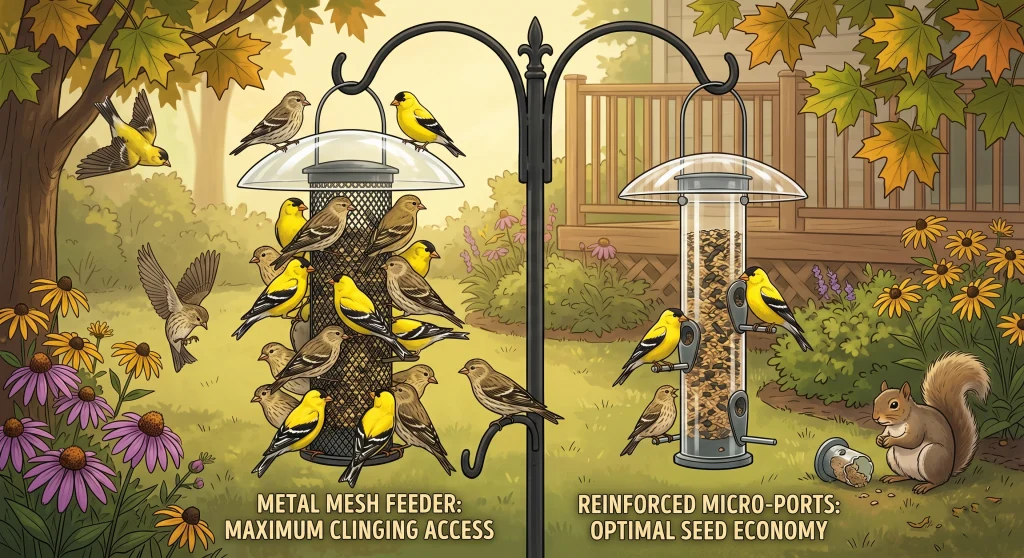
While port-based designs work nicely, a metal mesh design often serves as the best finch tube feeder you can buy. Finches naturally cling to wild flower heads to extract seeds from challenging, awkward angles. A mesh tube replicates this exact foraging experience, allowing them to grab hold anywhere on the metal surface. Instead of waiting for an open perch, dozens of birds can cover the entire cylinder simultaneously.
This clinging capability creates a massive advantage when a large winter flock arrives in your yard. The available surface area of a mesh feeder accommodates far more birds than a traditional model restricted to four or six rigid perches. You just need to ensure the mesh squares are small enough to hold the seed securely inside. Investing in a high-quality metal mesh model will also outlast standard plastic tubes by several seasons.
Field Note: I once had a customer bring in a heavily chewed plastic tube feeder. Squirrels had destroyed the tiny plastic ports trying to get to the nyjer seed, even though they do not really like eating it. We swapped them to an all-metal mesh design. Not only did it stop the chewing damage entirely, but they came back weeks later to show me a photo of twenty finches clinging to it at once, simply because the birds no longer had to wait in line for a perch.

It has no wood and no plastic, it’s all metal! The wire mesh design features a powder-coated finish to resist rust, while the sturdy metal construction will help thwart squirrel damage to help you save a lot of bird feeding costs.
Check on AmazonIf you click this link and buy, we earn a commission at no additional cost to you.
The Fabric Sock Feeder Trap
If you want a very cheap alternative to rigid tubes, fabric sock feeders are a common starting point. These simple woven bags let you pour seed directly inside, and the birds simply hang onto the fabric to pull the food through. A goldfinch tube feeder made of fabric costs practically nothing and provides an excellent clinging surface. They are incredibly popular for people who just want to test if these species actually live in their neighborhood.
The primary downside to a sock feeder is its extremely short and fragile lifespan. Squirrels can chew through the thin material in minutes, and heavy rain causes the seed inside to mold very quickly. You will end up replacing them multiple times a year, which eventually costs more than buying a durable metal setup. They serve well as a temporary starter option, but they are absolutely not a permanent solution for a serious feeding station.
Top Hardware Recommendations to Start With
When people asked me which specific model to buy at the store, I always guided them toward durability over aesthetics. You want something that will survive harsh weather, sharp teeth, and heavy daily use. Rather than experimenting with cheap plastics that crack in the winter, investing in proven hardware saves you a lot of frustration. Here is how I usually break down the best options for different yards.
If you want to invest once and never worry about chewed ports, an all-metal mesh feeder is the first thing I would buy. It accommodates the maximum number of clinging birds and outlasts plastic models by years, easily justifying the slightly higher upfront price. The solid metal construction also completely eliminates the risk of squirrels destroying the feeding equipment.
If you prefer the traditional perch look, search for a polycarbonate tube equipped with reinforced metal micro-ports specifically labeled for nyjer seed. These rigid tubes hold up incredibly well as long as the feeding ports themselves are made of metal. Whichever style you choose, I highly recommend buying a ten-inch acrylic weather dome to hang directly above it. This simple addition protects your expensive seed from ruining in the rain.

12-inch diameter universal dome. Protects any small or medium-sized feeder from rain and snow. Molded from uv stabilized polycarbonate, the strongest and most durable plastic available. Guaranteed for life.
Check on AmazonIf you click this link and buy, we earn a commission at no additional cost to you.
Why Your New Feeder Might Sit Empty at First
When you finally set up your new dedicated finch feeder, do not panic if it sits untouched for a week or two. Finches are creatures of extreme habit who rely on scout birds to locate and test new food sources. It simply takes time for the flock to trust a new metallic object appearing in their territory. Keep the seed fresh, leave the feeder in a consistent location, and practice patience.
Once the scouts give the all-clear, the rest of the flock will quickly follow. They have incredible spatial memory and will memorize your yard’s exact layout for their daily foraging routes. Before long, that empty mesh cylinder will become a reliable, bustling destination for the entire neighborhood flock.
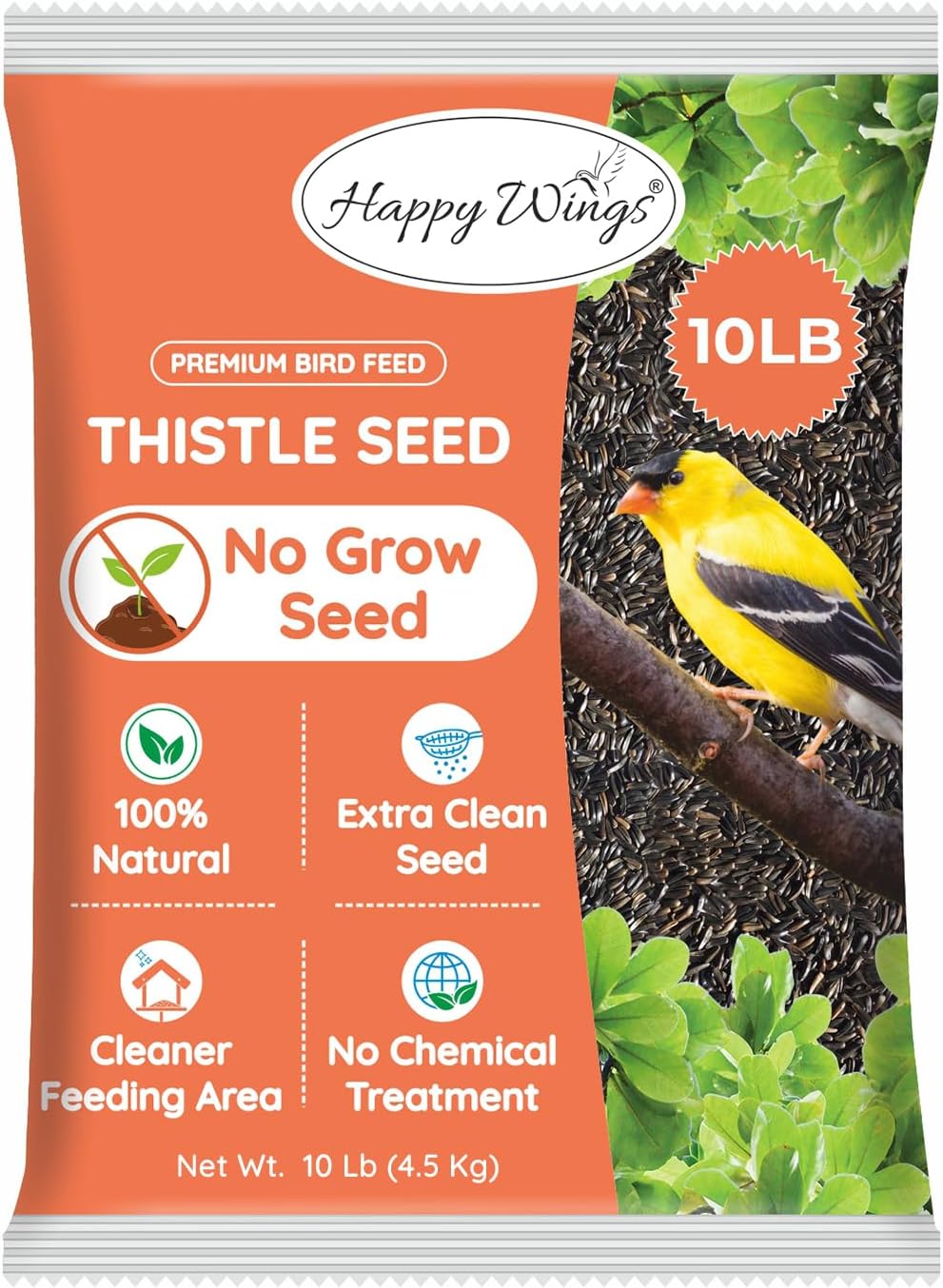
Your new feeder is ready — don't let it sit empty. This is the exact seed finches actually come back for, and at 150,000 seeds per pound, one bag goes a lot further than you'd expect.
Check on AmazonIf you click this link and buy, we earn a commission at no additional cost to you.
FAQs
🧽 How do you clean a finch tube feeder?
You should disassemble the feeder and soak it in a solution of one part bleach to nine parts water. Use a specialized long brush to scrub the inside of the tube, and use a small detail brush to clear out the tiny feeding ports. Rinse thoroughly and let it air dry completely before refilling.
🌻 Can I use mixed seed in a finch feeder?
No, mixed seed will instantly clog the micro-ports on a dedicated finch feeder. These specialized feeders are designed exclusively for tiny seeds like nyjer or highly crushed sunflower chips. Larger seeds simply cannot fit through the holes.
🙃 Do goldfinches actually feed upside down?
Yes, goldfinches are excellent acrobats and often feed upside down in the wild to extract seeds from flowers. Some specialized finch feeders intentionally place the feeding port below the perch to take advantage of this behavior. This specific design helps exclude other birds that cannot hang upside down.
🐿️ Do squirrels eat nyjer seed?
Squirrels generally ignore nyjer seed because it is too small and not worth their effort compared to peanuts or sunflower seeds. However, if they are desperate, they might still chew on the feeder itself. Using a durable metal mesh feeder prevents them from causing structural damage.