The Three Reasons Suction Cups Fail
Suction cups fail for three very specific reasons. Fortunately, the adjustments take almost no time at all. At the store, customers would frequently bring back window setups, convinced they had purchased a defective unit because the window feeder keeps falling. I would usually take the unit, perform a quick adjustment right there at the counter, and stick it to the front door of the shop where it would hold fast for the rest of the week.
A window bird feeder suction cup relies entirely on creating a perfect vacuum seal against a flat surface. When that seal is compromised, gravity takes over. Instead of throwing the unit away or trying to use superglue, you just need to identify which of the three causes is ruining your setup. The table below outlines the most common issues I see and the immediate fixes that restore the seal.
| Failure Mode | The Warning Sign | The Quick Fix |
|---|---|---|
| Dirty Window Surface | Cup slides slowly down the glass before falling. | The Alcohol Wipe Method |
| Cold Temperatures | Cup feels stiff, rigid, and pops off suddenly. | The Warm Water Dunk |
| Trapped Air Bubbles | Center of the cup does not touch the glass. | The Center Push Technique |
Dirty Windows and the Alcohol Wipe Fix
If your suction cup bird feeder not sticking is a recurring nightmare, the first culprit to investigate is the glass itself. Most people assume their windows are clean because they look transparent. However, standard household glass cleaners often leave behind a microscopic film of chemical residue designed to prevent streaking. This invisible film acts like a lubricant, causing the plastic cups to slowly slide down the pane under the weight of the seed.
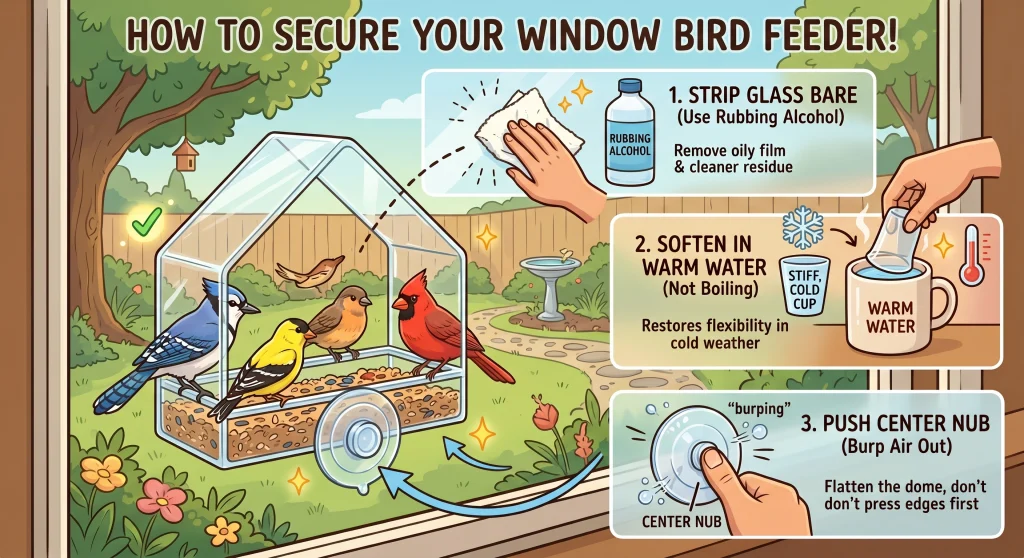
To fix this, you have to strip the glass completely bare. Take a paper towel and apply standard rubbing alcohol to the exact spot where you plan to mount the unit. Wipe the area thoroughly and let the alcohol evaporate, which takes about ten seconds. You also need to wipe the inside surface of the suction cups with the alcohol to remove any oils transferred from your fingers during handling. Once both surfaces are stripped clean, press the cups firmly against the glass. This simple chemical reset solves the majority of sliding issues immediately.

70% isopropyl alcohol formula that helps prevent infection from minor cuts, scrapes, and burns. Large 32 oz bottle for home first aid use. Keep away from heat sources.
Check on AmazonIf you click this link and buy, we earn a commission at no additional cost to you.
Cold Temperatures and the Warm Water Dunk
Temperature changes are the silent enemy of a good vacuum seal. Most suction cups are made of PVC plastic. In warm weather, this material is highly pliable and easily flattens against the glass. When the temperature drops near freezing, the plastic hardens and stiffens. A stiff cup cannot conform to the microscopic imperfections in the glass, which means cold air leaks in and the unit crashes to the ground.
If you are trying to fix suction cup feeder mounts in the middle of winter, pushing harder will not help. You need to soften the plastic. Remove the cups from the mounting bracket and drop them into a bowl of very warm tap water for a minute or two. Do not use boiling water, as extreme heat can permanently warp the shape. The warm water quickly makes the plastic soft and flexible again.
Field Note: A frustrated customer once brought a feeder back in January, demanding a refund because the cups were “hard as a rock.” I dropped them in a mug of warm water from our break room. A few minutes later, they were soft and pliable. We stuck them to the cold storefront window, and they held perfectly. The customer ended up keeping the feeder.
Once you pull the cups out of the warm water, dry them quickly with a lint-free cloth and press them immediately onto the cold window. The pliable plastic will form a tight seal, and as it cools down against the glass, it will lock firmly into place.
There is one more winter factor to keep in mind: the condensation differential. When your house is heated inside and the outside air is freezing, microscopic condensation can form on the exterior glass right under the suction cup, slowly breaking the vacuum. Making sure you wipe the exterior glass completely dry before applying the warm, softened cups is a critical ten-second step to prevent the cups from slipping in cold weather.
Trapped Air Bubbles and the Center Push Method
Sometimes the glass is perfectly clean and the temperature is mild, but the unit still falls. This usually happens because of how the cup was applied. When people push a suction cup against a window, they tend to press around the outer edges. This traps a pocket of air directly in the center of the dome. That trapped air expands as the sun hits the window, breaking the vacuum seal from the inside out.
The correct way to mount the unit is to focus entirely on the center. Place your thumb directly over the middle nub of the suction cup and push straight into the glass as hard as you can. You want to flatten the cup completely, “burping” all the air out from under the edges. Once the center is firmly pressed against the pane, you can gently smooth out the outer edges. If you look at the cup through the glass from the other side, there should be no visible air bubbles trapped in the middle.
Long-Term Prevention for Your Setup
Once you have secured the mount, a few basic habits will keep it there permanently. First, pay attention to the texture and type of your glass. Suction cups only work on completely smooth, non-porous surfaces. If your window has a decorative frosting or a slight texture, the vacuum seal will always fail. Additionally, if you have modern double-pane low-E glass, the factory energy-efficiency coating can sometimes be stubborn to clean. You might need to wipe those specific windows twice with alcohol to get down to the bare surface.
Another overlooked factor is the actual weight rating of the cups. Standard cups are usually rated to hold between five and fifteen pounds. Most people think their setup is lightweight, but they fail to account for the combined weight. You have to calculate the weight of the plastic structure, the seed, the extra weight of that seed when it gets wet from rain, and the force of two or three heavy birds landing on the rim simultaneously. If you notice your suction cups bird feeder setup sliding down after a heavy rainstorm, you are likely exceeding the maximum weight capacity of the hardware.
If you have addressed the window surface and the temperature, but are still struggling with your setup, it might be an issue with the overall design you chose. Taking a broader look at the window bird feeder options available can help you determine if a model with a deeper seed tray or a lighter frame makes more sense for your specific location.
When to Replace the Cups vs the Feeder
Nothing lasts forever, especially not soft plastic exposed to constant sunlight. Over time, ultraviolet rays from the sun will break down the PVC material. The cups will eventually turn yellow, become permanently rigid, or develop microscopic cracks around the edges. When this happens, no amount of cleaning or warm water will restore the vacuum seal.
You do not need to throw away a perfectly good acrylic housing just because the mounts have degraded. Most manufacturers sell replacement suction cups for just a few dollars. Replacing the hardware every two to three years is standard maintenance. When you buy replacements, I highly recommend looking for silicone suction cups instead of standard PVC. Silicone stays flexible in freezing temperatures and resists UV damage much longer, offering a significant upgrade for very little money.
However, if the main acrylic body of your unit is severely cracked, opaque from sun damage, or missing pieces, buying new cups is a waste of money. At that point, the safest choice for the birds is to retire the old unit. If you find yourself replacing your window setup constantly, it might be worth exploring other bird feeder types like a sturdy pole-mounted hopper or a classic tube feeder that does not rely on a window seal to stay off the ground.

Industrial-strength clear silicone cups, 2 inch diameter, stick firmly to any smooth window, ceramic, or mirror surface. Reusable forever, just soak in warm water to restore full suction. Works for window bird feeders, plant hangers, wreaths, bathroom caddies, and more. Backed by a lifetime guarantee.
Check on AmazonIf you click this link and buy, we earn a commission at no additional cost to you.
Final Thoughts: A Secure Setup
A window feeder falling is rarely a sign of a bad product. It is almost always a sign of a compromised vacuum seal. By stripping the glass bare with rubbing alcohol, softening the plastic in warm water during the winter months, and pushing from the center to eliminate air bubbles, you can solve the problem easily.
Take the extra few minutes to prep the glass and the cups correctly the first time. A strong, reliable hold ensures the seed stays where it belongs, and gives you the confidence to enjoy watching your backyard visitors up close without waiting for the inevitable crash.

A large window bird feeder made from 1/4-inch premium cast acrylic for exceptional durability. Holds over 4 cups of seed and attaches securely to any window via 3 ultra-strong suction cups, with 3 extras included. Features a slide-out tray for quick, mess-free cleaning and refilling. Backed by a lifetime guarantee.
Check on AmazonIf you click this link and buy, we earn a commission at no additional cost to you.
FAQs
🧼 Can I use dish soap to help the suction cup stick?
No. While some people recommend a drop of soapy water, it often leaves a slippery film as it dries. A clean, bare surface prepped with rubbing alcohol creates a much stronger and longer-lasting hold.
❄️ Why does my window feeder only fall in the winter?
Cold temperatures cause the plastic of the suction cup to harden and contract. This stiffness prevents the cup from sitting perfectly flat against the glass, allowing cold air to leak in and break the vacuum seal.
🧽 How often should I clean the suction cups?
You should wipe them down with rubbing alcohol every time you take the unit down for a thorough washing, which is typically every two weeks. This prevents natural oils and dust from building up around the edges.
🧱 Will suction cups work on brick or wood siding?
No. Suction cups require a completely smooth, non-porous surface to create a vacuum. They will immediately fail on brick, wood, stucco, or heavily textured privacy glass.