The Honest Answer to the Waiting Game
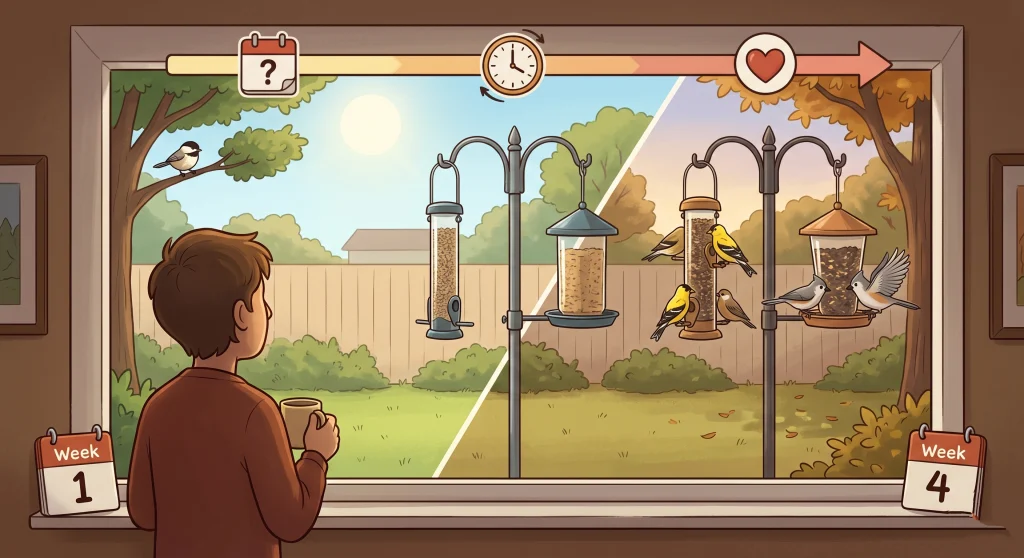
When people ask how long does it take for birds to find a feeder, they usually want one number they can circle on a calendar. I understand why. An untouched feeder makes every day feel like evidence that something is wrong. In practice, discovery can happen within days, take several weeks, or occasionally take longer, so I would treat two to four weeks as a useful expectation window rather than a deadline.
One pattern I saw repeatedly at the store was people changing three things after only a few quiet days. They would move the feeder, replace the seed, and sometimes buy different hardware before local birds had much chance to investigate the first setup. That makes troubleshooting harder because you never learn which part of the original setup was actually working. Unless the seed is spoiled or the location has an obvious safety problem, I would rather make one deliberate adjustment than keep resetting the entire feeding station.
If you are wondering how long before birds come to feeder stations you just installed, watch what is happening around the feeder as well as what is happening on it. Birds moving through nearby trees, shrubs, fences, or the ground below tell you that the yard already has traffic even if nothing has landed on the feeder yet. A completely quiet yard may simply have fewer birds passing through at that time of day or season. The useful question is not only how many days have passed, but whether your setup gives the birds already present a reason and a safe opportunity to use it.
The Real Range: Days, Weeks, and Sometimes Longer
There is no honest way to promise that a new feeder will be discovered in three days, two weeks, or any other fixed window. I have seen enough variation between backyards to be wary of timelines that sound too precise. A feeder beside an active yard with suitable cover and familiar seed may get attention quickly, while a feeder in a quieter area can remain untouched much longer even when there is nothing obviously wrong with it. That wide range is why the calendar should guide your troubleshooting, not dictate it.
Field Note: The pattern I paid attention to at the store was not the exact number of days a customer had waited. I wanted to know whether birds were already using the yard, what food was in the feeder, where the feeder sat in relation to cover, and whether anything had recently changed around it. Those details usually told me more than the date the feeder was hung.
Nearby feeding activity can help because birds that already move through residential yards are more likely to pass your property during normal foraging. That does not mean a neighbor with a feeder cuts your wait by a predictable amount, and a yard without nearby feeders is not automatically a bad location. Local habitat matters more. Mature trees, shrubs, seed-producing plants, water, and the species actually present in your area all influence whether birds are passing close enough to notice what you have put out.

Exotic and highly nutritious oil-rich seeds, which are great for year -round feeding. No growth seed to prevent unwanted growth in your yard. Nyjer seed is one of the best single grain seed for attracting many varieties of finches and songbirds.
Check on AmazonIf you click this link and buy, we earn a commission at no additional cost to you.
The 5 Factors That Determine Your Timeline
You cannot make a wild bird visit on command, but you can remove many of the reasons a new feeder stays unnoticed or unused. When people ask me how long does it take birds to discover feeder locations, I look at five variables before I look at the calendar. None works as a stopwatch by itself. Together, they tell you whether continued patience makes sense or whether the setup deserves a closer look.
| Environmental Factor | Impact on Your Wait Time |
|---|---|
| Feeder History | Birds already accustomed to feeding in the yard may notice a new station sooner, but a new yard can still develop regular traffic with time. |
| Current Season | Natural food, weather, migration, and breeding activity can all raise or lower feeder use, so no season guarantees faster discovery. |
| Seed Quality | Fresh food that matches local seed-eating species gives birds a better reason to investigate than stale seed or a filler-heavy mix. |
| Neighborhood Density | Nearby bird activity can increase the chance that birds pass your yard, but there is no reliable formula for how much it shortens the wait. |
| Local Species | The species present, their diets, and the feeder styles they can use matter more than labeling one species fast and another slow. |
The first factor I check is whether birds are already using the space around the feeder. A yard with active shrubs, mature trees, water, or neighboring habitat gives birds more reasons to pass through, and an established feeding station can become part of that activity over time. If several houses nearby feed birds, that may increase the number of birds moving through residential spaces, but I would not treat it as a guarantee of quick discovery. If your yard is quieter, focus on making the feeder easy to approach and useful to the species that actually live there rather than assuming the neighborhood itself is the problem.
Season matters, but not because fall automatically beats summer or spring. If you are learning how to attract birds to your yard for the first time, pay attention to what natural food is available around you. Insects, berries, native seeds, migration, breeding activity, cold snaps, snow, and regional weather can all change how heavily birds use supplemental food. A feeder may be quieter when natural food is abundant and busier when those resources become harder to find, but the pattern varies enough that I would not use the month alone to judge whether your setup is working.
Finally, food and feeder design need to match the birds you hope to see. Black oil sunflower is a strong starting seed because many common seed-eating birds can handle its thin shell and use its high-energy kernel, while filler-heavy mixes may leave more unwanted grain behind. Hardware matters just as much: small ports, narrow perches, trays, mesh, and platform space each suit different feeding styles. That is why combining suitable food with a usable feeder is a more reliable way to attract birds to your feeder than trying to predict a visit by personality alone. If you are unsure whether the physical setup suits the birds in your yard, reviewing the various bird feeder types is a smart next step.

Wagner's Four Season Sunflower Seed is 100% black oil sunflower seed. Sunflower seed is the favorite seed of most wild birds. It is high in energy and has a thin shell making it easy for all birds to consume. Use tray feeders or hopper feeders to attract sunflower loving songbirds. Cardinals, Chickadees, Finches, Nuthatches, Woodpeckers and much more. Trust your backyard birds to the experts at Wagner’s.
Check on AmazonIf you click this link and buy, we earn a commission at no additional cost to you.
Red Flags: When to Stop Waiting and Start Fixing
A quiet feeder does not become defective when the calendar reaches a particular week. Even after a month or more, the right response is usually to inspect the setup before assuming the feeder has failed. I would check sooner if the seed has become wet, clumped, moldy, musty, or contaminated, if the feeder is difficult for the target birds to use, or if the location leaves birds unusually exposed. Around the six-week mark with no visits at all, a methodical re-check is reasonable, but it is still a troubleshooting cue rather than proof that something is actively driving birds away.
Leaving the exact same batch of seed in the hopper for two months, assuming the birds will eventually find it when they are hungry enough.
Replacing the seed every two weeks during the waiting phase so it is fresh and aromatic when a scout finally flies by.
Seed freshness is one of the first things I check because damp or spoiled food can turn an otherwise workable setup into a poor food source. Heat and moisture can accelerate deterioration, especially when a feeder stays full and sees little traffic. Do not treat a two-week interval as a universal replacement rule, though. Inspect the seed itself, discard anything wet, moldy, clumped, musty, or insect-damaged, and refill with smaller amounts when conditions make spoilage more likely.
Placement is another common reason a feeder deserves adjustment. A station buried deep inside dense vegetation can limit visibility and create ambush cover, while one isolated in a large open area may leave small birds reluctant to linger. I usually start with nearby natural cover and then adjust for the actual yard, predator pressure, and window safety rather than insisting on one exact distance. A range around ten to fifteen feet from useful cover can be a practical starting point in many yards, but the goal is a clear approach with a quick escape route, not hitting a measurement with a tape measure.
Pro Tips: If you want to make a new feeding area easier to notice, try scattering a small amount of white millet or sunflower seed directly below the station. Ground-feeding birds such as sparrows, juncos, and doves may encounter loose seed before they use a hanging feeder. That extra activity can make the area more noticeable, but think of it as a discovery aid rather than a guarantee that birds above will immediately follow.
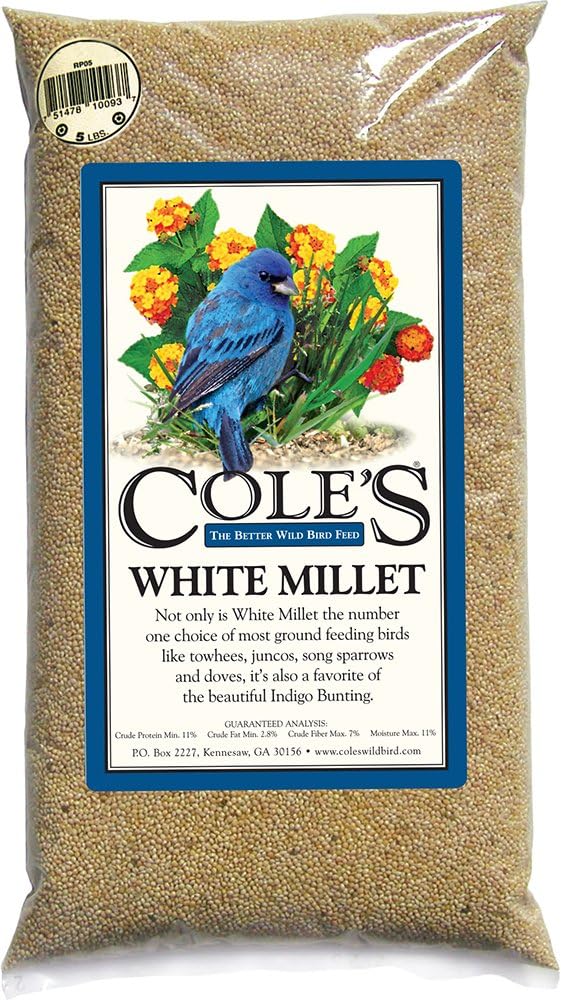
White Millet is the number one choice of most ground feeding birds. Birds prefer White Millet over all similar grain varieties like red millet and red milo. Additionally, Indigo and Painted Buntings as well as Scarlet Tanagers seem particularly attracted to it. Throw it out on the ground straight or mix it with other seeds such as Oil Sunflower to create your own unique blend. Ingredients: White Proso Millet.
Check on AmazonIf you click this link and buy, we earn a commission at no additional cost to you.
Final Thoughts: Setting Realistic Expectations
An active feeder sometimes starts quickly, and sometimes it asks for more patience than anyone expected. I would judge progress by the condition of the seed, the birds already moving through the yard, the suitability of the feeder, and the safety of the location rather than by one promised discovery date. Give a sound setup time to work, but keep watching for specific problems you can actually fix. If you recently hung your very first setup, you should review exactly what to do with a new bird feeder so you can separate normal waiting from an avoidable setup issue.
FAQs
⏳ How long should I wait before changing my seed type?
If the seed is fresh and appropriate for birds in your area, I would usually give the setup several weeks before deciding the food itself is the problem. Change it sooner if the seed becomes wet, moldy, clumped, stale, or obviously full of grain the local birds are leaving behind. Make one change at a time so you can tell what actually improves the feeder.
🍂 Is it faster to attract birds in the fall or the spring?
Neither season is automatically faster. Feeder use changes with natural food, weather, migration, breeding activity, and the species present in your region. A feeder can become especially useful when natural food is limited, but local conditions matter more than the calendar alone.
👀 Can birds smell the food from far away?
For most backyard seed feeders, I would not rely on smell as the way birds discover the food. Location, visibility, familiar feeding activity, and whether birds already move through the yard are more useful things to focus on. Keep the seed fresh because spoiled or moldy food should not be offered, not because you need the feeder to broadcast a strong scent.
🐦 Does the color of my feeder matter for discovery?
For ordinary seed feeders, color is usually much less important than food, placement, visibility, and a safe approach. Hummingbird feeders often use red accents because hummingbirds respond to red floral cues, but seed-eating birds do not need a specific feeder color to find a useful food source.