Does a Bird Feeder Attract Rats?
When people asked me whether their feeder was attracting rats, they were usually already worried enough to consider taking everything down. I would separate two questions: is the feeding station providing food a rat can reach, and is that food helping the rat return repeatedly? A feeder can contribute to the problem, but the useful response is to remove access rather than assume bird feeding itself has to end permanently.
Rats are opportunistic feeders, and bird seed is food whether it is inside the feeder, caught in a tray, stored in a shed, or scattered underneath the station. Spilled seed is often the easiest access point because it can accumulate unnoticed after birds sort through a mix. That distinction matters because reducing what reaches the ground and what remains available overnight can lower the incentive for rodents to keep checking the area.
If rats are appearing around the feeding station, start by changing how food is delivered and cleaned up. Aim to leave as little accessible seed as practical, especially after birds finish feeding for the day. If rodent activity continues despite those changes, temporarily taking feeders down is more responsible than assuming a particular seed or gadget will guarantee the rats disappear.
The Feeder May Reveal an Existing Rodent Problem
One useful distinction is the difference between creating a food opportunity and proving where a rat originally came from. In populated areas, rodents may already be using sheds, woodpiles, drains, dense cover, garbage, pet food, or neighboring properties before anyone notices them at a feeder. A new feeding station can make an existing animal easier to notice, but it can also become an additional food source if seed is consistently available.
You usually cannot prove the original source of a rat from timing alone, but you can determine whether your setup is rewarding repeat visits. Look for seed under the feeder, food left overnight, open storage bags, droppings, gnawing, or a route that lets rodents reach the feeder itself. When you learn how to attract birds successfully, keeping the feeding area clean is part of maintaining the setup, not an optional extra.
Field Note: One pattern I learned not to overlook was what happened after the feeder came down. If rodents were still crossing the yard, checking garbage, or using nearby cover, the feeder was clearly not the only thing supporting their route. That did not make spilled bird seed harmless; it simply meant the whole yard needed to be checked for food and shelter instead of blaming one object.
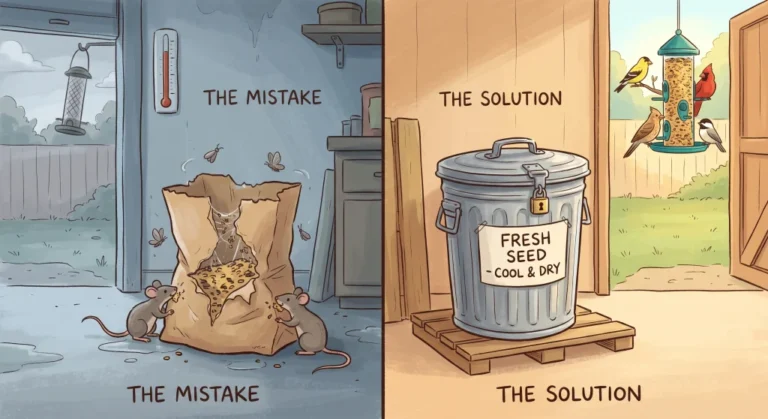
Panicking, throwing away all your expensive bird feeding gear, and assuming your yard is permanently infested because you tried to feed the cardinals.
Checking every accessible food source, reducing feeder spillage, cleaning the ground, securing stored seed, and pausing feeding if rats continue to return.
When Your Setup Actually Contributes to the Problem
Certain feeding habits can make a rodent problem easier to sustain. Low-quality mixes that contain ingredients many common feeder birds leave behind can create more ground waste as birds sort through the food. Cornell notes that mixes heavy in red millet, oats, and similar fillers can lead to substantial waste, which matters here because any edible material left below the feeder is available to rodents.
The problem is not that one particular filler grain has a magical attraction for rats. The problem is accumulation. Rejected grain, intact sunflower kernels, suet crumbs, and other edible debris can turn the area below a feeder into a dependable food source if it is not removed.
Open trays and platforms can also make food easier for non-target animals to reach, especially when they are mounted where rodents can climb or jump onto them. Whatever feeder style you use, the important questions are how much food spills, whether the feeder itself is accessible, and what remains at the end of the day. Some of the physical-exclusion ideas in my guide to how to attract birds but not squirrels can help, but rats and squirrels are not identical problems and no baffle should be treated as a guarantee.
5 Practical Steps to Secure Your Station
The most useful prevention changes are the ones that reduce accessible food rather than simply adding more hardware. If you want to feed birds while lowering rodent risk, focus on ground cleanup, smaller amounts of food, secure storage, and making the feeder harder to reach. These five steps are a practical starting point.
Attach a Seed Catcher Tray
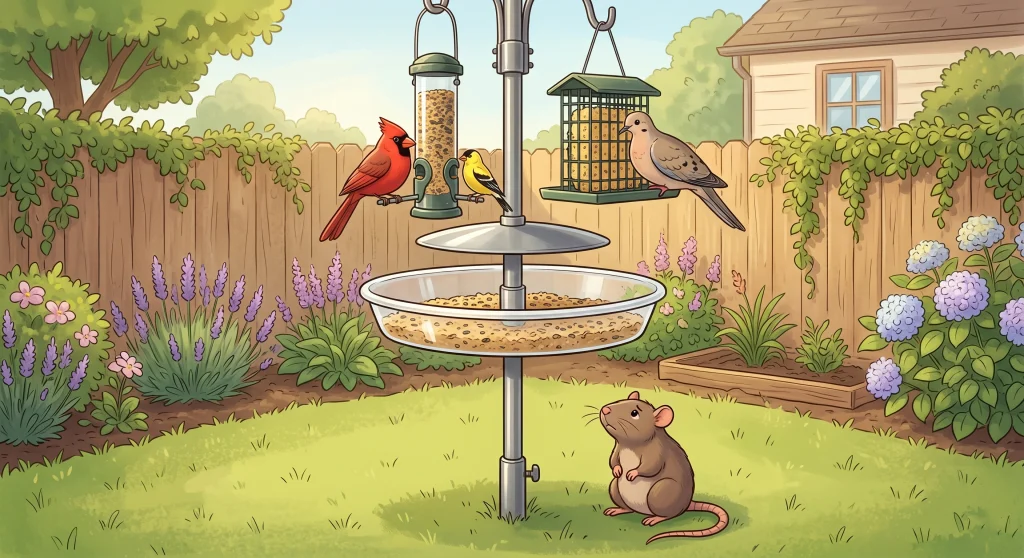
A seed catcher can reduce how much food reaches the lawn, especially under a tube or hopper feeder that produces predictable spillage. It is not a rodent-proof device by itself, because anything caught in the tray is still edible if a rat can reach the pole or tray. Treat the catcher as a cleanup aid and combine it with a mounting setup that limits access.
Empty the catcher frequently enough that spilled food does not sit there overnight or turn wet and moldy after rain. During an active rodent problem, I would check it daily and dispose of unwanted seed in a closed trash container rather than dumping it beside the yard or into an open compost pile. Keeping food elevated helps only if rodents cannot climb to it.

A hanging seed catcher tray that reduces waste by catching fallen seed and husks before they reach the ground. Features 3 drain holes and bird-friendly non-reflective black chains with an S-hook for secure attachment to most feeders. Also doubles as a standalone platform feeder. Bird feeder not included.
Check on AmazonIf you click this link and buy, we earn a commission at no additional cost to you.
Switch to No-Mess Seed Blends
Hulled seed can reduce the volume of empty shells under a feeder, which makes cleanup easier. It does not eliminate rodent food, because every sunflower heart or chip that reaches the ground is still an edible, calorie-dense piece of food. The benefit is less debris and easier monitoring, not a magically rat-proof seed.
Hulled sunflower hearts or a well-designed no-mess blend can make it easier to see and remove whatever birds spill. Because shelled food has less protection from moisture and spoilage, put out modest amounts and keep it dry. If a rat problem is already active, the goal is still to prevent edible food from reaching or remaining on the ground.

Shell-free whole sunflower hearts with no mess, no waste, and no cleanup. High in fat, protein, Vitamin E, Iron, Magnesium, and Vitamin B - free from harmful chemicals or additives. Attracts the same wide variety of birds as traditional sunflower seeds. A year-round favorite across North America.
Check on AmazonIf you click this link and buy, we earn a commission at no additional cost to you.
Bring the Feeders Inside at Night
Rats are often most active after dark, so removing access to bird food overnight can be useful when you are troubleshooting a rodent problem. Bringing a feeder inside only helps if the storage location itself is secure and rodents cannot reach it there. A tightly closed, pest-resistant container is safer than setting a seed-filled feeder loose on a garage floor.
If nightly removal is practical, use it as one part of the cleanup routine rather than expecting it to solve the problem by itself. Ground seed, open storage bags, pet food, compost, and garbage can continue rewarding rodents even after the feeder is gone. If rats keep returning, temporarily stopping feeding altogether gives you a cleaner way to remove that food source.
Use a Metal Pole Mount
A smooth pole can make access harder, but rats are capable climbers and jumpers, so pole material alone is not enough. Mounting location, distance from fences and branches, and a well-sized baffle all matter. Wooden surfaces generally offer more grip, but even a metal pole should be treated as part of an exclusion system rather than a complete barrier.
A properly positioned baffle can reduce climbing access when the feeder is also isolated from nearby launch points. Keep checking for tracks, droppings, gnawing, or food disappearing overnight, because rodents can exploit routes that looked impossible from the kitchen window. Physical exclusion works best when there is also nothing edible accumulating below.
Upgrade Your Seed Storage
Sometimes the easiest food source is not the feeder at all but the bag stored nearby. Paper, thin plastic, and other flexible packaging are poor barriers against rodents and pantry pests. If you store seed in a shed or garage, inspect both the container and the surrounding area for gnawing, droppings, and spilled food.
A sturdy metal container with a tight-fitting lid is a strong choice where rodents are a recurring problem because it resists chewing better than many lightweight bins. Heavy plastic can also work in protected indoor storage if pests cannot reach it. The goal is physical exclusion and spill control, not masking the smell of the seed.

This 92-inch bird feeder pole combines a squirrel-deterring spring-loaded baffle with four adjustable shepherd hooks for hanging multiple feeders or garden accessories. Its nine-prong ground base helps improve stability, while the adjustable six-section pole allows the overall height to be changed for different backyard setups. The station also includes a detachable bird bath and mesh feeding tray, providing several feeding and watering options around one central pole.
Check on AmazonIf you click this link and buy, we earn a commission at no additional cost to you.
Comparing Your Feeding Setup
It is easy for a feeding station to provide more food to rodents than you realize, especially when small amounts accumulate day after day. Hardware can help, but routine matters just as much. The lower-risk setup is the one you can keep clean, inspect easily, and close off when rodent activity appears.
Here is a practical comparison of choices that tend to leave more food accessible and choices that make cleanup or exclusion easier. None of the options in the right column guarantees a rat-free yard, but together they reduce the amount of food available.
| More Food Access | Lower-Access Setup |
|---|---|
| Cheap mixed seed with milo | Hulled seed in small amounts, with daily spill cleanup |
| Wooden post or tree branch | Isolated pole with an appropriately sized baffle |
| Open platform feeder | Feeder with a catcher that is emptied frequently |
| Seed stored in original plastic bags | Seed stored in a tightly closed, pest-resistant container |
| Leaving feeders out 24/7 | Removing food access overnight when rodent activity is active |

A galvanized metal seed storage bucket with a rustic hammered steel finish, holding up to 25 lbs (16.5 quarts) of bird seed. Features a locking lid to prevent spills and deter critters, an integrated side pocket for the included scoop, and a sturdy handle for easy transport. Measures 14 x 14 x 13 inches.
Check on AmazonIf you click this link and buy, we earn a commission at no additional cost to you.
Why Safflower Is Not a Rat-Proofing Strategy
Safflower is often suggested as a pest-deterrent seed because cardinals and several other feeder birds eat it while some squirrels avoid it. That does not make safflower a dependable rat deterrent. A rat is an opportunistic feeder, and I would not leave any edible seed accessible on the ground simply because the bag contains safflower.
If the birds in your yard already use safflower, offering it can be one way to reduce reliance on mixes that create a lot of rejected grain. Cornell notes that squirrels avoid safflower in some places but eat it in others, which is a good reminder not to treat taste preferences as pest control. For rats, sanitation, exclusion, secure storage, and removal of nighttime food access are the controls I would rely on.
Pro Tips: If you test safflower, do it because the birds you want already accept it and because a single seed type can make waste easier to monitor. Do not use safflower as permission to leave spilled food overnight. If rats are active, clean up every edible seed regardless of type.
Final Thoughts on Keeping Your Yard Clean
Seeing a rat near the patio is a reason to tighten the feeding routine, not automatically a reason to give up bird feeding forever. It does mean the station should be treated as a possible food source until you have shown otherwise. Reduce spillage, clean the ground, secure stored seed, and remove access overnight while you watch what changes.
No feeder setup gives you total control over wild animals. The realistic goal is to make bird food difficult for rodents to obtain and easy for you to clean up. If rats continue visiting after those changes, pause feeding and address the broader rodent problem rather than adding more seed or relying on a single deterrent.

A premium safflower seed that attracts cardinals, chickadees, titmice, and grosbeaks while naturally deterring squirrels, grackles, and starlings. Its bitter taste keeps unwanted visitors away without any extra effort. Can be used alone or gradually mixed with other seed blends to transition your feeder to a more desirable bird-friendly environment.
Check on AmazonIf you click this link and buy, we earn a commission at no additional cost to you.
FAQs
🐀 Do bird feeders attract rats to the house?
Bird feeders can contribute to rat activity when seed is accessible in the feeder, on a catcher tray, in storage, or on the ground below. Keeping the area clean and limiting food access reduces that attraction, but it does not guarantee rats will disappear if other food or shelter is available nearby.
🌙 Should I take my bird feeder in at night?
Removing feeder access overnight can help when rats are active, but only store the feeder where rodents cannot reach it. A sealed, pest-resistant location is better than setting a seed-filled feeder on a garage floor. If rats persist, temporarily stop feeding instead of moving the same food between two accessible places.
🧹 How do I clean up seed from the ground?
Sweep or collect edible seed and debris before it accumulates, with frequency based on how much your feeder spills. During an active rat problem, check the area daily rather than waiting a week. Put unwanted food in a closed trash container instead of leaving it in an open pile nearby.
🌶️ Does cayenne pepper keep rats away from bird seed?
I would not use cayenne-treated seed as the main solution to a rat problem. Even if a taste deterrent reduces feeding by some mammals, it does nothing about spilled food, open storage, garbage, or shelter around the yard. Sanitation, physical exclusion, secure storage, and temporarily removing bird food are more dependable controls than switching from one flavored or bitter seed to another.