The Invisible Reason Birds Abandon Feeders
If birds have stopped visiting and nothing obvious about the feeder location has changed, inspect the food before assuming the yard itself is the problem. Bird seed is not an inert product that can sit indefinitely in a hot garage or damp shed. It can absorb moisture, become moldy, attract insects, and lose quality while the bag still looks perfectly normal from the outside.
Many popular feeder foods contain substantial natural oils, and heat, moisture, oxygen, and storage time all work against freshness. When people ask me how to attract birds, they often focus on the feeder design or where it hangs. Those things matter, but moldy, wet, insect-damaged, or stale food can undermine an otherwise good setup.
Use your own senses as part of the inspection. Seed that smells musty, sour, or otherwise different from when it was fresh deserves a closer look, especially if it has also been exposed to heat or moisture. I would not rely on smell alone, though: visible mold, clumping, insects, webbing, moisture, or sprouting are stronger reasons to discard a questionable batch.
Why Seed Freshness Changes Feeder Use
Birds routinely sort through feeder food rather than consuming every seed they encounter. If you are trying to figure out why birds stopped coming to your feeder, seed condition is especially worth checking when the decline began after a refill or after food sat through warm, damp weather. It is one diagnostic check, not proof that every feeder lull is caused by stale seed.
Oily foods such as sunflower seed, nyjer, peanuts, and suet need more attention than a bag of dry material might suggest. Warm storage and long exposure to air can reduce quality, while humidity introduces the more immediate problem of moisture and mold. In practice, the safest approach is to keep stock cool and dry and to avoid putting out more food than birds will use before conditions degrade it.
When I heard complaints about birds throwing large amounts of seed onto the ground, I learned not to assume there was only one explanation. Birds naturally sort seed, and filler ingredients, empty hulls, wet seed, or poor-quality food can all increase what gets discarded. If the amount of rejected food suddenly changes, inspect the batch and feeder condition before blaming the birds for being messy.
The Float Test: A Practical Quality Check
One practical screening trick used in bird-feeding retail is the float test. It can help reveal an unusual amount of very light or empty material in a batch, but it cannot tell you whether seed is safe, rancid, moldy, or nutritionally sound. Treat it as one rough clue alongside a normal visual and physical inspection.
Field Note: When someone blamed the feeder itself, one of the first things I learned to check was the food coming out of it. A surprising amount of dust, empty material, moisture, webbing, or clumping could explain more than changing the feeder design ever would. The float test can add one more clue, but I would never use it by itself to declare a batch good or bad.
To try it, place a small sample in water and look at how much obviously light material floats. Empty husks and some low-density pieces may rise while denser seed sinks. That does not mean every floater is rancid or every sinking seed is fresh, so do not use the result as a substitute for checking moisture, mold, odor, insects, and storage history.
Keep in mind that this is a rule of thumb, not a scientific measurement. A few floaters may simply be empty husks or debris. If an unusually large share of the sample floats, inspect the bag more closely and compare it with a fresh batch, but discard the food based on actual spoilage or contamination signs rather than the float test alone.
Visual and Physical Signs of Bad Seed
Visible and physical signs are more useful than the float test for deciding whether food should go into a feeder. Knowing how to store wild bird seed properly also means recognizing moisture, mold, pest activity, or other contamination before birds are exposed to it.
If a bag is moldy, wet, heavily infested, or obviously contaminated, do not try to hide the problem by mixing it into fresh food. Here is what I look for:
- Webbing and clumps: If you scoop the seed and it comes out in a solid chunk bound together by sticky, silk-like webbing, you have pantry moths. The larvae spin these webs as they feed on the seed.
- Sprouting: Germination tells you the seed has been exposed to enough moisture to start growing. That same moisture can support mold, so I would discard sprouted seed from a storage bag or feeder rather than trying to dry and reuse it.
- Excessive dust or debris: Some dust is normal, but a sudden increase in powder, broken pieces, webbing, holes, or live insects deserves investigation. Dust alone does not prove an infestation.
- Musty or sour odors: An unusual musty smell can accompany damp or spoiled food. Use odor together with moisture, mold, clumping, and storage history rather than relying on a specific “fresh seed” smell.
Choosing the Right Bird Seed Storage Container
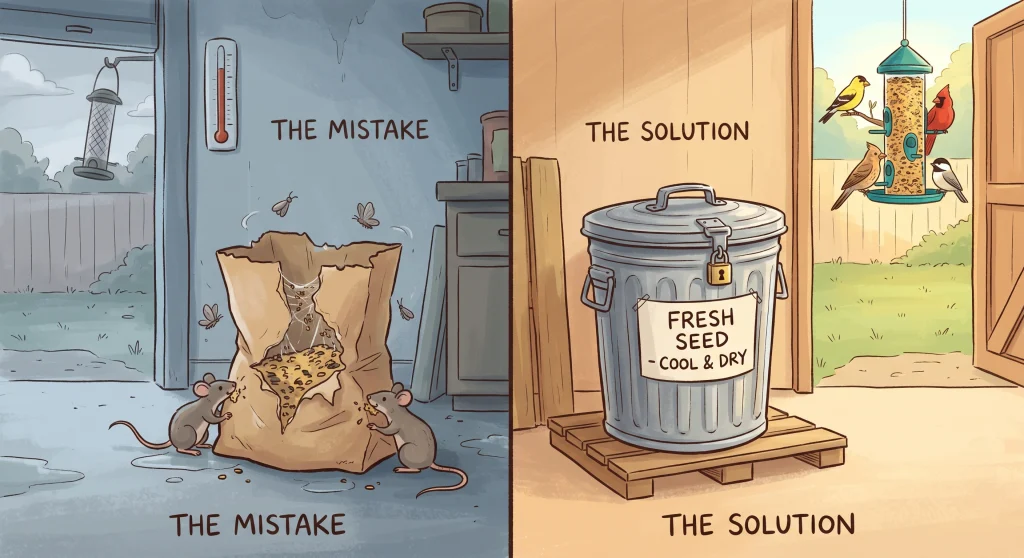
Once a bag is open, the storage goal is simple: keep the food cool, dry, clean, and inaccessible to pests. Leaving an open paper or thin plastic bag on a damp garage or shed floor makes all four of those goals harder. A tightly closed container in a dry location gives you much more control.
Heavy plastic bins can work well indoors when they close tightly and rodents cannot reach them, but chew resistance matters in garages and sheds. Mice, rats, or squirrels can damage some plastic containers, while metal is much harder for them to chew through. Whatever material you use, keep the lid tight and inspect the container for pest access or contamination.
Rolling the top of the paper bag down and leaving it on the concrete floor of a damp garage or shed.
Using a tightly closed, pest-resistant container kept off damp surfaces in a cool, dry spot.
A sturdy metal container with a tight lid is a particularly practical choice where rodents are a recurring problem because it resists chewing better than many plastic totes. Glass, metal, or heavy plastic can all work in protected storage when they seal well. The bigger priorities are keeping seed dry, limiting heat, and preventing pests from reaching the food.

A galvanized metal seed storage bucket with a rustic hammered steel finish, holding up to 25 lbs (16.5 quarts) of bird seed. Features a locking lid to prevent spills and deter critters, an integrated side pocket for the included scoop, and a sturdy handle for easy transport. Measures 14 x 14 x 13 inches.
Check on AmazonIf you click this link and buy, we earn a commission at no additional cost to you.
Shelf Life: Not All Seeds Age the Same Way
You cannot treat every bird food exactly the same way. Shelled foods have less physical protection than intact seed, and hot, humid storage makes moisture and spoilage more likely across the board. Rather than relying on a universal calendar, judge how much to buy by the food type, your storage conditions, and how quickly your feeders actually turn it over.
Shelled peanuts and sunflower hearts deserve extra attention because removing the outer covering leaves more of the food exposed. Nyjer also benefits from buying smaller amounts and keeping it dry, especially in feeders that can easily be soaked by rain. Black oil sunflower still needs cool, dry storage; its hull is relatively thin, so I would not treat it as unusually resistant to poor storage conditions.
| Seed Type | Cool/Dry Storage | Hot/Humid Storage |
|---|---|---|
| Black Oil Sunflower | Stores well when kept sealed and dry; inspect before refilling. | Buy less at a time and watch closely for moisture, insects, or musty odor. |
| nyjer (thistle) | Use modest quantities and keep the container tightly closed and dry. | Refresh in small batches rather than letting seed sit through damp weather. |
| Mixed Seed Blends | Storage depends on the most perishable ingredients in the mix. | Smaller purchases make it easier to avoid stale or moisture-damaged leftovers. |
| Shelled Peanuts / Sunflower Hearts | Keep sealed and use steadily because the exposed food has less protection. | Put out small amounts and replace promptly if damp, stale, or moldy. |
The practical pattern is more useful than an exact expiration date. Shelled foods and seed exposed to hot, humid conditions deserve smaller purchases and faster turnover, while all bird food should be discarded if it becomes moldy or contaminated. No-mess food is convenient, but convenience does not remove the need to keep it dry and fresh.

A premium nyjer (thistle) seed specially loved by finches, including the desirable Goldfinch. With around 150,000 seeds per pound, it delivers exceptional value and countless feeder visits. High in energy and extra clean, it's ideal for use in finch feeders with small holes and tiny perches. Available in a 10-pound bag with a convenient velcro press-lok closure.
Check on AmazonIf you click this link and buy, we earn a commission at no additional cost to you.
The Trap of Buying in Bulk
One storage mistake I saw repeatedly started with buying far more seed than a yard could use while it was still in good condition. A large bag may cost less per pound, but that only saves money if you can store it properly and move through it at a reasonable pace.
A yard with a couple of small feeders may take a long time to work through a bulk bag, especially when seasonal feeder use drops. During that time the remaining stock keeps experiencing the conditions in your garage, shed, or storage room. If you regularly reach the bottom of a container and find old, dusty, damp, or insect-damaged food, the bag size is larger than your setup can use efficiently.
I would size purchases around your actual turnover rather than a fixed number of weeks. Buy enough that you can keep the stock sealed, cool, and dry and finish it before storage quality starts becoming questionable. In hot or humid weather, smaller purchases and smaller feeder fills make that easier.

Wagner's Four Season Sunflower Seed is 100% black oil sunflower seed. Sunflower seed is the favorite seed of most wild birds. It is high in energy and has a thin shell making it easy for all birds to consume. Use tray feeders or hopper feeders to attract sunflower loving songbirds. Cardinals, Chickadees, Finches, Nuthatches, Woodpeckers and much more. Trust your backyard birds to the experts at Wagner’s.
Check on AmazonIf you click this link and buy, we earn a commission at no additional cost to you.
Closing Thoughts on Seed Freshness
Attracting birds doesn’t require complicated formulas or expensive gadgets. It mostly comes down to providing a reliable, safe, and nutritious food source. Treat your bird seed less like hardware and more like groceries. Keep it cool, keep it dry, and keep it moving.
If you suspect your current batch has turned, the best thing you can do is dump it, clean the feeder, and start fresh. To figure out what type of food you should be putting in that clean feeder, check out my guide on choosing the best bird seed for the specific birds you want to see.

Black oil sunflower seed with high oil content for energy and thin hulls that are easy for birds to crack. Attracts the widest variety of wild birds, especially smaller songbirds.
Check on AmazonIf you click this link and buy, we earn a commission at no additional cost to you.
FAQs
🧊 Can I store bird seed in the freezer to keep it fresh?
Freezer storage can be useful for protecting dry seed from pantry pests when you have enough space. Keep the seed sealed, and let the closed container come back toward room temperature before opening it so humid air does not condense directly onto cold seed. Do not freeze seed that is already damp or moldy in an attempt to salvage it.
🌧️ What should I do if my bird seed gets wet in the rain?
If seed becomes soaked, check it promptly rather than leaving a wet mass in the feeder. Discard seed that remains damp, clumps together, smells musty, or shows any mold, then clean and fully dry the feeder before refilling. In persistently wet weather, smaller fills reduce the amount of food at risk.
🗑️ How do I dispose of rancid bird seed safely?
Moldy, heavily infested, or contaminated seed should be contained and put in household trash rather than scattered outdoors. That keeps questionable food away from birds and reduces the chance of feeding rodents or other wildlife around the disposal area.
🪲 Are pantry moths in bird seed dangerous to the birds?
A heavy pantry-moth infestation is enough reason to replace the seed. Webbing, larvae, debris, and damaged food make the batch difficult to keep clean and dry, and infestation can spread through stored products. Discard heavily infested seed and clean the storage container and surrounding area before adding a new bag.
☀️ Does sunlight make bird seed go bad faster?
Heat and direct sun are good reasons to choose a cooler storage location. Container transparency matters less than whether the seed is tightly closed, dry, shaded, and protected from large temperature swings. A heavy plastic container in a cool indoor space can be a better choice than a metal can sitting in a hot sunny shed.