The Container You Store Your Seed In Matters Almost As Much As What Seed You Buy
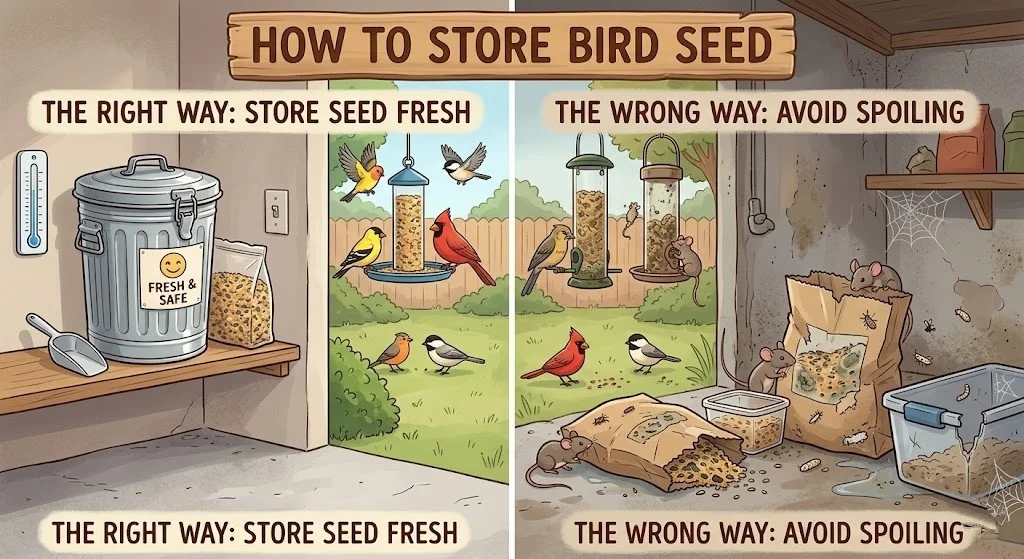
If you want to know how to store bird seed, start by treating it like a dry food product rather than something that can sit indefinitely in a corner of the garage. Seed can absorb moisture from humid air, stored-food insects can get into poorly protected packages, and damp seed can develop mold. I have seen people focus on feeder quality while the open bag beside the wall was the weak point in the whole setup. Once the seed is compromised in storage, a clean feeder cannot make it fresh again.
The practical goal is simple: keep the seed cool, dry, covered, and protected from pests. Cornell and extension guidance consistently emphasize dry storage and discarding moldy seed rather than trying to rescue it. Birds may also avoid old or spoiled seed, so poor storage can look like a feeder problem when the food is really the issue. Good bird seed storage is less about chasing a perfect shelf-life number and more about controlling moisture, heat, pests, and how long a bag sits unused.
Choosing the Right Bird Seed Container: Metal vs. Plastic
An unopened bag may be convenient, but paper and thin plastic packaging are poor defenses once rodents or pantry pests find the seed. Cornell’s Project FeederWatch team specifically recommends moving stored bird seed out of a loose garage bag and into a metal bin when rodents are a concern. Extension sources also accept thick plastic or metal containers with secure lids for dry stored foods. The important distinction is not that plastic automatically ruins seed, but that metal is much harder for rodents to chew through.
For a garage, shed, or other place where mice may be active, I prefer a galvanized metal bird seed container with a tight-fitting lid. Galvanized cans are durable, easy to clean, and commonly recommended for feed storage. I would not choose metal because painted metal is automatically unsafe; the real advantage is pest resistance and a lid that closes securely. Whatever container you buy, inspect the interior for rust, peeling coatings, damaged seams, or anything else that would make it difficult to keep clean.
Heavy-duty plastic can work well indoors or in another rodent-protected area. It is lighter and often easier to handle, but it should still have a lid that closes completely. If mice or rats are already present, I would move up to metal rather than expecting a plastic tote to function as a rodent barrier. Glass can also protect small quantities very well, although it is less practical for large bags because of weight and breakage risk.
Regardless of material, do not treat a loose lid as good enough. A tight-fitting or latching lid helps keep out pests and reduces exposure to humid air. The container should also be easy enough to open, empty, and clean that you will actually maintain it. A huge bin that never gets emptied can become its own storage problem.

A galvanized metal seed storage bucket with a rustic hammered steel finish, holding up to 25 lbs (16.5 quarts) of bird seed. Features a locking lid to prevent spills and deter critters, an integrated side pocket for the included scoop, and a sturdy handle for easy transport. Measures 14 x 14 x 13 inches.
Check on AmazonIf you click this link and buy, we earn a commission at no additional cost to you.
Location: Where to Keep Seed Fresh and Dry
Where you keep the container matters because heat and moisture are two of the main things working against stored seed. A cool, dry, shaded place is the target. Penn State recommends storing bird seed in a cool, dry location, and Cornell gives the same basic advice for summer stockpiles. Stable conditions are useful, but you do not need to maintain a special exact temperature for ordinary backyard use.
Garages and sheds can work, but they deserve more attention than an indoor closet because temperature and humidity can swing sharply with the weather. A hot, damp garage is especially unforgiving in summer. If the space smells humid, regularly gets condensation, or allows rainwater to reach stored items, move the seed somewhere better rather than assuming a closed bin solves every moisture problem. A basement or utility room can be a good option only if that particular space is dry rather than damp.
If the container must stay in a garage or shed, keep it away from leaks and places where water collects. Elevating it on a low shelf can make the base easier to inspect and keeps it out of incidental floor moisture, but concrete itself does not magically pull water through an intact metal or plastic container. I care more about actual wetness, condensation, pest access, and whether the lid stays closed. Check the area around the bin periodically for droppings, gnaw marks, insects, spilled seed, or dampness.
The Hidden Trap: Why You Must Clean Your Storage Bin
Field Note: One storage mistake I saw more than once was pouring a fresh bag into a bin that still held old seed dust, broken kernels, or damp residue at the bottom. If the previous batch had gone moldy or attracted insects, adding new seed without cleaning the container simply carried the problem forward. The new bag was not the problem; the storage environment was.
Seed dust and fragments collect at the bottom of a bin over time. Those leftovers can provide food for pantry pests, and any damp residue gives mold a better opportunity to develop. Stored-grain guidance puts sanitation near the top of the list for exactly this reason: old grain and debris should be removed before new material goes into storage. The same logic scales down cleanly to a backyard seed bin.
I clean the container whenever it empties, and sooner if I see moisture, insects, mold, or spoiled residue. Empty it completely, wash away debris with soap and water when the material allows it, rinse it, and let it dry fully before fresh seed goes back in. Clean the scoop as well if it has contacted contaminated seed. That is the same basic discipline I use when explaining how to clean a bird feeder: remove old material first, clean the surface, and do not add fresh food while anything is still damp.
Shelf Life and Quantity: How Much Seed to Buy at One Time
There is no useful universal rule that says a particular backyard seed is good for exactly two, three, or four months. Storage life changes with moisture, temperature, packaging, whether the seed is whole or hulled, and how fresh it was when you bought it. Project FeederWatch notes that nyjer can grow stale relatively quickly even when kept dry, while warm, damp conditions make spoilage a concern for seed in general. That is why I would rather match bag size to your actual feeder turnover than buy a huge bag just because the unit price looks better.
A good routine is to use older seed first and buy quantities you can rotate through while the seed still smells clean and remains dry and loose. During periods of heavy feeder use, a larger bag may move quickly enough to make sense. During hot, humid weather or a seasonal lull, smaller purchases reduce the amount sitting in storage. When you store wild bird seed, turnover is one of the few freshness controls completely under your control.
| Seed Type | Storage Sensitivity | Storage Notes |
|---|---|---|
| Nyjer (Thistle) | High | Can grow stale relatively quickly even when kept dry. Buy smaller amounts if your finches are not using it fast. |
| Black Oil Sunflower | Moderate | Keep whole seed cool and dry, and discard it if you find mold, insects, damp clumps, or a musty odor. |
| Hulled Sunflower (No-Mess) | High | With the protective hull removed, the edible kernel is more exposed to moisture and air. Favor smaller quantities and fast turnover. |
| Safflower | Moderate | Store it like other whole dry seed: sealed from pests, protected from moisture, and rotated rather than held indefinitely. |
| Mixed Seed | Depends on the blend | Different ingredients age differently, so judge the whole mix by its condition and the least stable ingredients rather than one fixed date. |
Nyjer deserves extra attention because stale seed is a common reason a finch feeder becomes less active. Do not rely on color alone to decide whether it is usable. Check whether it smells clean, remains dry and loose, and is being eaten normally; if it is musty, moldy, damp, or clearly rejected after sitting too long, replace it. Hulled seed also rewards careful storage because the kernel no longer has its intact outer shell. If you are comparing the best bird seed options for your yard, factor turnover and storage conditions into the decision instead of buying only by price per pound.

Wagner's Four Season Sunflower Seed is 100% black oil sunflower seed. Sunflower seed is the favorite seed of most wild birds. It is high in energy and has a thin shell making it easy for all birds to consume. Use tray feeders or hopper feeders to attract sunflower loving songbirds. Cardinals, Chickadees, Finches, Nuthatches, Woodpeckers and much more. Trust your backyard birds to the experts at Wagner’s.
Check on AmazonIf you click this link and buy, we earn a commission at no additional cost to you.
Recognizing Seed That Has Gone Bad
Even a good container cannot rescue seed that becomes wet or arrives with an insect problem. The most important warning signs are mold, a musty or sour odor, dampness, unusual clumping, visible insects, or webbing from stored-food moth larvae. Penn State and Cornell both advise discarding moldy bird seed rather than feeding it. I would rather lose part of a bag than gamble with visibly spoiled food.
Clumping deserves context. A little compression from the weight of a bag is not the same as seed cemented together by moisture, so look at the whole picture. Damp clumps, visible fungal growth, or a musty smell mean the batch should go. Do not try to bake, sun-dry, or mix spoiled seed with fresh seed to save it. Drying does not undo contamination that has already occurred.
Odor is useful because a bad batch often announces itself before you can see the problem clearly. Fresh dry seed should not smell musty, fermented, sour, or rancid. If you are unsure, inspect deeper in the container instead of judging only the top layer. Good bird feeder tips start before the seed reaches the feeder, and refusing questionable seed is one of the easiest preventive steps you can take.
You should also inspect the bin for pest activity before you scoop. Here is a quick checklist of things to watch for:
- Look for silk-like webbing, larvae, or moths around the seed, which can indicate Indianmeal moth activity.
- Check for small beetles, shed skins, holes in kernels, or unusually heavy fine debris associated with stored-food insects.
- Feel the seed. It should be dry and loose rather than damp, sticky, or bound together by moisture.
- Inspect the lid, seams, scoop, and the storage area around the bin, not just the top layer of seed.
If you find a clear pantry-pest infestation, the simplest backyard-feeding response is to discard the infested seed and clean the container and surrounding storage area. Extension guidance for stored foods emphasizes finding and removing the infested source because insects can spread to other dry goods. Do not spray insecticide into a bird seed bin or try to mask an infestation by mixing the old seed with a new bag.
Final Thoughts: A Simple Storage Routine
Proper storage does not need an elaborate system. Use a container that closes securely, choose metal when rodent pressure makes that worthwhile, and keep the seed somewhere cool and dry. Rotate older stock first, clean out residue before refilling an empty bin, and buy an amount that matches how quickly your feeders are actually using it.
I also make a habit of checking the seed itself instead of trusting the calendar. Dry, clean seed with no mold, insects, webbing, or off odor is what you want. If a batch becomes wet, moldy, badly infested, or smells wrong, discard it and reset the container before opening a fresh bag. That routine protects both the money you spent on seed and the birds you intended to feed.
FAQs
🥶 Can I store bird seed in the freezer to make it last longer?
You can store dry seed in a freezer if it is sealed in a moisture-resistant container, but most backyard feeders do not need to freeze their everyday supply. Cool, dry storage with good turnover is simpler. If you do freeze seed, keep the container closed while the seed warms back up so humid room air is less likely to condense on cold seed.
🪣 Is it safe to use a plastic trash can for seed storage?
Yes, a sturdy heavy-plastic container with a secure lid can work in a dry, rodent-protected location. Metal is the better choice where mice or rats are active because rodents can gnaw many plastics. Whichever material you use, keep the bin clean, dry, and fully closed.
🐭 How do I keep mice out of my bird seed bin?
Use a metal container with a tight-fitting lid and clean up spilled seed around the storage area. Metal is much more resistant to gnawing than bags or ordinary plastic bins, but no container replaces basic rodent control if mice already have access to the building. Check the lid and seams regularly for damage or signs of entry.
🐛 What should I do if I find bugs in my bird seed?
If the seed is clearly infested with pantry pests, I would discard it, clean the bin and scoop, and inspect nearby dry goods before opening another bag. Freezing can kill insects in some stored foods, but it does not make moldy, damp, foul-smelling, or otherwise spoiled bird seed suitable to feed. For backyard feeding, removing the infested source is the cleanest reset.
🌧️ Will seed go bad if I store it on an outdoor patio?
It can, especially if the container is exposed to rain, humidity, direct sun, large temperature swings, or pests. A weather-protected patio may work with a secure, water-resistant container, but indoor cool-dry storage is usually easier to control. Wherever you store it, inspect the seed rather than assuming a closed lid guarantees freshness.