The Problem With Using Bleach on Your Deck
When figuring out how to clean bird poop off deck surfaces, the mistake is reaching for a strong chemical before checking what the deck finish can tolerate. Concentrated chlorine bleach can discolor wood and damage some coatings, but diluted bleach is also used in certain wood-cleaning products. The useful rule is simpler: do not pour household bleach directly onto a stained deck, and do not improvise concentrations. Use a cleaner approved for the wood and finish you actually have.
At the store, deck complaints often had two separate parts: the mess under the feeder and the cleanup method chosen afterward. That distinction matters. A few droppings are usually a manageable maintenance problem; turning a narrow pressure-washer jet or an unsuitable chemical loose on a stained surface can create a second problem that is harder to fix.
Field Note: When someone asked how to stop feeder mess from ruining a deck, I found it useful to separate prevention from cleanup. Moving the feeder or catching some debris reduces how often you clean; using a gentler method protects the finish when you do clean. One fix does not replace the other.
Dry droppings become difficult mainly because the material loses moisture and adheres to the surface. On rough or weathered boards, residue can also settle into the texture of the wood. That is why soaking first and working gently is usually more useful than treating the stain as a chemistry experiment.
What Makes Dried Bird Droppings Stick
Bird droppings contain fecal material plus urinary waste. The pale portion contains urates, including uric acid and its salts, rather than being a lump of pure concentrated acid. Droppings can stain or affect finishes when they sit for long periods, but it is too simplistic to say uric acid steadily “eats” through every deck sealer. Finish type, exposure time, moisture, sunlight, and the condition of the coating all matter.
A quick hose spray may not remove a dried deposit because the residue needs time to rehydrate. Start by wetting the spot and letting the moisture soften it before you scrub. Hard scraping or aggressive brushing can damage a finish, but ordinary gentle scrubbing does not somehow drive uric acid deeper into the wood.
A season of buildup is much harder to clean than a few fresh spots because there is more dried organic material and more opportunity for staining. The goal is to loosen and remove that residue without stripping or roughening the finish. You do not need to “neutralize” uric acid to do that.
Why Standard Deck Cleaners Cause Damage
Household degreasers, disinfectants, and deck cleaners are not interchangeable. Some may be too aggressive for a particular stain or sealer, while a purpose-made deck cleaner may be exactly what the coating manufacturer recommends. Check the label and, when possible, the finish manufacturer’s maintenance instructions before applying a cleaner across a visible area.
Straight household bleach is a poor default for spot-cleaning a stained deck because it can discolor wood and affect coatings, and concentrated chlorine is unnecessary for simply removing a few droppings. That is different from saying every chlorine-containing wood cleaner is unsafe. Some products use carefully diluted sodium hypochlorite for specific jobs. Follow the product and finish directions rather than making a strong bleach solution yourself.
Another common mistake is using a narrow pressure-washer jet at close range. Excess pressure can raise or damage wood fibers and can strip an existing finish. A pressure washer is not automatically forbidden on wood, but it needs the right pressure, a broad fan pattern, adequate distance, and technique suited to the species and finish. For a few feeder droppings, a hose and soft brush are usually simpler and lower risk.
Pouring concentrated household chemicals directly onto a stained deck, then attacking the spot with a wire brush or a narrow high-pressure jet.
Wet the droppings first, use a mild cleaner or a product specifically compatible with the deck finish, follow its stated dwell time, scrub gently with a nonmetal brush, and rinse thoroughly.

Heavy-duty 9.8 inch brush head with soft-medium PP bristles that lift dirt and grime without scratching wood, composite, or concrete. Handle extends up to 53.89 inches to reach corners, gutters, and under furniture with no bending. Ergonomic angle reduces effort, detachable sections for easy storage. Great for decks, patios, driveways, pool areas, and garage floors.
Check on AmazonIf you click this link and buy, we earn a commission at no additional cost to you.
Where Enzyme Cleaners Fit
Bio-enzymatic cleaners are one option for organic residue, especially when a product is specifically labeled for bird droppings or pet waste. But “enzyme cleaner” does not automatically mean safest for every deck, and it is too broad to say these products simply digest uric acid into harmless byproducts. Formulas differ. What matters is whether the label says the product is suitable for the surface and finish you have.
Do not assume an enzymatic formula will ignore paint, stain, or sealant. Surfactants, solvents, fragrances, and other ingredients vary between products even when “enzyme” appears on the label. Spot-test an inconspicuous area first and follow the manufacturer’s dilution and rinse instructions.
If you want to try an enzyme cleaner, check for explicit surface compatibility, outdoor-use directions, and instructions for sealed or stained wood. A standard deck cleaner can also be appropriate when the deck or stain manufacturer recommends it. The product category matters less than using a cleaner designed for the surface and following the label.

Super-concentrated natural enzyme formula, one quart makes a full gallon. Breaks down bird droppings fast and neutralizes odors so birds stop coming back. Just spray, wait, and rinse off with a hose. Works on carpets, cages, drains, cars, and more. 100% non-toxic, bio-degradable, and safe for humans and the environment.
Check on AmazonIf you click this link and buy, we earn a commission at no additional cost to you.
Step-by-Step Deck Cleaning Process
Warning: Do not dry-sweep a large, dusty accumulation of bird droppings. CDC guidance recommends wetting accumulated material before disturbing it to reduce airborne dust. Fresh droppings on ordinary outdoor surfaces are not the same exposure scenario as a heavily contaminated roost, but large accumulations deserve more caution and may warrant professional cleanup.
For ordinary feeder mess on a deck, use a low-dust, low-abrasion sequence and adjust it to the cleaner and finish manufacturer instructions:
- Step 1: Remove loose debris without raising dust. Sweep away seed hulls that are not contaminated, but wet dried droppings before disturbing them. For a larger dusty accumulation, avoid dry sweeping altogether.
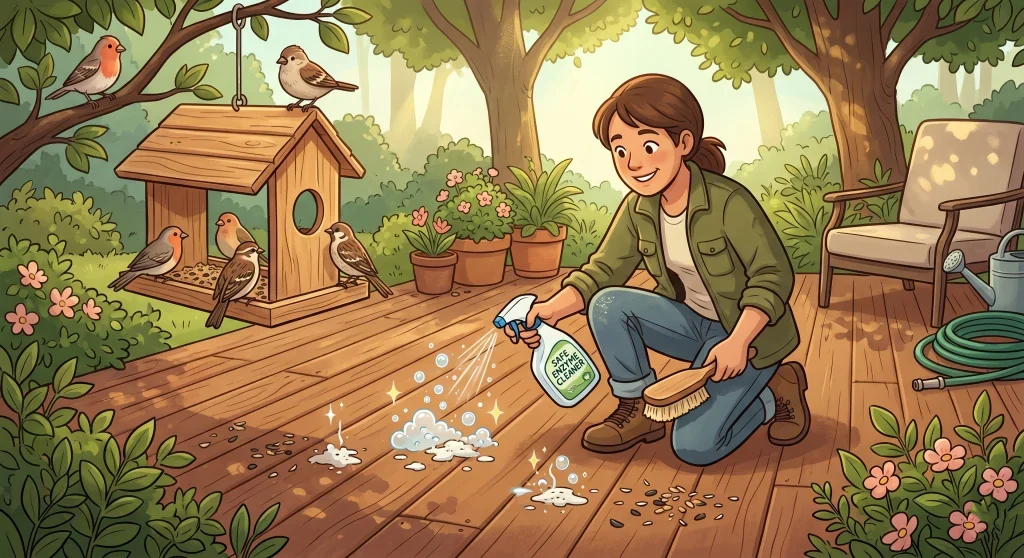
- Step 2: Soften the residue. Wet the affected spots with water or apply your chosen finish-compatible cleaner according to its label. Give dried material time to soften instead of immediately scraping at it.
- Step 3: Follow the stated dwell time. If the cleaner specifies a contact or dwell time, use that number rather than assuming every product needs ten to fifteen minutes. Do not let a cleaner dry on the wood unless its label specifically allows it.
- Step 4: Scrub gently and rinse. Use a soft or medium nonmetal brush in the direction of the grain, then rinse thoroughly with a garden hose. Repeat the soak-and-scrub cycle rather than increasing force if some residue remains.
This gives you a conservative routine that removes ordinary feeder mess while minimizing unnecessary stress on the wood and coating.

NIOSH-approved N95 with 95% filtration against non-oil particles and aerosols. Cool Flow exhalation valve makes breathing up to 50% easier than non-valved masks. Adjustable nose clip for a secure seal, stretchable braided headbands for comfort, and lightweight enough for long wear. Disposable and convenient.
Check on AmazonIf you click this link and buy, we earn a commission at no additional cost to you.
Prevention: Moving the Feeder vs Using Seed Catchers
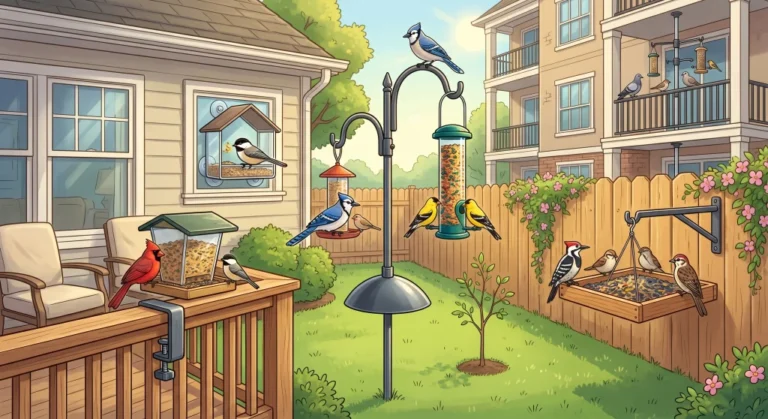
Cleaning is easier when less material lands on the deck in the first place. If the yard layout allows it, moving the feeder away from the patio can dramatically reduce direct droppings, hulls, and spilled seed on the boards. Our broader bird feeder tips cover the other placement tradeoffs, so do not move a feeder into a worse location just to protect the deck.
If you cannot move the feeder, a catcher tray can intercept some seed, hulls, and droppings before they reach the deck. It will not catch everything, and a wide tray can become another place where wet seed and waste collect. Empty it often and clean it whenever residue starts building up.
Wet seed and droppings should not be allowed to build up in the tray. The same basic hygiene principles behind how to clean a bird feeder apply here: remove spoiled material, wash contaminated surfaces, and let them dry before more food accumulates. A catcher reduces deck cleanup only if you are willing to maintain it.
| Prevention Method | Pros | Cons |
|---|---|---|
| Moving the feeder over grass | Greatly reduces direct feeder mess landing on the deck. | Requires yard space and a new mounting pole installation. |
| Seed catcher tray | Catches some droppings, seed, and hulls before they reach the wood. | Adds another surface that needs regular emptying and cleaning. |
| Switching to hulled seed | Eliminates the seed shell mess entirely from the patio area. | Does not stop droppings, only reduces the seed waste. |

This hanging bird seed catcher tray sits below a feeder to collect dropped seed and husks before they reach the ground. It can also be used as an open platform feeder and is designed to fit many common bird feeder setups. Three drainage holes help water escape, while the black chains and S-hook provide a simple hanging attachment for backyard feeding stations.
Check on AmazonIf you click this link and buy, we earn a commission at no additional cost to you.
Final Thoughts
Droppings under an active feeding station are a normal maintenance problem, but the cleanup does not need to become a refinishing project. Wet dried deposits before disturbing them, use a cleaner compatible with the deck finish, and choose a nonmetal brush before you reach for stronger chemicals or more pressure.
An enzyme cleaner can be useful when its label specifically fits the surface, but it is one option rather than a guaranteed cure. Regular cleanup and moving or modifying the feeder usually matter more than the brand of cleaner. The safest routine is the one that removes the residue without changing the color, texture, or protective coating of the deck.

Natural enzyme formula at 1:1 concentration, one gallon makes two gallons ready to use. Breaks down droppings fast and neutralizes odor so birds stop returning. Works on carpets, cages, drains, cars, and more. Just spray and rinse off with a hose. 100% non-toxic, bio-degradable, and safe for humans and the environment.
Check on AmazonIf you click this link and buy, we earn a commission at no additional cost to you.
FAQs
🐦 Can I use dish soap to clean bird poop off my deck?
A small amount of mild detergent can be enough for ordinary droppings once they have been softened, but compatibility still depends on the deck finish. Spot-test first and rinse thoroughly. If residue remains, move to a cleaner approved for the coating rather than automatically choosing a stronger household chemical.
🧹 Do I really need to wear a mask to clean my deck?
Do not dry-sweep a large dusty accumulation. CDC guidance recommends wetting accumulated droppings before removal to reduce airborne dust, and larger contaminated areas can require respiratory protection or professional cleanup. A few fresh droppings on an outdoor deck are not the same risk scenario as a heavily contaminated roost.
🌧️ Will the rain wash the bird poop away eventually?
Rain may soften or wash away some fresh material, but dried residue can remain on textured or coated wood. It is better to clean visible buildup than to wait for weather to do the job. Soak stubborn spots first and scrub gently rather than attacking them dry.
🧽 Is a wire brush safe for cleaning wood decking?
A wire brush is a poor choice for routine cleaning on stained wood because it can scratch coatings and roughen softer boards. Use a nonmetal soft or medium brush that the finish manufacturer considers suitable.
🧪 Does vinegar work for removing bird poop from a patio?
Do not choose vinegar based on the idea that bird droppings need acid-base neutralization. Cleaning performance and finish compatibility matter more. Some wood finishes may tolerate a dilute vinegar solution and others may not, so follow the deck or coating manufacturer’s guidance and spot-test before using it.