
Raccoons at Bird Feeders: Why Standard Squirrel Baffles Fail
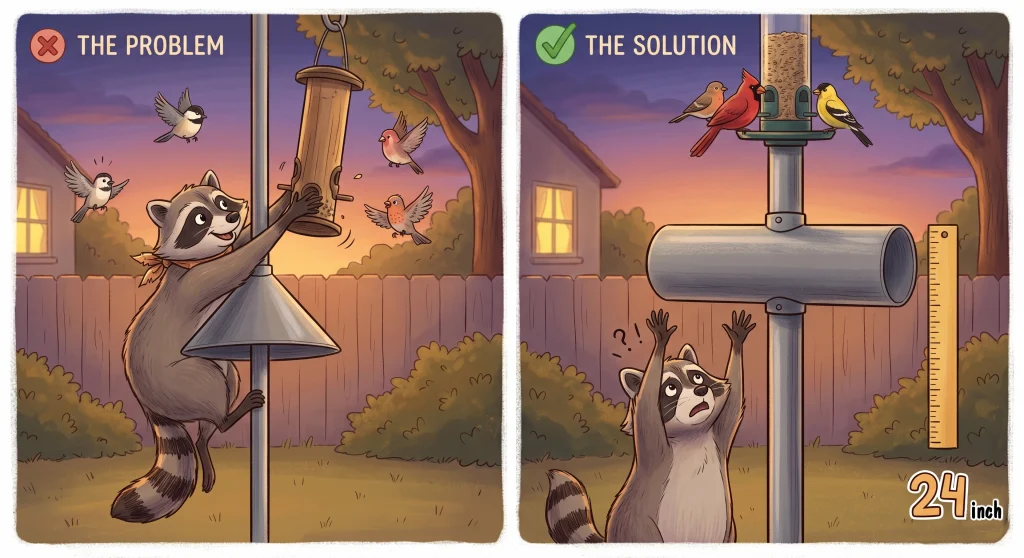
Raccoons At Bird Feeder

Raccoons can do much more damage to a bird feeder than squirrels because they are strong climbers with dexterous paws and enough leverage to pull, twist, and shake feeder hardware. A long smooth barrier on an isolated pole can help, and Washington Department of Fish and Wildlife specifically recommends a 24-inch metal or heavy-plastic barrier
Winter Bird Feeding Schedule: Why You Shouldn’t Leave Seed Out Overnight

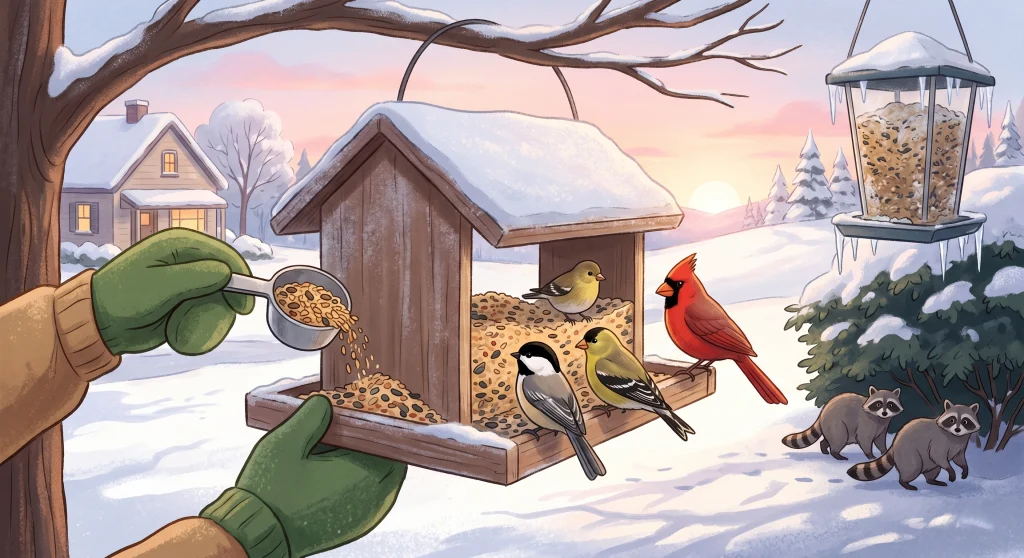
Winter Bird Feeding Schedule

Winter changes how quickly seed gets wet, buried by snow, or consumed, so your refill routine should respond to weather and actual feeder use. You do not need to make every feeder empty before dark, and a full dry hopper does not automatically freeze into a solid block overnight. A better winter bird feeding schedule

How to Protect Bird Feeders From Heavy Snow Loads

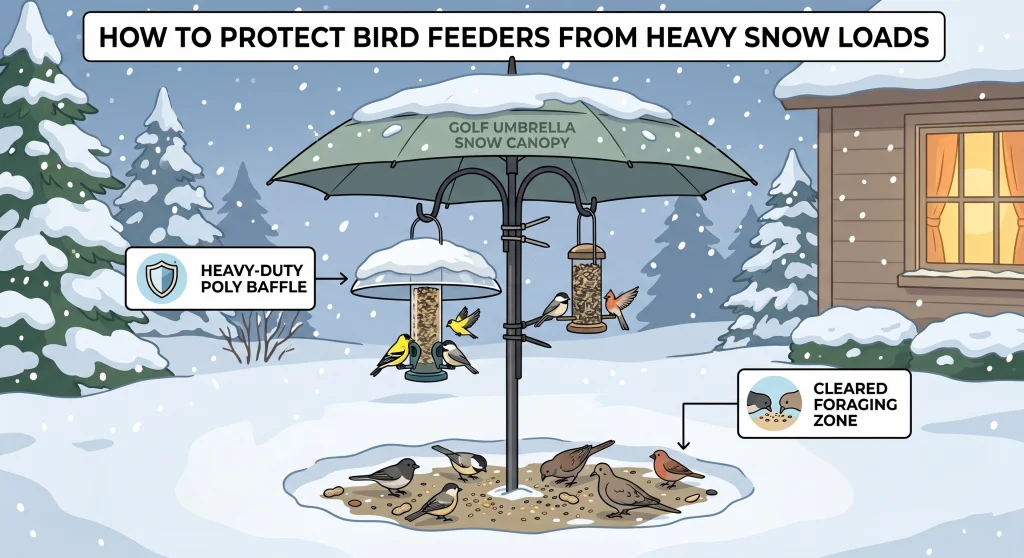
How To Protect Bird Feeder From Heavy Snow

Heavy snow is less about finding one supposedly indestructible cover and more about keeping the feeder accessible, stable, and easy to clear. A wide roof or baffle can reduce accumulation over seed, but the hanger, pole, feeder body, and mounting hardware all need to handle winter conditions together. In deep snow, clear access to the

Bird Feeder Camera: What You Can Actually Identify (And What No AI Can Tell You)

Bird Feeder Camera

The artificial intelligence on a modern bird feeder camera is genuinely impressive, but it also misidentifies species occasionally. Knowing when to trust the software and when to double-check the results is the difference between learning about your local birds and getting frustrated by bad data. Getting the most out of these devices requires understanding their

Bird Feeder Weather Guard: What It Does, What It Doesn’t, and Which Type to Buy

Bird Feeder Weather Guard

A bird feeder weather guard can reduce the rain and snow reaching exposed seed, but it does not make a feeder weatherproof. Wind-driven rain can still get underneath a dome, and humid air can keep seed damp enough for mold to become a problem even when no raindrops hit the ports. The best setup combines

Caged Bird Feeder: The Safer Squirrel Solution (And How to Pick the Right Cage Size)

Caged Bird Feeder

A wire cage bird feeder is one of the safest ways to protect your seed from pests, but most people buy the wrong size. I have watched countless customers realize their setup was failing every spring because they did not check the exact dimensions of the metal grid. This guide explains how cage gaps actually

Squirrel-Proof Bird Feeder: What Actually Stops Squirrels (After Testing the Most Popular Options)

Squirrel Proof Bird Feeder

There are four ways to squirrel-proof a bird feeder, but only one works without any strict placement requirements. After watching people struggle with this for years, I can tell you that most squirrel-resistant bird feeder designs fail because they underestimate the animal. This guide covers how weight-sensitive and caged designs actually work, the hidden safety

Bees and Wasps at Your Hummingbird Feeder: Why Moving It 3 Feet Changes Everything

Bees And Wasps At Bird Feeder

Bees and wasps are coming to your hummingbird feeder for accessible sugar, especially when nectar leaks or sits within reach of the ports. Moving a problem feeder a few feet can temporarily disrupt repeat visits, but there is nothing magical about an exact three-foot distance and insects may find it again. The stronger fixes are

How to Get Rid of Ants Around Your Bird Feeder (Not Just at It)

How To Get Rid Of Ants Around Bird Feeder

An ant moat can stop ants from crossing a hanging route to nectar, but it does not solve ants foraging on the ground below a feeding station. Ground activity is usually a food-source problem first: spilled seed, suet crumbs, nectar drips, and other debris give workers a reason to keep returning. I start by removing

Ant Moat for Bird Feeder: How It Works and Which Type Actually Lasts

Ant Moat For Bird Feeder

An ant moat for a bird feeder is a simple water barrier that can stop ants traveling down a hanger from reaching nectar. The most useful moat is not automatically glass, plastic, built-in, or clip-on; it is the one that stays filled, sits in the ants’ path, fits your hardware, and is easy to check.

Melt Proof Suet Feeder Setup: Preventing Summer Disasters

Melt Proof Suet Feeder

Feeding suet in July without a roof is a recipe for rancid fat and birds with matted, damaged feathers. Most people try to fix this by switching to a different type of food, but the real issue is the feeder hardware itself. A true melt proof suet feeder setup relies on creating permanent shade to

How to Keep Ants Out of Your Hummingbird Feeder (Without Harming the Birds)

How To Keep Ants Out Of Hummingbird Feeder

The safest way to keep ants out of a hummingbird feeder is to remove the sugar leaks that attract them and put a water-filled ant moat between the feeder and the route ants use to reach it. Plain water is enough. Do not add vegetable oil, petroleum jelly, cooking spray, or other greasy substances, because