
How an Ant Moat Actually Works
If you are considering an ant moat for a bird feeder, the basic job is simple: interrupt the route ants are using to reach the food. On a hanging hummingbird feeder, ants commonly travel along the support and down toward the sugar water. A water-filled moat placed in that route creates a gap they cannot simply walk across, which is why many saucer-style hummingbird feeders include a moat in the center.
For a separate hanging moat, placement matters more than the color or material. The moat belongs above the feeder, between the support hook or wire and the feeder itself, so ants traveling down the hanger encounter the water first. If ants have another route to the feeder, such as a branch, wall, railing, or cord that bypasses the moat, the water cup cannot block that route.
The part people underestimate is maintenance. The moat does not repel ants from a distance and it does not permanently change their behavior. It works only while enough clean water remains to maintain a continuous barrier, so evaporation, splashing, wind, and debris can turn a good setup into an open path again.
Built-in Versus Clip-on Moats: The Depth Problem
Built-in moats are not automatically inferior. Many saucer-style hummingbird feeders use a central water moat effectively, and I would not add extra hardware just because a separate moat looks more substantial. If the built-in cup stays filled between your normal feeder checks and ants are not reaching the nectar, it is already doing the job.
A separate clip-on moat becomes useful when the existing reservoir is too small for your conditions, is awkward to refill, or is absent entirely. More water generally gives you a larger reserve before the barrier disappears, but capacity is only one variable. A wide shallow cup in direct sun and wind can lose water differently from a deeper cup in shade, so product dimensions alone cannot promise a specific number of hours or days.
Assuming every shallow built-in moat will fail and replacing it before you know whether it stays filled in your yard.
Check the moat during the hottest part of the day for several days. If it repeatedly runs dry before your next normal feeder check, move to a larger-capacity moat or a shadier location.
When I compare moats, I look first at usable water capacity, how easy the cup is to see and refill, and whether the hanger keeps the cup level. A larger cup is valuable only if it hangs securely and does not tip when the feeder swings. This is one of those small accessories where a five-second daily glance tells you more than a marketing promise about refill intervals.
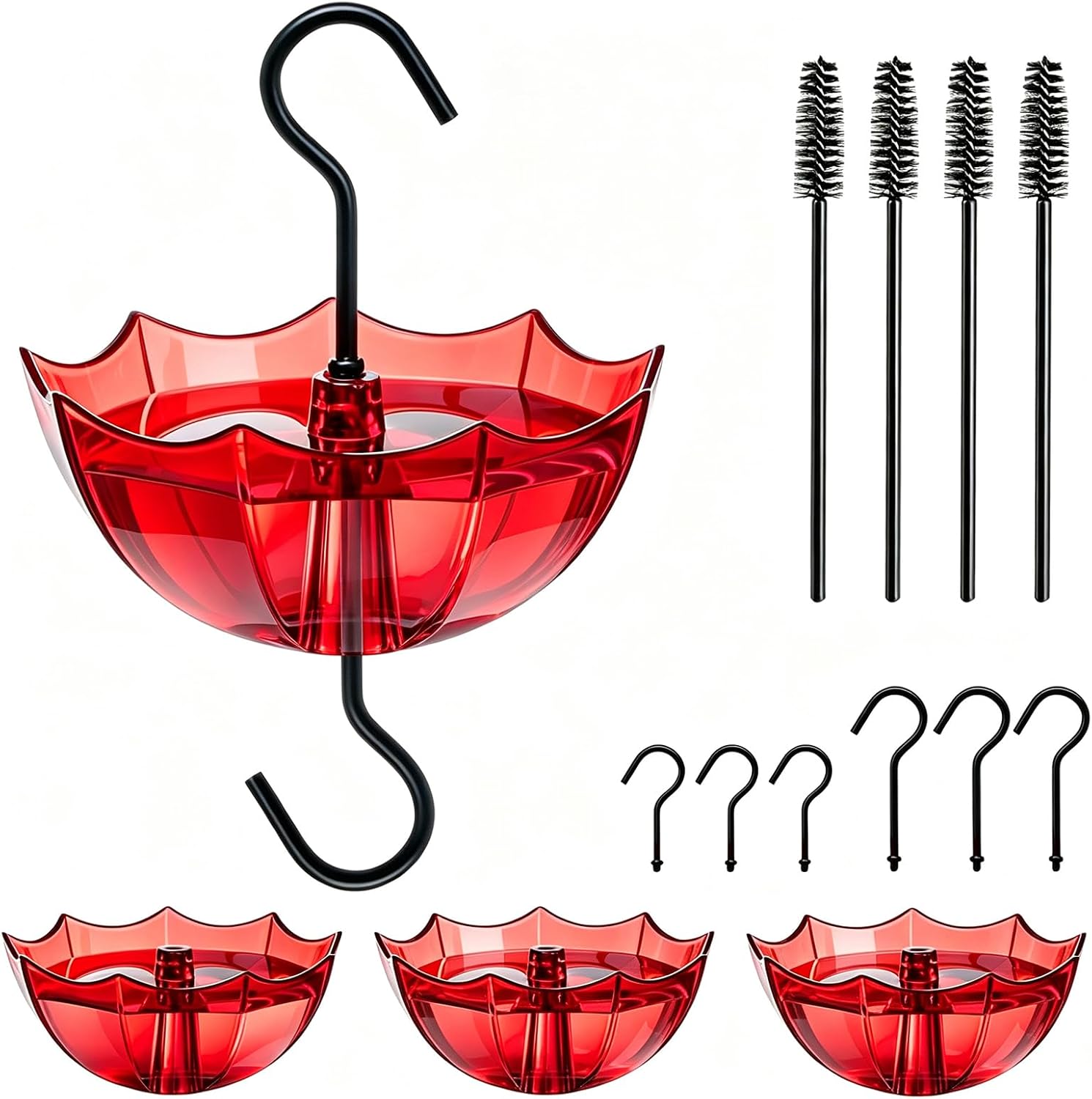
Large 3.94 inch clear cups hold up to 5 oz of water to block even big ants from reaching nectar. Bright red umbrella design adds a decorative touch to any garden. Includes 8 hooks in two sizes for easy top and bottom attachment.
Check on AmazonIf you click this link and buy, we earn a commission at no additional cost to you.
Material Choices: Plastic Versus Glass
Plastic and glass ant moats can both work. I would not choose between them based on a claim that one material always keeps the water cooler or always evaporates more slowly, because evaporation also depends heavily on sun exposure, wind, humidity, water surface area, and the shape of the cup. In practice, the material decision is more about weight, breakage, durability, visibility, and cleaning.
Plastic is light and forgiving if the feeder swings or the moat is dropped. A clear or translucent plastic cup can also make the water level easy to check from a window. The tradeoff is that thin plastic can fade, warp, or become brittle after long exposure outdoors, so inspect it for cracks and leaks rather than assuming it will last indefinitely.
Glass is heavier and breakable, but it can be durable when protected from impact and is often easy to inspect and scrub. That extra weight matters on a light shepherd’s hook, thin branch, or flexible hanger. The best ant moat for a particular setup is therefore the one whose capacity and hardware fit the location, not the one made from a supposedly superior material.
| Moat Type | Useful Strength | What to Check |
|---|---|---|
| Built-in moat | No extra hanging hardware and easy to refill with the feeder | Does it still contain water when you normally check the feeder? |
| Clip-on plastic moat | Lightweight, inexpensive, and available in larger capacities | UV wear, cracking, hook fit, and whether the cup hangs level |
| Clip-on glass moat | Rigid, easy to inspect, and often simple to clean | Extra weight, breakage risk, hook fit, and usable capacity |
The comparison is deliberately practical because there is no universal refill interval for any of these materials. A deep plastic moat in shade may outlast a glass one in full sun, while a small built-in moat may be perfectly adequate in a cooler location. Measure success by whether the barrier remains intact in your actual setup.

Vintage-style glass cup with rust-proof stainless steel hook holds 3/5 cup of water or oil for days of ant protection without constant refilling. Wide opening hook hangs easily on any branch or feeder in-line between hook and feeder.
Check on AmazonIf you click this link and buy, we earn a commission at no additional cost to you.
Hardware Compatibility: Check Your Hooks
Before buying a standalone hummingbird ant moat, look at the complete hanging chain from the branch, pole, or bracket down to the feeder. The moat must sit in that chain without leaving another dry route around it. It also needs upper and lower attachment points that can safely support the filled feeder plus the water in the moat.
Check hook openings, hanger thickness, feeder weight, and whether the finished assembly hangs level. A cup that tilts can spill enough water to break the barrier even when its advertised capacity looks generous. I also avoid improvised connections that can slide off a smooth hook or twist open in wind.
This is one place where measuring before buying saves frustration. You do not need a precise engineering calculation, but you should know whether the hardware physically fits and whether you can remove the feeder for cleaning without dismantling the entire setup. Convenience matters because a moat that is annoying to refill is the moat most likely to be found empty.
Routine Maintenance: The Debris Bridge
A working moat needs open water, not just a cup that happens to contain something wet. Leaves, dead insects, seed hulls, and other debris can reduce the clear gap across the surface and make the cup harder to inspect. I empty and rinse the moat whenever the water looks dirty, then refill it with plain water.
Field Note: A pattern I saw repeatedly at the store was a customer saying the moat “didn’t work,” then describing a cup that had either dried out or filled with debris. Before replacing the moat, I would have them clean it, refill it, and check whether the ants had any second route around the hanger. Those two checks solved a surprising number of supposed product failures.
Ants also use chemical trails to help other workers return to food sources. If ants were already using the feeder before you installed the moat, wipe sticky nectar from the feeder exterior and clean the hanger and nearby contact points so you are not leaving an established food trail in place. That does not replace the moat, but it removes one of the signals drawing workers back to the same route.
Do not fill the moat with vegetable oil, petroleum jelly, or another greasy substance. Water is enough to create the barrier, and oily materials can soil a bird’s feathers if contact occurs. Plain water also makes it much easier to dump, rinse, and refill the cup as part of normal feeder maintenance.
DIY Versus Buying: Why the Investment Matters
A DIY ant moat can work, so I would not dismiss one simply because it is homemade. The same principle applies whether the cup came from a store or your workbench: the hanger passes through a water-holding container, the opening around the hanger is sealed against leaks, and the feeder hangs below the water barrier. A small plastic cup or similar container can do the job if the hardware is secure.
Commercial moats are convenient because the attachment points, reservoir, and weather-resistant hardware are already assembled. That can be worth paying for when the feeder is heavy or the location is difficult to reach. With either option, inspect the connections periodically for corrosion, cracking, looseness, or leaks.
When I compare a homemade moat with a purchased one, I care less about price than about whether I will actually keep it filled. A larger, easy-to-see cup usually requires less attention than a tiny improvised reservoir, but there is no minimum half-cup rule that every yard needs. Choose enough capacity to remain filled between the checks you realistically make.
Routine checks fit naturally with other bird feeder tips: glance at the water level, look for a bypass route, and wipe away leaked nectar before it builds into a sticky trail. If ants are swarming the feeder area rather than simply traveling down the hanger, ants in your bird feeder may require a broader look at leaks, food residue, placement, and the route the colony is using.

Large 5 oz capacity cup keeps ants away from nectar without frequent refilling. Bright red flower shape attracts hummingbirds and adds a pop of color to any garden. Simply rotate hooks into place, fill with water or oil, and hang alongside any feeder on a tree or shepherd hook. A lovely gift for any bird lover!
Check on AmazonIf you click this link and buy, we earn a commission at no additional cost to you.
Final Thoughts on Moat Selection
An ant moat is a simple tool, but it only solves one problem: ants using the feeder’s hanging route. If that is the route you are dealing with, a water barrier above the feeder is one of the cleanest ways to interrupt it without coating feeder hardware in sticky or oily substances.
I would choose a moat by capacity, fit, stability, and ease of checking rather than by a promised refill interval or a glass-versus-plastic claim. Start with the moat you already have if it works. If it repeatedly runs dry, move to a larger reservoir, reduce sun and wind exposure where practical, and keep the water clean.
The final test is simple. Look at the moat during the hottest part of the day, confirm there is still a clear water barrier, and make sure ants cannot bypass it on another branch, wire, wall, or railing. That small check tells you whether the setup is actually working in your yard.

Large 3.94 inch clear plastic cup holds up to 5 oz, keeping even big ants away from nectar. Transparent design lets you monitor water level at a glance. Bright red umbrella shape attracts hummingbirds and adds charm to any garden. Rust-proof coated metal hook.
Check on AmazonIf you click this link and buy, we earn a commission at no additional cost to you.
FAQs
🐜 Do ant moats work for all crawling bugs?
No. An ant moat is designed mainly to interrupt ants and similar crawlers using the hanger route. Flying insects can bypass it, and spiders or other arthropods may reach the feeder by routes the moat does not block.
☀️ How often do I need to refill the moat?
There is no reliable fixed schedule. Check it daily at first, especially during hot, sunny, or windy weather, then adjust once you know how quickly your particular cup loses water. Refill before the water barrier disappears.
🪝 Where exactly does the moat go?
A separate moat goes above a hanging feeder, between the support hook or wire and the feeder. The goal is to make ants encounter the water before they reach the nectar, while ensuring there is no alternate dry route around the moat.
🕊️ Will birds drink from the ant moat?
A bird may occasionally investigate or drink from an accessible water-filled moat. Use plain clean water only, keep the cup free of debris, and avoid oil or petroleum-based barriers that could contact feathers.
🧊 Can I put ice in the ant moat?
You can, but it is not a useful long-term fix for evaporation because the ice melts quickly. A larger water capacity, regular checks, and less direct sun or wind where practical are more dependable ways to keep the barrier from running dry.