The Natural Urge to Overfill
When temperatures fall and snow covers natural food, feeder traffic can rise quickly. In the store, the useful question was rarely “How many cups should I put out today?” It was how fast the birds were actually using the food and whether the feeder was keeping it dry. Cornell treats feeders as supplemental food, while Audubon notes that birds may rely more heavily on feeders during harsh winter conditions.
There is no general rule that seed left overnight becomes unusable by morning. Hopper feeders are specifically designed to hold a supply of seed while protecting it from weather, and Audubon recommends keeping winter feeders stocked during severe conditions. The real problem is moisture. If snow, sleet, condensation, or wind-driven rain gets into the food and then freezes, ports can clog and seed can spoil. That is the winter-specific part of bird feeder tips worth planning around.
I do not use a one-week safety rule in summer or a one-day rule in winter. Seed condition depends on humidity, precipitation, feeder design, sun exposure, and how quickly birds are eating. In winter, inspect for wet clumps, frozen ports, and snow buildup. In any season, smaller refills make sense when food is turning over slowly because less seed is at risk if moisture gets inside.
When Wet Seed Freezes and Blocks the Feeder
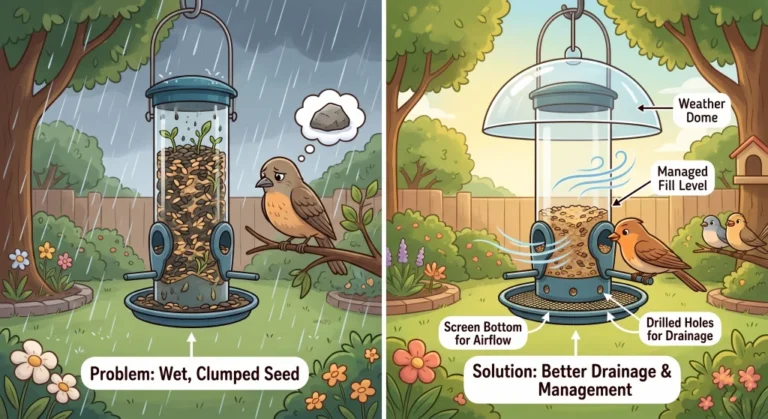
Seed can freeze into clumps, but I would not describe this as an inevitable overnight process inside every tube feeder. The more common practical warning is simpler: once seed becomes damp, a temperature drop can freeze that moisture and lock seed around a port or tray. Wind-driven snow, melting snow, freezing rain, a leaking lid, or poor drainage can all provide the moisture.
If the lowest layer of seed is wet, freezing weather can turn it into a hard clump that stops gravity flow. That can happen overnight or during a daytime freeze, depending on the weather. “Frost-lock” is a useful description for the symptom, not a standard biological or engineering term, and there is no January-or-February timetable that applies across climates.
If birds are visiting but no seed is moving, check the ports rather than assuming the feeder is full and usable. Remove snow and inspect the food. If seed is wet, frozen together, sour, or moldy, discard it instead of thawing and serving it again. Bring the feeder into a suitable work area if necessary, clear the blockage, clean and dry the feeder, then refill with fresh dry seed.
Field Note: When a customer described the same feeder jamming after wet winter weather, I would first ask how much seed was sitting in it and where the water was getting in. Reducing the fill could limit how much food had to be discarded while we solved the moisture problem, but I would not prescribe a two-cup ration or promise the feeder would empty on a fixed schedule.
Does Your Feeder Type Make Frost-Lock Worse?
Not all feeders react to winter moisture the same way, and the type of equipment you use determines how strict you need to be with your overnight seed management.
Feeder design changes where moisture collects. A good hopper roof can keep a supply of seed dry, while drainage holes or screened bottoms help water escape from trays. Tube feeders can clog around ports if wet seed packs there, but they are not automatically the worst winter design. Open platforms drain well when screened, yet exposed seed can become wet or buried by snow. The better winter feeder is the one that sheds precipitation, drains, and is easy to inspect and clean.
If winter precipitation is frequent, prioritize weather protection, drainage, and easy access for clearing snow. Fill level should follow consumption and seed condition rather than a clock. A feeder that holds several days of dry seed can be perfectly practical if birds are using it quickly and the food stays dry.

A premium cedar hopper feeder with crack-resistant acrylic windows and rust-free hardware. The removable seed tray features a seed diverter and drainage holes to reduce waste and keep seed fresh. Wide opening for spill-free filling and extra perching space for both large and small birds.
Check on AmazonIf you click this link and buy, we earn a commission at no additional cost to you.
Expect Morning and Late-Day Activity, Not a 90-Minute Rule
Small winter birds face higher energetic costs in cold weather, and research on black-capped chickadees shows that feeder visitation increases as ambient temperature falls. Birds also manage energy stores across the day in species-specific ways. That supports keeping food accessible during difficult weather, but it does not give us a universal ninety-minute feeding clock for chickadees, titmice, finches, and every other feeder visitor.
Many backyard observers notice busy periods after dawn and again later in the day, and birds do need to replace overnight energy losses and prepare for the next night. However, a recent winter study of individually marked black-capped chickadees found substantial variation in the timing and total number of feeder visits. Temperature, daylength, individual behavior, food availability, and species all matter. Treat dawn and late afternoon as useful times to check a feeder, not as exact ninety-minute windows.
Birds may feed throughout the daylight period, cache food, forage naturally away from the station, or reduce activity during poor weather. I do not intentionally let a feeder run empty at midday because I expect birds to be resting. The practical schedule is to make sure food is accessible when birds arrive, especially during cold snaps and storms.
The Daily Ration Strategy
Because feeder use varies, I size refills by turnover rather than forcing every station onto a one-day ration. Cornell suggests offering only a couple of days of seed at a time in exposed tray feeders, while hopper feeders are specifically built to hold a larger dry supply. In wet weather or at a slow feeder, use smaller amounts. During a cold spell with heavy traffic, keeping a protected feeder stocked may make more sense.
There is no bird-health reason to make the feeder empty at sunset. Birds are generally not feeding from a seed feeder through the night, but dry seed can remain in a weatherproof feeder for the next morning. If mammals are raiding the station, bringing food in at night can be one management option, but spilled seed and other attractants on the ground still have to be addressed.
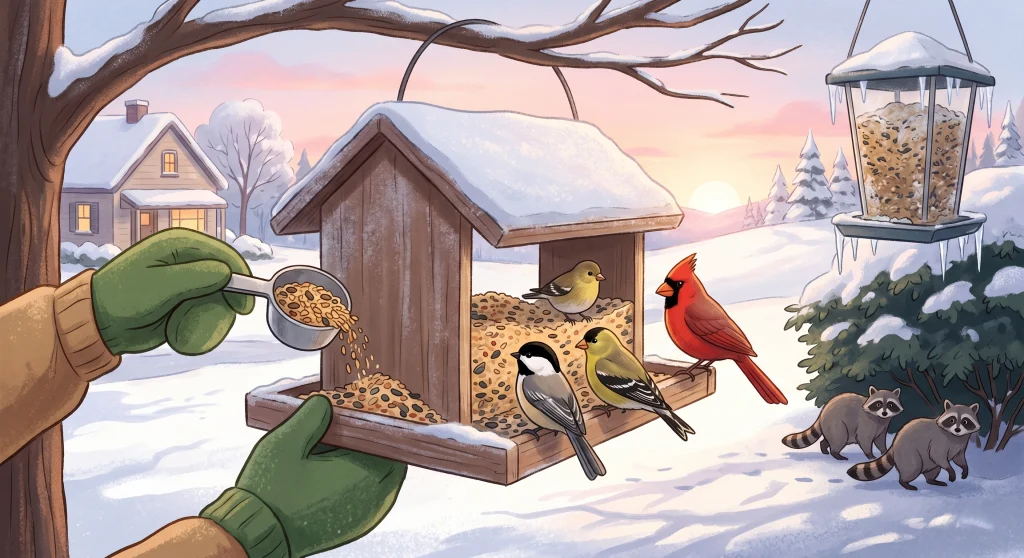
Use a few refills to learn your yard’s turnover. Note how much remains before the next refill and whether any of it is damp, compacted, or stale. Adjust from there. Bird numbers can change through winter, and cold weather can increase feeder use, but there is no universal two-cup or four-cup ration. The best amount is enough to stay available while still turning over before weather damages it.
Filling a slow feeder far beyond what the birds will use, then leaving the same seed through repeated wet weather without checking its condition.
Checking the feeder regularly, keeping dry seed available, reducing the fill when turnover is slow or weather is wet, and increasing it when winter traffic is heavy.
What to Change During Extreme Cold
During extreme cold, birds may increase feeder use and winter storms can make natural foods harder to reach. The priority is not warming dry seed. It is keeping food accessible, clearing snow from ports and trays, and preventing moisture from entering the feeder in the first place.
I do not recommend a “heated seed feeder” as a standard solution. Mainstream winter-feeding guidance focuses on weather-resistant feeders, dry seed, snow removal, and heated birdbaths for liquid water, not on heating seed chambers. If a feeder repeatedly freezes because water is entering it, fix the roof, drainage, placement, or feeder design. Electrical equipment outdoors also adds installation and weatherproofing concerns that are unnecessary for ordinary dry seed.
Stopping Nocturnal Winter Pests
Bird feeders can attract mice, rats, raccoons, and other mammals, and some of those animals are active after dark. That is a legitimate reason to change your routine if you are seeing nighttime raids. But the attractant is not only the seed inside the feeder. Fallen seed, suet, and other food on the ground can keep mammals returning even when the feeder itself is empty.
Raccoons are opportunistic and mostly nocturnal or crepuscular, while rodents readily use spilled bird seed. Repeated access can make a feeding station a dependable food source. If wildlife is damaging equipment or becoming a regular visitor, remove access to the food rather than assuming the behavior will stop on its own.
Bringing a feeder in at night can reduce one food source, but it does not guarantee nocturnal mammals will ignore the yard. Clean up fallen seed, secure stored seed, and address access routes too. If raccoons or other wildlife are already recurring visitors, the broader bird feeder predators setup matters more than a promise that one nighttime habit makes the station bulletproof.

This 92-inch bird feeder pole combines a squirrel-deterring spring-loaded baffle with four adjustable shepherd hooks for hanging multiple feeders or garden accessories. Its nine-prong ground base helps improve stability, while the adjustable six-section pole allows the overall height to be changed for different backyard setups. The station also includes a detachable bird bath and mesh feeding tray, providing several feeding and watering options around one central pole.
Check on AmazonIf you click this link and buy, we earn a commission at no additional cost to you.
Structuring Your Daily Routine
A winter routine is easier when you can inspect and refill without turning it into a project. Keep backup seed cool, dry, and protected from rodents, and use a scoop that makes it easy to add only what your feeder traffic justifies. You do not need to refill every feeder at dawn if it still holds clean, dry seed.
| Time of Day | Recommended Action | Weather & Temperature Context |
|---|---|---|
| Morning | Check that seed is accessible and refill if the feeder is low. | Especially useful after overnight snow, freezing rain, or a cold snap with heavy feeder traffic. |
| During a storm | Brush snow or ice away from ports, trays, and roof edges without forcing damaged parts. | Check whether seed has become wet; discard spoiled or frozen wet clumps rather than mixing them into fresh food. |
| Late afternoon | Top up a heavily used feeder if it is running low before a cold night. | Bird activity varies, so use actual consumption rather than a fixed feeding window. |
| Overnight | Dry seed can remain in a weatherproof feeder. | If raccoons, rodents, bears, or other unwanted wildlife are accessing the station, remove or secure feeders as local wildlife guidance recommends. |

This BPA-free clear container holds up to 2.5 to 3 pounds of bird seed and features a silicone-sealed airtight lid that keeps contents dry, fresh, and squirrel-proof. A built-in measuring cup with scale and a slot pour spout let you fill hopper, tube, and wire mesh feeders cleanly without spilling. An ergonomic carry handle and compact design fit easily in cabinets or cupboards.
Check on AmazonIf you click this link and buy, we earn a commission at no additional cost to you.
Final Thoughts: Working With the Daylight
Successfully managing a winter feeding station is mostly about keeping food dry, accessible, and fresh. Do not force a bulk-fill routine when seed is sitting too long, but do not force a one-day ration when a protected feeder is being emptied quickly either. Let weather and consumption set the refill amount.
That flexible routine reduces waste because you catch wet seed and blocked ports before they become larger problems. Keeping the ground clean and managing mammal access can also reduce pest pressure. Those habits fit into broader winter bird feeder care without pretending every bird in every climate follows the same daily clock.

12-inch diameter universal dome. Protects any small or medium-sized feeder from rain and snow. Molded from uv stabilized polycarbonate, the strongest and most durable plastic available. Guaranteed for life.
Check on AmazonIf you click this link and buy, we earn a commission at no additional cost to you.
FAQs
❄️ How do I unfreeze a block of bird seed?
If dry seed has simply frozen around an exterior mechanism, bring the feeder to a suitable area and let the ice release without prying on brittle plastic. If the seed itself is wet and frozen into a block, discard it once you can remove it, then clean and dry the feeder before refilling.
⏰ What time do birds eat the most in winter?
Morning and late-day activity can be busy, especially in cold weather, but there is no universal ninety-minute rule. Species, temperature, daylength, flock size, natural food, and individual behavior all influence when birds visit a feeder.
🌙 Should I leave suet out overnight?
Suet can remain outdoors in cold weather if it stays clean and inaccessible to unwanted wildlife. If raccoons or other mammals are raiding it at night, bring it in or use a setup that prevents access. The need to remove it depends on the wildlife pressure in your yard, not on a universal dusk rule.
🌧️ Does snow ruin bird seed?
Snow is mainly a problem when it blocks access or melts into the food. Wet seed can clump, freeze, mold, or spoil, so replace it rather than waiting for it to dry in the feeder. A roof or weather dome can help if it is large enough for the feeder and does not interfere with bird access.
🐿️ Will an empty overnight feeder deter squirrels?
Most tree squirrels are active during the day, so removing seed only at night does little for daytime squirrel pressure. It may reduce access for nocturnal or crepuscular mammals, but only if spilled seed and other food are cleaned up as well.