Buy for Where You Are Going, Not Where You Are
The right pole depends on one specific number: how many feeders you are actually hanging. Most people go to a hardware store, grab the cheapest metal stick they can find, and stick it in their lawn. They bring home a single lightweight tube feeder, and for the first month, everything looks great. Then, the backyard birding addiction kicks in. They add a suet cage for the woodpeckers. They add a tray for the cardinals. Suddenly, that cheap metal stick bends in half under the weight, dumping expensive seed all over the grass.
I always advise beginners to plan their purchase around the station they eventually want to build, rather than the single feeder they hold in their hands today. The best bird feeder pole system for your yard is the one that gives you room to grow without compromising stability. Trying to force four different feeders onto a pole designed for one is a recipe for disaster. You need a progressive approach to building your station, matching the hardware to the exact weight and layout of your setup.
Finding a top bird feeder pole is a matter of structural engineering, not just aesthetics. You have to consider the wind, the soft ground after a rainstorm, and the immense leverage that heavy feeders create when hanging off the side of a tall metal rod.
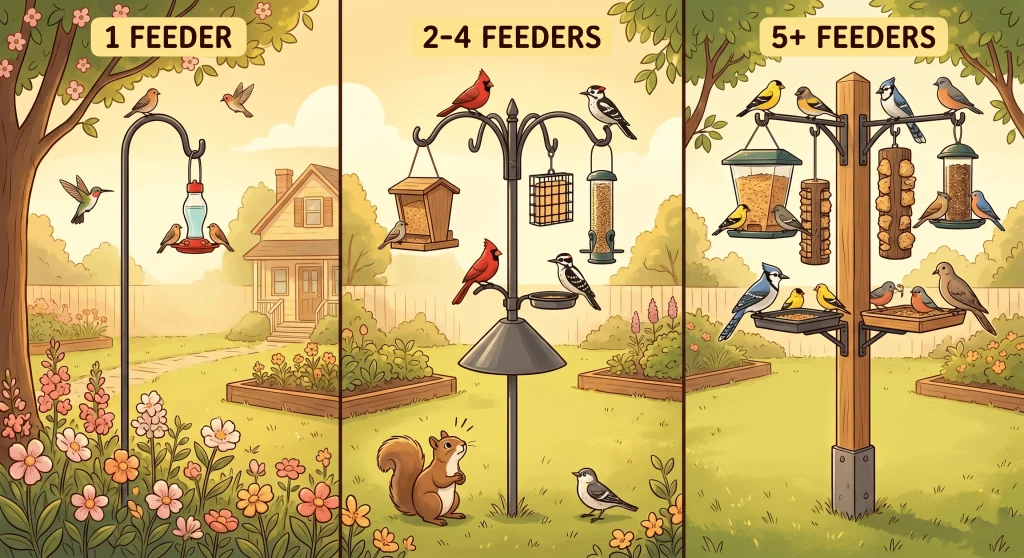
The Shepherd Hook: For a Single Feeder Setup
If you are absolutely certain that you will only ever run a single, lightweight feeder, a classic shepherd hook is the perfect budget-friendly option. These are the tall, curved metal rods that push directly into the soil. They are elegant, easy to install, and blend nicely into garden landscaping. However, they come with a massive physical disadvantage that most people never consider until the pole falls over.
A shepherd hook has a serious fulcrum physics problem. Because the arm curves outward, the weight of the feeder is entirely offset to one side. This creates a lever arm effect, putting constant directional pressure on the base. If you hang a ten-pound wooden hopper from a single shepherd hook, that weight will slowly pull the pole forward, enlarging the hole in the dirt until the entire setup simply falls face-first into the mud.
Field Note: I used to have customers come into the store carrying a bent shepherd hook, asking for a refund because the metal was defective. I would ask them what they hung on it. They would usually describe a massive setup with three hanging attachments and fifteen pounds of seed. I had to explain that the metal was not defective. They were just asking a bicycle to do the job of a pickup truck.
Keep shepherd hooks restricted to small tube feeders, lightweight hummingbird bottles, or single suet cages. If you must buy a shepherd hook, avoid the cheap hollow tubular metal options. Specifically, look for solid, half-inch forged steel hooks. Brands like Panacea and Ashman make models that resist bending far better than hollow alternatives.

This 48-inch shepherd hook provides a simple outdoor hanging point for bird feeders, planters, lanterns, wind chimes, and other garden accessories. Its five-prong base helps anchor the pole securely in the ground, while the adjustable construction makes setup and storage straightforward. The iron pole has a rust-resistant finish designed for outdoor use and can be repositioned around a yard or feeding area as needed.
Check on AmazonIf you click this link and buy, we earn a commission at no additional cost to you.
The Multi-Arm System: The 2 to 4 Feeder Sweet Spot
For the dedicated backyard birder running two to four different bird feeder types, a multi-arm pole is the ultimate solution. This is where you enter the territory of serious, stable backyard setups. Instead of a single offset hook, these systems feature a thick central pole with three or four hanging arms radiating outward from the top.
The genius of a multi-arm system lies in weight distribution. If you hang a heavy hopper feeder on the left side, you can hang a large tube feeder on the right side to balance the load. Because the downward pressure is distributed evenly around the central axis, the pole is far less likely to lean or tip over in soft soil. This balanced geometry makes it the most reliable bird feeder pole recommendation I can give to someone upgrading their yard.
When shopping for a multi-arm system, my top recommendation is always the Squirrel Stopper Sequoia or similarly integrated models. These feature a built-in metal cylinder halfway up the pole that bobs and tilts when a squirrel tries to climb over it. Buying a dedicated bird feeder pole squirrel proof setup with the baffle already engineered into the design is significantly more effective than trying to attach a cheap aftermarket cone later.

The FEED GARDEN squirrel-proof bird feeder pole creates a multi-feeder backyard station with four hanging hooks. A 19-inch smooth cone baffle helps prevent squirrels from climbing toward the feeders, while the five-prong base improves stability in the ground. The powder-coated steel pole adjusts up to 92 inches and can support bird feeders, suet cages, and other lightweight outdoor accessories.
Check on AmazonIf you click this link and buy, we earn a commission at no additional cost to you.
The Heavy Duty Bird Feeder Pole: 5 or More Feeders
However, if your setup has grown beyond four feeders and your yard looks like a high-traffic nature reserve, you have outgrown commercial metal poles entirely. You need a heavy duty bird feeder pole setup, which almost always means transitioning to a wooden 4×4 post or a commercial-grade steel pipe.
When you start combining massive fly-through platform trays, multiple double-sided suet logs, and large-capacity hoppers, the sheer weight of the station becomes a liability. A standard multi-arm pole will buckle under a fifty-pound load, especially in high winds. A treated 4×4 wooden post buried three feet deep in concrete gives you a permanent, immovable foundation. You can bolt heavy-duty iron brackets directly into the wood to create a customized station. If you do not want to pour concrete, you must seek out a commercial-grade, two-inch tubular steel system, like the heavy-duty pole sets from Erva, which are specifically engineered for extreme weight.
| Feeder Count | Recommended Pole Type | Primary Advantage |
|---|---|---|
| 1 Feeder | Forged Shepherd Hook | Low cost, easy to move, elegant look. |
| 2 to 4 Feeders | Multi-Arm System | Balanced weight distribution, integrated baffles. |
| 5+ Feeders | 4×4 Post or 2-inch Steel | Maximum load capacity, indestructible foundation. |

Crafted by a multi-generation American family business, this powder-coated heavy-gauge steel pole stands 90 inches tall with 12-inch arms and a fully welded hardened steel twist-in ground socket that pushes through rocks and roots with ease. Once the anchor is set, the remaining components snap into place with no additional tools needed. Built for maximum durability and longevity season after season.
Check on AmazonIf you click this link and buy, we earn a commission at no additional cost to you.
Sizing Your Pole: Why Height Matters
Before you add any pole to your cart, you must check the assembled height. Height is not just about your viewing angle; it is a critical safety and pest-control metric that dictates what you can actually hang. A standard shepherd hook usually sits at five or six feet tall once placed in the ground, which is perfectly fine for a basic tube feeder with no squirrel protection.
However, if you are buying a multi-arm system intended to be squirrel-proof, you must look for a pole that stands at least seven to eight feet tall above the soil. A squirrel baffle must be mounted exactly five feet off the ground to prevent jumping. If you buy a short six-foot pole, mounting the baffle at five feet leaves absolutely no room for your hanging feeders. Always check the final above-ground height specification before purchasing to ensure your baffle and feeders will physically fit.
Calculating Weight Capacity and the Moisture Factor
The most overlooked factor when buying a bird feeder pole is weight management. Manufacturers will stamp a specific weight rating on the box, but consumers almost always calculate their needs incorrectly. They weigh their empty plastic feeder, add the stated weight of the dry seed, and assume they are within the safe limit.
They forget about the birds, the wind, and most importantly, the moisture. A large hopper full of sunflower seeds can have a dry weight of seven to eight pounds. Once humidity and blowing rain soak into those hulls, the wet seed swells like a sponge and that weight increases dramatically.
Calculating the weight of the empty feeders plus the dry seed, and buying a pole rated exactly for that number.
Always calculating your total setup at absolute full capacity, and then adding a twenty percent safety margin to account for rain, snow loads, and multiple birds landing simultaneously.
If your calculation says your setup weighs fifteen pounds, you need a pole rated for at least twenty pounds to ensure it does not slowly bend over a wet, rainy season.
Final Thoughts: Buy Your Hardware Once
The fastest way to waste money in backyard birding is to constantly upgrade your pole as your hobby grows. By matching your hardware to your actual feeder count right from the start, you eliminate the constant cycle of replacing collapsed metal rods.
Be honest about your goals. If you only want one feeder, spend a few extra dollars on a solid forged shepherd hook. If you want a full, active station, skip the budget aisle entirely and invest directly in a baffled multi-arm system or a heavy-duty post bracket. Buying the right foundation ensures your expensive feeders stay safe, the seed stays dry, and you only have to purchase your hardware once.

Wagner's Four Season Sunflower Seed is 100% black oil sunflower seed. Sunflower seed is the favorite seed of most wild birds. It is high in energy and has a thin shell making it easy for all birds to consume. Use tray feeders or hopper feeders to attract sunflower loving songbirds. Cardinals, Chickadees, Finches, Nuthatches, Woodpeckers and much more. Trust your backyard birds to the experts at Wagner’s.
Check on AmazonIf you click this link and buy, we earn a commission at no additional cost to you.
FAQs
📏 What diameter pole is best for adding squirrel baffles?
Most aftermarket squirrel baffles come with mounting collars designed to fit standard poles ranging from one inch to one and a quarter inches in diameter. Always verify the diameter of the pole before buying an add-on baffle.
🔩 Do I need a pole with an auger base?
Yes, for any pole over six feet tall that holds multiple feeders, a screw-in auger base provides crucial stability. A flat stake base will eventually wiggle loose and cause the pole to lean under a heavy load.
🐿️ Why is my squirrel baffle sliding down the pole?
Most aftermarket baffles use a mounting collar with a single screw that loosens as the metal contracts in the cold. You need to wrap a piece of electrical tape around the pole right beneath the collar to give the screw something soft to bite into.
🪵 Can I mount a bird feeder pole on my wooden deck?
Yes, clamp-on deck poles exist, but they have significantly lower weight capacities than ground poles. They are best suited for a single, small feeder to ensure the leverage does not damage your wooden railing.