
The Ingredient List Matters More Than the “No Mess” Claim
If you are standing in the store looking for the best no mess bird seed, the higher price makes sense only when you are paying for food that gets eaten. Removing hulls adds processing cost, and sunflower hearts, peanut pieces, and other shelled ingredients are usually more expensive than intact grain.
The label on the front does not tell you whether the blend fits your birds. “No mess,” “no waste,” and “shell free” are marketing descriptions, not promises that nothing will land under the feeder. Birds still sort food, carry pieces away, drop fragments, and sometimes reject ingredients they do not want.
That is why I start with the ingredient list. Hulled sunflower has the broadest appeal of the common shell-free ingredients. Project FeederWatch notes that any bird that eats sunflower seed can also use hulled sunflower, and many species may prefer the easier meal. Peanut pieces can add value for chickadees, titmice, nuthatches, jays, and woodpeckers. White millet can be useful when doves, juncos, and native sparrows are part of the goal.
The best blend is therefore not the one with the most ingredients. It is the one whose ingredients match the birds and feeder setup you actually have.
What “No Mess” Really Means
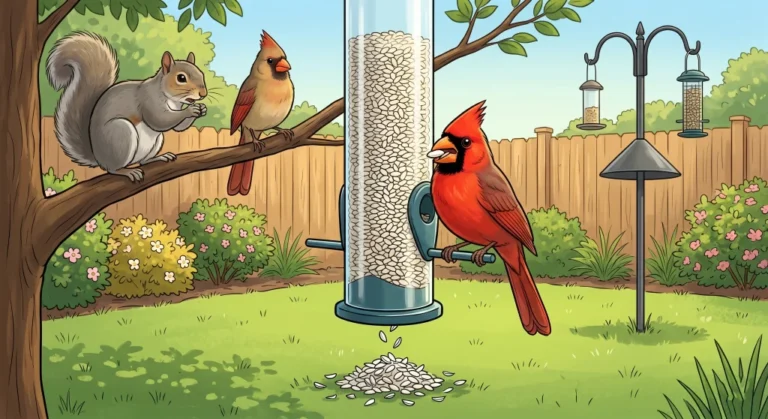
The clearest advantage of hull-free bird seed is reduced chaff. When birds eat intact sunflower, they open the seed and drop the empty hull. Hulled sunflower removes that shell before the food reaches the feeder, so you do not build the same layer of husks beneath the station.
That is different from zero scatter. Birds can still knock edible sunflower chips, millet, and peanut pieces onto the ground. Cornell’s Bird Academy describes no-mess blends as seed without shells that reduces the mess below feeders, while still recommending regular cleanup where food reaches the ground.
Spilled kernels may be eaten by doves, juncos, sparrows, squirrels, or other ground visitors, but do not assume they will all disappear. Wet food can spoil, and accumulated seed can attract rodents. The real advantage is that you have removed much of the inedible hull waste, not every maintenance job around the feeder.
Field Note: When someone complained that a premium no-mess mix was still landing under a deck feeder, I found it more useful to ask what was on the ground than to argue about the label. A pile of empty sunflower hulls and a handful of edible chips are two different problems. The second usually points to feeder design, crowding, or birds sorting through a blend.
Assuming a no-mess mix means the surface under the feeder will stay spotless without any cleanup.
Expecting far less hull debris while still managing spilled edible food, moisture, and normal feeder waste.
That expectation also helps with price. You are paying to remove shells and, ideally, to buy a higher proportion of ingredients birds use. You are not buying a self-cleaning feeding station.
The Ingredients Worth Paying For
For a general-purpose no-mess mix, hulled sunflower is the ingredient I want to see doing most of the work. Black-oil sunflower is one of the most broadly accepted feeder foods, and Project FeederWatch says birds that eat sunflower also use hulled sunflower. Removing the shell makes it easier to eat and reduces the chaff problem, although it also makes the kernel more vulnerable to moisture and spoilage.
Peanut pieces are another useful ingredient when you want birds such as chickadees, titmice, nuthatches, jays, and woodpeckers. They are calorie-dense and easy to eat when offered as clean, plain pieces. White proso millet serves a different group, especially doves, juncos, towhees, and native sparrows that often feed on or near the ground.
| Ingredient | What It Is | Why It Belongs in the Mix |
|---|---|---|
| Hulled Sunflower | Sunflower kernels sold as hearts or chips after the shell has been removed. | The strongest all-around base because a wide range of sunflower-eating birds can use it, with much less hull debris below the feeder. |
| Peanut Pieces | Plain shelled peanuts broken into smaller pieces. | Useful for chickadees, titmice, nuthatches, jays, and woodpeckers, especially when you want a higher-energy mix without intact shells. |
| Hulled White Millet | Small millet kernels with the outer covering removed in blends sold as hull-free. | Useful when doves, juncos, towhees, and native sparrows are part of your target group, though it is less important in a feeder aimed mainly at tree-feeding species. |
There is no credible reason to promise that a three-ingredient mix will be consumed at “nearly 100 percent.” Local species and feeder style matter too much for that. What the short ingredient list does give you is a clearer way to see what you are buying and which ingredient may be getting left behind.

This 10-pound no-mess wild bird seed blend is made with 100% edible ingredients to reduce hulls, waste, and cleanup beneath feeders. The mix includes sunflower hearts, peanuts, tree nuts, pumpkin seeds, raisins, and papaya to attract cardinals, chickadees, finches, grosbeaks, woodpeckers, and other backyard birds. It works with tube, hopper, tray, platform, and other common outdoor feeders and is a practical choice for cleaner feeding areas.
Check on AmazonIf you click this link and buy, we earn a commission at no additional cost to you.
Red Flags Depend on Which Birds You Want
Cheap mixes often contain large amounts of grains that have narrower appeal than sunflower. Cornell specifically warns that red millet, oats, and similar low-preference ingredients can create waste when birds sort through a mix. Milo, also called sorghum, is another common inexpensive ingredient that relatively few feeder species prefer in many parts of North America.
Cracked corn needs more nuance. It is not useless filler. Project FeederWatch lists cracked corn as a legitimate food for doves, quail, and sparrows, and Cornell notes that several other birds use it. The question is whether those are the birds you are trying to feed and whether your setup can keep the corn dry and off surfaces where rodents become a problem.
Warning: Do not treat “shell free” as permission to let food sit wet. Hulled sunflower and other exposed kernels spoil faster than intact seed, and cracked corn or millet left damp on a tray or ground can also mold. Buy a blend that matches your turnover and put out smaller amounts when weather is wet or humid.
If milo or another low-preference grain dominates a premium-priced bag, I would question the value. If cracked corn is present in a blend aimed at doves and sparrows, that may be perfectly reasonable. A useful ingredient is defined by who eats it, not by whether a blog has labeled it “filler.”
The Cardinal Trade-Off Is About the Blend, Not a Need to Crack Shells
Some bird-feeding communities report fewer cardinals after switching from whole sunflower to a very fine no-mess mix. That observation is worth mentioning, but the common explanation that cardinals need the physical act of cracking a shell is not supported by feeder guidance from Cornell.
Project FeederWatch says any bird that eats sunflower seed will also be attracted to hulled sunflower, and many species may prefer the work-free kernel. Cornell’s Northern Cardinal guidance also emphasizes sunflower as a favored feeder food without requiring it to remain in the shell.
So if cardinal visits drop after a switch, look at the whole change. Did the new blend replace most sunflower with millet? Did the feeder change too? Are the chips extremely fine? Is a different group of birds crowding the feeder? Did natural food or seasonal movement change at the same time? Those are more defensible explanations than assuming the cardinal misses cracking shells.
Pro Tip: If cardinals are a priority, choose a no-mess blend where hulled sunflower is the dominant ingredient, and use a tray, hopper, or other feeder that gives a cardinal enough room to perch comfortably. If visits fall after the change, test plain sunflower hearts before abandoning hull-free seed entirely.
Whole safflower or in-shell sunflower can still be offered in a separate feeder if you want variety, but that is a preference experiment, not a requirement for cardinal feeding behavior.

The seasoned birder's secret to attracting Cardinals, Grosbeaks, and Buntings while naturally deterring blackbirds, sparrows, and squirrels who dislike the hard shell. Always fresh, always clean. Family owned and made in the USA.
Check on AmazonIf you click this link and buy, we earn a commission at no additional cost to you.
Choose a Blend Profile, Not a Magic Percentage
There is no evidence-based formula saying a patio mix needs exactly 50 percent sunflower or a woodpecker mix needs 70 to 80 percent chips. Ingredient percentages can be useful when a manufacturer provides them, but your target birds should determine the profile.
Two simple buying patterns cover most situations:
- Broad-appeal no-mess profile: Make hulled sunflower the main ingredient, then add peanut pieces and some white millet if you also want doves, juncos, towhees, or native sparrows. This works best where you accept some ground feeding and will clean spilled food.
- Tree-feeder profile: Choose mostly hulled sunflower with peanut or nut pieces and little or no millet when your priority is chickadees, titmice, nuthatches, finches, woodpeckers, and other birds using elevated feeders.
The first bag you buy should also be small enough to test. Hulled sunflower spoils faster than sunflower in the shell, and Cornell recommends keeping it dry and offering only what birds can consume promptly, especially in warm or humid weather.
Pay attention to what remains in the feeder after a week or two. If one ingredient consistently accumulates while everything else disappears, that tells you more about the next bag to buy than any generic “premium” label.

Shell-free mix of sunflower hearts, chips, and peanut pieces keeps patios and decks spotless. Attracts finches, cardinals, thrushes, wrens, buntings, and more. Works in any tube, tray, hopper, or platform feeder year-round.
Check on AmazonIf you click this link and buy, we earn a commission at no additional cost to you.
Final Thoughts: Pay for Ingredients Your Birds Use
A good no-mess mix earns its higher price by reducing hull waste and giving birds a high proportion of usable food. Hulled sunflower is the safest general-purpose starting point. Peanut pieces broaden the appeal to several tree-feeding species, while white millet makes more sense when ground-feeding birds are part of the plan.
Do not reject cracked corn automatically, and do not assume every grain in a mix is filler. Match the ingredient to the species you want. At the same time, be cautious when a premium bag is dominated by milo, oats, red millet, or other ingredients that Cornell identifies as low preference for many common feeder birds.
Remember that shell-free seed also needs tighter freshness management. Without the hull, sunflower kernels spoil more quickly if they get wet, so buy amounts you can use promptly, keep reserve seed cool and dry, and clean up edible spills before they mold or draw rodents.
If you are still comparing shell-free seed with standard options, the broader best bird seed overview can help you decide where the extra cost makes sense. For the full setup and maintenance trade-offs, see the page on no mess bird seed.

Shell-free, dust-free, debris-free blend packed with tree nuts including pecans, almonds, cashews, walnuts, and hazelnuts, plus sunflower hearts and peanut kernels to mimic the woodpecker's natural high-fat diet. Attracts a wide variety of wild birds daily. Family owned and made in the USA.
Check on AmazonIf you click this link and buy, we earn a commission at no additional cost to you.
FAQs
❓ Does no mess bird seed attract rats?
It can. Any edible bird seed that accumulates on the ground can attract rodents, and Cornell specifically warns that scattered feeder food can draw unwanted rodents. Hull-free seed removes shell waste, but it does not remove the need to control spills and clean beneath the feeder.
💧 Will hull-free seed sprout in my lawn?
Hull-free sunflower greatly reduces the chance of sunflower seedlings because the kernel has been mechanically removed from its protective shell and is commonly damaged during processing. I would still avoid promising zero sprouts from every commercial mix, since blends can contain other viable grains or occasional intact seed. The more reliable benefit is much less hull accumulation and fewer intact sunflower seeds reaching the soil.
❄️ Does shell-free seed go bad faster?
Yes, hulled sunflower is more exposed to moisture and spoilage than sunflower protected by its shell. Project FeederWatch specifically advises keeping hulled sunflower dry because it spoils more quickly. Buy smaller amounts, store them cool and dry, and avoid leaving large quantities sitting in a damp feeder.