The Great Seed Misunderstanding
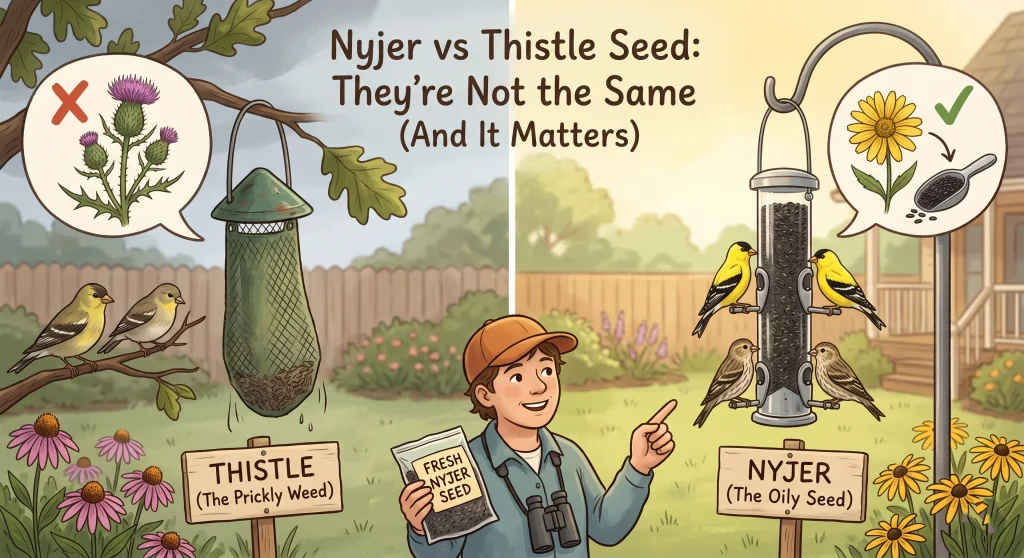
The seed labeled “thistle” in the bird-food aisle does not come from a thistle plant. When people ask about nyjer vs thistle seed, that is the first point I clear up. The tiny black or brown birdseed is Guizotia abyssinica, a plant in the daisy and sunflower family native to the Ethiopian highlands and widely grown in parts of Africa and Asia. True thistles belong to different genera. The two foods may be associated with finches, but they are not botanically the same.
The distinction matters because it clears up two recurring misconceptions at once. Imported niger seed is treated under USDA plant-health rules, and that treatment makes germination unlikely. It does not turn the seed into thistle, and current evidence does not support treating the required heat step as the reason every bag becomes stale quickly. Nyjer is naturally oil-rich, so freshness and moisture control still matter, but finch activity also changes with season, local food availability, feeder condition, and which birds are present in your area.
Field Note: The practical question behind the naming confusion is usually, “Will this create thistles under my feeder?” Imported Nyjer is heat-treated under U.S. import requirements, so germination is unlikely. If you ever use viable, domestically grown niger seed, a sprout would be Guizotia abyssinica, not a true thistle. I would still remove volunteer plants you do not want rather than assuming every sprout is harmless.
Why the Bag Says Thistle
If the seed does not come from thistle, why did the name become so common? Goldfinches do feed on seeds from thistles and many other composite plants in the wild, and the imported niger seed became associated with the same finch-feeding niche. Over time, “thistle seed” became a familiar retail label even though it was botanically inaccurate.
The industry eventually moved toward the spelling “Nyjer” to reduce two kinds of confusion: the frequent mispronunciation of “niger” and the false assumption that the seed was a noxious thistle. The Wild Bird Feeding Institute says registration of the Nyjer trademark was granted in 1999. So Nyjer is not a separate species or a special processing grade. It is the trade name used for niger seed, Guizotia abyssinica.
Today you may still see “Nyjer,” “niger,” and “thistle” used around the same feeder product. The ingredient line is the useful place to look. If it lists Guizotia abyssinica or niger seed, you are buying the small oilseed used in finch feeders, not seed from a true thistle plant.
The Heat Treatment That Changes Everything
Imported Guizotia abyssinica is subject to USDA plant-health treatment requirements. APHIS says the seed can be treated at an approved facility in the exporting country or after arrival at the first U.S. port of entry. The Wild Bird Feeding Institute lists the standard heat schedule as 248°F for fifteen minutes. The purpose is phytosanitary control, especially devitalizing noxious or quarantine-significant weed contaminants that can travel with imported seed. It is misleading to describe the standard process as routine irradiation or to say its main purpose is killing the niger plant itself.
The heat-treatment story is often stretched too far. A 2015 comparison of U.S.-grown niger with imported commercial samples found that all samples still contained high total fat: the U.S. sample measured 36.6 percent, while the imported samples ranged from 36.5 to 38.2 percent. The domestic sample looked better visually in that comparison, but the data do not support a blanket claim that import heat treatment rapidly destroys the oil or automatically gives imported seed a dramatically shorter shelf life. Finches may reject old or spoiled seed, but a bird that lands and leaves is not a reliable freshness test by itself.
Buying far more Nyjer than your birds will use, then leaving the opened bag in a hot or damp storage area for months because you assume the seed cannot deteriorate.
Buy a quantity your finches can use while it is still in good condition, keep the reserve seed cool and dry in a sealed container, and replace seed that smells musty, has become damp, or is being ignored after you have ruled out feeder and seasonal causes.
When you are evaluating the best bird seed for your yard, freshness matters with Nyjer because it is an oil-rich seed and is often sold for relatively low-volume specialty feeders. I would not use a universal six-month comparison or blame a short shelf life on mandatory heat treatment. Buy manageable quantities, keep them dry, and judge the seed by condition and bird use rather than an invented expiration rule.
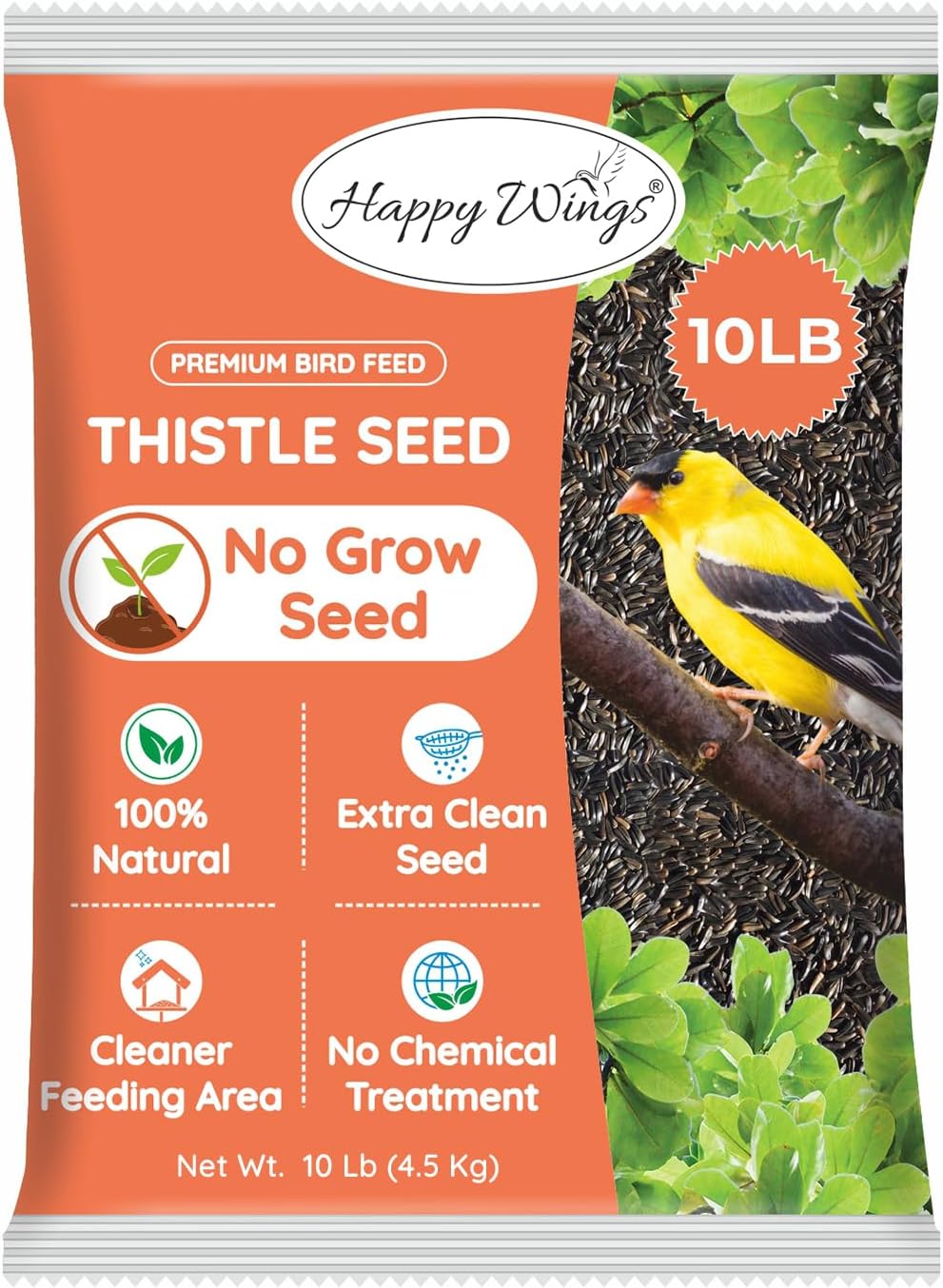
Your new feeder is ready — don't let it sit empty. This is the exact seed finches actually come back for, and at 150,000 seeds per pound, one bag goes a lot further than you'd expect.
Check on AmazonIf you click this link and buy, we earn a commission at no additional cost to you.
The Newer Option: American-Grown Nyjer
U.S.-grown niger does exist, but it is better described as a niche domestic option than a brand-new category. Researchers tested the EarlyBird cultivar in Minnesota and North Dakota more than two decades ago, and a later study evaluated seed grown in South Dakota. Because domestically produced seed is not being imported, it does not go through the import treatment required for foreign Guizotia abyssinica. Availability, however, is much more limited than ordinary imported Nyjer.
Do not use color alone to decide whether a seed is domestic, imported, fresh, or more nutritious. The 2015 U.S.-versus-imported comparison did find the domestic sample darker and glossier, but the imported samples still had essentially the same total-fat range. The Wild Bird Feeding Institute also notes that commercial Nyjer from different origins can naturally be black or brown and that current consumption research does not support a simple “black is better” rule. A fresh domestic lot may be excellent seed, but origin by itself does not prove that finches will prefer it or receive more energy from it.
| Seed Characteristic | Imported Nyjer | American-Grown Nyjer |
|---|---|---|
| USDA Heat Treatment | Required phytosanitary treatment, commonly heat sterilization | No import-treatment requirement for U.S.-grown seed |
| Visual Appearance | Can be black or brown; appearance varies by origin and lot | Can be glossy, but appearance is not a universal quality test |
| Oil Content | Still high; one study measured imported samples at 36.5 to 38.2% fat | Also high; one U.S. sample measured 36.6% fat |
| Shelf Life | Depends on lot, storage, moisture, and age | No universal longer shelf life established |
| Sprout Risk | Low after approved treatment, but not a useful absolute guarantee | Possible if the seed remains viable; sprouts are Guizotia, not thistle |
If you find a genuinely U.S.-grown niger product, treat it as another option to compare rather than an automatic upgrade. Domestic seed avoids the import-treatment step, but the available research does not show that it universally contains more fat, lasts longer, or produces better feeder activity. If finches are ignoring your setup, first check the seed condition, feeder cleanliness, port access, weather, and whether finches are currently using your yard. Origin is one variable, not the diagnosis.

Wagner's Nyjer Seed is a 5-pound wild bird food formulated to attract finches including American Goldfinches, House Finches, Purple Finches, and Pine Siskins. The small Nyjer seeds are well suited to finch feeders with narrow feeding ports and provide a high-energy food source for small songbirds. The resealable bag helps keep the seed contained between feeder refills.
Check on AmazonIf you click this link and buy, we earn a commission at no additional cost to you.
Setting Up Your Finch Feeder
If you want to get the most out of a finch feeder, the tiny size of Nyjer matters. A standard open tray or large-port hopper may waste more seed because the grains can spill through gaps or blow out. Mesh socks and tube feeders with very small ports are designed specifically to hold Nyjer efficiently, which is why they are usually the easier choice rather than the only possible way to offer it.
To learn exactly how to choose the right feeder, protect the ports from rain, and deal with the inevitable shell mess, read my full guide on nyjer bird seed. It covers everything you need to know about managing finch feeding stations in the real world.

A squirrel-proof nyjer/thistle tube feeder with 8 feeding ports and 4 perches for both clinging and perching finches. Features a patented ventilation system to keep nyjer seed fresh longer. UV-resistant components, easy to fill and clean. Backed by a lifetime warranty.
Check on AmazonIf you click this link and buy, we earn a commission at no additional cost to you.
Final Thoughts on the Naming Confusion
The naming confusion is real, but the clean answer is straightforward. Niger is the common name of Guizotia abyssinica, Nyjer is the bird-feeding trade name, and “thistle seed” is an old retail label that does not mean the bag contains true thistle. Once you have confirmed the ingredient, focus on the actual condition of the seed and whether the feeder is working for the birds in your yard.
I would not judge a bag by store type, color alone, or an assumed warehouse age you cannot verify. Buy an amount you can use, choose intact seed without dampness or a musty odor, and keep it dry after opening. American-grown niger is an interesting niche option when you can verify the source, but ordinary properly handled imported Nyjer remains a legitimate high-oil food used by goldfinches, siskins, redpolls, and other small seed-eating birds.

The FEED GARDEN Finch Feeder is designed for Nyjer and thistle seed to attract finches, goldfinches, Pine Siskins, and other small birds. Its metal tube includes 12 small feeding ports and 8 perches so several birds can feed at the same time. A removable top, wide refill opening, internal spacer, and drainage holes help make refilling, cleaning, and routine outdoor use easier.
Check on AmazonIf you click this link and buy, we earn a commission at no additional cost to you.
FAQs
🌿 Is nyjer the same as thistle?
No. Nyjer is the trademarked bird-feeding name commonly used for niger seed, Guizotia abyssinica, a member of the daisy family. True thistles are different plants. Goldfinches do eat seeds from thistles and other composite plants in the wild, which helped the inaccurate “thistle seed” label become familiar in the feeder trade.
🌱 Will nyjer seed grow into thistle weeds in my lawn?
Imported Guizotia abyssinica is treated under USDA phytosanitary rules, so germination after treatment is unlikely. If viable domestic niger seed sprouts, the plant would be Guizotia abyssinica, not a true thistle. Remove volunteer plants you do not want rather than relying on a blanket claim that every sprout is harmless.
🐦 Why won’t finches eat my nyjer seed?
Stale, damp, or spoiled seed is one possible reason finches stop using a Nyjer feeder, but it is not the only one. Check the seed condition and feeder cleanliness, then consider seasonal movement, natural food availability, feeder placement, and whether finches are currently present nearby. The mandatory import heat treatment should not be used as proof that a particular bag has a short shelf life.
🌾 What is niger seed and how is it different?
Niger and Nyjer refer to the same Guizotia abyssinica seed in this bird-feeding context. “Niger” is the established common name; Nyjer is the trademarked spelling adopted by the Wild Bird Feeding Institute to reduce pronunciation problems and confusion with true thistle. You may see either term on packaging.