How to Clean a Bird Feeder With Vinegar (And When It Works Best)
When I worked in bird-feeding retail, customers regularly asked whether they could clean feeders without relying on bleach every time. Vinegar came up often because it is inexpensive, familiar, and useful for loosening ordinary grime. The mistake is assuming that “natural” automatically means it provides the same level of disinfection as a properly diluted bleach solution.
White vinegar contains acetic acid and can help loosen mineral film, old food residue, and other buildup that makes a feeder difficult to scrub. I would not claim that a household vinegar soak reliably kills most backyard bird pathogens. If the goal is routine cleaning, vinegar plus thorough scrubbing can be useful. If sick birds have been using the feeder or you need a stronger disinfection step, Cornell’s bleach guidance is the better-supported option.
Vinegar vs. Bleach: Choosing the Best Cleaner
When someone is choosing between vinegar or bleach for bird feeder maintenance, I separate cleaning from disinfection. Vinegar can be useful for routine grime and mineral buildup. A properly diluted bleach solution has much stronger evidence behind it when the goal is reducing pathogens on a seed feeder. The feeder material and manufacturer’s care instructions still matter because not every finish tolerates every cleaner equally well.
Warning: Never mix vinegar and chlorine bleach. CDC guidance warns that mixing bleach with acids can release chlorine gas, which can cause serious respiratory injury. Keep people and animals away from the area, use one cleaning method at a time, and never combine household cleaners in the same bucket or sink.
If you start with vinegar and later decide the feeder needs bleach disinfection, discard the vinegar solution and rinse the feeder, bucket, brushes, and work area thoroughly with plain water before preparing bleach separately. Do not pour bleach into a container that still holds vinegar. Keeping the two methods physically separate is the safest habit.
Dilute chlorine bleach is a strong disinfectant, and Cornell recommends no more than one part bleach to nine parts water for seed feeders. Research cited by Cornell found a ten-minute soak to be a very effective addition after physical debris has been scrubbed away. Bleach still needs careful handling, material compatibility, thorough rinsing, and complete drying before the feeder goes back outside.
Vinegar works differently and is better treated here as a cleaning aid rather than a guaranteed disinfectant. Its acidity can help loosen buildup and make scrubbing easier. You should still rinse the feeder thoroughly afterward instead of assuming leftover vinegar is automatically harmless at any concentration or on every feeder material.
| Cleaning Solution | Best Used For | Drawbacks |
|---|---|---|
| White Vinegar | Routine grime, mineral film, and cleaning when the feeder material tolerates acid | Not as well supported as bleach for pathogen disinfection; ratio and contact time are not standardized across bird-care sources |
| Chlorine Bleach | Disinfection when disease is a concern and for washable feeder materials | Must be diluted correctly, kept separate from acids, rinsed thoroughly, and used only on compatible materials |
For ordinary maintenance, you can choose vinegar, hot soapy water on seed feeders, or another method allowed by the feeder manufacturer, as long as you scrub away debris and rinse well. I do not reserve bleach only for emergencies. Cornell recommends dilute bleach as a normal effective cleaning option for seed feeders, and it becomes especially useful when disease has been observed.
Wood Feeders Need Material-Specific Care
Wooden feeders are harder to clean because the material is porous, seams can hold debris, and long soaking can swell or damage wood and joints. Cornell notes that less-absorbent feeders are generally easier to sanitize, but I could not find authoritative support for a universal rule that wood must always be cleaned with vinegar or that one dilute bleach wash permanently ruins every wooden feeder. Check the manufacturer’s care instructions and avoid prolonged soaking unless the feeder was designed for it.
Field Note: Wooden hopper feeders were always the ones I wanted customers to inspect most carefully because seed dust and moisture can work into corners and rough grain. I would not diagnose a quiet feeder by saying birds can smell bleach embedded in the wood for months. The practical issue is whether the feeder has been cleaned, rinsed, dried completely, and whether the finish or joints were damaged during washing.
With wood, I rely more on physical brushing and less on soaking. If the manufacturer allows dilute vinegar, apply only enough to clean the surface, scrub the problem areas, rinse as directed, and let the feeder dry thoroughly. The important part is avoiding waterlogged joints and trapped moisture, not assuming vinegar has a special ability to sanitize deep inside the grain.
Soaking a wooden feeder for a long period in any cleaner without checking whether the wood, glue, fasteners, or finish are designed for immersion.
Following the feeder maker’s cleaning instructions, scrubbing visible debris from the wood, rinsing appropriately, and allowing the feeder to dry completely before adding seed.
Cleaning Tools That Make the Job Easier
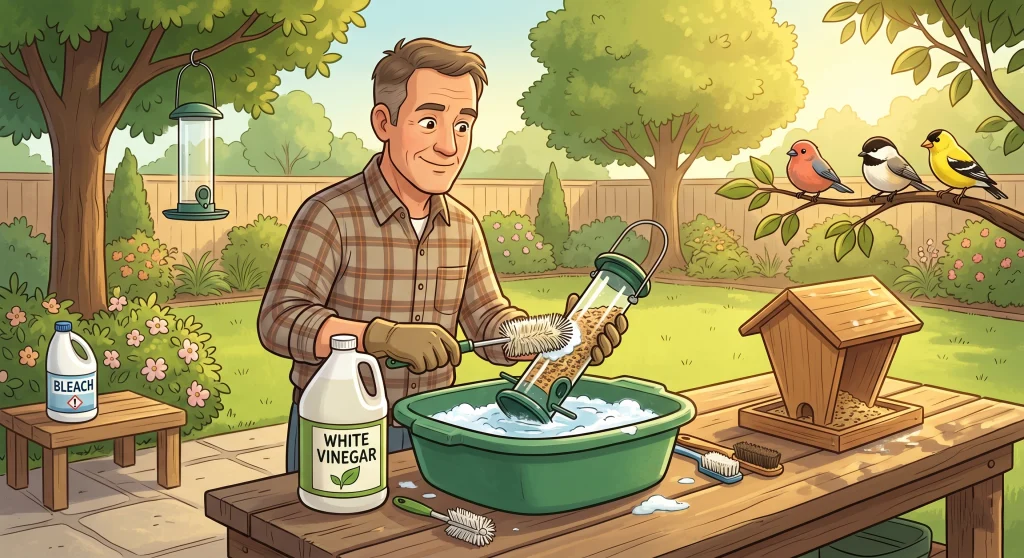
Whatever cleaning solution you choose, the brush does much of the important work because organic debris can shield microbes from a disinfectant. An old toothbrush is useful for corners and perches, but a narrow tube or feeding port often needs a longer or smaller brush to reach every surface.
For tube feeders, a bottle brush sized to the tube makes the bottom and walls much easier to reach. Small port brushes or pipe cleaners help around feeding openings and seams where old seed can lodge. I prefer keeping these tools dedicated to feeder cleaning so they are not carrying grease or household-cleaner residue from another job. The exact brush matters less than being able to physically reach every food-contact surface.

This 19-piece hummingbird feeder cleaning set includes three brush sizes for reaching reservoirs, feeding ports, bottle holders, and other narrow areas. The largest brush has a double-ended design for cleaning both nectar bottles and smaller feeder components, while the medium and small brushes handle tighter spaces. Nylon bristles combined with stainless steel and plastic handles provide a practical reusable set for routine bird feeder cleaning.
Check on AmazonIf you click this link and buy, we earn a commission at no additional cost to you.
Getting the Bird Feeder Vinegar Solution Right
There is no single authoritative bird-feeder vinegar ratio that turns household vinegar into a validated disinfectant for plastic or metal. The 1:2 and 1:1 mixtures you often see online are practical cleaning mixtures for loosening grime, not disease-control standards. If you need pathogen disinfection on a compatible seed feeder, Cornell’s better-supported benchmark is bleach diluted no stronger than one part bleach to nine parts water.
For routine vinegar cleaning, one part white vinegar to two parts water is a reasonable practical starting mixture if the feeder manufacturer allows vinegar. Use it to help loosen ordinary grime, then scrub. I would not call that ratio “perfect” or claim that it sanitizes the feeder by itself.
For stubborn mineral film or residue, some cleaning instructions use a stronger 1:1 vinegar-and-water mixture. Treat that as a cleaning step, not a substitute for proven disinfection when disease is involved. Also check material compatibility before using a stronger acid mixture, especially on wood, coatings, galvanized parts, or decorative finishes.
For a feeder that is compatible with vinegar, this is a practical routine:
- Take the feeder apart as far as the manufacturer intends, removing detachable trays, ports, perches, and roof pieces.
- Prepare the vinegar mixture separately from every bleach product and use water that is safe for the feeder material.
- Soak only parts that are designed for immersion. For wood or sensitive finishes, use a shorter surface-cleaning approach instead.
- Scrub away visible seed dust, droppings, mold, and residue, paying special attention to corners, seams, and feeding ports.
Soaking can soften stubborn residue, but it is not mandatory for every feeder and it does not guarantee that bacteria are gone. Thorough physical cleaning, the right disinfection step when needed, careful rinsing, and complete drying are the parts that matter.

A 1-gallon (128 oz) natural distilled white vinegar at 5% acidity. Versatile for cooking - pickling, brightening sauces, and balancing flavors - as well as general cleaning when diluted with water. All natural ingredients.
Check on AmazonIf you click this link and buy, we earn a commission at no additional cost to you.
Rinsing and the Air-Dry Requirement
Once the scrubbing is done, rinse every piece thoroughly with clean water. I would not base that step on a claim about birds disliking the smell of acetic acid. The purpose is simpler: remove loosened grime and cleaning residue before food goes back into contact with the feeder.
Complete drying is especially important for seed feeders because trapped moisture encourages seed to clump and spoil. Air drying is simple and works well. A clean lint-free towel can be used on suitable exterior parts if needed, but the feeder should still be fully dry inside before it is refilled.
Do not refill a seed tube while water is still pooled in the bottom or trapped around seams. Even a small wet area can dampen nearby seed and create a place for mold or spoilage to start. Let the feeder dry fully rather than putting a deadline on how quickly one drop will create a problem.
If you want more general bird feeder tips regarding setup and maintenance, keeping food dry is one of the recurring themes. The broader process in how to clean a bird feeder also matters because cleaning frequency, ground sanitation, crowding, and what you do when sick birds appear all affect disease risk.
Final Thoughts: The Reward of Routine Maintenance
Vinegar is a useful cleaning option, but I would not build the whole maintenance routine around avoiding bleach. For routine grime, vinegar and scrubbing may be enough. When stronger disinfection is warranted, a correctly diluted bleach solution that is thoroughly rinsed and dried is an established bird-feeder cleaning method, not something that automatically poisons birds.
The real payoff is a feeder that is easier to inspect and maintain before old food, droppings, and moisture accumulate. No cleaning method can make a shared feeding station risk-free, but regular maintenance reduces avoidable contamination. Learning how often to clean a bird feeder is just as important as deciding whether vinegar, soap, hot water, or dilute bleach fits the job.

A no-scratch foam cleaning mop with a long arm designed for cleaning hummingbird and oriole feeders. Removes harmful residue and water buildup to keep birds healthy. Features a built-in hook for convenient hanging storage.
Check on AmazonIf you click this link and buy, we earn a commission at no additional cost to you.
FAQs
🍎 Does apple cider vinegar work for cleaning bird feeders?
Plain distilled white vinegar is the more predictable cleaning choice because its acidity is standardized and it does not contain the color and flavor compounds found in apple cider vinegar. I would not claim that a properly rinsed trace of apple cider vinegar automatically attracts ants, but there is little reason to choose it over inexpensive white vinegar for feeder cleaning.
⏱️ How long do I need to soak the parts?
There is no universal 30-to-60-minute vinegar requirement for every feeder. Longer contact can help soften stubborn residue on compatible plastic or metal parts, but follow the feeder manufacturer’s limits and avoid prolonged soaking of wood or sensitive finishes. Remember that soak time does not turn vinegar into a validated disease-control disinfectant.
🧼 Is it safe to add dish soap to the mix?
For seed feeders, Cornell allows hand washing with soap and hot or boiling water, followed by thorough rinsing. I would use soap as a separate cleaning step rather than mixing products unnecessarily. For hummingbird feeders, Cornell’s current guidance says to clean with hot water and a bottle brush and not use soap or detergent.
☀️ Can the sun help sanitize the feeder?
Sunlight can help a feeder dry, but I would not rely on backyard sun exposure as the disinfection step or promise that it kills whatever bacteria remain. Use the appropriate cleaning or disinfection method first, rinse thoroughly, and let the feeder dry completely before refilling.