The Viral Trick That Harms the Birds
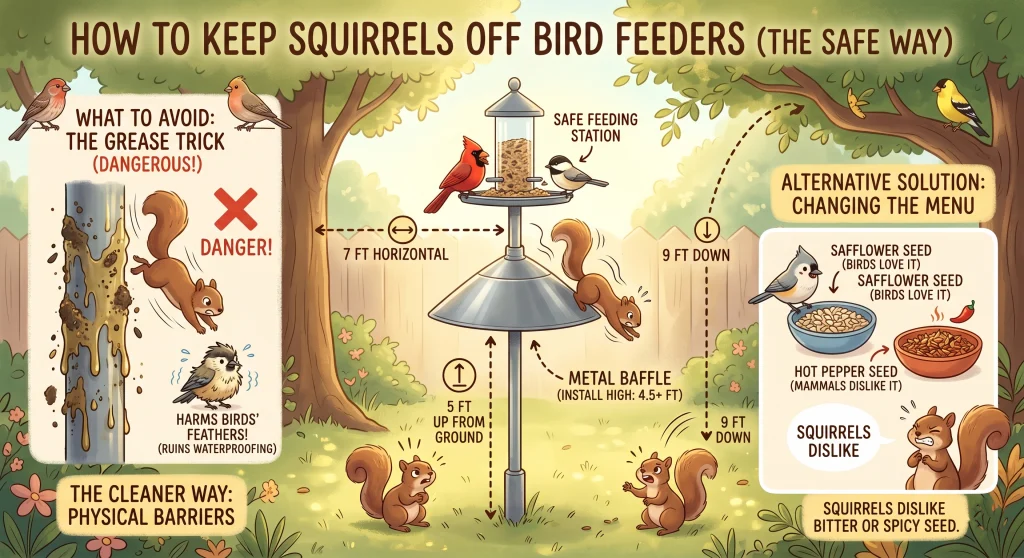
If you are trying to figure out how to keep squirrels off a bird feeder, you will eventually run into videos showing petroleum jelly, cooking oil, grease, or similar substances smeared on a pole. A slick pole may make climbing harder for a while, but Cornell specifically recommends against grease, oil, petroleum jelly, and glycerin because these substances can mat fur and feathers and reduce their insulating properties. There is no reason to take that risk when physical barriers work without coating the pole.
When people brought up the grease trick at the store, the part I focused on was not whether a squirrel might slide. It was what else could touch that coating. Birds can brush against poles, hooks, or nearby hardware while landing and moving around a feeder. If grease reaches the plumage, you have created a feather-care problem that did not exist before.
Warning: Do not grease a bird feeder pole with petroleum jelly, cooking oil, glycerin, or similar products. Cornell warns that these substances can mat feathers and reduce their insulating and waterproofing performance. That can leave a contaminated bird less able to cope with cold or wet conditions, so use a mechanical baffle instead.
Grease also creates an unpleasant maintenance problem. Dirt and seed debris stick to it, the coating has to be reapplied, and it can transfer to hands and clothing during refills. A well-positioned baffle is cleaner, easier to inspect, and does not depend on keeping an exposed pole coated with an oily substance.
The Foundation: Getting Your Spacing Right
Before buying more hardware, look at the geometry of the yard. Squirrels climb and jump well enough to bypass a baffle if a tree, fence, roof, deck rail, or other launch point sits nearby. Placement is therefore part of the exclusion system, not a separate detail.
You will often see the 5-7-9 rule used as a backyard shorthand, but I treat those numbers as a starting guideline rather than exact biological limits. Current Cornell guidance says squirrels can leap several feet and recommends keeping feeders at least ten feet from jumping-off points; Audubon likewise recommends roughly eight to ten feet of horizontal clearance and a pole baffle about four to five feet above the ground. When you are working out how to set up a bird feeder, use the conservative spacing your yard allows and combine it with the other bird feeder tips that block alternate routes.
A low feeder or a feeder beside a deck railing gives squirrels options that bypass the pole completely. Even a good baffle cannot help if an animal can jump directly to the tray from another surface. Check the whole approach path before blaming the hardware.
When a baffle appears to be failing, I would first check for a nearby launch point and the height of the baffle before replacing anything. If the yard cannot provide enough clearance, a weight-activated or caged feeder may be a better fit than trying to force a pole setup into a tight space.
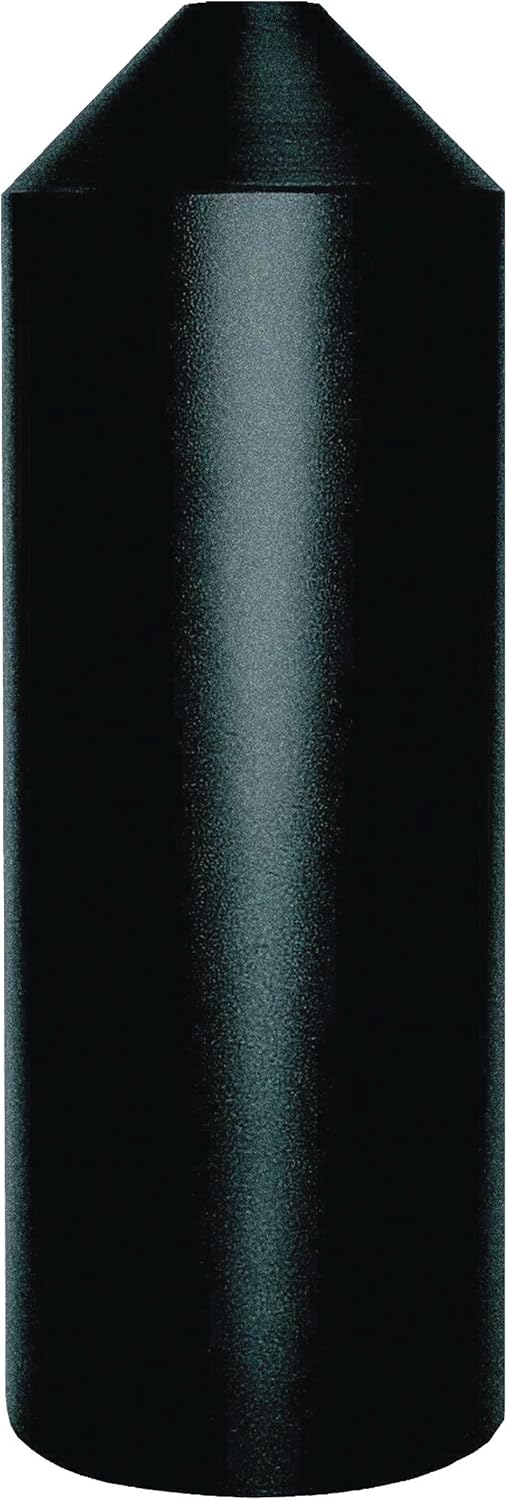
A torpedo-shaped steel squirrel baffle with a textured powder-coated finish. Measures 6.125 inches in diameter and slides onto any pole ranging from 1/2 to 1-3/8 inches in diameter via an included coupler. Easy to install - simply remove the zip tie and secure the coupler around the pole. Pole not included.
Check on AmazonIf you click this link and buy, we earn a commission at no additional cost to you.
Choosing the Right Baffle for Your Setup
Once the feeder is away from obvious launch points, a baffle is one of the most useful physical defenses for a pole or hanging setup. It is not literally impenetrable and no feeder arrangement is guaranteed squirrel-proof, but Cornell and Audubon both recommend baffles as a strong first-line option when they are installed in the animal’s access route.
The right baffle depends on how the feeder is mounted and which route the squirrel is using. Pole-mounted systems commonly use cylindrical or cone-style barriers, while hanging feeders can use a baffle above the feeder when the main approach is down the hanger.
| Baffle Type | How It Works | Best Used For |
|---|---|---|
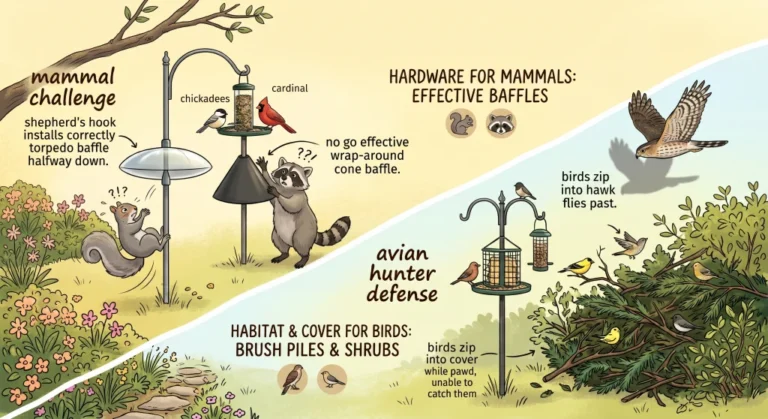
| Torpedo Baffle | A long, cylindrical tube that mounts directly to the pole. It tilts and wobbles when an animal grabs it, dropping them to the ground. | Straight metal poles and heavy-duty setups. Excellent against both squirrels and climbing nocturnal mammals. |
| Wrap-Around Cone | A wide, skirt-like metal disk that physically blocks the upward climbing path. | Existing setups where you cannot remove the pole from the ground. It snaps securely around the middle of the post. |
For a torpedo or stovepipe-style baffle, follow the manufacturer’s required length, pole diameter, and mounting height rather than treating one material or one length as universal. Metal can be durable, but a properly designed outdoor-grade plastic or polycarbonate product is not automatically useless. Fit and placement matter more than a blanket material rule.
If the feeder hangs from a branch, the access route changes. A hanging baffle above the feeder can make it difficult for a squirrel to climb down the hanger and reach the food, but the feeder still needs enough clearance from the trunk, branch, and nearby structures. Cornell recommends at least an eighteen-inch diameter for a hanging baffle. Material durability matters, but do not assume every plastic dome will be chewed through or every metal one will solve poor placement.
Squirrels may keep testing a new setup, and some will find routes you did not notice at first. Give the baffle a fair test, but do not assume correct sizing guarantees failure. If a squirrel still reaches the feeder, watch how it gets there and fix that specific route.

19 inch diameter design makes this squirrel stopper more effective than other sizes. Larger sizes have greater jitter, no matter if rodents fly up or climb up, they will not be able to stand stably on the baffle. Anything smaller than 19 inches cannot step over this baffle easily, which means that the foods in your bird feeder can be specially provided to feathery friends instead of greedy squirrels or raccoons.
Check on AmazonIf you click this link and buy, we earn a commission at no additional cost to you.
The Most Common Installation Mistakes
Even a good baffle can fail when it is mounted too low, too high, or beside an alternate launch point. Audubon recommends a pole baffle roughly four to five feet above the ground, which is a useful target for many setups. Always follow the dimensions and mounting instructions for the specific baffle you bought.
Field Note: When someone says a new baffle “doesn’t work,” I start with three checks: its height above the ground, its distance from nearby launch points, and whether the squirrel is actually climbing the pole. That usually tells you whether the problem is the baffle, the installation, or an entirely different access route.
Use the installation rules below as practical checks, but do not treat them as a guarantee. The manufacturer’s dimensions and the actual jump routes in your yard still control whether the setup works:
- The top of a pole baffle must be at least four and a half feet off the ground.
- The bottom of a cone baffle must sit high enough that a squirrel cannot reach the rim while standing on its hind legs.
- Do not place the baffle so high that it touches the bottom of the seed tray. The squirrel needs room to hit the baffle without accidentally grabbing the food source above it.
- Always ensure the mounting collar is tightened securely. If the collar slides down the pole under weight, the barrier fails.
Measure the setup rather than eyeballing it, then watch the first few attempts. If squirrels bypass the baffle from the side or above, increasing pole height alone will not fix the real access route.
Squirrel-Proof Feeders as a Structural Alternative
Some yards simply do not provide enough open space for a pole-and-baffle system. If a feeder must sit close to a deck, fence, tree, or building, a weight-activated or caged feeder may be more practical. A baffle can still help in some tight layouts, but it cannot stop a squirrel that can jump around it directly to the feeder.
These feeders reduce access through mechanical design rather than relying only on distance. Two common approaches are weight-activated closures and outer cages.
Weight-activated feeders use the visitor’s weight to move a shroud or door over the feeding ports. Models with adjustable sensitivity let you change which heavier visitors trigger the mechanism, although the useful setting depends on the feeder design and the bird species you want to admit.
Cage-style feeders surround the seed tube with openings that small birds can pass through while squirrels cannot fit through easily. They can work well, but the cage may also exclude larger birds you wanted to feed, and a poorly positioned feeder can still let a squirrel reach through or pull it toward another surface.

The most popular large-capacity squirrel-proof feeder around. When a squirrel climbs on, its own weight automatically closes the feeding ports, keeping seed safe without harming the animal. Patented weight-adjustable spring lets you control which birds can feed. Built with UV-stabilized, chew-proof materials for long-lasting outdoor use. Backed by lifetime support with real humans on the phone.
Check on AmazonIf you click this link and buy, we earn a commission at no additional cost to you.
Safflower Seed: The Ultimate Backup Plan
If your yard layout makes physical exclusion difficult, changing the food can be a useful secondary tactic. It will not replace the structural approach I use for other bird feeder predators, but it can reduce how rewarding the feeder is to squirrels while still serving some of the birds you want.
Safflower is worth trying, especially if cardinals, chickadees, titmice, or finches already visit your yard. Audubon notes that many birds eat it while squirrels generally dislike the taste. “Generally” matters here: individual squirrels can still eat safflower, and switching foods may also change which birds use the feeder.
Do not expect a predictable few-day transition or assume every squirrel will reject safflower after one taste. Offer a small amount first and watch what actually happens in your yard. If squirrels keep eating it, move back to physical exclusion rather than waiting for the seed to become a deterrent.
Capsaicin-treated seed is another option because mammals are much more sensitive to capsaicin than birds, and controlled studies have found capsaicin far less aversive to birds than to mammals. Still, I would not describe birds as completely incapable of sensing it, and Cornell reports mixed real-world results for squirrel deterrence. If you use a commercial hot-pepper product, follow the label, avoid getting the material in your own eyes or on your skin, and keep the physical baffle as the main defense.

A premium safflower seed that attracts cardinals, chickadees, titmice, and grosbeaks while naturally deterring squirrels, grackles, and starlings. Its bitter taste keeps unwanted visitors away without any extra effort. Can be used alone or gradually mixed with other seed blends to transition your feeder to a more desirable bird-friendly environment.
Check on AmazonIf you click this link and buy, we earn a commission at no additional cost to you.
Final Thoughts on Squirrel Management
You do not need to remove squirrels from the neighborhood to protect a feeding station. The practical goal is to make the bird feeder harder and less rewarding for them to access without creating hazards for other wildlife.
Skip greasy poles and other sticky coatings. Start with placement and a properly installed baffle, move to a weight-activated or caged feeder when the yard is too tight, and treat safflower or hot-pepper products as optional backups rather than guarantees. That combination is safer and usually easier to troubleshoot because each fix has a clear job.

Steep dome design sends squirrels sliding off with no moving parts, no gimmicks. Made in the USA from UV-resistant polycarbonate built to withstand rain, sleet, snow, and hail for years. Fits any bird feeder or birdhouse, easy to clean and assemble. Backed by a lifetime warranty with real humans available to help.
Check on AmazonIf you click this link and buy, we earn a commission at no additional cost to you.
FAQs
🔊 Do ultrasonic squirrel repellents work?
I would not rely on an ultrasonic device as the main squirrel defense. Outdoor deterrents can be highly situation-dependent, and squirrels may simply use another approach route or habituate to a repeated cue. A physical baffle or access-limiting feeder gives you a much clearer way to see whether the intervention is working.
🦷 Can squirrels chew through a plastic baffle?
Some squirrels chew plastic feeder parts, but that does not mean every plastic or polycarbonate baffle will fail. Choose a product rated for outdoor squirrel exclusion, inspect it for chewing or cracks, and replace damaged hardware. Metal is durable, but correct size and placement still matter.
🌀 Will putting a Slinky on the pole stop them?
A Slinky is a backyard hack rather than a standardized exclusion device, so results vary with the pole and installation. I would use a purpose-built baffle when you want a predictable setup that can be positioned and inspected according to manufacturer guidance.
🌶️ Does hot pepper seed hurt the birds’ eyes?
Birds are much less sensitive to capsaicin than mammals, which is why commercial hot-pepper seed can deter squirrels without producing the same burning response birds would experience in a mammal. That is not the same as proving every formulation can never irritate eyes or skin. Use a commercial product as directed and avoid loose DIY pepper dust around faces, hands, and feeding surfaces.
🥜 Will a dedicated squirrel feeder keep them away from the bird seed?
A separate squirrel feeding area can sometimes reduce competition at the bird feeder, and both Cornell and Penn State mention it as an option. It is not a guaranteed diversion, so keep the main station protected with placement or a baffle if squirrels continue to raid it.
🐿️ Do squirrels eat suet?
Yes, squirrels may eat standard suet. A commercial hot-pepper suet can discourage some squirrels, but effectiveness varies. If they keep raiding the cage, a baffle, squirrel-resistant suet feeder, or better placement is more dependable than changing the recipe alone.
❄️ Will a baffle still work in heavy snow?
Deep snow can effectively raise the launch surface around a pole and reduce the clearance below a baffle. After major accumulation, recheck the measured height from the packed snow surface and clear snow around the pole if it gives squirrels an easier route over the barrier.