Why Most Multiple Feeder Setups Create Chaos
When you bring a new pole system home and step the base into your yard, the immediate instinct is to fill every available hook. But if you do not understand how birds navigate space, this approach usually fails. I have watched this pattern repeat more times than I can count. People load up a station with oversized wooden hoppers, and then wonder why the birds are constantly bickering.
The core problem is flight clearance. Birds like Northern Cardinals and Blue Jays need room to land, grab a seed, and take off without bumping their wings against a metal pole or a neighboring feeder. When feeders are crowded too closely together, the birds feel trapped. Instead of peacefully sharing the space, they become territorial and chase each other away.
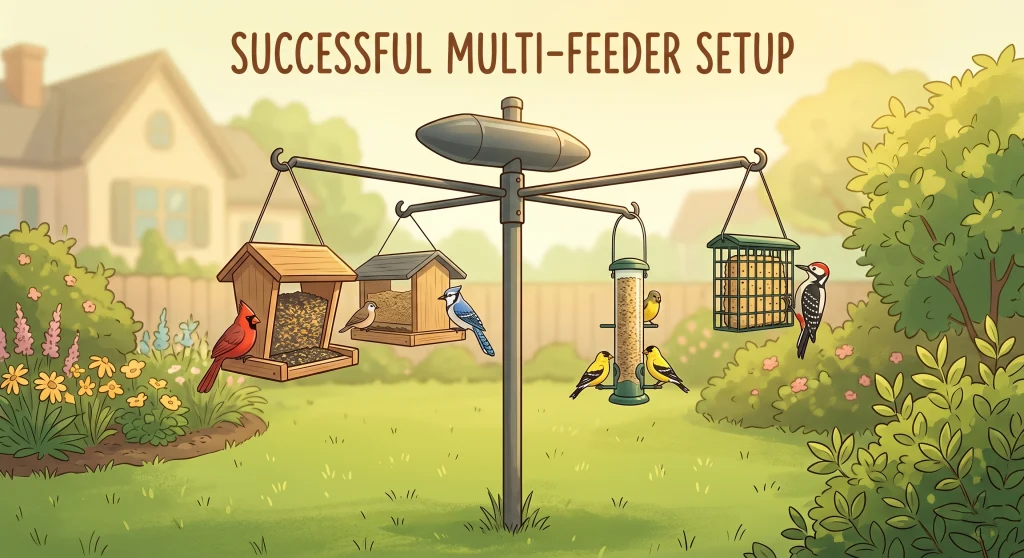
To fix this, you have to look beyond the number of hanging points. A truly functional setup needs to account for bird comfort, meaning you must intentionally pair the right bird feeder types with the correct arm spacing, and balance the overall weight of the system.
Arm Count and Spacing: The 10-Inch Rule
Before looking at spacing, you have to decide on the arm count. A standard 4-hook bird feeder pole is the sweet spot for most yards. It gives you enough variety without overcrowding the airspace. Upgrading to a 6-arm system sounds appealing, but it significantly tightens the flight paths. If you choose a 6-arm pole, you must stick strictly to narrow tube feeders and small suet cages. Hanging six wide hoppers on a single pole is a recipe for territorial brawls.
If you only look at one specification before buying, make it the arm reach. The distance from the center pole to the hanging hook determines exactly what you can safely hang there. Many cheaper poles on the market have short arms that only extend 5 or 6 inches outward, which forces large feeders to bump into the main mast.
According to testing data from onthefeeder.com, an arm spacing of exactly 10 inches from the center pole is adequate for larger feeders without crowding. A 10-inch gap gives a wide hopper feeder enough room to swing slightly in the wind without crashing. If a pole has shorter arms, around 7.5 inches from the center, the data shows it is better suited exclusively for slender tube feeders.
Pro Tips: Always measure the radius of your largest feeder. If your feeder is 8 inches wide, it needs at least a 4-inch radius just to hang straight. Add another 4 to 6 inches of clearance for the birds to maneuver, and you can easily see why a 10-inch arm reach is the minimum standard.

The FEED GARDEN squirrel-proof bird feeder pole creates a multi-feeder backyard station with four hanging hooks. A 19-inch smooth cone baffle helps prevent squirrels from climbing toward the feeders, while the five-prong base improves stability in the ground. The powder-coated steel pole adjusts up to 92 inches and can support bird feeders, suet cages, and other lightweight outdoor accessories.
Check on AmazonIf you click this link and buy, we earn a commission at no additional cost to you.
The Physics of Tipping and Weight Balance
Once you have the spacing right, the next hurdle is gravity. A 4-hook bird feeder pole holds a tremendous amount of weight, especially after you fill everything to the brim. If you do not balance that weight across the arms, the entire pole will slowly lean to one side, eventually bending the metal or tearing up your lawn.
I always tell people to treat their pole like a seesaw. You need equal weight on opposite sides. A large hopper feeder filled with black oil sunflower seed can easily weigh six to eight pounds. A small wire cage holding a single suet block weighs barely a pound. If you hang the heavy hopper on the north arm and the light suet on the south arm, the pole will immediately start pulling to the north.
Field Note: One of the most common things I saw at the store was customers bringing in photos of their brand new pole leaning at a 45-degree angle. Almost every time, they had hung a massive, 10-pound high-capacity feeder on one side and left the opposite hook completely empty. Once the ground softened after a heavy rain, the unbalanced weight pulled the pole right over.
To avoid this, pair heavy feeders with heavy feeders, and light feeders with light feeders. If you only have three feeders for a four-hook system, leave one of the lighter-weight hooks empty, not the hook opposite your heaviest feeder.
| Feeder Type | Estimated Weight (Filled) | Best Balancing Partner |
|---|---|---|
| Large Wooden Hopper | 6 – 10 lbs | Another Hopper or Large Platform |
| Standard Tube Feeder | 2 – 4 lbs | Tube Feeder or Heavy Suet Log |
| Single Suet Cage | 1 – 1.5 lbs | Nyjer Sock or Small Nectar Feeder |
| Hummingbird Dish (12oz) | 1 lb | Small Suet Cage |
Height Requirements and Integrated Baffles
A multi-arm feeder pole is basically an all-you-can-eat buffet for squirrels if you do not protect it properly. The only reliable way to keep squirrels off a multi-feeder setup is a torpedo baffle mounted directly on the pole. But for a baffle to work, your pole has to be tall enough to accommodate it.
Squirrels can jump about four feet straight up from the ground. This means the top of your baffle needs to sit at least four and a half to five feet high. Here is where the math catches people off guard: most feeders hang down about a foot or more from their hook. If your pole is too short, the bottom of your hanging feeders will rest right against the top of the baffle, allowing the squirrel to simply reach up and grab a snack.
When you are comparing bird feeder pole options, total height is critical. You want a pole that stands at least eight feet tall before it goes into the ground. Once you sink it a foot and a half into the dirt for stability, you are left with six and a half feet of workable height. This gives you plenty of room to mount a baffle at the five-foot mark.
Key point: If you are shopping for a new system, strongly consider poles with an integrated squirrel stopper baffle. These premium systems feature a baffle that is factory-engineered to fit the exact diameter of the center mast, preventing any slippage or gaps that clever squirrels often exploit on aftermarket baffles.

This 92-inch bird feeder pole combines a squirrel-deterring spring-loaded baffle with four adjustable shepherd hooks for hanging multiple feeders or garden accessories. Its nine-prong ground base helps improve stability, while the adjustable six-section pole allows the overall height to be changed for different backyard setups. The station also includes a detachable bird bath and mesh feeding tray, providing several feeding and watering options around one central pole.
Check on AmazonIf you click this link and buy, we earn a commission at no additional cost to you.
Deck-Clamp Systems for Patios and Balconies
If installing a ground pole is not an option because you live in an apartment or want to watch birds from a second-story patio, a deck-clamp mount is a very practical alternative. These brackets tighten securely around a wooden or metal deck railing without the need for drilling.
You can find a multi-arm pole system designed specifically for deck railings, but there are a few limitations to keep in mind before you buy. First, clamp mounts typically have a much lower weight capacity than ground poles. A strong wind hitting three heavily loaded hoppers can put tremendous torque on a deck railing. It is usually best to stick to lighter tube and suet options for these setups.
Second, remember that whatever drops from those feeders will land directly on your deck or the patio below. If you use a multi-arm system over a deck, stick to completely shell-free seed like sunflower hearts to keep the mess manageable.

This powder-coated heavy-duty steel pole stands 41 inches tall with a 29.9-inch width and clamps onto horizontal deck rails up to 2.1 inches thick without any tools. The curved tip safely holds bird feeders, flower baskets, lanterns, wind chimes, and more. Hand-tightened nuts make repositioning or removal quick and easy.
Check on AmazonIf you click this link and buy, we earn a commission at no additional cost to you.
Final Thoughts: What to Look For
Setting up multiple feeders in one spot is incredibly rewarding when done correctly. It brings a wide variety of species into a single viewing area and centralizes your cleaning routine. The trick is simply buying a system that respects the physical space the birds need.
When comparing options and making your final choice, prioritize these three features:
- Arm Reach: Insist on 10-inch arm spacing from the center pole so your hoppers have room to swing.
- Total Height: Look for an 8-foot total height so you can properly mount a baffle at the 5-foot mark after burying the base.
- Base Stability: Choose a system with an auger or a wide, multi-prong ground stake rather than a simple straight point, as this prevents the pole from tipping under heavy loads.
Take the time to plan your layout, balance your weight evenly, and your multi-arm system will provide years of peaceful bird watching.

A textured powder-coated steel squirrel baffle that mounts on any 1/2 to 1-3/8-inch pole or shepherd hook via an included black coupler. No need to remove the bird feeder during installation. Snaps apart easily for quick setup. Defeats squirrels every time.
Check on AmazonIf you click this link and buy, we earn a commission at no additional cost to you.
FAQs
⚖️ How deep should I bury a multi-arm pole?
A tall pole holding multiple feeders should be sunk at least 18 to 24 inches into the ground. Using a ground auger base provides much more stability than just pushing straight stakes into the dirt.
🐿️ Can squirrels jump from one arm to another?
Yes, once a squirrel bypasses your baffle and gets onto the arms, they will easily jump between the hanging feeders. The baffle on the center pole is your only true line of defense.
🌧️ Does rain make the pole more likely to lean?
Absolutely. Wet ground softens considerably, and rainwater adds significant weight to exposed seed inside the feeders. This is when an unbalanced pole is most likely to tip over.
🦅 Will a multiple feeder station attract hawks?
A busy feeding station congregates a lot of small birds in one area, which naturally draws the attention of Cooper’s Hawks and Sharp-shinned Hawks. Providing nearby brush or tree cover gives the smaller birds a safe place to hide.