
The Geometry of Saving Money
Many people assume that if a feeder costs twenty dollars, it is inherently lower quality than one that costs one hundred and twenty dollars. In the bird feeding world, price does not dictate quality as much as it dictates complexity. A simple hopper feeder is incredibly effective at feeding birds, it just lacks the complex machinery to stop rodents. The pole baffle is what allows you to use that simple, effective feeder without fear.
If you are looking for a cheaper way to stop squirrels, adding a baffle wins every time, provided you have the open yard space to support it. The choice between a high-end integrated feeder and a simple pole setup is entirely dictated by where you plan to put it. You are not choosing between good and bad products. You are choosing the tool that fits your specific backyard geometry.
The Spatial Requirement: Understanding the 5-7-9 Rule
Before you look at prices, you have to look at the trees in your yard. Squirrels are incredible athletes, and defeating them requires understanding their exact physical limits. The industry standard for outsmarting them is known as the 5-7-9 rule, which maps out their jumping capabilities from every possible angle.
Here is exactly what those numbers mean when you are setting up a feeding station. You have to account for vertical leaps, downward drops, and horizontal jumps. Missing even one of these clearance requirements gives the rodents a direct path to the seed.
- 5 feet up: A squirrel can jump five feet straight up from the ground. If your baffle is mounted lower than this, they will simply spring off the grass, bypass the metal cone entirely, and latch onto the pole above it.
- 7 feet down: A squirrel can drop down onto a feeder from a branch seven feet above it. You need clear vertical airspace above your setup, meaning you cannot place a pole directly under a low-hanging oak canopy.
- 9 feet across: A squirrel can launch itself horizontally up to nine feet from a tree trunk, fence line, or deck rail. If your pole is eight feet from a privacy fence, they will treat it like an Olympic long jump and clear the distance easily.
Action Log: The Pre-Purchase Yard Audit
Before buying anything, take ten minutes to map out your potential feeding station. First, identify every possible launching point in your yard. Look beyond the obvious tree branches and include fence lines, deck rails, and shed roofs. Second, measure the exact 5-7-9 distances from your preferred pole location to those launch points.
Finally, double-check for temporary stepping stones. A kid’s bicycle leaning against a tree, a BBQ grill rolled to the edge of the patio, a tall outdoor trash can, or even a large decorative garden rock can instantly invalidate your carefully measured vertical clearance. Identify these temporary launching pads and make sure your pole is stationed far away from them.
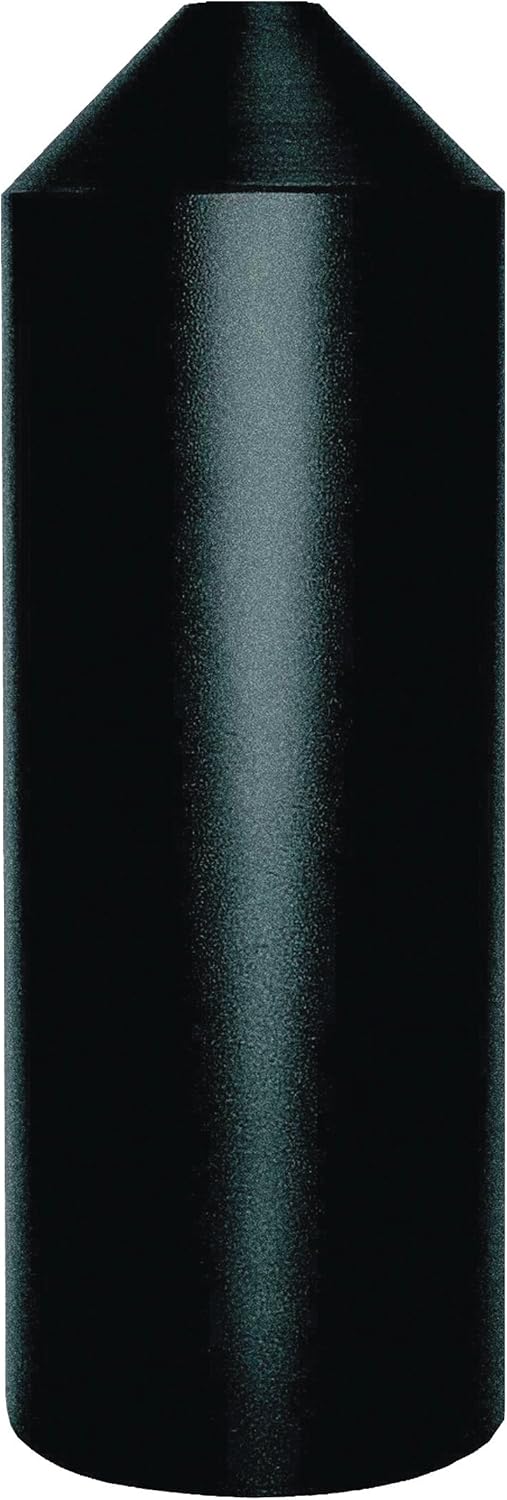
A torpedo-shaped steel squirrel baffle with a textured powder-coated finish. Measures 6.125 inches in diameter and slides onto any pole ranging from 1/2 to 1-3/8 inches in diameter via an included coupler. Easy to install - simply remove the zip tie and secure the coupler around the pole. Pole not included.
Check on AmazonIf you click this link and buy, we earn a commission at no additional cost to you.
The Math Breakdown: Premium Feeder vs Baffle Combo
When customers came into the store complaining about squirrels, they were often shocked by the price tags on the premium integrated feeders. It is true that a high-quality, weight-activated feeder will easily cost over a hundred dollars. But when you run the numbers on a component-based pole setup, the spatial return on investment becomes incredibly obvious.
Instead of relying on a complex mechanical shroud to block seed ports, a baffle simply denies the animal access to the pole entirely. This allows you to choose from a wider variety of standard bird feeder types, using inexpensive plastic or wire models that hold more seed and cost practically nothing to replace if they accidentally break. The initial savings are obvious, but the long-term replacement costs are where the component setup really shines.
| Setup Approach | Required Components | Estimated Total Cost | Long-Term Durability |
|---|---|---|---|
| Premium Integrated Feeder | High-end mechanical feeder + basic hanging hook | $120 to $150 | High (moving parts require twice-yearly lubrication) |
| Pole and Baffle Combo | Basic tube feeder ($15) + Pole ($25) + torpedo baffle ($30) | $70 | Very High (no moving parts to fail or seize) |
Field Note: I would often walk customers through this exact math. The realization that they could save fifty dollars and still completely stop squirrels just by moving their setup a few feet away from an oak tree was usually the turning point in their backyard planning.
This component approach also means that if your basic tube feeder cracks after dropping it on the patio, you are only out fifteen dollars. If a premium engineered feeder takes a hard fall and bends a vital internal spring, you are looking at a much more complicated repair or a total replacement. Separating the deterrent from the feeder itself drastically lowers your long-term maintenance costs.

6 feeding ports with perches let multiple birds feed at once. Transparent 2 lb seed chamber makes it easy to see when to refill, with a simple flip-top lid for quick access. Built-in drainage keeps seed dry and mold-free. Works with sunflower, nyjer, safflower, mixed seed, and more. A great gift for any bird lover!
Check on AmazonIf you click this link and buy, we earn a commission at no additional cost to you.
When the Expensive Feeder is Your Only Option
There is a very specific reason why the high-end mechanical models dominate the market. Many people simply do not have a yard that accommodates the strict 5-7-9 rule. If your property is heavily wooded or tightly packed, a pole baffle will fail instantly because squirrels will simply drop from the canopy above or launch sideways from a nearby fence.
In these environments, you have to concede the physical space to the rodents and rely on hardware to do the blocking. This is where investing in a premium squirrel proof bird feeder becomes financially justified. Because the weight-sensitive mechanism is built directly into the seed chamber, it does not matter how the squirrel gets there. The moment their weight hits the perch, the ports close.
Beyond mechanical necessity, there is also a visual trade-off to consider in tight spaces. A large metal torpedo baffle on a central pole is highly functional, but it is not a subtle addition to a flower bed. If you are forced to place your setup in a small, highly visible courtyard, a well-designed weight-sensitive feeder hanging from a decorative hook often blends much more naturally into the landscaping.

The most popular large-capacity squirrel-proof feeder around. When a squirrel climbs on, its own weight automatically closes the feeding ports, keeping seed safe without harming the animal. Patented weight-adjustable spring lets you control which birds can feed. Built with UV-stabilized, chew-proof materials for long-lasting outdoor use. Backed by lifetime support with real humans on the phone.
Check on AmazonIf you click this link and buy, we earn a commission at no additional cost to you.
How to Install a Torpedo Baffle Correctly
If you decide to go the economical route with a pole and baffle, the installation height is the single most critical factor. People often ask me, do squirrel baffles work in every situation? The answer is yes, but only if they are mounted high enough on the pole to prevent an easy bypass jump.
There are two main styles of pole baffles: the wide wrap-around disk and the long cylindrical torpedo style. From my experience, the torpedo style is generally more effective against determined climbing rodents, as it forces them to try and grip a smooth, vertical surface that eventually flares out. Regardless of which style you choose, the mounting collar must be secured precisely.
Measure exactly five feet up from the ground. The top of the baffle must sit at or slightly above this line, never below it. Do not measure to the bottom edge of the baffle, or you are giving the squirrel a shorter target. If you are putting this together for the first time, checking a detailed bird feeder pole setup guide can save you the frustration of having to dig up and move a pole.
Final Thoughts
Defeating backyard squirrels does not automatically require a massive budget. It requires a realistic assessment of your landscape. If you have an open lawn and can respect the 5-7-9 jump distances, a basic tube paired with a solid pole baffle is the most cost-effective and reliable solution you can build.
If your yard forces you into tight corners or under low branches, skip the pole setup and invest directly in a premium mechanical feeder. Walk outside, measure your distances, and once you know your numbers, go grab the setup that actually matches your yard.

Squirrel weight automatically closes the shroud to block seed access, saving money on wasted feed over time. Chew-proof construction with 4 staggered ports and thick U-shaped metal perches for comfortable multi-bird feeding. Patented ventilation keeps seed fresher longer. Tool-free disassembly for easy cleaning. Works best with sunflower, safflower, and dried mealworms. Backed by live phone support Monday to Friday.
Check on AmazonIf you click this link and buy, we earn a commission at no additional cost to you.
FAQs
🦝 Do squirrel baffles work against raccoons?
A standard squirrel baffle will usually not stop a determined raccoon. Raccoons are much larger and heavier, and they can often bear-hug a torpedo baffle or pull a disk baffle down. If you have raccoons, you need a longer, wider raccoon-specific baffle mounted even higher.
💰 Can I use grease or petroleum jelly on the pole instead of buying a baffle?
No, you should never put petroleum jelly or grease on a bird feeder pole. It is extremely dangerous for the birds if the grease gets onto their feathers, as it destroys their natural waterproofing and insulation, leading to hypothermia.
📏 How high should a squirrel baffle be from the ground?
The very top of the baffle must be at least five feet from the ground. If you measure to the bottom of the baffle, the top will sit too low, and an athletic squirrel can simply leap from the grass and grab the pole above the deterrent.
🌳 Will a squirrel proof feeder work if I hang it against a tree trunk?
No, hanging a weight-sensitive feeder directly against a tree trunk defeats the mechanism. The squirrel can simply hang onto the tree bark with its back legs and use its front paws to pull seed out, without ever putting its body weight onto the feeder’s closing mechanism.