
The First Frost Rule (And Why It Rarely Works)
People often ask when to start feeding birds in fall and expect a temperature or frost date. I would not use the first frost as a hard trigger. Birds can use feeders before cold weather arrives, and natural food availability can vary a lot from one year and one yard to the next.
A warm autumn can still have patches where berries, insects, or seeds are becoming harder to find, while another yard may stay loaded with natural food well into the season. I have seen feeder traffic change dramatically from one fall to the next even when the calendar looked similar. That is why I pay more attention to what birds are doing locally than to one date on a weather forecast.
Field Note: One pattern I heard from customers was that they would put a feeder out after the first hard cold spell and expect immediate traffic. Sometimes birds found it quickly, and sometimes they did not. I treated that as a discovery and setup issue, not proof that they had missed a narrow seasonal window. Watching local foraging activity gave us a more useful starting point than waiting for frost.
If you want to know how to attract birds reliably, the practical goal is to offer clean food in a safe, consistent location and then watch how local birds respond. Fall can be a convenient time to restart, but frost itself is not what makes a feeder useful.
The Foraging Signal: Watching the Yard Instead of the Calendar
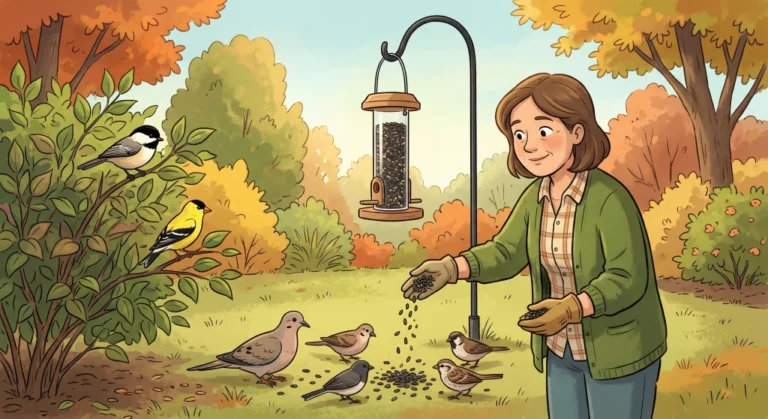
One cue I like is a noticeable increase in birds working natural seed sources around the yard. It is not the only valid signal, and birds forage in shrubs, flowers, and leaf litter throughout the year, but in fall it can tell you that local food use is shifting.
Look at plants such as coneflowers, black-eyed Susans, grasses, and seed-producing shrubs. You may see finches working dried flower heads, chickadees and titmice carrying seeds away to cache, or sparrows scratching through leaf litter. Those are normal feeding behaviors, but when they become more obvious around your yard, that is a sensible time to put out a small amount of fresh seed if your feeders have been down.
I use that observation as a starting cue, not a promise that birds suddenly need supplemental food. Natural food remains important, and some years it stays abundant enough that feeder traffic remains light. If birds ignore a clean feeder filled with fresh seed, that does not mean you started at the wrong temperature. It may simply mean they have plenty of other options.

Wagner's Four Season Sunflower Seed is 100% black oil sunflower seed. Sunflower seed is the favorite seed of most wild birds. It is high in energy and has a thin shell making it easy for all birds to consume. Use tray feeders or hopper feeders to attract sunflower loving songbirds. Cardinals, Chickadees, Finches, Nuthatches, Woodpeckers and much more. Trust your backyard birds to the experts at Wagner’s.
Check on AmazonIf you click this link and buy, we earn a commission at no additional cost to you.
The Spoilage Trap (Why Starting Too Early Backfires)
Starting early is not harmful by itself. Cornell keeps seed feeders filled year-round, and plenty of backyard feeders do the same. The real problem is putting out more seed than birds are eating and then letting it sit through warm, wet, or humid weather.
Seed can spoil faster in heat, especially after it gets wet. If a large tube feeder is barely moving, do not keep topping it off. Use a smaller amount, check for dampness, clumping, mold, or an off smell, and replace questionable seed instead of waiting for birds to finish it.
Birds commonly avoid food that has spoiled and use other food sources instead. You do not need to leave the feeder empty for a fixed number of days to “reset” them. Empty bad seed, clean and dry the feeder, refill with a modest amount of fresh seed, and watch whether activity changes.
Filling a large-capacity feeder to the brim when very little seed is being eaten, then leaving the same seed exposed to summer heat, humidity, or rain.
Starting with a small amount of fresh seed, checking it regularly, and increasing the amount only when birds are using it fast enough to keep the food fresh.

6 feeding ports with perches let multiple birds feed at once. Transparent 2 lb seed chamber makes it easy to see when to refill, with a simple flip-top lid for quick access. Built-in drainage keeps seed dry and mold-free. Works with sunflower, nyjer, safflower, mixed seed, and more. A great gift for any bird lover!
Check on AmazonIf you click this link and buy, we earn a commission at no additional cost to you.
Regional Timing Guidelines (A Starting Point)
If you restart feeders seasonally, broad regional windows can tell you when to begin paying closer attention, but they are not fixed start dates. Migration timing, local plant crops, rainfall, elevation, and latitude can all shift what you see from one year to the next.
Use the table as a rough watch window, then let conditions in your own yard make the decision. If natural food is abundant and feeder traffic is light, keep the amount of seed small. If activity is increasing, you can refill more often without leaving excess seed sitting for long periods.
| US Region | When to Watch for the Foraging Signal |
|---|---|
| Northern Tier & New England | Early to Mid-September |
| Midwest & Plains | Mid to Late September |
| Pacific Northwest | Late September to Early October |
| Southern US & Gulf Coast | Late October to Early November |
Note: Treat these as observation windows, not biological deadlines. In the South and along the coasts, seasonal changes may be driven as much by migration and changing natural food as by freezing temperatures, and feeder use can vary widely within the same region.
Setting the Table: Your Fall Prep Checklist
When you decide to restart, begin with a clean feeder and fresh seed. A feeder that spent months in storage can hold old hulls, dust, moisture, or residue, and last season’s seed is not worth gambling on if its condition is questionable. Before you set anything up, run through this quick reset:
- The Deep Clean: Take your feeders apart and scrub away old seed and debris. Wash with hot soapy water or use a dilute bleach solution of no more than one part bleach to nine parts water, then rinse thoroughly and let every part dry before refilling.
- The Port Check: Inspect feeding ports, perches, hangers, and fasteners for cracks, sharp edges, or loose parts. Make sure the feeder is still suitable for the seed you plan to use.
- The Seed Test: Check any stored seed for moisture, mold, insects, clumping, or an off or musty smell. If you are unsure whether an old bag stayed dry and fresh, replacing it is safer than putting questionable seed back into a clean feeder.
This is also a useful time to prepare for colder weather instead of reacting to it later. If your winters freeze open water, inspect a heated birdbath or de-icer before you need it. You can also keep high-energy foods such as suet on hand and use what to feed birds in winter as a practical reference once cold-weather feeding becomes part of your setup.

Terracotta powder-coated bowl holds 1 quart of water and stays ice-free year-round with a thermostat that runs only when needed to save energy. Hidden electrical connection keeps your setup looking clean. Mounts three ways including deck post, clamp, or ground legs.
Check on AmazonIf you click this link and buy, we earn a commission at no additional cost to you.
Final Thoughts: Maintaining Consistency Through November
Once you restart a fall feeder, consistency matters mostly because fresh, dependable food is easier for birds to use and easier for you to maintain. Birds do not rely on one feeder as a single daily survival route. They continue using natural foods and other feeding locations, and their visits can rise or fall as those options change.
I would rather keep a modest amount of fresh seed available than fill a feeder to the top on a rigid schedule. Check it often enough to catch wet or spoiled food, especially after rain or during humid weather, and refill according to how quickly birds are actually using it. A clean feeder that stays reasonably predictable is more useful than one that alternates between overflowing and sitting full of stale seed.

A no-melt suet dough made with beef suet and roasted peanut pieces, staying solid up to 100F for year-round use in any climate. Fully consumable with no shells or waste, keeping feeders clean. Rich in healthy fats and protein to support daily activity, nesting, and migration. Attracts woodpeckers, nuthatches, chickadees, wrens, and other songbirds. Made in the USA.
Check on AmazonIf you click this link and buy, we earn a commission at no additional cost to you.
FAQs
🍂 Can I start feeding birds in September?
Yes. Feeding birds in September is fine, and feeding year-round can also be fine when feeders are kept clean and food stays fresh. If you restart seasonally, use local bird activity and seed condition rather than treating September as a universal start date.
🤔 Will birds starve if I start feeding them too late?
No. Wild birds normally use multiple natural food sources and can move among feeding areas, so they do not depend on one newly installed backyard feeder. Starting later may mean it takes time for birds to discover or begin using your setup, but there is no narrow fall deadline after which feeding becomes pointless.
⏰ When to put out bird feeders fall vs winter?
If you feed year-round, you do not need to remove seed feeders just to wait for fall or winter. If you restart seasonally, fall is a practical time to clean the setup, add a small amount of fresh seed, and watch how quickly local birds use it as natural food and migration patterns change.
🥶 Is it okay to feed birds before it gets cold?
Yes. Birds can use feeders in warm weather as well as cold weather. The main warm-weather concern is food quality, because seed spoils more readily in heat and especially when it gets wet, so offer amounts that birds can use while the food is still fresh.